Nick Tyrone

Nick Tyrone

Nick Tyrone is the research director of the Jobs Foundation. He is also the author of several books including Politics is Murder.

Are the Lib Dems finished?

16 min listen

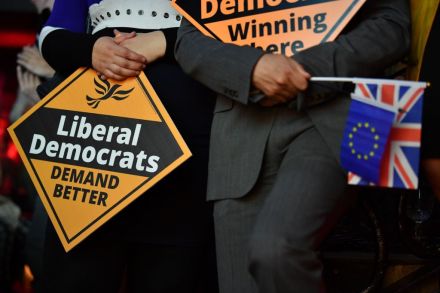
The Liberal Democrat leadership race will finally come to an end this month but, after December's crushing election defeat, is the party over too? In a special Saturday edition of Coffee House Shots, Gus Carter speaks to Katy Balls and Nick Tyrone, author of Politics is Murder, about how a new leader could pull the Lib Dems back from the brink of extinction.

What all parties can learn from the SNP

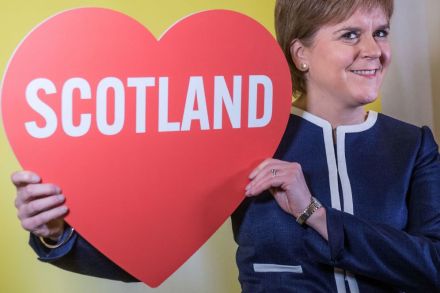
In the run up to the 2015 general election, there was a lot of talk in Westminster about the demise of two-party hegemony. We were coming to the end of five years of coalition government and the thinking was that neither the Tories nor Labour could get a majority, possibly ever again. This theory has since been crushed as First Past the Post works its magic. But there is one exception to this: the SNP. From having only six MPs in parliament when Nick Clegg was deputy prime minister, they ended up with 56 after 2015, and though they dipped in 2017, they went back up to 48 seats in the House of Commons in December – their dominance of Scottish politics looks destined to continue.

Layla Moran will kill off the Lib Dems. But I still want her to win

Make no mistake: Layla Moran's Lib Dem leadership platform is terrible. She wants to scrap Ofsted, stop publishing league tables of schools and call time on SATs for primary school kids. These policies are so bad that as a parent of three I would have to seriously think about leaving the country if Layla was ever put in charge of our education system. These policies slide in well with the rest of the platform, which is a blancmange of green-flavoured leftist material. Layla herself summarises it beautifully in one sentence: 'We need an economy that puts the environment and people's well-being first'. Moran's politics is totally disconnected from the concerns of parents and many ordinary people.

Keir Starmer is right to stay quiet on Brexit

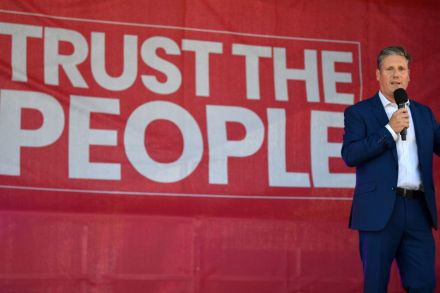
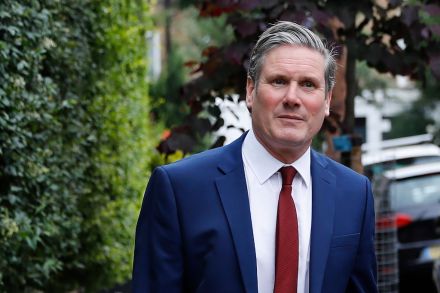
Ever since Keir Starmer became Labour leader, there have been calls for him to publicly embrace Brexit to win back seats in the ‘Red Wall’. Starmer has stayed quiet on Europe since his victory, to the consternation of many Remainers who wanted him to push the importance of extending the transition period, before that opportunity passed. This silence has been wise on Starmer’s part – and he should continue to stay silent on the European question for the time being. The calls for Starmer to announce that he’s converted to Brexit misunderstand several things, including: the nature of the electoral coalition Starmer needs to build, why Red Wall seats fell in December, and how Brexit plays out from here.

Is it time for the Lib Dems to merge with Labour?

Voting opens this week for Lib Dem members to choose the next leader of their party. One figure has overwhelmingly dominated the race so far, both during public hustings and behind the scenes. Unfortunately, it has not been Ed Davey nor Layla Moran – but Keir Starmer. Both candidates are essentially engaged in a battle to see who would work more effectively with the new Labour leader. As one Lib Dem donor put it to me: ‘I was worried about Ed but then in speaking to him I could see that he was keen on getting as close as possible to Starmer. That alleviated any fears I had.’ The Lib Dems seem to have decided that their next leader, whoever wins, will openly aim to help make Keir Starmer the next prime minister of Great Britain.

It’s time for Remainers like me to stop focusing on Russia

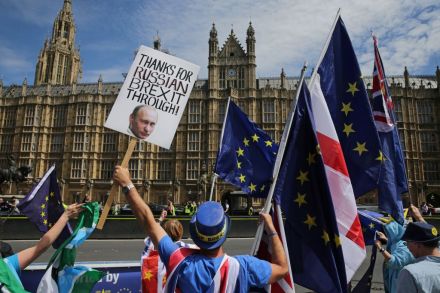
The release of the Russia report has long been a cause championed by some Remainers. The idea took hold that sitting in some select committee chamber was a report detailing how the 2016 EU referendum was influenced by Russian state actors to such a degree that it materially affected the result. The government has been trying to stifle the release of the report for that precise reason; once it sees the light of day, the Russia report will be the thing that turns the tide on Brexit. It will become so apparent that the referendum result happened via bent means, Leavers will have their false consciousness ripped away and leaving the transition period will seem like madness to everyone, Boris Johnson included. Brexit, at long last, will have been vanquished.

Keir Starmer must win the farmer

It is often written that the Labour party has an enormous electoral mountain to climb in order to win a majority at the next general election – or possibly, even the general election after that. What isn’t evaluated enough is what this means in hard, psephological terms. Winning substantially in Scotland appears to be getting harder and harder by the day, with the SNP looking indomitable. This means that Labour has to win in England and Wales on a Blair-style majority – perhaps even bigger than Blair given the Scottish problem. All this leads to one conclusion: Labour has to figure out how to win again in seats with a rural contingent. When looked at from one angle, this is completely doable.

Does Keir Starmer know something about Facebook we don’t?

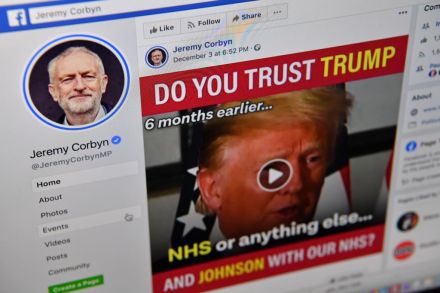
The Labour Party has officially joined the advertising boycott of Facebook, following the lead of several large corporations over the past few weeks. Rachel Reeves, shadow chancellor of the Duchy of Lancaster, said on the BBC over the weekend that the boycott was in ‘solidarity with the Black Lives Matter campaign’ but also ‘to express our concern about the failure of Facebook to take down some hateful material.’ On the face of it, this seems like an unwise move. The Labour Party has spent over a million pounds advertising on the platform over the last couple of years – presumably because it was an effective way to get their messaging across.

‘Rishinomics’ could cost the Tories the next election

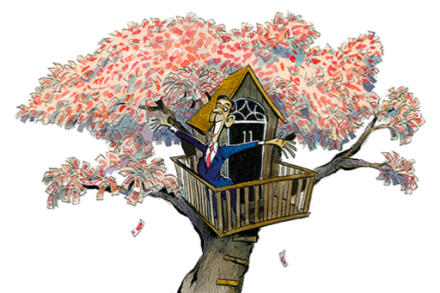
A truism is emerging that the Tories’ massive public spending has left Labour politically with nowhere to go. This quasi-social-democrat version of conservatism supposedly leaves all of the opposition’s attacks on the Tories blunted – if there’s a Conservative government spending big, what does Labour have to offer? There is another way of looking at this, however. The current Chancellor’s spending plans could result in a perfect storm for Labour at the next election – a chance for Starmer to attack the Tories from both the left and the right. From the left, Labour can claim that they will spend money in a more ‘caring and thoughtful’ manner, something their audience is already geared to believe.

Starmer has exposed Corbyn the coward

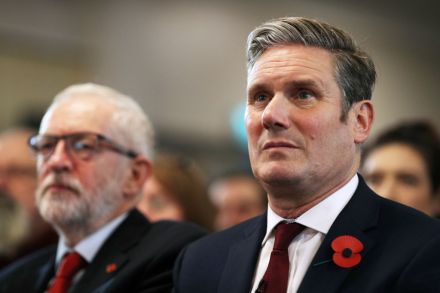
Being a radical feels nice. You get to think you’re a morally superior being in a society full of evil-doers and sell outs. You can reduce the world to easily understandable, fixable problems. You get to reframe everything in life as good versus evil with you as the hero of the story. The only problem? It’s all a mirage. Human societies are complex and fixing them even more so. Affecting actual change requires compromise, both with others and with yourself. More than that, it takes courage – a courage that Keir Starmer is already demonstrating in his leadership of the Labour party. And one which was woefully lacking during Jeremy Corbyn's time at the top.

What Peter Mandelson still doesn’t understand about Brexit

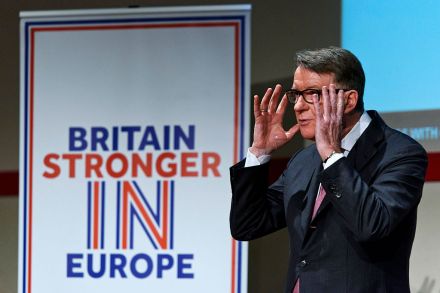
On Tuesday evening at 11 pm, the chance for the UK to extend the Brexit transition with the EU expired. Britain and the EU must come to some sort of deal before the end of 2020 or what amounts to a no-deal Brexit will happen. What is interesting about this is how much a no-deal situation is still being underplayed by many in the government and other parts of the Westminster bubble. What is even more fascinating is the position of several key remainers on this point. Lord Mandelson of Foy and Hartlepool has been doing media interviews this week, all as part of putting out his stall to become the UK candidate to be the next WTO director-general. The Labour peer says he’s been informally approached by the government to be our choice for the role.

Could Corbynites infiltrate the Lib Dems?

It’s funny how politics works. This time last year, the talk was of whether Labour moderates should leave their party and join with the Lib Dems after some of them had already taken the plunge. Labour’s hard-left was unassailably in charge of the party and it seemed there was no way they could be defeated from within. If you wanted a more reasonable form of centre-left politics, it was becoming a truism that you had to leave. Now, the situation has become perfectly reversed. In the wake of Rebecca Long-Bailey's sacking from the shadow cabinet, the question is whether it is Labour’s hard-left whose cause is hopeless and if they should depart from Labour’s ranks, as Starmer seems keen on expanding Labour’s appeal.

Labour’s phony lockdown war

Keir Starmer has welcomed the easing of the lockdown, saying he thinks ‘the government is trying to do the right thing and in that we will support them’. The Labour leader wants to scrutinise the details of the policy but recognises that keeping the economy in stasis for much longer will have serious consequences. Meanwhile, in another part of Labour land, Richard Burgon put forward his total opposition to easing. In the Commons, Corbyn’s former shadow justice secretary said the easing of lockdown restrictions was simply a way of ‘appeasing right-wingers on the Tory backbenches’ and that the prime minister was ‘gambling with people’s lives’. Many on the left-wing of the party seem to mostly support Burgon’s position.

Labour’s path to victory lies in destroying the Lib Dems

It has become a truism that there are not enough liberal voters to get Labour a majority at the next general election. That Labour need to recapture some of the socially conservative vote to win. That they need the ‘red wall’ seats back to give them even the slimmest chance of victory. But for a period last year, however brief, the Lib Dems were as high as 24 per cent in the national polls. If Starmer can tap into this potential electorate I believe he can win, and Labour can become the biggest party in England and Wales – which would probably allow the party to govern. It looks like the Lib Dems are willing to help.

What are Black Lives Matter’s actual policies?

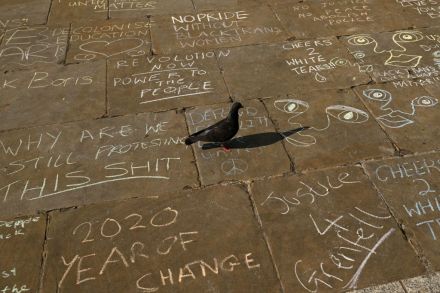
The effect of George Floyd’s death in Minnesota upon Britain has been remarkable. We have had waves of protests, in London but also other large British cities, that look set to continue. Statues have fallen; long-loved television shows have been removed from digital platforms. An assumption has been made by many that the protests have at the very least been necessary. But there is a question few are actually asking about the Black Lives Matter protests in Britain: what do the protestors actually want? Some will say the answer is obvious. The protests are about ending racial inequality in Britain. If so, how do the BLM protests seek to correct this problem in real, practical terms? Think about other large protests from the past that linger in the memory.

Are Remainers wrong about a no-deal Brexit?

As a Remainer, I was always convinced a no-deal Brexit would be a disaster for Britain. Now, I’m not so sure. And while I once thought anything – even a painful and protracted transition period – would be better than leaving without a deal, I’m convinced Britain should push ahead with leaving the EU, whatever happens. The reaction to coronavirus – and, in particular, people’s thoughts about the pros and cons of lockdown – has convinced me why. Ask someone’s position on the lockdown and you’ll probably have a fair idea of whether they are a Brexiteer or a Remainer.

In defence of free markets in the time of coronavirus

One of the dominant political themes of the moment is that the big state, alongside either a high tax and spend economic model or massive borrowing, is here to stay. Those who advocate for even slightly more of a market economy and less state largesse apparently belong to a bygone age. This narrative is being advanced by both left and right, Labour and the Conservatives. The Labour Party have obvious reasons to argue for a bigger state given this is one of the main reasons they exist, but the Conservative Party have begun to talk the economic language of Labour as well. This began under Theresa May’s leadership and continues through to the present.

Should the lockdown protests worry Boris?

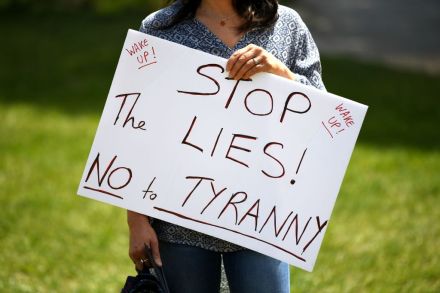
Jeremy Corbyn’s brother, Piers, was among 19 people arrested at an anti-lockdown protest in Hyde Park at the weekend. The protest was small, as were those held in other cities across Britain, including ones in Belfast and Glasgow. Signs and chants held by demonstrators linked 5G and coronavirus. And familiar anti-Bill Gates slogans were chanted. It's easy to dismiss the protesters as a bunch of eccentrics. But doing so might be a mistake. It's plausible to argue that the government should be pleased that the first public protests against the lockdown, coming almost two months after it was brought in, were both small and attended by people with fringe politics.

How the Labour party ran out of ideas

After losing the leadership contest in April, the left of the Labour Party regrouped. Organising as part of old factions like the Socialist Campaign Group and new ones such as Don’t Leave, Organise, they have held Zoom events and created websites, pledging to make life difficult for Keir Starmer. One thing is missing, however, from their plans: any serviceable ideas. The left of the party can’t seem to name one solid thing in policy terms on which they disagree with Starmer. And, they appear unable to point to a single practical thing they would do differently had they won the leadership contest. Instead, they frame everything in culture war terms, and when the discussion does get round to policy, it’s so vague it falls to dust.

The Lib Dem leadership race is descending into farce

In the midst of the coronavirus crisis, the finer details of the contest to choose who will be the next leader of the Liberal Democrats might have understandably passed you by. It was supposed to be taking place, well, right about now, with all Lib Dem members getting to vote for who ultimately is to replace Jo Swinson. Ed Davey and party president Mark Pack are currently interim co-leaders of the party, a strange situation that was meant to be only temporary and that you’d think they would want to change as quickly as possible. Instead, in the wake of the pandemic, the Lib Dems have pushed the leadership election back: to May 2021. Or at least, that’s what has been pencilled in.