Nick Cohen

Nick Cohen

Nick Cohen is the author of What's Left and You Can't Read This Book.

Does the rule of law cover the poor?

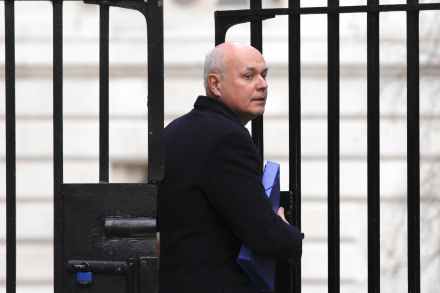
Belatedly, the disastrous rollout of Universal Credit has become a media 'talking point'.  I could do with less praise for Iain Duncan Smith in the debate. He is the man the Tories decided was unfit to lead them, but still fit to manage and, as we are seeing, wreck the lives of the poorest people in the country. He deserves no special indulgence. 'His intentions were good,' everyone feels obliged to say. As if motives mattered more than deeds, and what politicians hoped for matters more than what they achieved. Duncan Smith’s achievement was to preside over disastrous and expensive experiments with IT systems that did not work, and then establish pilot projects for the new catch-all benefit, which was meant to end the complexity of the welfare state.
‘Fake news’: the far left’s favourite new excuse

Admirers of violence and lies must go carefully. As true cowards they must leave themselves an escape hatch in case they are forced to retreat. They never quite commit to the suppression of rights, the rigged elections, the secret policemen and the torture chambers. Instead they tell us we are not hearing the full story, and switch the argument. The real problem is not the oppressive state and its suffering citizens, they say. The problem is the fake media. Not media faked by government propagandists and controlled by censors, not countries where every TV station and mass circulation newspaper must follow the party line, but the free media in their own country.

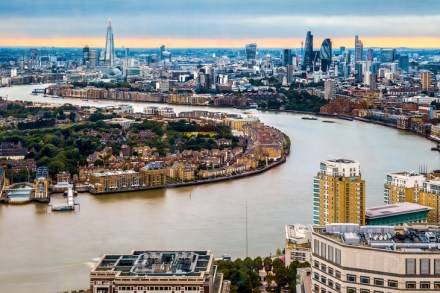
The Thames Water monopoly needs to be challenged

Enough has been written about a Conservative government that knows its electoral success depends on Britain remaining a property-owning democracy, yet offers nothing beyond token gestures to stop the young being priced out of home ownership. Enough, too, has been said about graduates being overcharged, pensioners soaking up the largesse of the tax and benefit systems, the failure to upgrade infrastructure, the obesity crisis, and all the other problems that can’t be tackled because of half-thought-through Tory prejudices. Allow me instead to concentrate on the scandal of the privatised water industry. Journalists and academics have been banging on for what feels like an age about an ‘organised rip-off’, to use the words of the usually sedate Financial Times.

The scandal of privatised water is going to blow

Enough has been written about a Conservative government that knows its electoral success depends on Britain remaining a property-owning democracy, yet offers nothing beyond token gestures to stop the young being priced out of home ownership. Enough, too, has been said about graduates being overcharged, pensioners soaking up the largesse of the tax and benefit systems, the failure to upgrade infrastructure, the obesity crisis, and all the other problems that can’t be tackled because of half-thought-through Tory prejudices. Allow me instead to concentrate on the scandal of the privatised water industry. Journalists and academics have been banging on for what feels like an age about an ‘organised rip-off’, to use the words of the usually sedate Financial Times.

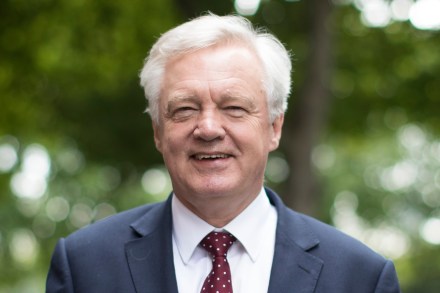
David Davis is heading for a tragic failure of his own making

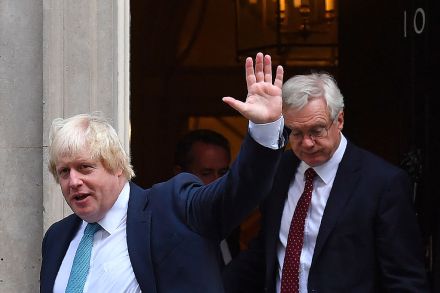
Stephen Bush of the New Statesman asked a good question the other day. Why do people who hate what Boris Johnson and Liam Fox are doing to Britain go easy on David Davis? He’s right to be perplexed. It turns out all those trade deals the leave campaign promised can’t be done for years. Liam Fox has nothing to do except be a public nuisance, which now I come to think of it is the only post he’s qualified to fill. Johnson meanwhile is an embarrassment, even to an administration which seems beyond shame, and Theresa May does her best to keep him locked in an FCO cellar. Davis, on the other hand, is Britain’s chief negotiator, and as such is the most important politician in the country today. Yet he receives little of the abuse directed at his colleagues.

What are Corbyn’s Venezuelan critics actually doing to help?

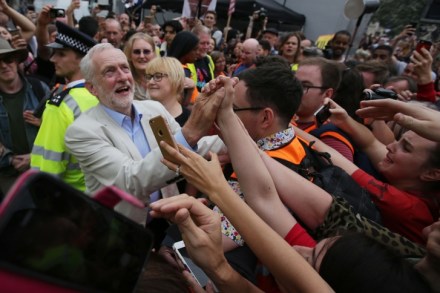
The victims of foreign dictatorships have become chips in our political games. In our corner of the rich world, for instance, the suffering of Venezuela matters only because Jeremy’s Corbyn’s enemies can use it to attack his support for the Chavist regime when it was unchallengeable, and his cowardly equivocation when the inevitable catastrophe followed. Saudi Arabia matters only because leftists can use it to damn the British establishment’s bootlicking support for the House of Saud and its suppression of democratic, women’s and minority rights. Yet the smallest concern of the Venezuelans is the praise the western far left lavished on their corrupt and massively incompetent dictators.

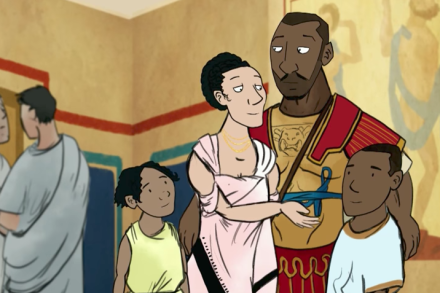
How alt-right was Roman Britain?

Over the weekend I, like a good dozen others, endured the Twitter rage of Nassim Nicholas Taleb, an old man who rolls around like a drunk trying to prove he’s still the toughest hombre at the bar. He’s the sort of guy who screams at the Cambridge classicist Mary Beard: https://twitter.com/nntaleb/status/892736047519608833 He’s the sort of guy, who, when I and others objected that bragging about his citations was a ‘crass’ way to behave, cried: https://twitter.com/nntaleb/status/893079278870548481 He’s the sort of guy who when I replied: https://twitter.com/NickCohen4/status/893098347875246082 Can come back with: https://twitter.com/nntaleb/status/893807860278317057 He’s that hard.

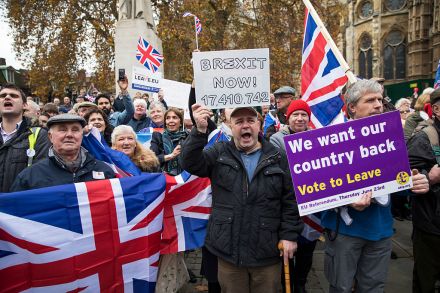
The Brexit betrayal bandwagon is growing

It may not be this week. It may not be Boris Johnson. But eventually a minister will break with this tottering government and establish himself (or herself, for it could be Andrea Leadsom) as the leader of the diehard right. Brexit is crying out for its Ludendorff; the scoundrel who can blame his failures on everyone but himself. The smart move for today's right wing politicians who find their careers blocked is to break with the Tory leadership – whatever or whoever that may consist of – and resort to old  slogans. The referendum delivered a mandate to leave, Johnson, or whoever takes up the challenge of building a new nationalist right, could say.

The Labour left and Tory right agree on Brexit. Why don’t they merge?

Britain has not had a functioning opposition on the most vital question of the day ever since the Labour left and Tory right found they were in agreement on our future relations with the EU. Although both sides are too embarrassed to admit it, we are ruled by a Corbyn-Johnson pact. It will deliver a hard Brexit, whatever the costs to the country. When Nigel Farage hailed Jeremy Corbyn as ‘almost a proper chap’ you learned that whatever trouble this hopelessly ill-equipped government faces it will never face trouble from the Labour leadership. The left has ceased to exist as an organised force in British politics, at least as far as the European question is concerned.

Our Brexit-backing politicians are making fools of us

The great physicist Richard Feynman warned of the perpetual torment that lies in wait for people who try to understand quantum mechanics. Modern physics cannot be understood. It can only be observed. ‘I am going to tell you what nature behaves like,’ Feynman said. ‘Do not keep saying to yourself, "but how can it be like that?" because you will get down the drain, into a blind alley from which nobody has yet escaped. Nobody knows how it can be like that.’ Equally, nobody knows how the Conservative Party can be like that. It just is. Theresa May, to pick an example. Every morning I wake up and check if she is still prime minister. Every morning the answer comes back, ‘apparently so’.

The brave new world of Brexit Britain

Although attributed to Milton Friedman, the assertion that 'there ain’t no such thing as a free lunch' had been around long before he took it for the title of an economics book in 1975. It has been used since by many who have never given monetarism a second’s thought. Physicists say the universe is a closed system. No magic source can give it free energy or indeed calories. Mathematicians and computer technicians are as adamant that something cannot come from nothing. Everyone agrees the lunch bill must be paid. Everyone, that is, except British politicians and the voters who endorse them in their millions.

Grenfell Tower and the politics of needless death

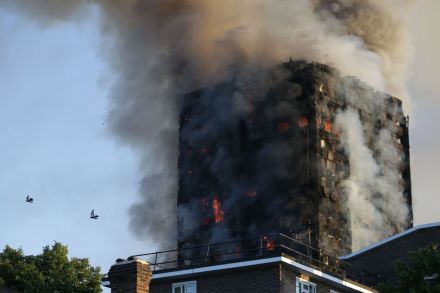
As the body count rose from the Grenfell Tower fire, sensible people warned us not to rush to judgement. Activists, mainly from the left, denounced a complacent housing bureaucracy at the Kensington and Chelsea Tenant Management Organisation, and a Conservative government, which had refused in its laissez-faire way to regulate rented housing. The warnings sounded sensible. At the time of writing, I still do not know for sure why the fire spread with such ghastly effectiveness. Why rush to judgement and into print? In any case, is there not something wrong with people whose first reaction to a disaster is to take cheap shots? But sensible points can be beside the point.

People have had enough of the Tory right

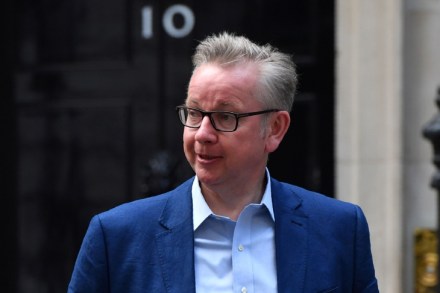
Go back ten years and you could never imagine green campaigners greeting Michael Gove’s return to government with a mixture of contempt and despair. It feels like another age, but in the last decade Gove, Cameron and Osborne decided the only way to stop the Tory party remaining in opposition was to force it to come to terms with modern Britain. ‘Detoxifying the brand’ – to use their advertising agency jargon – meant Conservatives should stop giving the impression that ethnic minorities weren’t truly British. They should help all people, rather than just the comfortable. Most of all, Conservatives must stop being John Stuart Mill’s ‘Stupid Party,’ which resists new ideas merely because they are new.

The end of Brexit Britain

'Brexit means Brexit' may have been the most gormless slogan ever uttered by a British politician – a species not previous famed for its gorm. But you knew what Theresa May meant. Legitimacy in Britain flowed from the Brexit referendum. Parliament could not question it. Judges were 'enemies of the people' when they even discussed it. You could say that the Leave campaign had won by telling outrageous lies. You could say that leaving the single market would cause needless damage to jobs and living standards. No matter. The referendum result stood, and could not be gainsaid. The Tory right in particular dismissed all objections. Seventeen million voted against immigration, so we had to abandon the single market and freedom of movement.

Seumas Milne and the Stasi

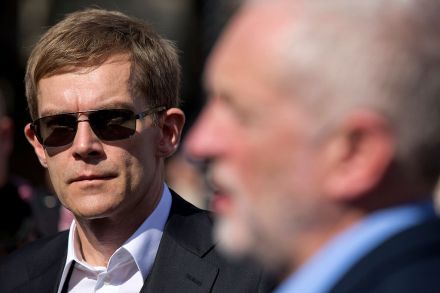
Few noticed in 2015 when Seumas Milne excused the tyranny that held East Germany in its power from the Soviet Invasion in 1945 until the fall of the Berlin Wall in 1989. Nearly every page reeked of a sly attempt to sweeten dictatorship and cover up the murder it inevitably brings. It was greeted with deserved indifference. As for Milne, two-years ago he was just another columnist in a newspaper industry that is stuffed with them. He provided a niche service on the Guardian by catering for a corner of the market that yearned to hear defences of 20th century Soviet Communism and 21st century Islamo-Fascism at the same time and for the same reasons. Now Milne is Jeremy Corbyn’s Executive Director of Strategy and Communications.

This election will be remembered as a triumph for the wealthy

This dismal, unnecessary election, conducted between the scream of police sirens and the murders of civilians, will be remembered for one thing only: the dementia tax. In years to come, political pros will shake their heads at the naivety of Theresa May. She appeared invincible, they will say. All she had to do was to keep quiet, turn up and she would win a landslide victory. Then she faced one of the great questions of the day. Everyone says they want politicians to do that. Who has not exclaimed that they must stop listening to focus groups and be brave? May was, and see how she has suffered. The PM understood that the social care system cannot cope now, and could collapse as more of us trudge into senility.

Will Corbyn’s supporters blame their election defeat on the Manchester attack?

The Manchester murders have given British politics its first conspiracy theory with a grain of truth in it. It may sound ghoulish to discuss the political consequences of an atrocity. But terrorism is a political crime, and we are in a general election campaign. Everyone is thinking that the Manchester attack passes the advantage to Theresa May. Soon they will be saying it too. It is easy to predict how the killings will be knitted into the left’s explanation for the defeat of 2017. Against the odds, Labour was doing well in the polls, Corbyn’s supporters will say. Why one survey had the opposition a mere nine points behind the Conservatives. (Others had it 14 points down, but trust me, they will be forgotten).

Election 2017: Do you believe in miracles?

If you want to imagine the future of British politics, consider the tale of Kristy Adams, the Conservative candidate in Hove. Her campaign is an insult to the electorate, but it is hardly alone in that. After the crash, the expenses scandal, Savile and phone hacking, it became a cliché to say that trust in institutions has collapsed. If the House of Commons is to restore its reputation, candidates must be honest. I don’t mean MPs have to tell us about their sex lives or publish their bank accounts, just be straightforward. Theresa May wants to make this a Brexit election. Taking her at her word, reporters from the Brighton Argus asked Adams a basic question. 'How did you vote in the referendum?

The counter-revolution begins, comrades, on 12 June

Think of the Parliamentary Labour Party as a regiment ordered over the top in the First World War. The soldiers know the generals haven’t a clue. They know the battle was lost before it began. The only question in their minds is who makes it back from the slaughter. The projected casualty rates vary. Corbyn’s supporters want to justify the left continuing to cling onto the leadership by getting close to Ed Miliband’s share of the vote in 2015. If they succeed they will keep the Labour party at 30 per cent and give the Tories a majority of 60 or 70. London Labour MPs also feel that the losses can be contained.

J. K. Rowling and the curse of the left

How people who want a fairer society should vote at this election is causing agonies across the liberal-left. It is easy to mock the torn activists. Why do they bother? One vote is worth next to nothing under a PR system. Under first past the post there are hundreds of safe seats where there’s no point in voting, let alone worrying about how you vote. The number of safe Tory seats is likely to grow after this election. Indeed, if you believe the opinion polls, it is likely to rocket. The futility of casting a token anti-Tory vote is more apparent than ever. For all that, those who laugh at conscientious leftists are laughing at democracy. How can you justify it unless voters care about who they vote for?