Molly Guinness

Remembering the decimation of Crimea’s Tatars

From our UK edition

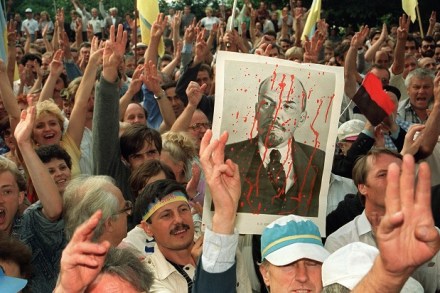
Crimea’s Tatars are nervous after Russia’s annexation of the territory. The Tatars, Sunni Muslims who account for 12 per cent of Crimea’s population, boycotted Sunday’s referendum worried that the Russians would impose repressive and discriminatory laws on them. Reading Bohdan Nahaylo’s 1980 article, Murder of a Nation*, you can see why. First, Stalin deported the entire Crimean Tatar nation. ‘In the early hours of 19 May 1944, some 238,000 people were abruptly awoken by units of the Soviet security forces and within minutes herded into cattle trucks. Sealed in without food or water, they were transported several thousand miles eastwards and eventually dispersed in Soviet Central Asia.

The Spectator: on popes and poverty since 1828

From our UK edition

A year ago, a relatively unknown Argentine cardinal, Jorge Mario Bergoglio was elected Pope. A few days later he announced he would take the name Francis, after Saint Francis of Assisi, because, he said, he had particular concern for the poor. In the 1880s, Pope Leo XIII also drew the attention of his clergy to St Francis’s teachings on poverty. The Spectator approved, and recommended it to Protestants as well as Catholics, but it took issue with the Pope’s argument that the spectacle of rich people joyfully embracing holy poverty would be enough to encourage the poor not to mind being poor.

The Spectator: on 150 years of punishing Russia

From our UK edition

Russia’s military intervention in Ukraine has left western diplomats scrabbling for sanctions that won’t backfire on to the rest of Europe and America. The foreign secretary William Hague said Russia must 'face consequences and costs'. When a policy paper was photographed that said the UK should not support trade sanctions or close London’s financial centre to Russians, Mr Hague said it did not reflect government policy. But punishing Russia is sure to be an expensive business. Just before the Crimean War, when Russia invaded Turkish Moldovia and Wallachia in 1853, a Spectator editorial took a hard line; Russia should be punished on principle.

The Spectator – on 400 years of unease between Ukraine and Russia

From our UK edition

Ukraine declared independence from the USSR in 1991, but Moscow has made sure it’s remained heavily involved in Kiev’s affairs ever since. That has been relatively simple. Soon before independence, Anne Applebaum described how Russia’s ruthless annexation of its neighbour had left Ukraine without much identity of its own. 'It took 350 years of Czarist domination, several decades of Stalinist purges, two collectivisation-induced mass famines, two world wars, and the refusal to teach Ukrainian children how to speak Ukrainian, along with the systematic elimination of anyone who might be thought a leader, an intellectual, a capitalist, or even a wealthy peasant. But they did it.

The Spectator – on the purpose of the Olympics

From our UK edition

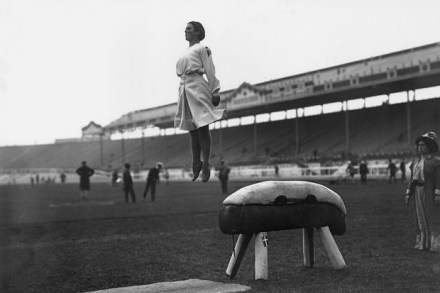
When the idea of a modern Olympic Games began to be discussed, Spectator writers couldn’t really see the point. ‘Beyond a certain waste of money, there will be no harm in the new whim,’ the magazine ruled in 1894, but the notion that the competition would bind nations together didn’t seem very convincing: Why? Is it because they will all for a few days be recalling the Greeks and their achievements, and their short-lived superiority in all the arts? They cultivated of all Europe once studied Latin; but they cut one anothers' throats for all that with a singular unanimity of brutality.

Shirley Temple, 1928 – 2014, remembered in The Spectator

From our UK edition

Shirley Temple has died in California at the age of 85. She was known as America’s little darling after she appeared in her first film at the age of three. Later in life she moved into politics, running for Congress and joining the diplomatic corps. Henry Kissinger, she said, was surprised she knew where Ghana was, but she became ambassador to Ghana and later to Czechoslovakia.

The Spectator – campaigning for the rights of the insane since 1828

From our UK edition

Talking to Barbara Taylor about her new madness memoir this week, it’s clear that Britain does not have a glorious history when it comes to dealing with mad people. But The Spectator has always stood up for them, arguing in 1844, for example, that ‘the custody of lunatics ought to be like that of children – of sick children; and the guardians, who stand to those adult in body but infantile in mind in the place of parents, should be at all times open to their applications, ready to aid, comfort, and sooth.’ The magazine has often made a point of reporting on the horrors that have gone on behind closed doors. In the 19th century, it was frighteningly easy to get carted off to a loony bin. A visiting Frenchman had a terrible time of it in 1828.

The Spectator on Britain’s treatment of refugees

From our UK edition

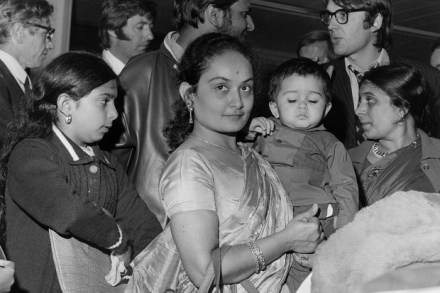
The British government has said it will allow in some of Syria’s most vulnerable refugees. The Home Office hasn’t specified how many will be admitted but says it will probably be in the hundreds. The Syrian civil war has created 2.4 million refugees and 6.5 million internally displaced people, and looking through the archive, you get the sense that some of The Spectator’s former writers might have thought Britain could have offered more this time. The government’s attitude towards Jewish refugees in 1944 was ‘niggardly, bureaucratic, evasive and insincere’, according to the diplomat Harold Nicolson. We’ve historically been ‘proud to succour the oppressed and to defend the weak.

Courtroom drama in 1828 – courtesy of The Spectator

From our UK edition

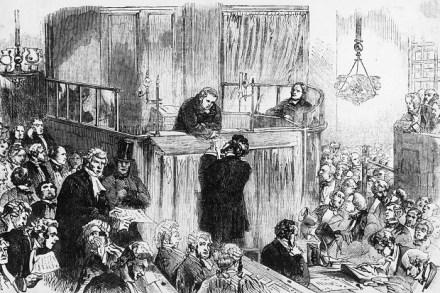
It’s a real pleasure looking through the first few editions of the Spectator from 1828, where the police reports and brief news items conjure up the England of Dickens and Trollope. There’s a man who comes before the court for throwing his wooden leg at people and is reprimanded by the judge. In a riotous atmosphere in court, the pauper explains that he can’t very well work with a leg that’s a foot and a half too short. Eventually, the Lord Mayor intercedes: ‘Defendant, I have prevailed upon the parish to put you once more upon your legs properly; and let me entreat you never to throw away an old leg until you get a new one."— (Loud laughing.

The wild life and times of Ariel Sharon

From our UK edition

When Ariel Sharon slipped into a coma in January 2006, The Spectator was just beginning to rather like him. Days after his stroke, the magazine ran a piece arguing that Sharon’s legacy would be ‘not his military exploits but his final major political act: unilateral withdrawal from Gaza’. Douglas Davis described Gaza as a lawless gangland where terrorism was the major growth industry. Yasser Arafat had sown the seeds of anarchy and Mahmoud Abbas was too weak to do anything about it. ‘The terror war appears to be on the verge of entering a new, more dangerous, phase,’ he wrote. ‘Israelis have cause to be grateful that Sharon dragged them out when he did.’ Before 2006, The Spectator would have often made less comfortable reading for Ariel Sharon.

What nannies know

From our UK edition

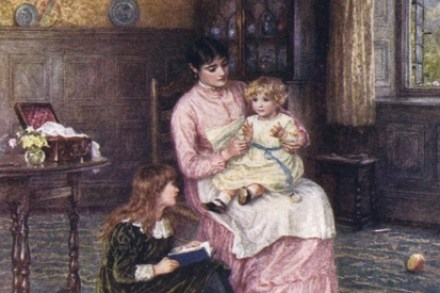
Soon after moving to London at the age of 20, Nina Stibbe wrote to her sister Vic saying, ‘Being a nanny is great. Not like a job really, just like living in someone else’s life.’ She was working for Mary-Kay Wilmers, the editor of the London Review of Books, and her letters home to Lincolnshire give a hilarious picture of her new life. She gets on well with her charges, Sam (ten) and Will (nine), treating them as equals and often playing tricks on them: Sam was invited to supper at the Tomalins’ — his first ever (official, evening) meal. Told him that Claire had rung to ask him to bring a potato with him. Will and me thought it was hilarious when Sam set off with a potato in one hand and his football cards in the other.

Darling Monster, edited by John Julius Norwich – review

From our UK edition

It must have been awful for Diana and Duff Cooper to be separated from their only child during the war, but we can be grateful for it because it’s a joy to read the correspondence it gave rise to. The letters in this book span the years 1939 to 1952 and take in the Blitz, Diana’s short spell as a farmer in Sussex, a trip to the Far East, when Duff was collecting intelligence on the likelihood of a Japanese invasion, the couple’s three years in the Paris embassy, and several more in their house at Chantilly, as well as a great number of journeys around Europe and North Africa. The most charming thing about the war letters is how grown-up they are. John Julius Norwich was sent to safety in America and hardly saw his parents for two years.

The best teachers make you fall in love with a subject

From our UK edition

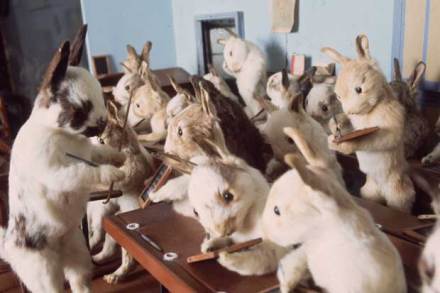
My brother’s Classics teacher Mr Maynard had a pet rock called Lithos (Greek for stone); his teaching methods included ‘subliminal learning’ sessions, during which he’d walk around the room conjugating verbs in a soft voice while everyone else suppressed giggles. He was also fond of a physical demonstration, hurling himself across the room with no warning when describing how Aegeus had thrown himself into the sea. As a result, most of his class at school chose Latin or Greek for A-level.

Death by Dior, by Terry Cooper – review

From our UK edition

This book may sound like it’s going to be about high fashion, but it’s actually about Nazism, satanism, incest and murder. Françoise Dior decided that her uncle Christian had been killed in a Jewish plot in 1957, so she joined a Nazi movement in France before moving to London to work for the cause over here. Later, she got more interested in the ‘spiritual side of Nazism’, which developed into a fascination with Satan. A sexual relationship with her teenage daughter Christiane eventually turned sour and when Françoise could no longer put up with her, she tricked Christiane into committing suicide. It’s all told in a cheerful, chatty way by Terry Cooper, who was Françoise’s lover for many years.

Christopher Hitchens and The Spectator: writing full of curiosity, indignation and analytical rigour

From our UK edition

After Christopher Hitchens died in December 2011, Douglas Murray wrote in the Spectator that he’d had 'a talent for making us, his readers, want to be better people. He used his abilities not to close down questions and ideas, but to open them up. In the process he made you, the reader, aware that you needed to do more, engage more, think more and know more. Writers often feel a need to impress their readers. Christopher made his readers want to impress the writer.' To nearly everything he wrote, Hitchens brought curiosity, indignation and analytical rigour and a vast frame of reference. It’s been a great pleasure looking through the recently digitised Spectator archive for Hitchens highlights.

The Girl from Station X, by Elisa Segrave – review

From our UK edition

On her seventh birthday, Elisa Segrave’s five-year-old brother Raymond drowned in their grandmother’s swimming pool. From that day onwards, her mother Anne was emotionally detached and alcoholic. ‘My mother was only 42 when I, my father and my two remaining brothers lost her — to grief.’ Rebuffed by her mother in the days after Raymond’s death, Segrave writes chillingly of the moment she began to hate her dead brother. Years later, when Anne was suffering from Alzheimer’s, Segrave came upon her diaries and discovered that her mother had been one of the highest-ranking women at Bletchley Park, had worked in bomber command and had visited Germany as part of the British reconstruction team in 1945.

Daniel Radcliffe: why are the leaders of our political parties so uninspiring?

From our UK edition

Daniel Radcliffe is wearing the standard rehearsal outfit of T-shirt, black jeans and trainers. ‘Ah, this is for The Spectator. I probably shouldn’t have worn my fake Che Guevara T-shirt.’ It’s the classic Guevara image with a cartoon smiley face substituted. ‘I bought it because I’m so sick of people using him as a fashion icon.’ Radcliffe is 5ft 5in and his head looks slightly big on his body. But it’s the big pale blue eyes that you notice. Under dark, chaotic eyebrows, they give him an air of innocent frankness before he’s said anything. Being cast as Harry Potter aged 11 and spending his teenage years as the lead in the highest-grossing film franchise of all time could have turned his head, but Radcliffe is modest.

Hairstyles Ancient and Present, by Charlotte Fiell – review

From our UK edition

The key thing in 18th-century France was to get the hair extremely high. Perching on a small ladder behind his client, a Parisian hairdresser could pull off all sorts of engineering feats. Once the hair was three foot in the air, the coiffeur could add props — ribbons, shepherdesses, feathers, mythical allegories. After a French naval victory in 1778, some of the more patriotic women took to sporting a ship riding on the waves of their hair. Extravagance was frowned upon after the Revolution, but innovation continued; some ladies of fashion took to wearing their hair very short like the hair of those condemned to the guillotine. The style was called ‘à la victime’.

We must save the bread-and-butter letter from extinction

From our UK edition

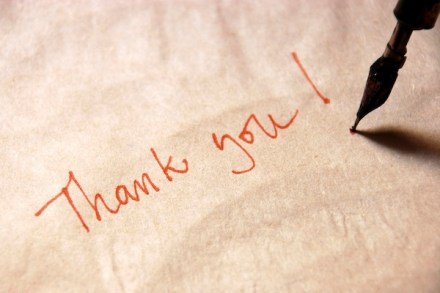
When my parents received a thank-you letter from a good friend recently, we all read it with (I’m afraid) not affectionate pleasure but a rising sense of indignation. The trouble with the letter was its extreme banality. It had been a lovely party, wrote the friend, the food delicious and the company great. The nerve, we all thought. He must think we’re mindless, to send us such a string of clichés. The writer must have felt a weight lift from his shoulders as he dropped his note into the postbox, but the truth was it would have been better had he never written at all. Platitudes by post are not worth the stamp. So why did he bother? Why do any of us bother any more?

‘Diana Vreeland’, by Amanda Mackenzie Stuart – review

From our UK edition

Over 80 and almost blind, Diana Vreeland was wheeled around a forthcoming costume exhibition at the Metropolitan Museum, issuing instructions all along the way about hats, shoes, lights and mannequins. She seemed, recalled the writer Andrew Solomon, an impossible old lady who couldn’t let go of her control and who was making everyone’s lives miserable for no good reason. And they did everything she’d said, and it was transformed. Her nearly sightless eyes could pick out things my youthful vision could not; enfeebled, she was still supreme at the discipline of chic. From childhood, Diana Vreeland had operated with deep faith in the power of self-presentation.