Molly Guinness

Ghoulishness, gawking and vile gratification

From our UK edition

James Foley’s family has begged people not to share images of him being beheaded. The Met has warned that watching and disseminating the film of the murder could constitute an offence under terrorism laws. The Spectator of 1886 would have approved of the ISIS media blackout hashtag.

When should Britain go to war?

From our UK edition

There’s been a lot written this week about whether or not to fight the Islamic State in Iraq. This time the consensus among Spectator writers is that Britain should. There’s a clear moral case, but is it in our interests to go to war? The first time this question came up was in 1839 when China started confiscating opium from British traders. It may have been a good move to protect British trade, but the magazine was less convinced about the morality of it.

Ian Fleming, James Bond and The Spectator

From our UK edition

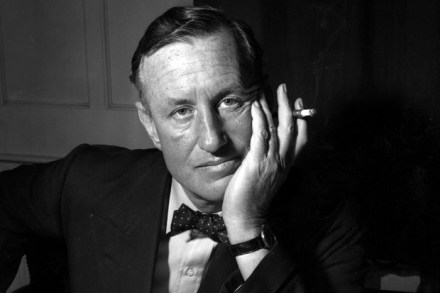
It’s 50 years since the death of Ian Fleming and The Spectator has always taken James Bond seriously. The writer of the Spectator’s Notebook in 1962 went along eagerly to see Bond’s first screen appearance. It hasn’t seemed to matter but it seemed odd that the director hadn’t explained some key parts of the plot. ‘Apart from the fact that Bond is played with an Irish-American accent—not particularly noticeable, of course, when he is throwing chaps around or conversing into his mistress's left ear—what struck me most was the assumption on the part of the film-makers that everyone would know the plot of Dr. No.

‘We believe Germany made the war’

From our UK edition

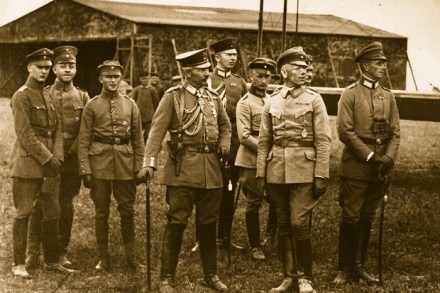
The 1914 editions of The Spectator in the days surrounding the declaration of war give a sense of bewilderment. At first they couldn’t believe it would happen. After Archduke Franz Ferdinand was assassinated by Serbian nationalists on 28th June 1914, Austria-Hungary’s handed Serbia a list of demands, which looked like a provocation of war: ‘It is hard to see how Servia could acquiesce in them without in effect making an admission of guiltiness which she must naturally feel it impossible to make.

Who knows what patriotism will feel like if Scotland becomes independent

From our UK edition

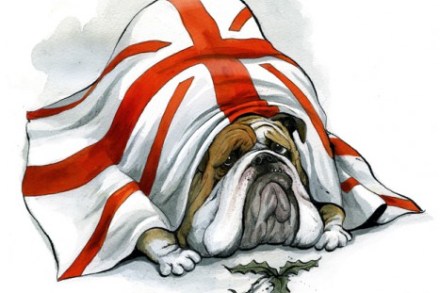
If Scotland goes independent in September, who knows what patriotism will feel like. This may be a last chance to savour some of this magazine’s most passionate expressions of British pride. In 1828, this article laid out the difference between a ‘genuine Briton’ and a Liberal. ‘The disposition of a genuine Briton is to make up his mind upon what he ought to do, and having once determined that, to adhere to his resolution with a fixedness of purpose, which more frequently proceeds to the length of obstinacy, than deviates into vacillation and uncertainty.

Nadine Gordimer, 1923-2014

From our UK edition

Spectator reviewers over the years have had a difficult time with Nadine Gordimer’s books. Gordimer (1923 - 2014), who won the Nobel Prize for literature and was one of the leading campaigners against apartheid, has died at the age of 90. Her books are passionately political and sometimes maddeningly abstract; some found them poetic, others were infuriated. Livingstone’s Companions in 1972 was a great book, Douglas Dunn wrote at the time. 'There is so much intelligence being brought to bear in her work that revulsion or criticism is never pious or direct but almost invisibly balanced by ironies, by the natural moral of fiction itself. Indignation is constantly being toned down by sympathy for the general human condition.

Should public servants go on strike?

From our UK edition

David Cameron has promised to change the law to make it harder to go on strike if he wins the next election. The Spectator has generally been in favour of tightening up strike laws, not trusting union leaders to do the right thing. In 1919, just as a law banning the police from striking was being passed, The National Police Union issued a sudden order to down tools, which was not a good PR move. ‘This unscrupulous attempt failed except in Liverpool and Birkenhead, where about half the police absented themselves from duty and allowed the criminal classes, who are largely Irish Roman Catholics, to riot and plunder. Order was restored last Sunday by troops. In London about a thousand men out of 19,000 failed to appear at their posts.

The eternal allure of the Caliphate

From our UK edition

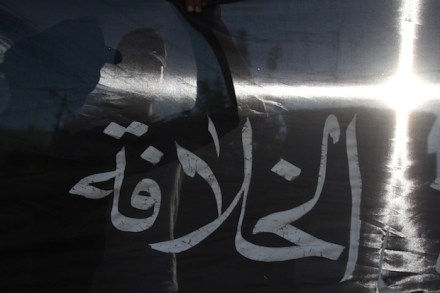
There’s nothing like a caliphate to rally disparate groups. The Sunni Islamic organisation ISIS has recruited fighters from all over the world with its dream of a single Muslim state, which now apparently exists in parts of Iraq and Syria. Across Europe, young men are packing their bags and heading to the east to join the jihadis. It’s an odd thing to want to do, but there’s something about a caliphate. In India in the 1920s, thousands of Muslims rallied behind the idea of a caliphate to support the Ottoman Caliphate. It was surprising because the Muslim population in India had never shown unity or indeed any fondness for Turkey. In fact many of them had fought against the Turks.

Lillian Hellman lied her way through life

From our UK edition

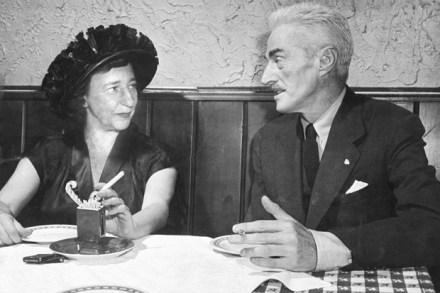
Lillian Hellman must be a maddening subject for a biographer. The author Mary McCarthy’s remark that ‘every word she writes is a lie, including “and” and “the”’ wasn’t far off. Navigating through the hall of mirrors that Hellman left behind, trying to sort fact from self-aggrandising fiction, seems to have worked Dorothy Gallagher into a fury. Perhaps this book is her revenge. One of America’s most successful playwrights, Hellman had her first Broadway hit before she was 30. She was a close friend of Dorothy Parker and her long-term lover was Dashiell Hammett. Ardently left-wing, she was summoned before Joseph McCarthy’s House Un-American Activities Committee to answer questions about her links with the Communist party.

Tracey Emin’s knickers – a short history of contemporary British art

From our UK edition

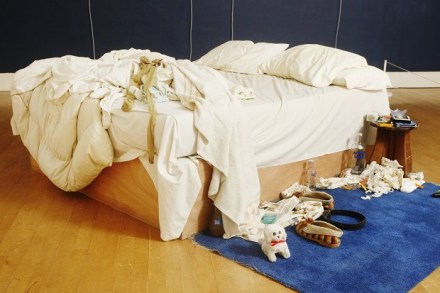
Tracey Emin’s bed is to be sold at auction this summer with a guide price of £800,000 to £1.2 million, although the man who sold it to Charles Saatchi has said it’s priceless. Emin was part of the British art movement in the ‘90s that gave Richard Dorment trouble at dinner parties; this scene is an occupational hazard of being an art critic, he said. ‘The beautiful person I'm sitting next to has bluntly informed me that modern art is rubbish. We're only on the soup, and a long evening stretches ahead. Whether or not we round this dangerous corner depends on my neighbour's tone of voice, which can range from raw aggression to lively interest. If it is confrontation she is after, the rule is: change the subject as fast as possible.

Celebrating the death of smallpox – and a short history of vaccination

From our UK edition

The World Health Organisation is voting on whether to destroy the last few remaining samples of the smallpox virus. Smallpox is the only virus that affects humans that’s ever been eradicated, but it took nearly 200 years from the discovery of the smallpox vaccination in 1796 to eradication in 1979. In the 19th century the British government hesitated about bringing in mandatory vaccination, proposing an amendment to the law that would make allowances for conscientious objectors. The Spectator thought that was a terrible idea. ‘Because these people have the sincerity to sacrifice their own children, we are to let them spread the disease everywhere.

Europe – from hope to scepticism

From our UK edition

In the lead up to next week’s European elections, voters seem to be disenchanted with the European Union. Around a quarter of the seats in the European parliament are expected to go to anti-EU or protest parties – almost double the proportion those groups won in the last elections five years ago. Ukip is in the lead in the UK and nearly a third of Britons support Nigel Farage and his campaign to take power away from Brussels. When the European project first got going in the early 1950s, sceptics had concerns about sovereignty – but the combination of economic enticements with the objective of preventing war in Europe meant that most people thought unity was too good to miss out on.

Britain’s debate on women’s education

From our UK edition

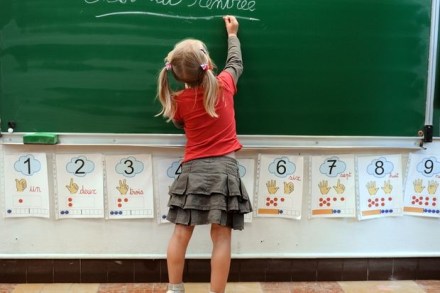
More than 200 Nigerian girls are missing after being abducted from school by Boko Haram militants nearly a month ago. One of the group’s leaders has said he’s planning to sell them as slaves. It’s thought they were kidnapped because the Islamist Boko Haram doesn’t approve of girls’ education. As the evidence mounts that educating girls is one of the best ways of alleviating poverty, extremist ideology means that girls in Nigeria and Pakistan are finding it harder and harder to go to school. The debate has been tamer in Britain, but The Spectator has followed it for the last 150 years or so. In 1865, the magazine called for more funds for the education of girls.

Sugata Mitra interview: ‘A reduction in resources can cause something nice to happen’

From our UK edition

Fifteen years ago, Sugata Mitra, a scientist from Calcutta, conceived of an interesting experiment. He went to a slum in Delhi, installed a computer into a public wall in the manner of a cash machine, then he waited to see what would happen. As he had expected, the local children crowded round and began to experiment — but what he had not expected was how very quickly the kids mastered the basics of computing and began to search the internet for new areas of study. Professor Mitra was astonished by how fast the kids learnt, especially given that they hardly spoke English. But as he observed the group, he realised one reason for their success: they were co-operating; reading in groups; solving problems together.

Is democracy flourishing in South Africa?

From our UK edition

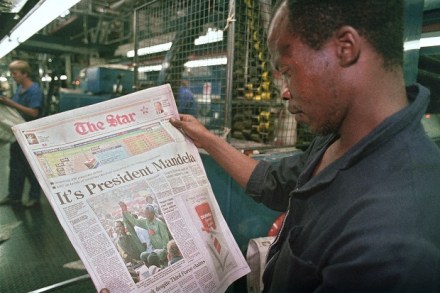
This week South Africa has held events to mark 20 years of democracy. Simon Jenkins, writing after the first election that included black people, was deeply moved: Democracy is an unromantic ideology, but the old girl can still draw a tear. I have never witnessed a political event to compare with the South African election, not even the fall of the Berlin Wall. The silent queues snaking for miles across bush and township were mesmeric…Streets that saw gunfights, burnt homes and necklaced corpses were graced with orderly lines in their Sunday best… Twenty-five million blacks got up one morning, and decided to put their faith in democracy. Nobody foretold this.

Evangelically wishy-washy

From our UK edition

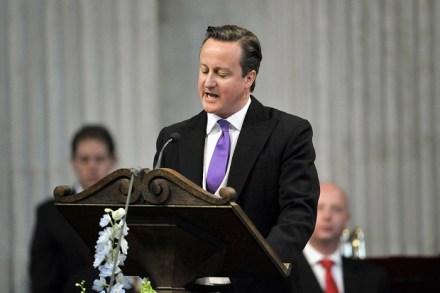
David Cameron has said Christians should be more evangelical “about a faith that compels us to get out there and make a difference to people's lives”. In an article for The Church Times he said he wanted to infuse politics with Christian values such as responsibility, hard work, charity, compassion, humility and love. In recent years politicians have often been shy about talking about religion, reluctant perhaps to invoke the authority of God to score a political point. William Ewart Gladstone had no such anxiety, saying in 1832: “Restrict the sphere of politics to earth, and it becomes a secondary science”.

From Göring to Hemingway, via Coco Chanel – the dark glamour of the Paris Ritz at war

From our UK edition

In Midnight in Paris, Woody Allen did a good job of showing how foolish it is to be obsessed by previous generations who’ve passed through Paris. Going back through the years, each group of geniuses turns out to be just as drunk and silly as the next, albeit with longer cigarette holders. Tilar Mazzeo, who has written biographies of Coco Chanel and the woman behind Veuve Clicquot, has done a similar service with this history of the Ritz. Focusing on the hotel is partly a device to write about the German occupation, but it’s mainly a way of gathering all the old Paris icons under one roof. Marcel Proust, Ernest Hemingway, Marlene Dietrich and Coco Chanel all drank cocktails there, and no one comes out of it well.
The Irish Question, as recorded by The Spectator

From our UK edition

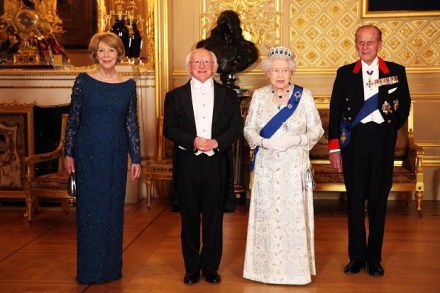
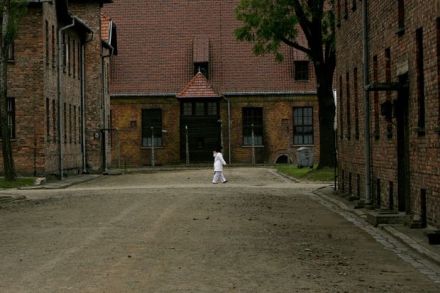
As the Irish president is making the first visit to the United Kingdom by an Irish head of state, some people have asked what’s taken him so long. The Spectator’s archive offers some insights into the two countries’ rocky relationship. The British government has often been criticised for not doing more to mitigate the effects of the Irish potato blight in the 1840s. The Spectator agreed the government could have done more, but also voiced suspicions about one of Ireland’s national champions, Daniel O’Connell. He’s known as The Liberator in Ireland and was one of the early campaigners for the repeal of the Act of Union.

A short history of ‘conscious uncoupling’

From our UK edition

There have been some rocky relationships in the news this year. As well as Gwyneth Paltrow and Chris Martin’s conscious uncoupling, world leaders have also had problems. Vladimir Putin’s divorce has just been finalised, and the newly single Francois Hollande this week welcomed his ex-girlfriend Segolene Royal to the French cabinet. So, first of all some advice from a 1951 Spectator, about how to be happily married. Hugh Lyon, then chairman of the National Marriage Guidance Council, was rather strict: ‘The real trouble about people who want to be happily married is that they don't start soon enough. It is not just a matter of taking thought before getting engaged, nor even of being properly educated for family life.

An infuriated cat, a ‘missing’ nose that isn’t – it’s screwball comedy in the courtroom

From our UK edition

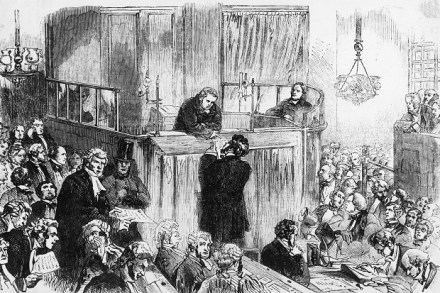
The jury at Max Clifford’s trial have had a tough time of it trying not to get the giggles, as his alleged victims wrangle with medical experts over what constitutes a ‘freakishly small’ penis. In the archive, there are reports of other moments that have compromised the solemnity of a British courtroom. At York in 1836, the assizes were interrupted by a large cat ‘in a very infuriated state’: ‘It rushed from the body of the court upon the counsel-table; it next jumped on the bench; and, after attempting to pay a visit to the Jury, it made a rapid descent on the head of one of the learned counsel, inflicting a scratch upon his forehead with its claws. This outrage was the signal for a general movement among the profession.