Molly Guinness

The moral argument for three-person babies

From our UK edition

If all goes according to plan, the first baby with the DNA of three people will be British, and could be born next year. Mitochondrial transfer could end years of misery for some couples and prevent appalling conditions being passed on to the next generation. Some scientists have raised concerns that it’s such uncharted territory that the babies could be born with disabilities or genetic defects, but the majority are happy that the research has been through necessary reviews. Melanie McDonagh and Isabel Hardman have drawn attention to the breakneck speed with which MPs voted to legalise the procedure. Parliament should act as a national conscience, and we don’t want them essentially outsourcing complex decisions to experts.

The horrors of concentration camps

From our UK edition

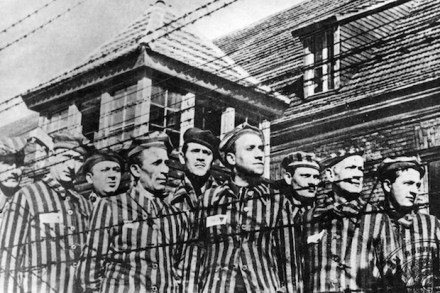
Seventy years on from the liberation of Auschwitz, Roman Kent, who was 12 when he was sent there, wept as he implored the world not to allow anything like that to happen again. 'How can one erase the sight of human skeletons – just skin and bones, but still alive?' he said. 'How can I ever forget the smell of burning flesh?' Paul-Emile Seidman was working as a doctor in Bichat hospital in Paris when the survivors of the concentration camps began to arrive. In a few days our beds were occupied by skeletons…They all seem to be of the same age, whether they are twenty or sixty. Their heads appear tiny—nothing but a fragile skull in which the eyes seem to occupy the whole face.

The perils of being posh

From our UK edition

This week’s wazzock spat hasn’t polarised people in the way that arguments about class often do; most of us have just enjoyed the spectacle of the pop star James Blunt and the Labour MP Chris Bryant exchanging insults. In case you missed it, Bryant said it was a pity the arts were dominated by public school boys like Blunt, who responded in an open letter to The Guardian by calling him a ‘classist gimp’ and a ‘prejudiced wazzock’, and Bryant wrote back to say that Blunt was being ‘blooming precious’. Blunt said he’d become a pop star despite his poshness, not because of it. In 1969, Nigel Nicolson met some girls at a private boarding school who were experiencing a similar kind of posh anxiety.

Life doesn’t care if your misery has a plot – but readers do

From our UK edition

Sometimes writers have to get a memoir out of their system before they can start on their great novel. Will Boast spent years trying to turn his life story into fiction, but eventually gave up and wrote an autobiography. In Epilogue, he describes how his mother died of brain cancer when he was in his first year of college; two years later, his younger brother Rory was killed in a car crash, then his father set about drinking himself to death. Later, he discovered that his father had had two sons from a secret previous marriage, so he tracked them down and made friends. Boast certainly has plenty of material to work with, but this book feels like it’s been written more for himself than for his readers.

Would a dash of hooliganism improve the game of snooker?

From our UK edition

The recent BDO and PDA darts championships were undeniably glorious. Ronnie O’Sullivan is arguing that snooker needs to learn from darts by introducing shot clocks and power play to speed things up. Perhaps another way of boosting snooker’s status would be to bring in an element of hooliganism. John Wells was delighted when a Jamaican crowd started ‘lobbing bottles of Auntie Emily's Home Town Goulash at the soberly clad riot police’ at a cricket match in 1968. In carrying sporting violence into Test cricket they have triumphantly invaded yet another cherished sanctum of peace and fuddy-duddy ritualised conflict…Violence is here to stay.

The joys of unrealistic New Year’s resolutions

From our UK edition

There’s something so depressing about the newspapers’ tips for sticking to your New Year’s Resolutions that to shield yourself from boredom and irritation, you may decide not to make any at all. But they can be rather romantic; the diplomat Harold Nicolson had a tender affection for resolutions, much preferring them to Christmas. How far more delightful, how far less cumbersome, is the search for New Year's resolutions. No careful planning is required for this catalogue; the resolutions trip merrily along together, as gay as a group of children leaving school…One should realise that the ease with which they buzz and settle implies an equal capacity for being able, in the dark days of January, to flit away.

Is torture acceptable if it helps save thousands of lives?

From our UK edition

This week’s Senate Report on the CIA hasn’t settled the question of torture once and for all, as Bruce Anderson has pointed out. When we talk about the heroes of the Resistance, our deepest admiration is reserved for the fighters who didn’t give away their secrets under torture, so the claim that the CIA’s enhanced interrogation techniques did not result in any useful intelligence is rather surprising: it’s too morally neat.

From the archives: Some advice on stripping

From our UK edition

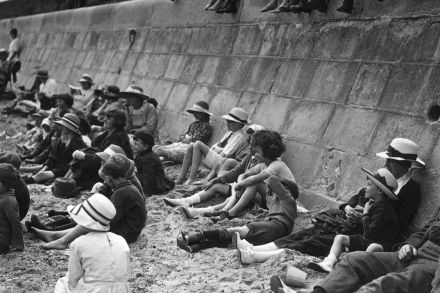
There have been some glorious celebrations of human flesh in the newspapers this week – who could resist poring over the pictures from the Victoria’s Secret catwalk show, or taking a few minutes to study Madonna’s page three shoot? Of course they’ve also spawned an awful lot of articles containing words like empowerment and objectify, so it’s refreshing to see how reasonable The Spectator has always been when it comes to nudity. Take this article from 1932, when local courts were occasionally fining people for walking to the beach in mackintoshes with nothing on underneath but their bathing suits.

Tristram Hunt’s proposals for public schools are nothing new

From our UK edition

The Shadow Education Secretary is suggesting that private schools provide qualified teachers to help deliver specialist subject knowledge to state schools. It’s depressing that they don’t all already have in-house specialists. Not surprising though, according to Terence Kealey, who argued in 1991 that the state should never have got involved in education in the first place: Ever since St Augustine had founded King's School, Canterbury in AD 597, charitable church schools had flourished. They were rarely short of sponsors. The Society for Promoting Christian Knowledge, for example, was raising no less than £10,000 p.a in London alone in 1719. New societies continued to be formed… But the Commons did not believe that the free market could supply sufficient education.

Spectator books of the year: Molly Guinness on the ‘oddly adorable’ New York dentist

From our UK edition

What You Want, or the Pursuit of Happiness by Constantine Phipps (Quercus, £20). This is a deeply eccentric book — a novel entirely in verse set in a theme park that takes in the history of philosophy and the tale of a disintegrating marriage. In a few witty rhyming couplets, my cousin Constantine Phipps can sum up an entire character with all its foibles or a whole system of ethics. And shining through the parade of philosophers, psychiatrists, dead presidents and theme-park attractions is a sense of deep wisdom and reasonableness. Some of the verses, especially towards the end, are truly moving and beautiful. Joshua Ferris’s To Rise Again at a Decent Hour (Viking, £12.99) is narrated by a misanthropic New York dentist.

Armistice, war and remembrance, seen through the pages of The Spectator

From our UK edition

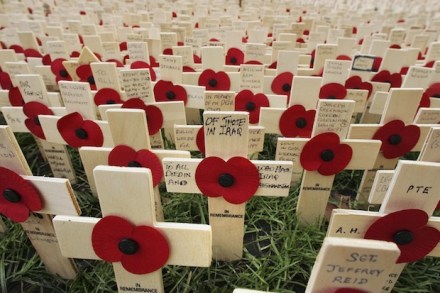
The verse before Laurence Binyon’s ‘They shall not grow old…We will remember them’, is this: They went with songs to the battle, they were young, Straight of limb, true of eye, steady and aglow. They were staunch to the end against odds uncounted, They fell with their faces to the foe. It’s reflected in an article that appeared in a 1917 Spectator under the headline ‘The Splendour of Youth’. We may not say that the development of the noblest qualities in the flower of the nation is a justification of war, but none can deny that it is a sustaining consolation. The war has shown of what British youth is capable. The young men did not know it themselves before; nor did their friends, nor even their fathers and mothers.

Liberate women…from the rotten dictatorial group-think of ‘feminism’

From our UK edition

Good on David Cameron for refusing to wear that hideous T-shirt. Feminists these days spend an awful lot of time telling people what to think and what to wear. It’s easy to forget the heady days of feminism’s innocence, when it lobbied for freedom, the freedom for women to operate telegraphs, for example. The deft fingers of women were to set in action the wires of the telegraph with as much swift dexterity as they do those of the piano. They were to write messages about iron and steel and stocks and shares with the same easy celerity that they corresponded about the last new ribbon or baby's first tooth.

Farewell to Afghanistan (for now)

From our UK edition

Britain has ended combat operations in Afghanistan. The war did topple the Taleban, but it hasn’t got rid of them. It has improved some things in Afghanistan – better roads, better education, better newspapers – but the country is still corrupt, bankrupt and dangerous. When Britain and America decided to go into Afghanistan in 2001, The Spectator ran an editorial entitled Why We Must Win. This is not a war against Islam, but against terrorists who espouse a virulent strain of that religion, a fundamentalism that most moderate Arabs themselves regard as a menace. This is not even a war against Afghanistan, but an attempt to topple a vile regime. The Taleban deserve to be expelled simply by virtue of their inhuman behaviour towards women and dissenters.

Lolita’s secret revenge mission, and other daft theories of literary spite

From our UK edition

Richard Bradford has written more than 20 books of literary criticism and biography. This latest one is a compendium of writers’ feuds and resentments. Reading Literary Rivals is a curious experience; from the quotations and bare facts you can just about make out a version of reality, but it’s fighting so hard against the author’s interpretations that it’s sometimes obscured altogether. It feels as if Bradford has done his research with a baleful monocle pressed to his eye, giving a ghastly pallor to everything he reads. When Dickens read Thackeray’s review of his work, he wrote to thank him, but when Professor Bradford read the same review, he saw nothing but mockery and malice. Nabokov and his friend Edmund Wilson disagreed about communism.

Keep calm and address Ebola: a brief history of pandemics at The Spectator

From our UK edition

Ebola clinics in many parts of West Africa are full, so more and more people are being told to stay at home and take Paracetamol and fluids if they become infected. It means if someone in your family gets Ebola, you all have to stay in the house, which is effectively a death sentence. At the moment, the disease is killing 70 per cent of the people it infects, but that’s likely to go up. People who need other medical treatment can’t get it, and in Sierra Leone 40 per cent of farmland has been abandoned. Western governments are building secure military encampments for health workers, fearing civil unrest and angry mobs. In 1898, there were plague riots in India after authorities brought in sanitary measures, including quarantine camps.

Clacton to Ukip, Britain’s anti-politics were long in the making

From our UK edition

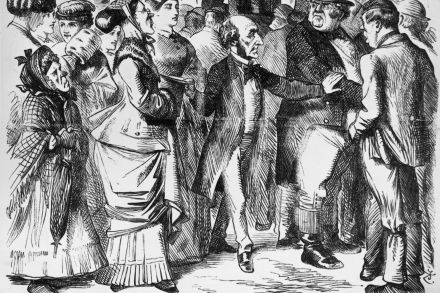
Talking to people in Clacton-on-Sea this week, there was a sense that, as much as they thought there were too many people in Britain, they felt politicians had it too easy. Over and over again people told me that MPs in Westminster didn’t understand working people. Politics is becoming less about policy and more about empathy; voters just don’t want to be ruled by aliens. In a famous article in 1955, Henry Fairlie described the chasm between the aliens and normal people: I have several times suggested that what I call the 'Establishment' in this country is today more powerful than ever before.

The Spectator: defending drunkenness since 1828

From our UK edition

University terms are getting started and this year’s Freshers may be glad to read that The Spectator has always staunchly supported the right to get drunk. In the late 19th century, the magazine took issue with the Permissive Bill, which would allow individual parishes to vote on whether or not to ban the liquor trade. ‘Unless the swallowing of alcohol is a mania in se, a positive offence against morals, then the advocates of the Permissive Bill have no logical standing at all, are simply trying to enable the majority to oppress the minority into acting on the majority's opinion in a matter of indifference.

Hostage taking has paid in the past — but it has won Isis nothing

From our UK edition

The three recent beheadings by the so-called Islamic State have been peculiarly, barbarically pointless. IS was asking western governments to leave them be to wreak havoc across the Middle East; it was an unrealistic demand. But rather than toning down their behaviour to a level perhaps tolerable, they simply executed their hostages. By murdering two American journalists and a British aid worker IS have demonstrated to the world that they don’t mind killing people, in case anyone hadn’t noticed, but they haven’t won any PR points, let alone any concessions. In 1995, Robin Harris pointed out that, whatever we might like to believe, hostage taking pays. Western liberalism is the creed of happy endings.

In praise and reproval of the elderly: slow, itinerant, violent – and revolutionary

From our UK edition

It’s been a good week for old people. On Friday, the Chilean poet Nicanor Parra celebrated his 100th birthday, and at midday people in Chile stopped whatever they were doing to read one of his poems. On his annual visit to Skegness, a 104-year-old man called Sid Pope was delighted when he was welcomed by local dignitaries and the town’s mascot (a jolly fisherman). Meanwhile at Sadler’s Wells, the over-sixties are limbering up for a dance festival for oldsters. And in Iraq aged Peshmerga warriors who retired years ago are returning to the army to help fight the Islamic State. Recent Spectator writers have been rigorously unsentimental about old people. Theodore Dalrymple was grimly intrigued when he met a truly evil woman in her eighties.

Escape from the hothouse

From our UK edition

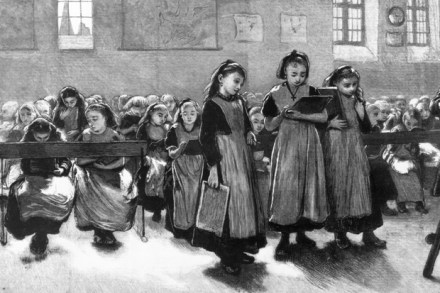
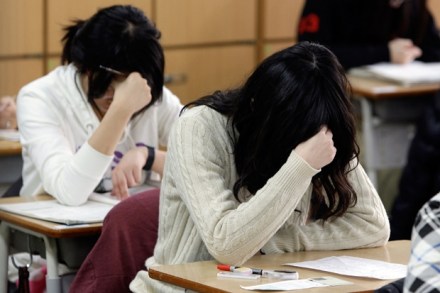
South Korea’s education system puts us to shame. Last year the BBC tested a group of 15- and 16-year-olds with some questions from a GCSE maths paper; they all finished in half the time allowed, four scored 100 per cent and the other two dropped one mark. It’s the kind of performance most British teachers and parents can only dream of, so at first it’s surprising that a London girls’ school has opened up a branch in South Korea. The North London Collegiate (NLCS) is one of Britain’s top schools, but it still looked like they were going to have a lot of competition on their hands when they chose South Korea for their first international franchise.