Mitchell Reiss

Mitchell Reiss is chairman of the International Churchill Society and a Distinguished Fellow at the Royal United Services Institute.

Michael Gove, Mary Wakefield, Mitchell Reiss, Max Jeffery and Nicholas Farrell

32 min listen

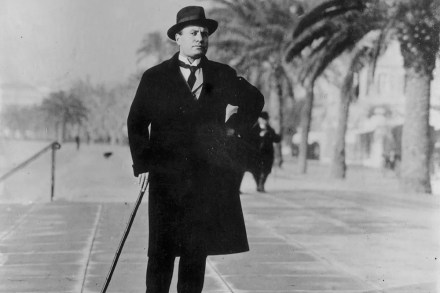
On this week’s Spectator Out Loud: Michael Gove offers up some advice to Keir Starmer (1:33); Mary Wakefield examines the rise of the ‘divorce party’ (7:28); Mitchell Reiss looks at the promise and peril of AI as he reviews Genesis: Artificial Intelligence, Hope and the Human Spirit, a collaboration between the former CEO of Google Eric Schmidt, the former chief research and strategy officer at Microsoft Craig Mundie, and the late US Secretary of State Henry Kissinger (13:52); Max Jeffery listens to The Armie HammerTime Podcast as the actor attempts to reverse his spectacular downfall (20:45); and, Nicholas Farrell reveals the time he got drunk with the ghost of Mussolini (25:24).  Produced and presented by Patrick Gibbons.
Time is running out to tackle the dangers posed by AI

Is this what it felt like in the months before August 1914? Or during the years leading up to September 1939? The discussion around artificial intelligence produces a deep foreboding that we are in the grip of forces largely beyond our control. Are we sleepwalking towards disaster? That is the feeling I have after reading Genesis, a collaboration by Eric Schmidt, the former CEO of Google, Craig Mundie, the former chief research and strategy officer at Microsoft, and Henry Kissinger, who died, aged 100, soon after completing this book. They have crafted a holistic analysis of the social, political, psychological and even spiritual impacts that a superior machine intelligence would have for humanity.  We are broadly familiar with AI’s current and future benefits.

The danger of America’s long presidential handover

As the US presidential race rollercoasters towards its finale, many Americans are already bracing themselves for a close and highly contested vote. The uncertain outcome of the election is just the beginning of what could be a fraught period for the United States and the world. There are 76 days for mischief, or worse, between this year’s election date and the transition to a new president being sworn in on 20 January. Traditionally, this period has been used by the president-elect to piece together a cabinet, reward staffers and large campaign donors with senior positions, refine policy priorities, entertain foreign officials eager to ingratiate themselves, and studiously avoid any hard commitments that may handicap the administration down the road.

An American’s love letter to Britain

My wife and I relocated to the UK a few months ago after spending the past 37 years in the United States, and I cannot stop comparing the two countries. I oscillate wildly between my irrational exuberance at America’s superior market efficiencies and my sheer amazement at how orderly and polite you all are. These reactions surprise me, as I am hardly new to these shores. I attended graduate school at Oxford, worked for a while in London, married a beautiful and talented Essex girl (TOWIE indeed), and have consulted for the UK government in Northern Ireland for the past eight years. But now I actually live here, there are so many things that I am seeing with new eyes and deeply appreciate about the UK. Let’s start with the major ones. No guns.