Miranda France

The Jane Austen of Brazil

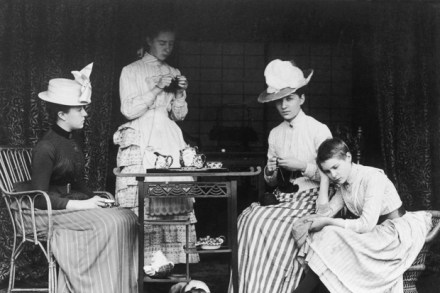
When the American poet Elizabeth Bishop arrived in Brazil in 1951, she expected to spend two weeks there and ended up staying 15 years, a time of emotional turbulence and creative productivity. Bishop wrote poetry and prose and translated Latin American writers, including Octavio Paz, but this project, suggested by friends as a way to improve her Portuguese, is something completely different. It’s a teenager’s diary, written between 1893 and 1895 in the remote mining town of Diamantina, the highest town in Brazil. It’s a delightful, funny and revealing memoir, a little bit of Austen in the Americas. Helena’s real name was Alice Dayrell, (the pseudonym came from her English relations).

Frank Johnson, a magnum and me

The 1996 Spectator/ Shiva Naipaul Memorial Prize was won by Miranda France. Here, she shares her experience of winning the award and visiting the Spectator office and then-editor Frank Johnson to get her £3,000 cheque.   Miranda France has since had four books published. Her Shiva Naipaul-winning entry, 'Bad Times in Buenos Aires', can be read here. To find out more about the Shiva Naipaul award, and how you can enter, click here.     I clearly remember the day I won the Shiva Naipaul prize in 1996. My husband and I were renting a place off London’s south circular, a slightly grim maisonette where cushions were attached to the chairs with velcro. Often we got attached to the velcro too, and it could feel like a really big effort to get off the sofa.

Bad times in Buenos Aires – Shiva Naipaul Prize, 1996

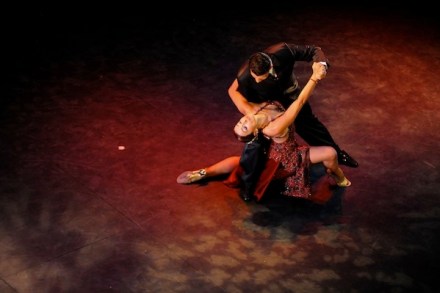
Miranda France won the Spectator/ Shiva Naipaul Memorial Prize in 1996. Her winning essay (below) formed the heart of her first, eponymous book. Two years later she wrote her second book, 'Don Quixote's Delusions', which the Sunday Times described as ‘stimulating to the point of intoxication.’ To learn more about the Shiva Naipaul prize for travel writing, and how you can enter, click here.   Bad times in Buenos Aires  ARGENTINES have a word for the way they feel: bronca. An Italo-Spanish fusion, like most Argentines themselves, the word implies a fury so dangerously contained as to end in ulcers. People feel bronca when they wait for an hour to be served at a bank, and then the service is bad because the cashiers have bronca too.

The full gothic treatment

Over the coming weeks you are sure to hear a good deal about The Thirteenth Tale. The author of this novel, a teacher of French literature living in Harrogate, has already netted 1.5 million pounds in advance royalties from British and US publishers alone. Foreign deals and film rights will surely garner much more. Comparisons have been drawn with Daphne du Maurier and some classics of the gothic genre. Diane Setterfield herself says that she turned to writing after ten years of reading French literature made her hanker for the English novels of the 19th century. If a literary estate agent were to show you around a classic gothic mansion, you might demand certain ‘period features’.

Sporting in the spa

George Orwell painted an unappetising picture of the typical book reviewer: He is bald, has varicose veins and wears spectacles, or would wear them if his only pair were not chronically lost. If things are normal with him he will be suffering from malnutrition, but if he has recently had a lucky streak he will be suffering from a hangover. It is the job of this bedraggled creature to invent reactions towards ‘books about which he has no spontaneous feelings whatever’. I’m not sure why Orwell’s hapless reviewer came to mind while I was reading The Wives of Bath. ‘Chick lit’, a new and popular genre, apparently invented in Britain, is not aimed at balding, varicose, depressed men.

Great — but uneven like the Andes

Pablo Neruda had three houses in Chile, the most lovely of them at La Isla Negra, on the Pacific coast near Valparaiso. This house is Neruda’s love-song to the sea that inspired so many of his poems. Like a stranded boat on the beach, its timbers creak, a collection of figure-heads loom from the rafters and miniature ships in bottles are lined against the windows.

The mind at the end of its tether

When I interviewed him about his novel Asylum, Patrick McGrath described himself as a ‘psychological novelist’, adding that he would be ‘very happy to spend the next 30 years working through different species of madness’. That was eight years ago, and he seems to be keeping to schedule. Asylum and then Dr Haggard’s Disease were richly praised for their portrayals of dangerous obsession and the loss of sanity. This new novel examines the maddening effect of life in the tropics on two volatile artists and their godforsaken daughters.

When seeing is not believing

Waking Raphael has all the ingredients one could hope for from a thriller set in Italy: corruption, art, religion, food and very nasty, mafia-style murders. Among the characters are a prim English art-restorer ripe for unbuttoning, a bimbo television presenter, a dodgy aristo, and a butcher who sings as he slaughters. The result is imaginative and entertaining but also highly informative about Italian history and the murky world of the Renaissance (did you know that poor Umbrians sometimes sent their sons to be gelded by the area’s skilled slaughterers in the hope that they might find fortune as castrato singers? In the context of this novel it is information one receives with a shudder). The novel is set in the Umbrian city of Urbino, in 1993.

The Paraguayan way

John Gimlette and I both won this magazine's Shiva Naipaul Memorial Prize (awarded for unconventional travel writing) and we both got book deals as a result. Winning the prize changed my life and perhaps it changed Gimlette's, too. We should toast The Spectator regularly for our good luck. I wrote about the inhabitants of Buenos Aires and found them to be sophisticated, intellectual, vain and angry, spluttering with rage in shop queues. Gimlette has written about Paraguayans, who, he says, are surprisingly lacking in anger. They aren't vain, sophisticated or intellectual, nor do they seem to have any unifying national characteristics.