Michela Wrong

Michela Wrong is the author of Do Not Disturb: The Story of a Political Murder and an African Regime Gone Bad, published by HarperCollins.

Will colonialism’s psychological legacy ever cease to be a source of pain?

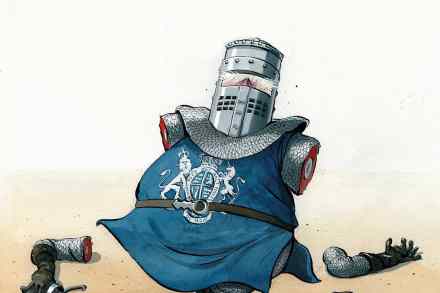
Whenever the legacy of colonialism comes up for debate, a Monty Python sketch springs to mind. It’s the one from Life of Brian in which Reg, the leader of the People’s Front of Judea, exclaims: ‘What did the Romans ever do for us?’ Corrected, he eventually concedes: ‘OK, apart from the sanitation, the medicine, education, wine, public order, irrigation, roads, a fresh water system, and public health, what have the Romans ever done for us?’ It’s a brilliant exchange. But as Simukai Chigudu’s beautifully written memoir testifies, one that misses an essential point, in that colonialism’s bequest extends beyond infrastructure and administrative systems. Its most abiding – if tantalising – legacy has been psychological and emotional.
A late Congolese ruler with a new following

From our US edition

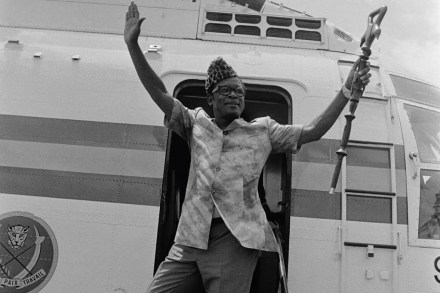
At the exit of the National Museum in Kinshasa, capital of the Democratic Republic of Congo (DRC), is a whiteboard for visitors to leave their comments. On that whiteboard, full of underlinings and exclamation marks, are messages like this: “Thank you for your life.” “Thank you for our national unity.” “You left behind a glorious historical legacy. We plan to follow in your footsteps.” A giant photograph of the man the messages refer to hangs in the museum’s main hall as part of its new exhibition, a man in dark glasses and leopard-skin toque, smiling down at his people. More than 28 years after fleeing into exile, Mobutu Sese Seko, once known as “The Leopard” and “The Great Helmsman,” is back in the limelight in the DRC.

The danger of becoming a ‘professional survivor’

It was a relatively minor episode in a period marked by the killing of two African presidents, months of massacres in churches, schools and sports stadiums, a biblical exodus by much of the Hutu population, a cholera outbreak in refugee camps established in the neighbouring Democratic Republic of Congo (DRC), and a rebel takeover of the country. But it mattered a great deal to Beata Umubyeyi Mairesse, the author of this book, as she was one of the children evacuated in June 1994. At 15, she did not meet the criteria stipulated by the convoy’s organisers, so she and her mother hid under a tarpaulin sat upon by the smaller children as the trucks worked their painstaking way through a series of road blocks manned by Hutu militiamen hungry for fresh victims.

The psychological toll of being constantly tracked and harassed

In late 2018 a Saudi journalist living in exile in Canada, who liked to work out in between recording YouTube critiques of his government, ordered some protein powder online. When a text message landed on Omar Abdulaziz’s smartphone notifying him of a DHL delivery, he clicked on it without hesitating. The portrait Deibert paints is a million miles away from the Cold War binary world of John le Carré The DHL invitation was fake digital bait. By clicking on it, Abdulaziz had enabled Pegasus, a spyware program designed by a now infamous Israeli company, NSO Group.

Never underestimate the complexities of African history

What does it take to bury an outdated argument? The thought occurred while reading Motherland, one of a series of recent books seemingly haunted by the ghost of Hugh Trevor-Roper. Back in 1964, Trevor-Roper, an expert on the English Civil War and the Third Reich, made the mistake of opining on African history. There was nothing much to teach, he said, other than the history of Europeans in Africa. ‘The rest is largely darkness... And darkness is not a subject for history.’ He then added insult to injury with a snitty reference to the ‘unrewarding gyrations of barbarous tribes’. These were silly remarks; but Trevor-Roper was the man who later authenticated the Hitler diaries, so not above the odd clanger.

The truth about the Rwandan genocide

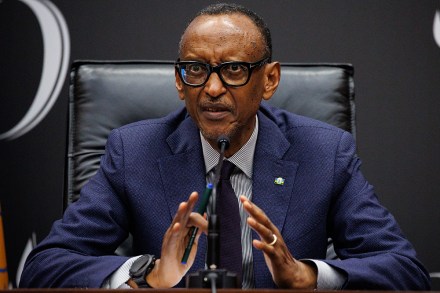
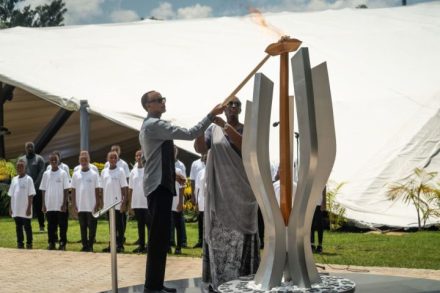
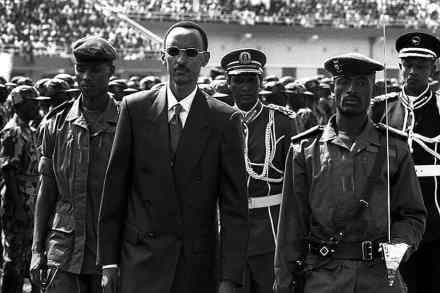
Today a solemn ceremony takes place in Rwanda’s capital. President Paul Kagame, flanked by international dignitaries – including our own development secretary Andrew Mitchell – will light a flame of remembrance at Kigali’s genocide memorial, where the bones of more than 250,000 people are interred. ‘Kwibuka’ (‘Remember’ in Kinyarwanda) – this act of commemoration – happens every April. But this time it’s special. It has now been 30 years since the genocide, and is thus an opportunity to assess the tenure of one of Africa’s most controversial leaders. Cue a flood of pre-prepared broadcasts, articles and declarations from journalists, politicians and institutions.

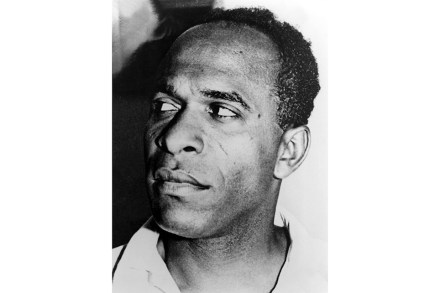
The fresh, forceful voice of Frantz Fanon

‘If I’d died in my thirties, what would be left behind?’ is the question that keeps coming to mind reading this timely new biography of Frantz Fanon, the psychiatrist and philosopher who became an icon to leftist revolutionaries across the globe. ‘Would I want history to judge me by what I wrote at 36?’ For that was the absurdly young age at which Fanon died of leukaemia in 1961, leaving two key works to his name: Black Skin, White Masks and The Wretched of the Earth. Not a huge legacy, then, in sheer numbers of words.

Why were 80,000 Asians suddenly expelled from Uganda in 1972?

The mantelpieces of many an Asian family in Leicester and London, it is said, sport two framed photographs. One is of Idi Amin, the African dictator who expelled them from Uganda; the other is of Edward Heath, the prime minister who allowed them in. ‘This double gratitude,’ writes Lucy Fulford, ‘says thanks for throwing us out and thanks for taking us in.’ Asians filled teddy bears with jewellery and baked diamonds into snacks taken aboard their last flights out If the expulsion from ‘the Pearl of Africa’ of 80,000 Asians was the most traumatic experience of their lives, many also retro-actively recognise it as the best thing that ever happened.

Michela Wrong, Emily Rhodes and Cindy Yu

21 min listen

This week: Michela Wrong asks whether anywhere is safe for Kagame's critics (00:58), Emily Rhodes charts the rise of fake libraries (07:54), and Cindy Yu reviews a new exhibition at the British Museum on China's hidden century (15:25).  Produced and presented by Oscar Edmondson.

Is anywhere safe for Paul Kagame’s critics?

After weeks of travelling – first Paris, then Kinshasa – I was looking forward to my evening at L’Horloge du Sud in Brussels. Known for its poisson liboké (fish wrapped in banana leaf) and other African specialities, the restaurant is popular with the city’s African diaspora. I’d been invited by a Pan-African thinktank to discuss my book on Rwanda. It was not to be. The day before, I got a call from the Benin journalist due to chair the event. He sounded rattled. The restaurant owner, he said, had been receiving complaints from pro-government Rwandan groups in Brussels, along with threatening emails and anonymous calls from Rwanda itself.

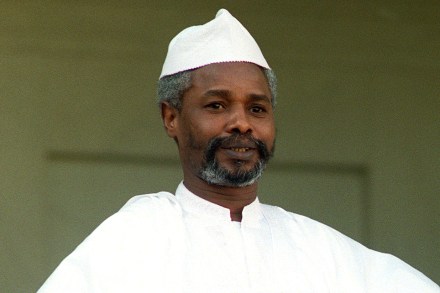
The butcher of Chad who died in a private Senegalese clinic

Recent years have not been kind to the campaign for universal justice. The notion that some crimes are so serious that perpetrators should be hunted down and prosecuted irrespective of where the atrocities were actually committed has taken something of a beating since the International Criminal Court (ICC) opened for business in the Hague in 2002. Just this August, William Ruto, a politician once charged with crimes against humanity by the ICC, was voted president of Kenya, wresting power from Uhuru Kenyatta, who had faced identical charges before the same court. A lawyer accused of witness-tampering in their cases then died in what looked very like a poisoning. So much for ending impunity for the ethnically targeted violence that swept Kenya after its 2007 polls.

How much longer can Boris Johnson keep going?

41 min listen

In this episode: Is Boris going to limp on? In her cover piece this week, Katy Balls writes that although Boris Johnson believes he can survive the partygate scandal, he has some way to go until he is safe, while in his column, James Forsyth writes about why the Tories have a summer of discontent ahead of them. They both join the podcast to speculate on the Prime Minister’s future. (00:44)Also this week: Why is the Rwandan government taking our asylum seekers?We have heard the arguments behind the Home Office’s plan to send migrants to Rwanda. But why is Rwanda up for this arrangement?

Priti Patel is playing into Paul Kagame’s hands

If President Paul Kagame has been tracking the furore over Priti Patel’s plan to send asylum seekers to Rwanda, he’s been doing it on the hoof. Kagame moves constantly these days: the news broke while he was en route to Barbados after a visit to Jamaica. In the past two months he has been to Congo-Brazzaville, Kenya (twice), Zambia, Germany (twice), Egypt, Jordan, Qatar, Mauritania, Senegal and Belgium. How the president of one of Africa’s poorest nations can afford all this travelling is a puzzle, and the fact that his Gulfstream jet is supplied by Crystal Ventures, his Rwandan Patriotic Front’s monopolistic investment arm, raises interesting budgetary questions.

Fraser Nelson, Michela Wrong and Mark Mason

25 min listen

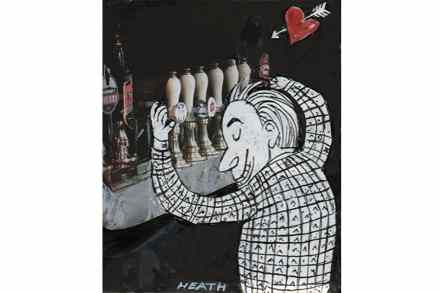
On this week's episode, Fraser Nelson starts by reading the leader. Britain has a labour shortage and our immigration system is a mess - why not have an amnesty for migrants without legal status? (01:00) Michela Wrong is on next. She found herself in the sights of Rwandan President Paul Kagame after she wrote a book exposing the abuses of his regime. (07:05)Mark Mason reads his piece to finish the podcast. Ordering at the bar isn't just about buying a drink, he says.

When will Britain wake up to the horror of Rwanda’s President?

I doubt that Paul Kagame would have me assassinated, but it became clear to me late on Sunday afternoon that, at the very least, I am in his sights. As President of Rwanda, Kagame became the toast of the international aid community – and collected billions of dollars in aid. But is this money well spent? My book, Do Not Disturb, takes a closer look at how Kagame operates. He doesn’t appreciate the attention. My book kicks off with the strangling of Patrick Karegeya, Kagame’s spy chief, in a Johannesburg hotel in late 2013 — almost certainly on the President’s orders. It then explores the campaign of harassment, intimidation and murder that Rwanda has waged against dissidents scattered from Africa to Europe and Scandinavia to North America.

Pleading with the emperor

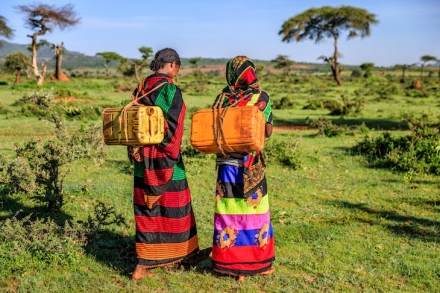
Yetemegn was barely eight years old when her parents married her off to a man in his thirties. Before she could become a spouse, he first had to raise her. Her education involved beatings when she left the house, even if it was only to borrow shallots from a neighbour. At 14, she gave birth for the first time. Successive pregnancies came like waves. Some of the children died or succumbed to diseases for which the only known treatment was prayer; most survived. She was a grandmother by her early thirties. In Ethiopia, it’s a story that ranks as utterly banal. Millions of women have lived it and millions will continue to do so, development programmes and government policy papers notwithstanding.

Spectator Books of the Year: John le Carré examines his own life

Back in 2006, David Cornwell, aka John le Carré, hired me as guide for his first trip to the Democratic Republic of Congo (DRC), to research The Mission Song. Evenings were spent on the terrace of the Orchids Hotel in Bukavu, watching pirogues languidly traverse Lake Kivu, ice cubes clinking in respective glasses of Scotch. It was easily the most entertaining ten days of my life, despite the stonking hangovers. Cornwell proved to be a thespian manqué. The wry, extremely funny anecdotes about his career as diplomat, spy and writer, his charming conman father, his peripatetic childhood and his encounters with the likes of Yasser Arafat, Richard Burton and Rupert Murdoch were all gloriously enriched by the fact that he can do all the voices.

Rwanda’s new tragedy

Never lighthearted, my African political exile friend sounded particularly lugubrious on the line from Washington. His voice was low and pensive. For the past few months, he said, he’d been hearing of plans hatched by the regime back home for his assassination. ‘They are very gruesome, very gruesome indeed.’ It was not the first time. In the past he’d always passed the details on to the FBI, which had also called him up several times when they thought he was in danger. This time he hadn’t bothered. ‘I always ask them: ‘What are you doing to protect me?’ and they say, ‘Well, if you see anything suspicious, call 911.

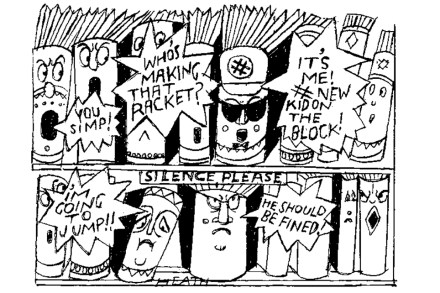
Spectator books of the year: Michela Wrong discovered a real-life picaresque tale

The highlight for me this year was the South African writer Jonny Steinberg’s A Man of Good Hope (Cape, £18.99), hugely topical at a time when Europe is contemplating what it means to be a refugee. I’ve repeatedly found myself recommending it to friends. Steinberg is a novelist camouflaging himself as a non-fiction writer, and his story of Somali tradesman Asad’s meandering journey across Africa — from the clan violence of Mogadishu via the slums of Nairobi and Addis Ababa to the townships of Cape Town and their vindictive, xenophobic attacks — is extraordinarily poignant. A real-life picaresque tale, it doesn’t contain a single dull sentence. Shame (Weidenfeld, £14.

King of Kings: The Triumph and Tragedy of Emperor Haile Selassie I of Ethiopia

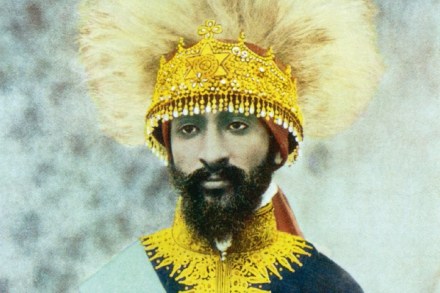
Great men rarely come smaller than Haile Selassie. In photographs, the golden crowns, pith helmets and grey felt homburgs he often donned can’t conceal the fact that he is the shortest man in the room. It didn’t matter: for the 44 years of his reign — with a five-year interruption engineered by Benito Mussolini’s invading troops — he was effectively lord of all he surveyed. Ethiopia’s current government, established by a former Marxist rebel group, has always harboured mixed feelings towards Tafari Makonnen, as he was baptised.