Michael Tanner

Gustav Mahler

From our UK edition

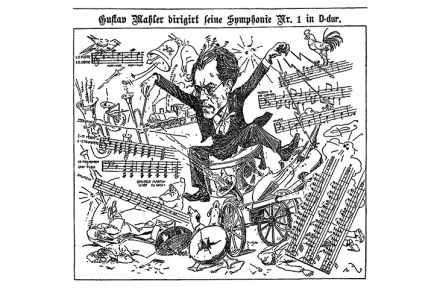
When I began listening to music seriously, in about 1950, I had read about Mahler but wasn’t able to hear any — almost none of his works was available on 78s, apart from the celebrated pre-war recordings of the Ninth Symphony and Das Lied von der Erde, under Bruno Walter, and they were way beyond a teenager’s pocket. Reading about his symphonies — vast, anguished, tormented, ecstatic — I was desperate, and when I finally managed to hear that recording of the Ninth I was suitably overwhelmed, as I still am. During the 1950s I was able, slowly, to hear, though not to get to know, the rest of his output, and responded with prepackaged ecstasy.
Dressed to thrill

From our UK edition

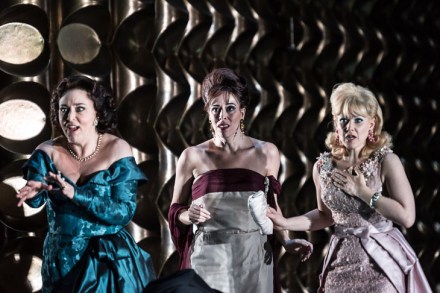
Mitridate, re di Ponto was Mozart’s fifth opera, written and first produced when he was 14 years old. Absolutely amazing. Now we’ve got that out of the way, what about the work? Is it worth reviving, and if so how? The Royal Opera evidently thinks so, since it is reviving for the second time Graham Vick’s production from 1991.

Twin peaks | 22 June 2017

From our UK edition

In an essay called ‘Wagner’s fluids’, Susan Sontag concludes, ‘The depth and grandeur of feeling of which Wagner is capable is combined in his greatest work with an extraordinary delicacy in the depiction of emotion. It is this delicacy that may finally convince us that we are indeed in the presence of that rarest of achievements in art, the reinvention of sublimity.’ For a performance of any of Wagner’s mature works, either we feel we are in the presence of sublimity or the whole thing is a frustrating waste of time, as almost all performances are.

Myths and morals

From our UK edition

Handel’s Semele, one of the most enjoyable operas (or opera-oratorio, if you insist) in the repertoire, is, in its upshot, an enchanting display of thoughtless hedonism and a warning about what may happen, or even what is bound to happen, if you take hedonism too far. Wormsley, to which Garsington Opera moved several years ago — this was my first visit — seems the ideal place to stage it. The opening of the season was a perfect early-summer evening, the countryside looking gorgeous, refreshments and supper delicious and prompt, the atmosphere friendly, and the performance in many ways excellent.

Death wish

From our UK edition

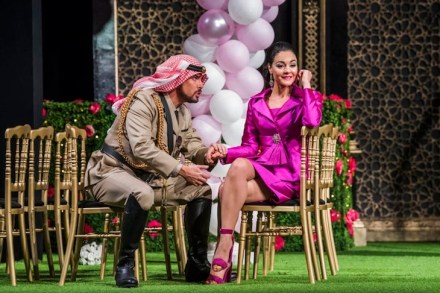
Anyone who thinks they have experienced absolute boredom, or even doubts that such a state can exist, should go to Glyndebourne’s first offering of the season, Cavalli’s Hipermestra. The first two acts, played without any break, last for 130 minutes, the third for a mere hour. The audience broke into its normal rapturous applause at the end, no doubt to reassure itself that it still existed. This opera of the inordinately productive Cavalli has been revived only once since its first outing in 1658, and I can only hope that its present resurrection is temporary and its second death final. Arriving at Glyndebourne, we saw a couple of Arabian newlyweds strolling round the grounds, then another pair, then another, at which point my companion twigged that they were part of the act.

Mild things

From our UK edition

English Touring Opera is playing safe this spring, with Tosca and Patience, and was rewarded, in Cambridge at least, with full houses. Its Tosca has been moderately reviewed, and that is about what it deserves. There is only one set, designed primarily with the tableau of chorus and soloists at the end of Act One in mind. Not at all atmospheric, it has to conjure up for us a church, a room in a palace, and dawn at the Castel Sant’Angelo, but scarcely succeeds with any of them. The soloists have a heavy weight of responsibility, which only the Tosca of Paula Sides fully managed. She is fine-looking, slim, good at acting temperamentally, and a powerful singer, though a slightly short-breathed one.

Beyond comprehension

From our UK edition

The London Philharmonic Orchestra’s ‘Belief and Beyond Belief’ season is drawing to a close, without making it in any degree clearer what it was supposed to be about. Many major works have been played, and the season will end with Eschenbach conducting Beethoven’s Ninth. But then any series of concerts with a pretentious name ends in that way; in fact, I have devised several imaginary series of that kind myself, and will gladly forward the details to any orchestra looking for a grandiose rubric. I would be grateful if whoever devised the name of this current season would tell me what ‘Beyond Belief’ means.

Fallen angel

From our UK edition

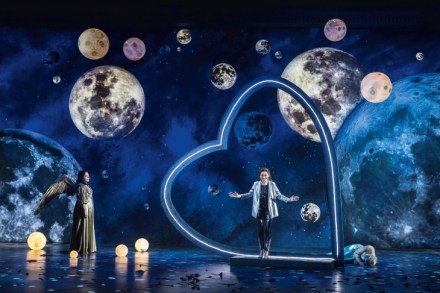
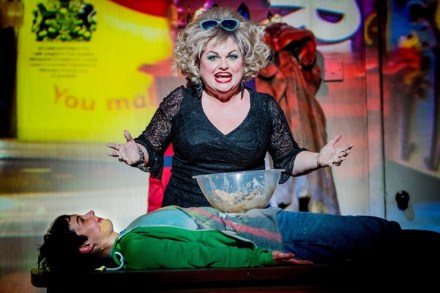
The Adèsives were out in force at Covent Garden last Monday for the UK première of their hero’s third opera, The Exterminating Angel, unable to contain their rapture until the piece was over, yelling their excitement even at the interval. Thomas Adès’s opera is closely based on Buñuel’s film of 1962, with the text adapted by the composer and Tom Cairns, who also directs the production, which was first seen last July in Salzburg, with a cast mainly identical to the Royal Opera’s. I hadn’t seen it before Monday, but have listened several times to my pirate recording and hoped that seeing it (with indispensable surtitles) would clarify the opera for me and help me to sort out my responses.

Take a bow

From our UK edition

Monteverdi 450 — the Monteverdi Choir and English Baroque Soloists’ tour of his three operas to 33 cities across two continents — began with his penultimate work Il ritorno d’Ulisse in patria, at Bristol’s Colston Hall. It was a marvellous occasion, uplifting and entertaining. I hadn’t been to the Colston Hall before, and was most impressed by its acoustics. Apparently it is due to have a £48 million makeover next year (call that £75 million) but it seemed new and with agreeably hard seats which counteracted any tendency the hall’s tropical heat might have to induce drowsiness. The opera was performed in a semi-concert version, which I am more and more inclined to hope is opera-in-general’s way forward.

Fatal distraction

From our UK edition

I don’t think that I have left a theatre many times feeling as depressed and irritated as after the Royal Opera’s Die Meistersinger, in the new production by Kasper Holten. The run of the Royal Opera’s recent productions of Wagner — appalling Tristans, a dire succession of Parsifals, mediocre Rings — hadn’t prepared me for so deep an abyss of irrelevant idiocy as this. I thought I had reached the stage where, having seen so many fearful operatic productions of works I love, I was able to enjoy myself purely on account of the music, almost inured to what I was seeing.

Statue-esque

From our UK edition

Why set a supremely great play to music? The Winter’s Tale, the play of Shakespeare’s that I love most, has much of his most beautiful and intelligent poetry, as well as some of his most condensed and puzzling lines. Ryan Wigglesworth, in several of the innumerable interviews about his new opera, says he has been obsessed by the play for decades. So have I, but if I were a composer I think that would be a reason for leaving well alone. Wigglesworth has made his own libretto by using snippets of Shakespeare, enough to remind one of the original, but frustrating, most of the time, in producing a strip-cartoon version of the text. The idea, presumably, is to amplify this telegrammatic digest with the music.

Tough love | 23 February 2017

From our UK edition

Frank Martin is one of those composers whose work seems to survive only by virtue of constantly renewed neglect. His quite large body of work is well represented in the CD catalogues, but rarely performed in the UK. One of his most powerful works is Le Vin herbé, though his fully-fledged opera on The Tempest also deserves revival. Welsh National Opera, ever adventurous, has mounted a staged version of Le Vin herbé, and despite its being more of a cantata than an opera and in English. The text is based on Joseph Bédier’s version of the Tristan myth, so some reference to Wagner, in discussing it, is inevitable.

A whirlwind life

From our UK edition

The dust cover features one of the best-known caricatures of Richard Wagner, his enormous head in this version opened like a boiled egg, with a photograph of Simon Callow either emerging from his skull or sinking into it. The idea is that rather than just writing another book on this over-biographised figure, Callow will let us know what it was like actually to have been him, something he also tried in his one-man show at the Linbury Theatre, Inside Wagner’s Head. Callow tells us that he has been a lifelong Wagnerian, but that only in the last four years has he investigated him as a man, reading the most important biographical and, especially, autobiographical works, together with a fair number of critical studies.

Losing the plot | 9 February 2017

From our UK edition

Fully to enjoy Opera North’s new production of Humperdinck’s Hansel and Gretel you need to take a trinocular perspective on it, but you can enjoy it a lot anyway. You could be mystified, if you don’t know the story, by the setting and action, as indeed I was some of the time despite having recently watched a straightforward account of it from Vienna on DVD, and having seen countless productions of it. So I would advise at least reading the plot. As so often with contemporary operatic productions, the synopsis in the programme book bears only a passing resemblance to what you see on the stage.

Bruckner by numbers

From our UK edition

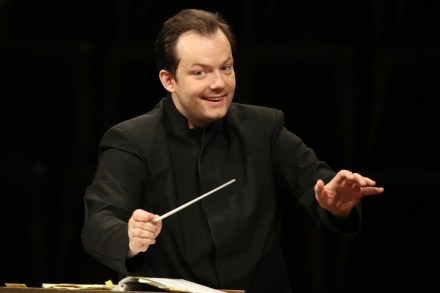
It used to be said that Bruckner composed the same symphony nine times, whereas, thanks to the comparative frequency of performances now, we know that his nine numbered symphonies are as different from one another as Beethoven’s nine. Nothing could make that clearer than the performances of the Fifth and the Ninth given by the Philharmonia Orchestra under Andris Nelsons, three days apart, at the Royal Festival Hall. The Fifth, as befits its stature and length, was given alone. It is Bruckner’s most demanding symphony both to listen to and to conduct. Nelsons is still, I think, at an early stage in his Brucknerian pilgrimage, and his account of the work was not a complete success, but then very few are.

Death rattle

From our UK edition

The Barbican website warns us that Ligeti’s opera Le grand macabre ‘contains very strong language and adult themes’. The strong language consists of the four-letter words that are known to everyone and used by most people, and the adult themes are sex/love and death, which this opera has in common with almost any non-comic opera you can think of, and without which the genre would certainly never have been conceived or added to over more than four centuries. But while love and sex have often also provided the stuff of comedy, death is another matter, and presumably it is Ligeti and Michael Meschke’s robust treatment of this (superbly translated into English by Geoffrey Skelton) that we might need to be warned about.

Callas would have found it a very big bore: Met Opera Live’s Nabucco reviewed

From our UK edition

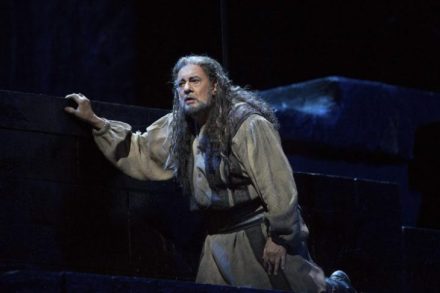
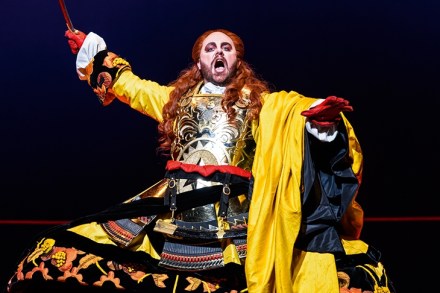
Nabucco Met Opera Live Callas, writing to her husband Meneghini from Naples in 1949, where she was performing a run of Verdi's Nabucco for the only time in her life, said 'the opera itself has beautiful music, but it's also a big bore!' That seems just, but it goes on being done fairly often, mainly on the strength of the chorus 'Va, pensiero', Italy's unofficial national anthem, and of Abigaille's Act III aria and the meaty part for the title character, who is provided with one of the relatively few baritone mad scenes, and ends up as a convert to the Hebrew god. The plot is rather complicated, considering there are only five main characters, who are locked in relationships of concealed fatherhood, elaborate deceptions and religious hostilities.

Gardeners’ world

From our UK edition

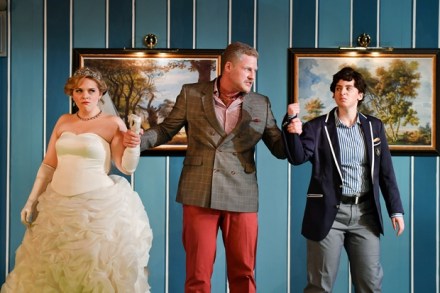
For the past few weeks I have been working my way through Decca’s gigantic set of every note Mozart wrote and quite a few that he probably didn’t — 220 CDs in a monumental hernia-inducing box. Chronological listening is not recommended. Mozart was technically a phenomenon, of course, but he didn’t reach maturity of expression, with one or two extraordinary exceptions, until he was in his early twenties. La finta giardiniera (or Die Gärtnerin aus Liebe, in the composer’s singspiel version — both are included in the Decca set) was written when he was 18, by which time he was exceptionally fluent in composition. Uncut it lasts three and a half hours — why do people always go on about how long Wagner’s operas are?

From first to last

From our UK edition

As the dreaded season of goodwill approaches, the Royal Opera has mounted two revivals of pieces that are interestingly contrasted: Puccini, in the first characteristic and successful opera of his career, though with a lot still to learn, and Offenbach, with the incomplete last work of his career, but a radical departure from all the successes he had had before, and a work that is ultimately a noble flop. Les Contes d’Hoffmann is one of the Royal Opera’s most venerable productions, dating from 1980 and having its eighth revival, with William Dudley’s elaborate sets.

Another fine mess

From our UK edition

I wonder why ENO has invested in a new production of Berg’s Lulu, when the previous one, which we first saw in 2002 and then in 2005, was so brilliant as to be virtually definitive. (Of course, that last word is anathema to operatic ‘creative’ teams, for obvious reasons.) Not that this new one, directed by William Kentridge, isn’t good too, though it is excessively busy, compounding the hyperactivity of the score and action. It doesn’t do anything to clarify matters, though almost all the questions one is left asking are ones that the composer-librettist has set.