Michael Tanner

Lessons in refrigeration

From our UK edition

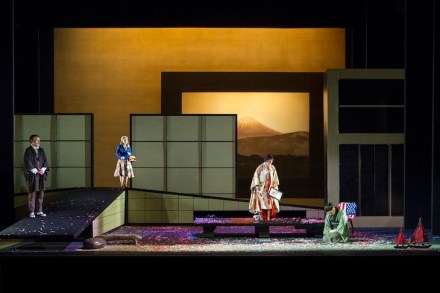
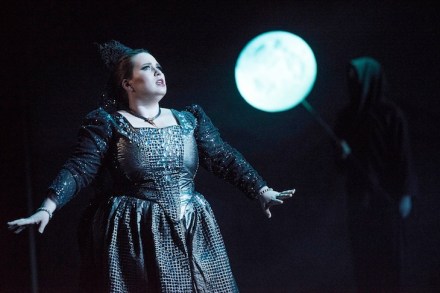
There is no such thing as a moderately good performance of Madama Butterfly, or, to be more precise, it’s not possible to be slightly or rather moved by a performance. As with some of Shakespeare’s plays, and most of Wagner’s music-dramas, one is either shaken and overcome, or refrigerated and indifferent. So it’s sad to report that Glyndebourne’s first ever Butterfly, toured in 2016 but now settling on home ground, is a stolid, undistinguished affair, with some decent moments and much that seems routine and a fair amount that is worse than that. Is it a good idea to update an opera that is set in Nagasaki to the 1950s, when the city was still reeling from the effects of the second atom bomb?

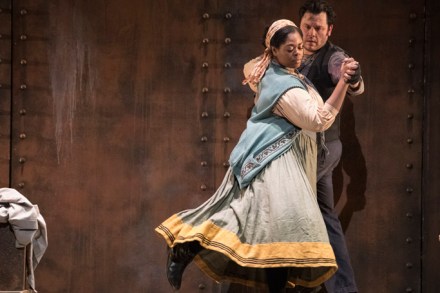
English Touring Opera’s Il tabarro was the most convincing I have seen

From our UK edition

Il tabarro & Gianni Schicchi Cambridge Arts Theatre English Touring Opera brought its production of two of the operas in Puccini's Il trittico to Cambridge recently, as well as Figaro, which unfortunately I wasn't able to go to. The production and performance of Il tabarro was the most convincing I have seen. Usually I feel that with this opera Puccini is worthily doing something different from any of his previous operas, and incidentally creating the only work which can justly be said to be verismo – a term ludicrously used for such markedly untruthful works as  Andrea Chenier and Adriana Lecouvreur, as well as Puccini's earlier works.

Hot and seedy

From our UK edition

Salome is my favourite opera by Richard Strauss, the only one where there is no danger, at any point, of his lapsing into good taste, which there is to some degree in all his other operas, even if only momentarily. With Salome, from the opening quiet clarinet slithering upwards, and the luckless young Syrian Narraboth, later in the work to stab himself to death without anyone noticing, remarking for the first of many times how beautiful the princess Salome is tonight, we know we are in for a mischievous orgy of lust and violence. The work’s chromaticism isn’t used to make particular expressive points but to create and sustain an atmosphere so hot and seedy that we are prepared for anything to happen.

The lady vanquishes

From our UK edition

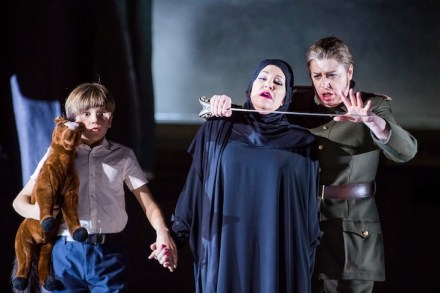
At last, a great time at the Royal Opera: a magnificent performance, in every way, of Verdi’s Macbeth, curiously but pleasantly beginning at 3 p.m. This is the fourth outing of Phyllida Lloyd’s 2002 production, and the finest by a long way, though each of the previous series had its merits. If my memory serves me rightly, and it very likely doesn’t, Daniel Dooner, the revival director, has made significant changes to the production. What previously struck me as tolerable seemed, in this revival, thoughtful, imaginative and genuinely helpful to the drama, qualities that I had given up hope of experiencing in a major opera house. Oddly, that meant that the striking unevenness of this opera became more evident, with the blame to be laid firmly at the composer’s door.

Love Handel

From our UK edition

Handel’s Rinaldo has not been highly regarded even by his most ardent admirers. I have never understood why — even less so after the recent performance at the Barbican, with stunning forces, including the English Concert, under the inspiring direction of Harry Bicket. Certainly the plot is absurd, with a last-minute mass conversion of Muslims to Christianity in order to bring things to a happy conclusion. But there are only six main characters in complicated relationships with one another, turning on their love and hatred like a switch, and going through the usual hoops; that is what Handel operas are. The penny has dropped with me, almost too late, that it is a complete mistake to look for characterisation in Handel.

Gallic pieties

From our UK edition

My two attempts to see Poulenc’s Dialogues des Carmélites at the Guildhall School were frustrated by the weather. Forced back on to my DVDs and CDs — vinyl, even — I took the opportunity to survey some of the manifestations and investigations of religious feeling in 20th-century French music. I began with Vincent d’Indy’s Fervaal, an opera he composed in 1895 which used to be referred to as ‘the French Parsifal’. Refreshing my memory of the plot by looking it up in The New Grove Dictionary of Opera, I was struck by the writer’s insistence that, while the work is heavily influenced by Wagner, ‘[d’Indy] had a better sense of dramatic pacing than Wagner, and more essential humanity’.

No sense of direction

From our UK edition

The new production of Bizet’s Carmen at the Royal Opera has received mixed reviews. It shouldn’t have done. They should have been unmitigatedly hostile, indignant, outraged — except that all those reactions would almost certainly have delighted the director, Barrie Kosky. What might please him less is the accusation of tedium, of making what often seems an unsinkable work into a colossal bore. This Carmen lasts for three-and-a-half hours and feels as long as that after the first 20 minutes. The whole and only set is a stage-wide flight of 16 steep stairs, up and down which the cast has to run at frightening speeds. As Jakub Hrusa, the conductor, dashed into the opening bars, hectic rather than brilliant, one wondered what might be added on-stage.

Get Carter | 1 February 2018

From our UK edition

Das Rheingold at the Royal Festival Hall was, all told, a disappointment, but it might not have been had there been one or two more rehearsals, and a replacement of one of the singers. Vladimir Jurowski plans to perform the whole Ring cycle in due course with the LPO, but he needs to remember that memories are still very fresh indeed of Opera North’s transcendently wonderful performance at the same venue in 2016. That showed, among other things, that you can semi-stage the Ring cycle with some imaginative lighting, a minimum of meaningful movement and no props.

Body language | 25 January 2018

From our UK edition

One of the Royal Opera’s greatest virtues is the care it takes with its revivals, even those that are virtually annuals, such as Jonathan Kent’s Tosca, the unnecessary replacement for Zeffirelli’s classic production. Kent’s version, with elaborate sets by the much-missed Paul Brown, was unveiled in 2006 and now has its ninth revival. It is a sloppy affair — three stars thrown together on the stage and told to get on with it. Since there is plenty of furniture around, and two precipitous flights of stairs, that isn’t as easy as it would be in any other UK production.

Les Troyens

From our UK edition

Grade: A-   Berlioz’s Les Troyens, one of the greatest operatic masterpieces, manages to be neglected even if it is quite often performed. The vast reputations of the most popular operatic composers seem to grow ever larger with the years, but Berlioz somehow always needs defending. Listening to this latest CD set, ‘live’ from Strasbourg, I was struck as always by the magnificence of much of the music, and the characteristic lurches into banality or irrelevance that account, I suspect, for the work being so often underrated.

Passion killer

From our UK edition

The late arch-Rossinian Philip Gossett regarded Semiramide as a neoclassical work, vaguely and alarmingly suggesting to me a musical equivalent of Canova, a sculptor I detest. Actually, I don’t think the terminology is helpful. Nor is Semiramide monumental in the way that the programme book suggests. There is a notable lack of ensembles and of anything except accompanied recitative and arias. The duets are as rare as in Handel, and come as just as great a relief. The culminating duets in Act Two are as balm to the soul. They even remind one that there is such a thing.

Wholly gripping: Glyndebourne on Tour’s Hamlet reviewed

From our UK edition

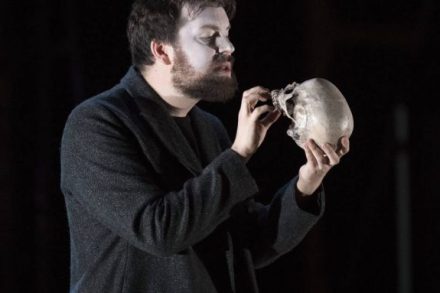
Hamlet Theatre Royal, Norwich, and touring until 1 December I had mixed feelings about Brett Dean's Hamlet as I went into the Theatre Royal in Norwich and mixed feelings when I came out of it: unfavourable, largely, on the way in and favourable, largely, on the way out.  I am still left wondering why a composer would want to set this amazing, flawed and most memorable of tragedies to music, but more than one hundred have, so presumably they must feel they can add something, or alter something, or even improve it in some way.

Unclear Handeling

From our UK edition

ENO has revived Richard Jones’s production of Handel’s Rodelinda. It was warmly greeted on its first outing in 2014, though Jones was, as he remains, inveterately controversial. The opera itself seems to command universal admiration among Handelians, and widespread approval among those of us who have never quite managed to call ourselves that. The most unequivocally positive response I’ve had to it was at Glyndebourne in 1998, where it was produced as if it were an early black-and-white film, and superbly conducted by William Christie. Viewing the DVD has confirmed my warm feelings about it.

Small wonders

From our UK edition

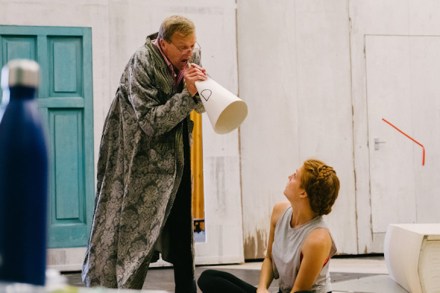
It has been a reasonably good week for peripatetic opera-loving female-underwear fetishists. In La bohème at Covent Garden Musetta slipped out of her knickers and swung them round, as everyone, except me, mentioned in their reviews; and now, in Leeds, in the first of Opera North’s ‘Little Greats’, what laughter the actors in the drama got was from Tonio and others trying on Nedda’s bra. This new production of Pagliacci by Charles Edwards, sadly under-attended, was possibly too ingenious. It is set in a rehearsal room, and we see the first day of rehearsals and then the final run-through. It kind of works, but anyone unfamiliar with the opera would have found it mysterious, and some of the time I felt I was on shifting sands.

DIY Bohème

From our UK edition

The Royal Opera’s one production that, it has always confidently been claimed, need never be replaced has been replaced. John Copley, vintage 1974, has given way to Richard Jones, in a production full of his trademark quirkinesses and mischief, though he is respectful enough of Bohème to keep his irony out of sight for the last two acts. Stewart Laing is the designer, with a separate movement director (I thought that’s what directors did) in Sarah Fahie. Snow falls continuously before the curtain rises, but the set of Act One inevitably strikes you as a gauntlet thrown down to Copley. Flat 7b, which is the abode of the bohemians, is nothing more than roof beams, with a single chair, no bed, a tiny stove that produces plumes of smoke emitted from a tall chimney.

Ave, Maria

From our UK edition

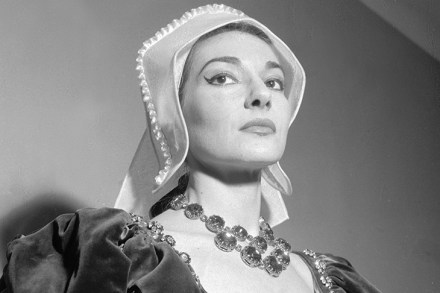
Anyone who thinks that an artist’s life is irrelevant to their artistic achievement, and for that matter anyone who thinks that it isn’t, must be given pause by Maria Callas. It is now exactly 40 years since her death and everything she recorded is available on multiple pressings. But of the huge body of material that has appeared about her, only a small percentage concerns itself with the recordings. There are innumerable biographies, memoirs, refutations of memoirs, studies of the influence of her fluctuating erotic life on her singing, her meteoric rise, the Great Decade, the tragic decline, and so on. All of these might be fascinating, but they draw attention away from the only thing that mattered about her: her art.

Bowled over by Bruckner

From our UK edition

The two Proms concerts given on consecutive evenings by the Royal Concertgebouw Orchestra were well planned: a short opening work, and after the interval a long and demanding symphony. Moreover, the big symphonies were by Bruckner and Mahler, to the latter of whom this orchestra has been devoted almost since its foundation. Willem Mengelberg, the orchestra’s chief for 50 years, was the only conductor, Mahler said, that he could trust with his works, and the orchestra has been headed by a succession of distinguished Mahlerians ever since.Bruckner, meanwhile, entered the orchestra’s repertoire in a major way in the 1950s, and has been there ever since.

Mistaken identity | 24 August 2017

From our UK edition

This year’s Lucerne Festival is given its identity by having as its theme ‘Identity’. Since the word doesn’t mean anything, that isn’t a lot of help. But does a festival have to have a theme? Surely a glut of fine performances of great, or at least interesting, music is enough? Michael Haefliger, the icy artistic director, clearly doesn’t agree, and offers two accounts of identity, one in the general festival booklet, where the emphasis is on refugees and national identity, the other in the programmes for the individual concerts, where he is more metaphysical, and concludes with the hope that by listening to the chosen music we will ‘rediscover ourselves entirely’. The results could be catastrophic.

The morality of conducting

From our UK edition

Now he is the greatest figure for me, in the world. [Toscanini is] the last proud, noble, unbending representative (with Salvemini) of the Risorgimento & 19th-century ideals of human liberty... not just a great conductor but a symbol of discipline and spontaneity in one — the most morally dignified & inspiring hero of our time — more than Einstein, (to me) more than even the superhuman Winston [Churchill]. That is Isaiah Berlin writing in 1952, two years before his hero’s last concert, and as quoted by Harvey Sachs in this magnificent biography. Though Berlin’s encomium is extreme, it isn’t unrepresentative of the kind of things that were being written about Arturo Toscanini for many years before his death in 1957.

New kid on the block

From our UK edition

The new Grange Park Opera at Horsley is amazing, as everyone who visits it must agree. In less than a year a pretty large, comfortable theatre, with excellent acoustics and a large stage, has been erected from nothing, and among the first productions is one of Die Walküre, a demanding work in all respects, and one which, when it is largely successful, as the performance I went to was, provides an exalting and moving experience such as few works can. You probably need to be as difficult and abrasive a personality as Wasfi Kani to bring it off, but there is no doubting that she has. The ‘creative team’ has as its most important members Stephen Barlow conducting, despite his concurrent work at Buxton; Stephen Medcalf directing, and Jamie Vartan designing the sets.