Michael Simmons

Michael Simmons

Michael Simmons is The Spectator's economics editor. Contact him here.

Who do voters trust most on the economy?

From our UK edition

12 min listen

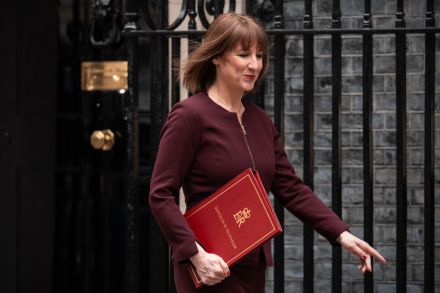
Chancellor Rachel Reeves has been in Washington D.C. this week at the IMF’s spring meetings, and will meet US Treasury Secretary Scott Bessent tomorrow. Cue the ususal talk of compromising on chlorinated chicken. Not so, reports the Spectator’s economics editor Michael Simmons, who explains that Reeves may offer a reduction in long-standing tariffs already imposed on American cars. But, it’s been a bad week of economic news for the Chancellor as the IMF downgraded the UK’s growth forecast.  We’re also one week away from the local elections – Starmer’s first big test since last year’s general election.
Britain’s borrowing is spiralling out of control

From our UK edition

Britain borrowed nearly £152 billion in the financial year to March – almost £21 billion more than at the same point in the last financial year, according to the Office for National Statistics (ONS). The latest public finance figures reveal that borrowing in March was the third highest since records began in 1993. Crucially, it’s also nearly £15 billion more than what the Office for Budget Responsibility (OBR) had expected for this point in the financial year. The £9.9 billion headroom Rachel Reeves left herself at the Spring Statement already looks to be in serious doubt. The current budget deficit, which is borrowing to fund day-to-day spending and the metric used to judge the Chancellor’s ‘ironclad’ fiscal rule, was nearly £75 billion.

Why the IMF has downgraded UK growth

From our UK edition

The waves from Donald Trump’s tariff upheaval continue to ripple through the global economy. The International Monetary Fund (IMF) has downgraded its forecasts for global growth to 2.8 per cent for this year and 3 per cent for 2026, down from previous estimates of 3.3 per cent for each year. The UK isn’t immune: the IMF expects British growth to come in at 1.1 per cent this year and 1.4 per cent next year. US growth, meanwhile, falls to 1.8 per cent followed by 1.7 per cent. These cuts were widely expected, but they sharpen the focus on the costs of the current trade tensions. The downward pressure on demand is likely to reduce inflation risks that the Bank of England had worried were becoming sticky.

Britain is not out of the woods on rising inflation just yet

From our UK edition

Price rises have unexpectedly eased. The Consumer Price Index rose by just 2.6 per cent in March, down from 2.8 per cent the month before and slightly lower than analysts’ expectations of 2.7 per cent. The figures, just published by the Office for National Statistics, show that the slowdown was driven by falling fuel costs and flat food prices compared to a year ago. Most of the fall was due to lower prices at the pumps, with both petrol and diesel down by 1.6p last month. Meanwhile, prices in some sectors continued to rise – most notably in education, where costs jumped by 7.5 per cent year-on-year, largely due to the introduction of VAT on private school fees.

The Bank of England’s mission to tame inflation just got harder

From our UK edition

Much to the concern of the Bank of England, British workers are continuing to bank inflation-busting pay rises. Figures just released by the Office for National Statistics (ONS) show that over the three months to February, the average worker received a pay increase of 5.6 per cent. Remove inflation and that works out as a 2.8 per cent real-terms rise.  The persistence of strong pay growth is likely to alarm the nine members of the Bank of England’s Monetary Policy Committee. They have repeatedly warned that they consider sustained wage increases to be a key sign of entrenched inflation. The committee has previously said it wants to see pay growth slow before resuming interest rate cuts.

Tariff turmoil: the end of globalisation or a blip in history?

From our UK edition

17 min listen

Globalisation's obituary has been written many times before but, with the turmoil caused over the past few weeks with Donald Trump's various announcements on tariffs, could this mark the beginning of the end for the economic order as we know it? Tej Parikh from the Financial Times and Kate Andrews, The Spectator's deputy US editor, join economics editor Michael Simmons to make the case for why globalisation will outlive Trump. Though, as the US becomes one of the most protectionist countries in the developed world, how much damage has been done to the reputation of the US? And to what extent do governments need to adapt? Produced by Patrick Gibbons.

China is hitting back with even more tariffs

From our UK edition

China has retaliated against Donald Trump by raising duties on all American imports to 125 per cent from 84 per cent, declaring that it has no interest in responding further to what it calls a ‘joke’ policy. The higher rate will come into force from tomorrow. The announcement comes after the White House’s clarification that tariffs on Chinese exports have climbed to 145 per cent this year – a move China’s commerce ministry described as ‘economically meaningless’ and a tool for ‘bullying and coercion’. The world’s two largest economies exchange goods worth around $700 billion annually. Beijing has made it clear that it considers American goods effectively unmarketable within its borders.

The economy is growing!

From our UK edition

11 min listen

Finally, some good news for your Friday: the economy is growing! Just when everyone seems to be revising down expectations of growth, the Office for National Statistics (ONS) estimates that GDP grew by 0.5 per cent in February. It also revised January’s figures upwards to give growth for the last quarter of 0.6 per cent, and annual growth of 1.4 per cent. It looks – for now – that the Reeves recession has been put on hold and that Labour's growth agenda could be working. That said, Labour cannot afford to celebrate just yet. There is reason to believe the figures could be overstated, and there are some trust issues with the ONS – the government last week announced a review of its ‘performance and culture’.

Xi escalates China’s trade war with Trump

From our UK edition

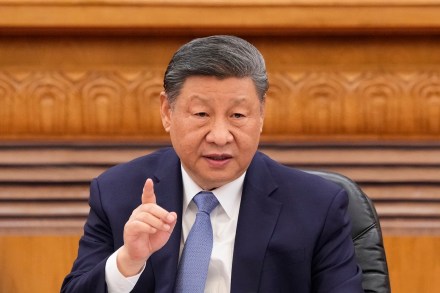
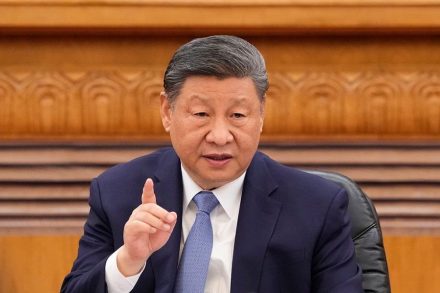
China has announced it will impose 84 per cent tariffs on US goods imports from tomorrow, as the war of words and levies between the world’s two largest economies escalates. The new measures –  50 per cent on top of the 34 per cent already imposed by Beijing's finance ministry – are a like for like increase for the 50 per cent increase levied by Trump overnight, taking the US’s total tariff on Chinese goods to 104 per cent. The FTSE100 – which was already down more than 2.3 per cent this morning – plunged even further to 3.6 per cent following the midday news.  Beijing had vowed a ‘firm and forceful’ response to Trump’s additional tariffs yesterday, declaring, ‘The Chinese people’s legitimate right to development is inalienable’.

What happened at the Liaison Committee?

From our UK edition

16 min listen

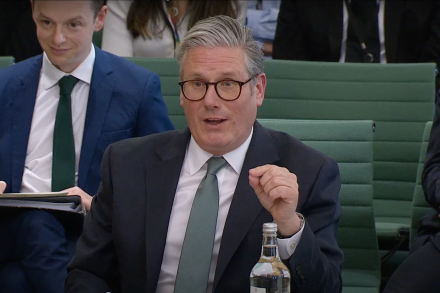
Parliament is about to go into recess for the Easter holiday and so – as is customary – Keir Starmer sat in front of the Liaison Committee this afternoon, where he was grilled on topics including tariffs, defence and welfare. This comes on the day when there has been a momentary reprieve in the markets, which experienced a modest bounce – most likely as a result of suggestions from Trump that he is willing to negotiate with China. Markets seem to have priced in that these tariffs could be negotiated down, but that is of course a big 'if'. The question remains for Keir Starmer: what more can he do to protect the UK against economic meltdown? And will he have to break his fiscal rules to do so? Oscar Edmondson speaks to Isabel Hardman and Michael Simmons.

Are Reeves’s fiscal rules really ‘ironclad’?

From our UK edition

This afternoon, Keir Starmer recommitted to not raising income tax, VAT or employee National Insurance for the duration of this parliament. At the same time, he reiterated his support for Rachel Reeves’s ‘ironclad’ fiscal rules. Are both possible? Answering a question from GB News’s Chris Hope at a visit to the Jaguar Land Rover factory in the West Midlands the Prime Minister said: ‘We made that commitment in the manifesto and we were absolutely clear about it going into the Budget and the Spring Statement, and that is a commitment we’ve made and a commitment we will keep.

Is Trump stoking a global recession?

From our UK edition

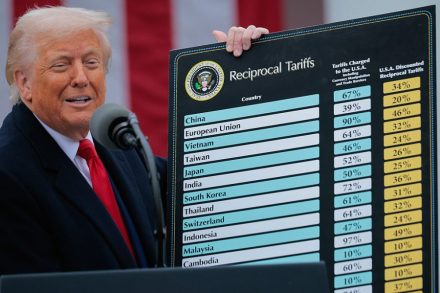
This week, Donald Trump steered the global economy away from the free trade era that has underpinned growth for decades. Within hours of his announcement of tariffs on what looked like a bookmakers board from Aintree, China had responded with its own: a 34 per cent tax on all US imports starting next Thursday. The markets were horrified. US stocks suffered their worst week since 2020, with the S&P 500 shedding over $5 trillion in value. Over the course of the week, the index fell just over nine per cent. For context: at this point after their election wins, the S&P was up 9 per cent for Obama’s second term, 10 per cent for Trump’s first, and 19 per cent under Biden. Under Trump 2.0, it’s now down 7 per cent. The fear of contagion is spreading.

This could be the largest US tax rise in half a century

From our UK edition

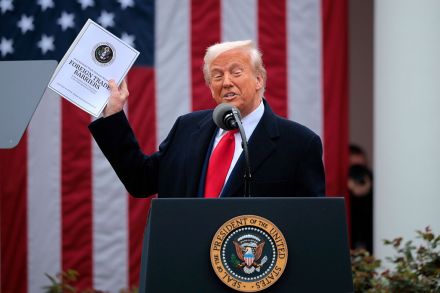
Across the world, markets are plunging as they respond to the global tariffs Donald Trump unleashed from the White House rose garden last night – with the president’s top economist describing the falls as ‘short-term bumps’. The pound passed $1.30 for the first time in six months while stocks in Tokyo fell 4 per cent. On opening, the FTSE 100 fell nearly 2 per cent, despite the slightly more favourable 10 per cent levy we face compared to the 20 per cent Trump hit Europe with. How bad could these ‘bumps’ get for the US though? Trump returned to office promising tax cuts. But however he may spin his new protectionist tariffs, many are clear that in fact they are huge tax rises.

Trump prepares to take his tariff war global

From our UK edition

In just a few hours, Donald Trump is set to take his tariff war global. At 9 p.m. UK time (4 p.m. in Washington), the American President will unveil a sweeping set of trade tariffs, on what he’s dubbed ‘Liberation Day’. What exactly Trump plans to announce remains unclear, but reports suggest everything from global reciprocal tariffs to the enforcement of the 25 per cent duties originally aimed at Mexico and Canada could be on the table. As Katy Balls noted in today’s Lunchtime Espresso, any hopes in Whitehall of securing a UK exemption have all but evaporated. The focus has now shifted from lobbying to damage control, as the economic fallout begins to bite.

Welcome to Terrible Tuesday

From our UK edition

14 min listen

Britain’s real economic pain starts today. Overnight, the cost of living has jumped once again: energy, water, broadband, public transport, TV licences – all up. So too are council tax bills, capital gains, and vehicle taxes. And that’s before we even get to the slow stealth march of fiscal drag and the impact of World Tariff Day which could wipe out Rachel Reeve's newly restored headroom. Jonathan Reynolds was the unlucky minister on the broadcast round this morning trying to defend this increasingly bleak picture, is there any good news?  James Heale speaks to Katy Balls and Michael Simmons.  Produced by Oscar Edmondson.

Welcome to Terrible Tuesday

From our UK edition

Britain’s real economic pain starts today. Overnight, the cost of living has jumped once again: energy, water, broadband, public transport, TV licences – all up. So too are council tax bills, capital gains, and vehicle taxes. And that’s before we even get to the slow stealth march of fiscal drag. Last week, the Office for Budget Responsibility warned that inflation will hover close to 4 per cent this year – driven by higher food and energy prices – and won’t fall back to the Bank of England’s 2 per cent target until 2027. One of the biggest culprits? Energy. Ofgem’s latest price cap hike – up 6.4 per cent – adds £111 to annual dual-fuel bills, bringing the average to £1,849.

Can we trust our economic data anymore?

From our UK edition

Britain’s economic outlook may have been skewed by bad data – and it could be costing billions. Wage data pored over by the Bank of England’s Monetary Policy Committee (MPC) is set to be revised in the coming weeks – and the implications could be serious. The nine economists who decide the country’s interest rates – currently at 4.5 per cent – have consistently said they want to see pay rises slow before they can be sure that the inflationary shock brought about by Covid has worked its way out of the system fully. But wage growth remains strong. Private sector wages have gone from below 5 per cent in early autumn last year to over 6 per cent in the latest release – meaning inflation-busting pay rises.

Britain narrowly escapes recession – again

From our UK edition

The Office for National Statistics (ONS) has just confirmed that the economy ‘grew’ by 0.1 per cent in the last three months of 2024. Its final estimate for the last quarter of last year confirms that Britain’s economy continues to float just above recession territory. The very modest growth in the final quarter was driven by the services sector, also 0.1 per cent, which outweighed a 0.3 per cent contraction in construction. On a per-head basis, GDP fell by 0.1 per cent. Each quarter from October 2023 to June last year had GDP growth revised upwards by 0.1 percentage points, with the ONS’s Chief Economist, Grant Fitzner, saying: ‘Today’s updated GDP estimates indicate that the economy grew slightly more strongly in the first half of the year’.

Are tax hikes on the horizon?

From our UK edition

Tax rises are almost certainly coming, Britain’s leading fiscal think tank has said. Those taxes are most likely to fall on pensioners and the wealthy, according to Paul Johnson, director of the Institute for Fiscal Studies (IFS). ‘There is a good chance that economic and fiscal forecasts will deteriorate significantly between now and an autumn Budget. If so, she will need to come back for more, which will likely mean raising taxes even further,’ the IFS director said. The tax burden is already just a year away from reaching its highest level in history – beating levels not seen since 1948. Reeves continues to blame a ‘changing world’ for the economic woes we now face The Chancellor has returned her headroom against her ‘ironclad’ fiscal rules to £9.

Reeves goes on the defensive

From our UK edition

14 min listen

It’s the morning after the afternoon before, and Rachel Reeves has just finished her broadcast round, where she has faced tough questions and negative splashes in the papers. The Daily Mail brands Reeves ‘deluded’, while the Daily Telegraph warns of ‘five years of record taxes’. The Guardian splashes with ‘Reeves accused of balancing books at expense of the poor’, while the Financial Times says, ‘Tax rise fears cloud Reeves’s fiscal fix’. She is navigating two main issues: first, the additional welfare reforms have caused disquiet in the Labour Party, with a potential rebellion on the horizon; second, the conversation has already turned to whether she will have to return for further tax rises in the autumn.