Michael Simmons

Michael Simmons

Michael Simmons is The Spectator's economics editor. Contact him here.

Why is Britain’s economy so unhealthy?

From our UK edition

20 min listen

The Spectator’s economics editor Michael Simmons is joined by the outgoing boss of the Institute for Fiscal Studies Paul Johnson and the CEO of the Resolution Foundation Ruth Curtice to understand why Britain’s economy is in such a bad place. Given it feels like we are often in a doom loop of discussion about tax rises, does this point to a structural problem with the British economy? And why are the public’s expectations so out of line with the state’s capabilities? Michael, Paul and Ruth talk about whether it’s fair for Labour to claim they’ve been ending austerity, the extent to which the effects of the covid-19 pandemic are still being felt and if tax rises are inevitable.
Reeves needs to tell the public that they’re wrong

From our UK edition

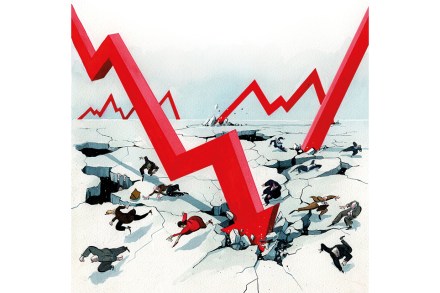
Writing about Britain’s spending plans has started to feel a bit like swimming through treacle. It’s not that there aren’t lots of interesting observations to make about Wednesday’s £300 billion spending announcement. Such as the fact that the NHS sucks up the bulk of the resource spending with a 3 per cent rise in real terms, while every other department combined only grows by 0.2 per cent. Or that the health service will soon take up nearly half of all day-to-day government spending on services. Or that only 13 per cent of Rachel Reeves’s capital spending increase is classed as ‘growth-focused’.It’s hard to pay attention to this because of the sense that the looming fiscal crisis is being largely ignored.

Is Rachel Reeves’s headroom shrinking?

From our UK edition

13 min listen

There were clear winners and losers in Rachel Reeves’s spending review yesterday but some of her announcements around capital spending and investment saw her dubbed the ‘Klarna Chancellor’ by LBC’s Nick Ferrari for her ‘buy now, pay later’ approach. Clearly trying to shake off the accusations of being ‘austerity-lite’, Labour point to longer term decisions made yesterday, such as over energy policy and infrastructure. But will voters see much benefit in the short-term? And, with the news today that Britain’s GDP shrank by 0.3% in April, will the decisions Rachel Reeves have to make only get harder before the October budget? Lucy Dunn speaks to Michael Simmons and Claire Ainsley, former director of policy to Keir Starmer and now at the Progressive Policy Institute.

Britain’s GDP decline is bad news for Rachel Reeves’s spending plans

From our UK edition

Rachel Reeves delivered her spending plans for the next three years less than 24 hours ago, but already the credibility of the Chancellor's plans are in doubt. GDP fell by 0.3 per cent in April, according to figures released this morning by the Office for National Statistics (ONS). It spells the end of a run of more positive economic readings that Reeves had hoped would buy her room to manoeuvre in the run up to the autumn budget – when she will have to explain to the Office for Budget Responsibility, and the nation, how her spending review sums add up.

Porn Britannia, Xi’s absence & no more lonely hearts?

From our UK edition

47 min listen

OnlyFans is giving the Treasury what it wants – but should we be concerned? ‘OnlyFans,’ writes Louise Perry, ‘is the most profitable content subscription service in the world.’ Yet ‘the vast majority of its content creators make very little from it’. So why are around 4 per cent of young British women selling their wares on the site? ‘Imitating Bonnie Blue and Lily Phillips – currently locked in a competition to have sex with the most men in a day – isn’t pleasant.’ OnlyFans gives women ‘the sexual attention and money of hundreds and even thousands of men’. The result is ‘a cascade of depravity’ that Perry wouldn’t wish on her worst enemy.

OnlyFans is giving the taxman what he wants

From our UK edition

Fenix International occupies the ninth floor of an innocuous office block on London’s Cheapside. The street’s name comes from the Old English for marketplace, and once upon a time Cheapside was just that: London’s biggest meat market with butcher shops lining either side of the road. Today, the street houses financial institutions and corporate HQs. But Fenix still runs a marketplace. Some may even call it a meat market, albeit one that operates on the phones of hundreds of millions of users worldwide. Its name: OnlyFans. OnlyFans is best understood not just as a porn site, but as a social media platform with a paywall. Creators – mostly women – post photos, videos and voice notes behind monthly subscriptions.

Spending review: smoke, mirrors and no strategy

From our UK edition

10 min listen

There were few surprises in Rachel Reeves’s spending review today. Health was the big winner, with a £29bn increase in day-to-day spending and £39bn was announced to build social and affordable housing. The main eyebrow-raiser was the announcement that the Home Office will end the use of hotels for asylum seekers within this parliament; this could save £1bn or it could become Labour’s ‘stop the boats’ moment. The bigger picture was confusing – with increases measured against levels three years ago, is there really as much cash as Rachel Reeves wants you to think there is? And what’s the strategy behind it all?

NHS the only winner in Reeves’s spending review

From our UK edition

Rachel Reeves has just taken her seat after delivering the first spending review since the pandemic. The plans outlined today set departmental budgets for the next three years and infrastructure spending for the next four. Total departmental spending will rise by 2.3 per cent – but, predictably, the spoils will not be shared evenly. The NHS and defence will take most of them. In real terms, the health service is set to receive a 3 per cent annual rise, leaving combined spending on the other departments with not even a 0.2 per cent increase. Britain continues its transformation into a health service with a country, and maybe a few guns, attached.

Labour goes nuclear while Reform turns to coal

From our UK edition

17 min listen

Rachel Reeves has pledged a ‘new era of nuclear power’ as the government confirms a £14.2 billion investment in the Sizewell C nuclear plant in Suffolk. This comes on the eve of Labour’s spending review, with the government expected to highlight spending pledges designed to give a positive impression of Labour’s handling of the economy. However, as Michael Simmons tells James Heale and Lucy Dunn, there are signs that the government’s National Insurance hike is starting to bite. Plus – Nigel Farage has made two announcements in as many days. This morning, he unveiled Reform’s new chairman, former MEP Dr David Bull, taking over from the recently returned Zia Yusuf.

Labour’s National Insurance hike is starting to bite

From our UK edition

The unemployment rate has risen to 4.6 per cent, the Office for National Statistics has revealed. This morning's figures mark the first proper reading of the jobs market since April, when the minimum wage was hiked and the £25 billion raid on employer National Insurance started. It's not just the joblessness rate rising: the number of payrolled employees fell by 55,000 between March and April, and by 115,000 compared to a year earlier. A flash estimate for May (which will be revised) shows an even starker picture: down 109,000 in a single month and 274,000 year-on-year. In other words, a city the size of Southampton has effectively been wiped off the payroll.

What’s new in Reeves’s spending review?

From our UK edition

When Rachel Reeves last week tried to shift the narrative around her spending review – from one of fiscal restraint to ‘spend, spend, spend’ – she ‘unveiled’ £113 billion in infrastructure investment. But for those in Westminster with more than a short-term memory, they will have felt a distinct sense of déjà vu. That’s because much of what Reeves announced had already appeared on gov.uk more than 18 months ago. These were Conservative plans, shelved for the election, now revived under a different party banner. Last week, Rachel Reeves announced £1.5 billion in funding to improve trams and buses in south Yorkshire. Eighteen months ago, the plans for south Yorkshire stood at £1.5 billion. In Liverpool, it’s the same story: £1.6 billion then, and £1.

Labour try to silence ‘austerity-lite’ accusations

From our UK edition

13 min listen

James Nation, formerly a special adviser to Rishi Sunak and now an MD at Forefront Advisers, joins the Spectator’s deputy political editor James Heale and economics editor Michael Simmons, to talk through the latest on the government’s spending review, which is due to be announced on Wednesday. The last holdout appears to be Home Secretary Yvette Cooper, pushing for more police funding. But, against a tough fiscal landscape, what can we expect? And how much does it matter with the wider public? Plus – former chairman Zia Yusuf returned to Reform just two days after resigning, what’s going on? Produced by Patrick Gibbons.

From Thatcher to Truss, who’s haunting Mel Stride?

From our UK edition

17 min listen

Shadow Chancellor Mel Stride delivered a speech today where he attempted to banish the ghost of Liz Truss and improve the Conservatives' reputation over fiscal credibility. And he compared leader Kemi Badenoch to Thatcher, saying she too struggled at first and will 'get better' at the dispatch box. LBC broadcaster Iain Dale and the Spectator's economics editor Michael Simmons join deputy political editor James Heale to unpack Stride's speech, talk about Labour's latest policy announcement over free school meals and discuss why both the main parties are struggling with fiscal credibility. Plus, Iain talks about his new book Margaret Thatcher and the myths he seeks to dispel. Why does he think the former PM still endures 35 years after she left office? Produced by Patrick Gibbons.

The ONS blunders. Again

From our UK edition

‘The ONS apologises for any inconvenience caused’ is becoming an all-too-familiar refrain from Britain’s statisticians. The latest mea culpa came after a blunder involving vehicle tax data led the Office for National Statistics to overstate April’s inflation figure. Initially reported as 3.5 per cent, the true figure was 3.4 per cent – only revealed once the Department for Transport corrected its own error on the number of cars subject to increased vehicle taxes. The latest mea culpa came after a blunder led the Office for National Statistics to overstate April’s inflation figure While civil servants at the DfT are to blame, it raises serious questions about the ONS’s quality assurance process.

To spend or not to spend

From our UK edition

16 min listen

Rachel Reeves unveiled billions of pounds of investment today for transport and infrastructure projects, as Labour attempts to demonstrate that next week’s spending review is not just about departmental cuts. However, most of the political noise today has centred on her announcement that the winter fuel cut will be reversed by the end of the year. But what does this all mean for the average voter, for the Chancellor’s fiscal headroom – and why is the government still blaming its own ‘fiscal rules’? James Heale and Michael Simmons join Lucy Dunn to unpack the Chancellor’s announcements and explain the economic jargon, plus a look at today’s PMQs. Produced by Patrick Gibbons and Oscar Edmondson.

Will Rachel Reeves heed the warnings over the UK’s gloomy economic outlook?

From our UK edition

Rachel Reeves has been warned again that the slim headroom against her ‘ironclad’ fiscal rule could be wiped out if growth prospects worsen. The Organisation for Economic Co-operation and Development (OECD) said in its latest economic outlook for the UK that ‘very thin fiscal buffers could be insufficient to provide adequate support without breaching the fiscal rules in the event of renewed adverse shocks’. The OECD also downgraded Britain's growth forecast. It predicted the economy will grow by 1.3 per cent in 2025 and then just 1 per cent next year – a fall from their previous forecast of 1.4 and 1.2 per cent. The OECD said this downgrade was caused by continuing uncertainty surrounding trade caused by Donald Trump’s tariffs and high interest rates.

Rachel Reeves risks killing off the family business

From our UK edition

Changes to how inheritance tax and trusts are treated for non-doms have already put the nation’s finances on shakier ground – something I revealed in a cover story last month. Now, a new report suggests these anti-business Treasury policies may risk killing off Britain’s family firms too. Fresh analysis by the CBI’s economics consultancy, commissioned by Family Business UK, warns that these changes to inheritance tax could jeopardise more than 208,000 full-time jobs over the course of this Parliament. That’s more than the entire construction workforce in London. The report says that as small firms retreat from long-term investment, the wider economic consequences could be severe.

What will save the Tories? The economy, or Robert Jenrick?

From our UK edition

16 min listen

Lots to discuss today: Robert Jenrick takes on TfL, a Nazi jibe from the attorney general and allegations of shoplifting made against our own Michael Simmons. But we start with Keir Starmer’s big speech yesterday, where the theme was ‘get Nigel’, after polling from More in Common showed that framing the election as a two-horse race could be beneficial to Labour. They are attempting to cut the Tories out altogether but, in response, the Conservatives plan to use fiscal credibility as the battleground to crawl back up the polls. Will the economy save the Tories? Elsewhere, Robert Jenrick is the star of the week after a video of him reprimanding fare-dodgers on the Tube went viral, racking up more than ten million views on X.

Will the economy save the Tories?

From our UK edition

This week Dominic Cummings said the Tories may have ‘crossed the event horizon’. He was trying to find a tech bro way of saying the game is up: they’re finished as an electoral force and it’s only Labour, Reform and the Lib Dems still in play. But might the Tories have one last chance? If they do, that chance will come from the economy. Next week the shadow chancellor, Mel Stride, will try to make the case for the Tories being the party of economic responsibility in a keynote speech to the Royal Society for Arts, Manufactures and Commerce. ‘Our country faces significant and increasing challenges both at home and abroad,’ he will say. ‘Challenges that will require a far stronger economy if they are to be met. An economy that can only be delivered through a radical rewiring.

Is this the end of Trump’s tariffs? Don’t count on it

From our UK edition

Overnight three federal judges on the United States Court of International Trade ruled that Donald Trump’s worldwide tariffs are unlawful and blocked them from going into effect. A group of businesses had taken the President’s administration to court, successfully arguing that the tariffs announced on ‘Liberation Day’ were beyond the powers of the presidency.The ruling made clear that the US Congress has sole authority on passing legislation affecting cross-border trade. The White House immediately appealed and argued that the court does not have the right to rule on the matter.