Michael Simmons

Michael Simmons

Michael Simmons is The Spectator's economics editor.

Antisemitism, Chinese spies & GB’s economic fragility

From our UK edition

14 min listen

It's been a rough week for the government: the row over the collapsed Chinese spy trial has rolled on, all while the Chancellor has been trying to lay the groundwork ahead of next month's budget. Then, overnight, another issue has emerged as fans of the Maccabi Tel Aviv football team have been banned from attending a football game against Aston Villa next month, leading to accusations of antisemitism. Tim Shipman and Michael Simmons join James Heale to discuss the day's developments. Tim reveals how the Chinese spy row has been picked up by American legislators, threatening to undermine the Five Eyes security alliance. Meanwhile Michael points out that the news that the IMF has upgraded UK growth forecasts – to the second fastest growing of the G7 – might not be all it seems.

Who’s to blame for Britain’s slowing economy?

From our UK edition

The economy is slowing down. GDP grew 0.3 per cent in the three months to August. As ever, services propped up Britain, growing by 0.4 per cent, while the production sector shrank by 0.3 per cent, according to Office for National Statistics data. We could have news of a stagnating economy confirmed just in time for Rachel Reeves’s Budget That growth over the last three months though was helped by a bumper June with the economy flat over the latest two months. If things don’t improve in the September data, then we could have news of a stagnating economy confirmed just in time for Rachel Reeves’s second Budget.

How Rachel Reeves can escape the doom loop

From our UK edition

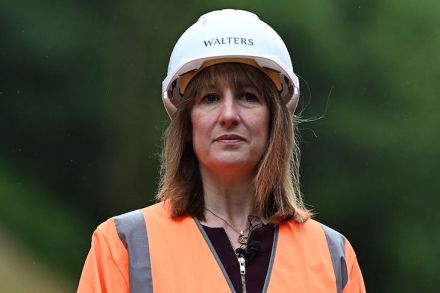
Rachel Reeves is trapped in an economic ‘doom loop’: high debt, low growth and higher debt again. But, as pessimists’ eyes turn to the Chancellor’s Budget next month, there is a way she can turn that loop into a ‘virtuous circle’. The doom loop theory of Reeves’s economy has so far gone like this: Following a fiscal event, tax receipts come in lower than expected, growth forecasts are downgraded, inflation forecasts rise – and a fiscal ‘black hole’ emerges. To fill in the hole, the Chancellor hikes taxes because her backbenchers won’t let her make cuts. The tax hikes further hamper growth, weighing down employment as companies struggle under the burden. The Chancellor calls another fiscal event – and we return to step one.

What happened to Reform’s Doge?

From our UK edition

When Linden Kemkaran (formerly of The Spectator) was elected leader of Kent County Council, she presented herself as the poster-child for Reform in power. ‘The electorate,’ she said in June, ‘are looking to judge whether they can put their trust in a Reform government at the next election.’ Her administration set up ‘Dolge’, a ‘department of local government efficiency’, modelled on Elon Musk’s original, and instructed it to cut wasteful spending and find cash-saving efficiencies. After just five months, however, its efforts appear to have faltered. The council is already ‘down to the bare bones’, Diane Morton, Reform’s cabinet member for adult social care in Kent, told the Financial Times yesterday.

crypto

Can stablecoins make America the crypto capital of the world?

“I will make sure the US is the crypto capital of the world,” Donald Trump vowed earlier this year. In July, he signed the Guiding and Establishing National Innovation for US Stablecoins (Genius) Act. The Act creates federal guardrails for dollar-pegged stablecoins and regulates who can issue and redeem them. Concerns from law enforcement are also addressed, by making sure anti-money laundering and consumer regulation applies. But what are stablecoins? They are digital tokens built to stay at a stable price, usually one dollar. They sit on the blockchain – the computer protocol that makes crypto work – but what’s underpinning their value are real-world assets, usually cash or government bonds.

Economy: can we trust the Tories again?

From our UK edition

11 min listen

Tim Shipman and Michael Simmons join Lucy Dunn live at Manchester for Conservative party conference. It's day two, and we've heard from shadow chancellor Mel Stride, who unveiled various pledges including business rates relief and spending cuts. The Tories are clearly trying to position themselves again as the party of 'fiscal prudence' – but are people listening to them? As the team points out – whether through a lack of protestors or the speedy serving times at the conference bar – the convention centre is pretty quiet. Produced by Patrick Gibbons.

Are the Tories really the party of ‘fiscal prudence’?

From our UK edition

The message the Tories want you to leave their conference with is that they are the party of prudence. The party of fiscal responsibility who will make the first ‘serious down payments’ on the size of the state, as shadow chancellor Mel Stride explained at a Spectator drinks reception last night. Today, he will set out his plan to achieve that. Stride will ‘recommit’ his party to ‘fiscal prudence’ by announcing £47 billion in savings for the public purse. Those measures include: Welfare reforms that will include stopping claims from people with ‘low level mental health problems’ and foreigners and reversing any lifting of the two-child benefit cap to bring the welfare bill down by £23 billion. Cutting 132,000 jobs from the civil service to save £8 billion.

Labour conference: ‘a holiday from reality’?

From our UK edition

11 min listen

Labour party conference has kicked off in Liverpool, and the Chancellor has just delivered her keynote speech. ‘Security, security, security’ was the message from Rachel Reeves as she addressed the Labour party faithful. The Labour government, she said, will create an economy that puts the British worker above all else. Aside from setting out her economic vision, she made time for a few jabs in Manchester mayor Andy Burnham’s direction and gave a nod to shadow education secretary Bridget Phillipson (should we take that as an endorsement?). Has she been taking notes from Gordon Brown? Elsewhere, the mood in the bars is much more buoyant than it was last year – although that has a lot to do with the absence of Sue Gray.

When will Rachel Reeves deliver on her promises?

From our UK edition

Security, security, security was the message from Chancellor Rachel Reeves as she addressed the Labour party today in Liverpool. A Labour government, she said, would stand for a British economy first. An economy that would put the British worker above all else. That, Reeves proclaimed, was the key difference between a Labour government and a Tory one. In fact, the line ‘don’t let anyone tell you there is no difference between a Labour government and a Conservative government’ was delivered so many times that by the fifth or sixth iteration it received only limp applause. The Conservatives were the main target of Reeves’s speech; they mismanaged the economy and allowed growth to stagnate for 14 years. This seemed an attack from an age we no longer live in.

Will Labour MPs stand for Rachel Reeves’ benefits crackdown?

From our UK edition

When Rachel Reeves speaks at Labour party conference today, she has a tough message to deliver. The Chancellor will announce her plans to ‘abolish youth unemployment’ by forcing Britain’s jobless youth into work. There’s a moral case to be made for welfare reform and the Chancellor must make it today The ‘youth guarantee’ scheme will offer the carrot of a guaranteed work placement once unemployed 18 to 21-year-olds have spent 18 months out of the workforce. Those who turn down job offers or training places, however, will face the stick via sanctions such as having their benefits docked. With nearly one million 16 to 24-year-olds classified as not in education, employment or training – so called 'Neets' – this is a problem that is costing our economy billions.

What is Andy Burnham talking about?

From our UK edition

Andy Burnham is worried about becoming Liz Truss. In an interview deemed so important it currently appears on the New Statesman’s website three times, he said: ‘We’ve got to get beyond this thing of being in hock to the bond markets.’ His worry, it seems, is that the main economic policy he’d like to introduce, nationalisation of everything, would require so much borrowing that it would cause the markets to freak out á la Truss and collapse a nascent Mancunian ministry. Since the interview one or two people have pointed out that we can’t really just choose to ignore the bond markets – much as Burnham might like to. And so a number of explanations have been offered up for what Burnham really meant.

The problem with removing the child benefit cap

From our UK edition

Despite having a £30 billion fiscal hole to fill Rachel Reeves might be about to splash the cash. If reports are to be believed, in the coming weeks the lifting of the two-child benefit cap will be announced. The cost is £3bn every year.  The cap was introduced under George Osborne to stop families claiming the child element of UC for three or more children. A committee of ministers and officials are due to make a series of recommendations to tackle child poverty before the November Budget, and it’s now widely expected that this will include scrapping the cap.  But will lifting it do anything to improve child poverty? There is some evidence to suggest it won’t.

Does paracetamol cause Autism?

From our UK edition

15 min listen

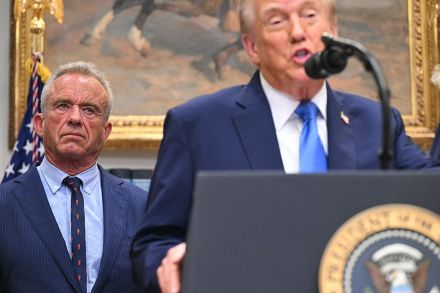
Freddy Gray speaks to The Spectator's economics editor Michael Simmons about Trump's announcement at the Oval Office on Monday night that taking Tylenol, known as paracetamol, 'is no good' and that pregnant women should 'fight like hell' to only take it in cases of extreme fever. They discuss the data behind the claims, whether the President is right, and what else could explain the startling rise in children with autism.

Ed Davey pitches himself as the anti-Farage

From our UK edition

11 min listen

The Liberal Democrat party conference in Bournemouth has concluded with a speech from leader Sir Ed Davey. While the current crop of Liberal Democrats are the most successful third-party in 100 years, they have faced questions about why they aren't cutting through more while Reform is. It's something Davey is aware of and – hoping to exploit how divisive the leader of Reform is – he sought to pitch himself as the anti-Farage. Will it work? Plus, more bad news for the Chancellor. Labour had pledged to aim for the highest growth in the G7. New figures from the OECD did upgrade their global growth forecast, including for Britain, but projected that the UK would see the highest inflation across the G7. How bad is this for Rachel Reeves?

Rachel Reeves has only ugly choices

From our UK edition

Rachel Reeves should shift the tax burden away from workers and on to those who take most from the state: our pensioners. That’s the view of the influential Resolution Foundation think-tank, at least. This morning it recommended increasing income tax by 2p on the pound while cutting employee national insurance (NI) contributions by the same amount. Because no one (above the tax-free allowance) is immune from income tax, this would mean £6 billion is raised without an increase in the tax bill for those whose sole income comes from salaried employment. Pensioners who don’t pay NI would end up footing the bill.

Rachel Reeves doesn’t get the interest rate cut she was hoping for

From our UK edition

The Bank of England has held interest rates at 4 per cent. Threadneedle Street’s Monetary Policy Committee (MPC) voted seven to two to keep rates where they are. The fact inflation now sits at almost double the Bank’s 2 per cent target outweighed concerns about the slackening jobs market and what its impact on Britain’s lacklustre growth. Two members voted to cut rates to 3.75 per cent, but the overall decision is no surprise. There’s a growing sense that the bulk of committee members feel they perhaps made a mistake in cutting rates last month with inflation still climbing. Markets don’t expect another cut this side of Christmas and the implied chance of a cut at the Bank’s November meeting has fallen to 20 per cent.

Britain is in a fresh cost-of-living crisis

From our UK edition

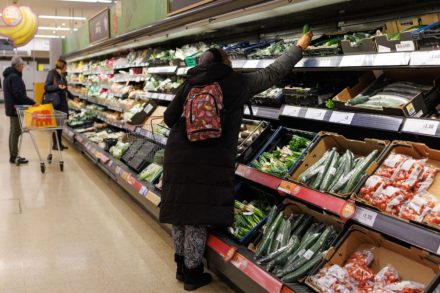
Prices are continuing to rise. Consumer inflation stayed at 3.8 per cent last month – matching the figure recorded in July and nearly double the Bank of England’s 2 per cent target.  This morning’s figures on CPI, released by the Office for National Statistics (ONS), were in line with the expectations of markets and pundits. Air fares, which spiked in July due to the summer holidays, were significantly down compared with last year, which offset a rise in fuel, meaning the pace of inflation did not pick up.   There is a tendency in economic reporting to say that because a reading has come in line with forecasts, then it is good news. But the truth is anything but. Food inflation has increased for the fifth month in a row.

Rachel Reeves: destroyer of jobs

From our UK edition

Over the past year, some 142,000 payrolled jobs have been lost, according to the latest labour market figures from the Office for National Statistics (ONS). Another 8,000 disappeared last month alone. Unemployment remained at 4.7 per cent – higher than a year ago. The bulk of job losses came in accommodation and food services, which shed 90,000 workers. The culprit seems obvious: the anti-business tax raid unleashed by the Chancellor in the last Budget. That £25 billion hike on employer National Insurance, as well as the increase in the minimum wage, is not just discouraging job creation but making employers think twice about keeping people on. And with the government’s employment rights bill sailing through parliament businesses fear things can only get worse.

The Budget that could make, or break, Starmer’s government

From our UK edition

As the Chancellor Rachel Reeves gets to work on her second Budget – to be delivered on 26 November – red lights flash everywhere. Gilt yields were up again as markets lost faith in her ability to balance the books. Reeves or Darren Jones – whoever is really calling the shots – will spend the next few weeks fixated on those yields. The price they land at when the Office for Budget Responsibility (OBR) settles their Budget forecast could make or break the government. I understand that the initial plan was to have a Budget much earlier, but that the decision was taken to put it off for as long as possible in the hope that yields come down a bit in that time. We may even hear calming words from the Treasury today aimed at achieving just that. It’s not all on Reeves though.

How bad is the UK bond crisis?

From our UK edition

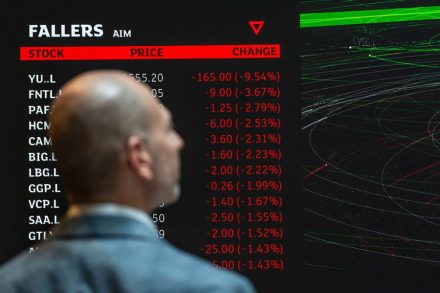
‘UK in the drain’, a trader exclaimed earlier today as 30-year gilt yields punched through to their highest level since 1998. London stocks were down and the pound fell too. The message to trading desks was clear: dump Britain. Things have worsened, at least in part, because yesterday’s Downing Street and Treasury reshuffle included no suggestions that the government has emergency plans to fix Britain’s broken fiscal maths and attempt to balance the books. And as I set out in last week’s cover story, markets are not amused. Wherever you look on the yield curve, Britain’s debt is cementing itself as the most expensive in the developed world. Long-term debt – the 30-year gilt – was sold off en masse and passed 5.73 per cent.