Michael Simmons

Michael Simmons

Michael Simmons is The Spectator's economics editor. Contact him here.

Wes Streeting is right to take on the doctors

From our UK edition

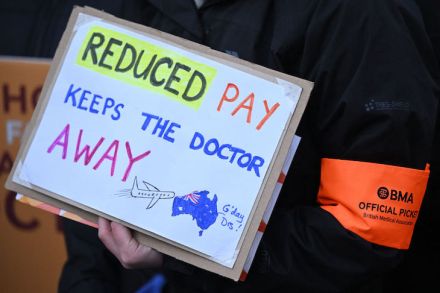
The public won’t forgive and nor will I, said Health Secretary Wes Streeting of plans by junior doctors to strike over his refusal to cave to demands for 29 per cent pay rises. Speaking to the Times he said: ‘There are no grounds for strike action now. Resident doctors have just received the highest pay award across the entire public sector. The Government can’t afford to offer more and it wouldn’t be fair to other NHS workers either, many of whom are paid less’. He’s completely right.  Just shy of half of the British Medical Association’s (BMA) junior doctors (they’re now called resident doctors) voted for strike action, but because of low turnout it meant an overwhelming majority of those who did vote backed walking out.
Britain is heading for economic catastrophe

From our UK edition

Britain is in trouble. That’s the judgement of the Office for Budget Responsibility (OBR) in their ‘fiscal risks and sustainability’ document released this morning. The language is polite, matter of fact and bureaucratic. But read between the lines, look at the numbers and it paints a damning picture of the risks we face as a country. In the 1950s, the state pension accounted for 2 per cent of GDP. Within 50 years it will cost nearly 8 per cent. This is not something an aging population can afford After a series of economic shocks, the report says, Britain is in a ‘relatively vulnerable position’. Our deficit (nearly 6 per cent of GDP) is around 4 percentage points higher than the average for advanced economies and the third highest among European countries.

Keir can’t catch a break

From our UK edition

13 min listen

Keir Starmer will have been hoping for a more relaxed week – but he certainly won’t be getting one. He is facing a fresh rebellion over support for children with special educational needs (SEND), which threatens to become welfare 2.0. The plan involves overhauling the SEND system and it’s another case of Labour MPs exclaiming that they didn’t stand on a Labour ticket just to target the most vulnerable in society. The main concern among backbenchers is whether it should be legally enforceable for parents to ensure their children receive bespoke support. Elsewhere, all roads lead to the Treasury, as Neil Kinnock has a solution for increasing Rachel Reeves’s headroom: a wealth tax.

Corbyn is back! … or is he?

From our UK edition

13 min listen

Some sore heads on Coffee House Shots this morning, after last night’s Spectator summer party. But while we were having fun, a drama was brewing in the Labour party after it was finally confirmed that Jeremy Corbyn is starting a new left-wing party... or is he? The news was broken last night by another MP: Zarah Sultana, a long-time admirer of Corbyn. Elected as a Labour MP in 2019, she lost the whip last July for voting to lift the two-child-benefit cap. However, after discussions with figures within the Labour party, it has become apparent that Sultana took many of those involved completely by surprise. She has, in the words of one, ‘completely jumped the gun – no ideas had been properly decided’. It has plunged the new party into a crisis even before its creation.

How the Home Office created the Boriswave

From our UK edition

The Home Office opened Britain’s doors to record numbers of migrants without properly assessing the risks or consequences, according to a damning new report from parliament’s Public Accounts Committee. The report, released overnight, finds that the department ‘made changes to the Skilled Worker Visa route without a full assessment of the risks or potential impacts, including the risks of non-compliance with visa rules and exploitation of migrant workers.

Chancellor in tears during PMQs

From our UK edition

11 min listen

There were extraordinary scenes in PMQs today. Rachel Reeves appeared distraught as the Prime Minister failed to guarantee her security when asked by leader of the opposition Kemi Badenoch. It was brutal to watch, as the iron chancellor’s lip quivered and a tear rolled down her cheek. In many ways, you can’t blame her – with her headroom narrowing, she will be forced to find a further £5 billion worth of savings to allow for the government’s botched welfare bill. No. 10 has since clarified that Rachel Reeves has not resigned and will not be sacked, stressing that it was ‘personal’ matter that had upset her, ‘which - as you would expect - we are not going to get into. The chancellor will be working out of Downing Street this afternoon’.

I feel sorry for Rachel Reeves

From our UK edition

I’m starting to feel a tiny bit sorry for the chancellor. Yes, most of the economic and fiscal problems we’re facing have been exacerbated – if not caused – by current Treasury policy. But Labour’s welfare reforms, flawed and limited as they were, at least acknowledged that the welfare bill is not just fiscally unsustainable but also morally unacceptable. The idea that we should simply accept rising worklessness among the young – 25 to 34-year-olds are now the fastest-growing group on sickness benefits, with claims up 69 per cent in five years – is indefensible in a supposedly compassionate country. Much of this is driven by the medicalisation of anxiety and depression.

Will the welfare bill really push 150,000 into poverty?

From our UK edition

Labour MPs are obviously going to panic when told their votes might plunge just one person into poverty – let alone 250,000. That was the original estimate for the fallout from Liz Kendall’s reforms to Personal Independence Payments (PIP) and Universal Credit. Yesterday, the DWP released a revised figure after Starmer caved to a rebellion by 126 MPs. The new number? Some 150,000 pushed into poverty. A marginally better headline, at a £2.5 billion cost to the taxpayer, but still enough to spook Labour’s already jittery backbenches. Frustratingly, these numbers, put out by the government, are completely meaningless.

Britain is facing a doomy economic future

From our UK edition

The Office for National Statistics (ONS) has confirmed the economy grew by 0.7 per cent in the first three months of the year. The figures, released this morning, are the ONS’s second attempt at estimating growth in the first quarter and, unusually, the GDP growth number was unrevised from the initial estimate. The strong growth – the fastest pace in a year – between January and March could be the last bit of economic good news Chancellor Rachel Reeves is able to celebrate this year as this set of numbers cover the period before her £25 billion raid on employer national insurance came into effect. It does, however, confirm that Britain was the fastest growing country in the G7. The growth was driven by the services sector with both production and construction growing too.

Revealed: the dodgy data undermining Universal Credit

From our UK edition

As Sir Keir Starmer offers concessions to 126 rebels to water down his welfare reform bill, a scandal that undermines the entire Universal Credit system goes ignored. The Spectator has seen figures revealing that the HMRC data feed which powers Universal Credit payments to low-paid workers may be so error-strewn that as many as one in four claimants has been underpaid, overpaid or not paid at all. When Universal Credit was introduced 11 years ago to modernise benefits, it required a robust data system to drive it. HMRC’s answer was the ‘Real Time Information’ (RTI) system – hailed at the time as the most significant overhaul of the tax system since PAYE’s introduction in 1944.

War and peace, why restaurants are going halal & the great brown furniture transfer

From our UK edition

45 min listen

This week: war and peace Despite initial concerns, the ‘Complete and Total CEASEFIRE’ – according to Donald Trump – appears to be holding. Tom Gross writes this week’s cover piece and argues that a weakened Iran offers hope for the whole Middle East. But how? He joined the podcast to discuss further, alongside Gregg Carlstrom, the Economist’s Middle East correspondent based in Dubai. (01:51) Next: why are so many restaurants offering halal meat? Angus Colwell writes about the growing popularity of halal meat in British restaurants. This isn’t confined to certain food groups or particular areas – halal is now being offered across restaurants serving all sorts of cuisine, from Chinese to Mexican. But why is it so popular?

Britain is racing towards a fresh cost-of-living crisis

From our UK edition

The poorest Brits now owe £6.6 billion in unpaid council tax – a record high and up some 85 per cent since before the pandemic. That’s according to data released this morning by the Ministry of Housing, Communities and Local Government, which suggests Britain is plunging back into a cost-of-living crisis. What’s more, a report also out today by the Centre for Social Justice (CSJ) finds that between 2022 and 2024, some 400,000 more households slipped into arrears, taking the total number of people in debt to their local council to 1.8 million. The CSJ’s report also finds that 97 per cent of those in arrears have at least one ‘personal vulnerability’ compared to 47 per cent in the whole population.

Britain is paying for Reeves’s non-dom tax disaster

From our UK edition

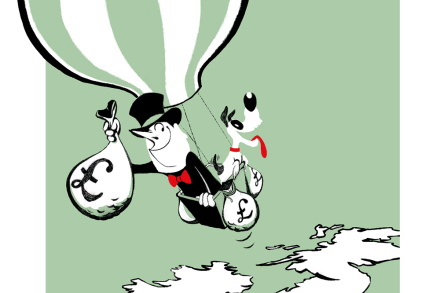
Britain will lose 16,500 millionaires this year, taking $90 billion of wealth with them. That’s according to a new report from Henley & Partners. If their projections are right, that’s more than double the number of dollar millionaires expected to leave China in 2025. As I wrote for the magazine last month, changes to the non-dom regime – first initiated in the dying months of the last government and worsened by the current Chancellor – have pushed many of the wealthiest over the edge. The effects are already becoming visible. Research from estate agent Knight Frank shows that sales of expensive homes slowed between March 2024 and this May, leading to £401 million less in stamp duty for the Treasury.

Why the Bank of England may welcome job losses

From our UK edition

Interest rates have been held at 4.25 per cent. The Bank of England’s Monetary Policy Committee (MPC) voted by six to three to hold rates after cutting them in May. The move mirrors that of the US Federal Reserve, which yesterday held rates for the fourth time in a row. Their decision came despite badgering from President Trump, desperate for a rate cut as inflation remains hard to tame and forecasts predict sluggish growth and rising unemployment. In Britain, the cost of borrowing on credit cards rose to its highest ever level on record in the second quarter of the year, according to Moneyfacts – despite the rate cut from the Bank last month. The average rate and fees on cards between March and June was just under 36 per cent.

Westminster waits for Donald’s decision

From our UK edition

14 min listen

Westminster waits with bated breath to discover whether Donald Trump will ally with Israel in striking Iranian nuclear sites. The President called for ‘UNCONDITIONAL SURRENDER!’ from Tehran overnight. The day to day of domestic politics appears diminished by comparison with the ever-looming threat of an escalated conflict… But the show must go on: today’s PMQs saw Chris Philp (why not Robert Jenrick?) and Angela Rayner deputising for their absent leaders; Liz Kendall introduced legislation to enact cuts to personal independence payments for disabled people; the Commons voted to decriminalise abortion at any point until birth; and the Office for National Statistics (ONS) is up to its old tricks, announcing that inflation has fallen when the reality is much more complicated.

Why is the ONS saying inflation has gone down?

From our UK edition

The rate of inflation remained flat at 3.4 per cent in May – still well above the Bank of England's 2 per cent target. Bizarrely, the Office for National Statistics (ONS), in their figures released this morning, claims this is down from 3.5 per cent the month before, even though just a couple of weeks ago they admitted that figure was overstated due to an error. Because of a policy not to revise inflation figures, that error lives on – leading them to announce the fiction that inflation has fallen. The reality is it has not. The result of stubbornly sticking to this no-revisions policy is a slew of misreporting about Britain's economy. The Today programme told us inflation was ‘cooling’, and news websites are already parroting the ONS line that inflation has fallen.

Rachel Reeves’s non-dom crackdown has truly backfired

From our UK edition

Rachel Reeves may finally have seen sense. A report in this morning’s Financial Times suggests she is ‘exploring’ performing a 180 on the changes to inheritance tax rules which meant non doms would have to pay the death tax on their global assets – even on wealth earned before they came to the UK. As I explained in our magazine cover piece last month, the fact that these changes – which came into force in April – would apply retroactively is what really sent non-doms over the edge and led them to flee the country in large numbers, taking their wealth and not insignificant tax revenues with them.

The good and bad news about the UK-US trade deal

From our UK edition

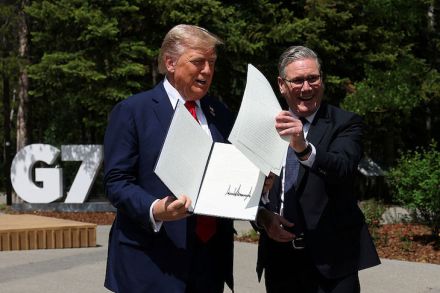
Donald Trump and Keir Starmer’s transatlantic trade deal has finally been signed. Before making an early exit from the G7, the US president approved an executive order giving legal effect to parts of the US-UK deal. The outline of the agreement was settled weeks earlier during a conference call, with Trump in the White House and Peter Mandelson, the UK ambassador in Washington, standing, slightly creepily, over his shoulder, as Starmer dialled in from 4,000 miles away. If the deal is to progress further, an almighty row could be brewing The delay in any further announcement left conservatives, and businesses, wondering whether the deal outline a month ago was turning into a fiction.

Why the Israel-Iran war could raise your taxes

From our UK edition

If Rachel Reeves is to have any chance of making it to her autumn budget without U-turns or raising taxes, the improved economic forecasts of recent months need to come true. Missiles flying between Israel and Iran may destroy that hope. Things had been getting better for the Chancellor. Look at economic forecasts from the aftermath of Trump’s ‘liberation day’, and there was a common theme when it came to Britain. Because of the nature of our economic relationship with America – as a massive exporter in services (we’re their call centre) and with more or less balanced trade in goods – we would be shielded against the worst impacts of a trade slowdown. Global GDP growth would suffer, but the effects would not come to Britain.

Paul Johnson: The spending review was ‘incomprehensible’

From our UK edition

Rachel Reeves’s spending review was the ‘most incomprehensible speech I’ve ever heard from a chancellor’, according to Paul Johnson of the Institute for Fiscal Studies. He spoke to me on today’s edition of Coffee House Shots. In this special episode, I was also joined by Ruth Curtice, chief executive of the Resolution Foundation, to take a wider look at Britain's fiscal and economic problems. Why, despite record tax levels, do our public services feel as if they’re in managed decline? Why do voters’ expectations of the state seem so out of whack with what we actually deliver? We discussed whether Ruth’s predecessor, Torston Bell, was right to claim Labour has ended austerity, and how much the lingering effects of Covid still shape where we are today.