Michael Simmons

Michael Simmons

Michael Simmons is The Spectator's economics editor. Contact him here.

Revealed: the dodgy data undermining Universal Credit

From our UK edition

As Sir Keir Starmer offers concessions to 126 rebels to water down his welfare reform bill, a scandal that undermines the entire Universal Credit system goes ignored. The Spectator has seen figures revealing that the HMRC data feed which powers Universal Credit payments to low-paid workers may be so error-strewn that as many as one in four claimants has been underpaid, overpaid or not paid at all. When Universal Credit was introduced 11 years ago to modernise benefits, it required a robust data system to drive it. HMRC’s answer was the ‘Real Time Information’ (RTI) system – hailed at the time as the most significant overhaul of the tax system since PAYE’s introduction in 1944.

War and peace, why restaurants are going halal & the great brown furniture transfer

From our UK edition

45 min listen

This week: war and peace Despite initial concerns, the ‘Complete and Total CEASEFIRE’ – according to Donald Trump – appears to be holding. Tom Gross writes this week’s cover piece and argues that a weakened Iran offers hope for the whole Middle East. But how? He joined the podcast to discuss further, alongside Gregg Carlstrom, the Economist’s Middle East correspondent based in Dubai. (01:51) Next: why are so many restaurants offering halal meat? Angus Colwell writes about the growing popularity of halal meat in British restaurants. This isn’t confined to certain food groups or particular areas – halal is now being offered across restaurants serving all sorts of cuisine, from Chinese to Mexican. But why is it so popular?

Britain is racing towards a fresh cost-of-living crisis

From our UK edition

The poorest Brits now owe £6.6 billion in unpaid council tax – a record high and up some 85 per cent since before the pandemic. That’s according to data released this morning by the Ministry of Housing, Communities and Local Government, which suggests Britain is plunging back into a cost-of-living crisis. What’s more, a report also out today by the Centre for Social Justice (CSJ) finds that between 2022 and 2024, some 400,000 more households slipped into arrears, taking the total number of people in debt to their local council to 1.8 million. The CSJ’s report also finds that 97 per cent of those in arrears have at least one ‘personal vulnerability’ compared to 47 per cent in the whole population.

Britain is paying for Reeves’s non-dom tax disaster

From our UK edition

Britain will lose 16,500 millionaires this year, taking $90 billion of wealth with them. That’s according to a new report from Henley & Partners. If their projections are right, that’s more than double the number of dollar millionaires expected to leave China in 2025. As I wrote for the magazine last month, changes to the non-dom regime – first initiated in the dying months of the last government and worsened by the current Chancellor – have pushed many of the wealthiest over the edge. The effects are already becoming visible. Research from estate agent Knight Frank shows that sales of expensive homes slowed between March 2024 and this May, leading to £401 million less in stamp duty for the Treasury.

Why the Bank of England may welcome job losses

From our UK edition

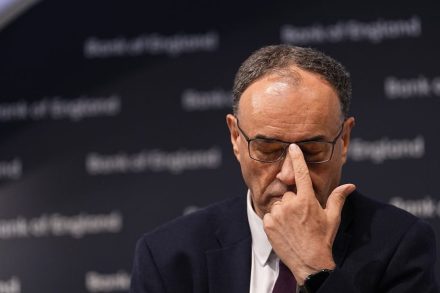
Interest rates have been held at 4.25 per cent. The Bank of England’s Monetary Policy Committee (MPC) voted by six to three to hold rates after cutting them in May. The move mirrors that of the US Federal Reserve, which yesterday held rates for the fourth time in a row. Their decision came despite badgering from President Trump, desperate for a rate cut as inflation remains hard to tame and forecasts predict sluggish growth and rising unemployment. In Britain, the cost of borrowing on credit cards rose to its highest ever level on record in the second quarter of the year, according to Moneyfacts – despite the rate cut from the Bank last month. The average rate and fees on cards between March and June was just under 36 per cent.

Westminster waits for Donald’s decision

From our UK edition

14 min listen

Westminster waits with bated breath to discover whether Donald Trump will ally with Israel in striking Iranian nuclear sites. The President called for ‘UNCONDITIONAL SURRENDER!’ from Tehran overnight. The day to day of domestic politics appears diminished by comparison with the ever-looming threat of an escalated conflict… But the show must go on: today’s PMQs saw Chris Philp (why not Robert Jenrick?) and Angela Rayner deputising for their absent leaders; Liz Kendall introduced legislation to enact cuts to personal independence payments for disabled people; the Commons voted to decriminalise abortion at any point until birth; and the Office for National Statistics (ONS) is up to its old tricks, announcing that inflation has fallen when the reality is much more complicated.

Why is the ONS saying inflation has gone down?

From our UK edition

The rate of inflation remained flat at 3.4 per cent in May – still well above the Bank of England's 2 per cent target. Bizarrely, the Office for National Statistics (ONS), in their figures released this morning, claims this is down from 3.5 per cent the month before, even though just a couple of weeks ago they admitted that figure was overstated due to an error. Because of a policy not to revise inflation figures, that error lives on – leading them to announce the fiction that inflation has fallen. The reality is it has not. The result of stubbornly sticking to this no-revisions policy is a slew of misreporting about Britain's economy. The Today programme told us inflation was ‘cooling’, and news websites are already parroting the ONS line that inflation has fallen.

Rachel Reeves’s non-dom crackdown has truly backfired

From our UK edition

Rachel Reeves may finally have seen sense. A report in this morning’s Financial Times suggests she is ‘exploring’ performing a 180 on the changes to inheritance tax rules which meant non doms would have to pay the death tax on their global assets – even on wealth earned before they came to the UK. As I explained in our magazine cover piece last month, the fact that these changes – which came into force in April – would apply retroactively is what really sent non-doms over the edge and led them to flee the country in large numbers, taking their wealth and not insignificant tax revenues with them.

The good and bad news about the UK-US trade deal

From our UK edition

Donald Trump and Keir Starmer’s transatlantic trade deal has finally been signed. Before making an early exit from the G7, the US president approved an executive order giving legal effect to parts of the US-UK deal. The outline of the agreement was settled weeks earlier during a conference call, with Trump in the White House and Peter Mandelson, the UK ambassador in Washington, standing, slightly creepily, over his shoulder, as Starmer dialled in from 4,000 miles away. If the deal is to progress further, an almighty row could be brewing The delay in any further announcement left conservatives, and businesses, wondering whether the deal outline a month ago was turning into a fiction.

Why the Israel-Iran war could raise your taxes

From our UK edition

If Rachel Reeves is to have any chance of making it to her autumn budget without U-turns or raising taxes, the improved economic forecasts of recent months need to come true. Missiles flying between Israel and Iran may destroy that hope. Things had been getting better for the Chancellor. Look at economic forecasts from the aftermath of Trump’s ‘liberation day’, and there was a common theme when it came to Britain. Because of the nature of our economic relationship with America – as a massive exporter in services (we’re their call centre) and with more or less balanced trade in goods – we would be shielded against the worst impacts of a trade slowdown. Global GDP growth would suffer, but the effects would not come to Britain.

Paul Johnson: The spending review was ‘incomprehensible’

From our UK edition

Rachel Reeves’s spending review was the ‘most incomprehensible speech I’ve ever heard from a chancellor’, according to Paul Johnson of the Institute for Fiscal Studies. He spoke to me on today’s edition of Coffee House Shots. In this special episode, I was also joined by Ruth Curtice, chief executive of the Resolution Foundation, to take a wider look at Britain's fiscal and economic problems. Why, despite record tax levels, do our public services feel as if they’re in managed decline? Why do voters’ expectations of the state seem so out of whack with what we actually deliver? We discussed whether Ruth’s predecessor, Torston Bell, was right to claim Labour has ended austerity, and how much the lingering effects of Covid still shape where we are today.

Why is Britain’s economy so unhealthy?

From our UK edition

20 min listen

The Spectator’s economics editor Michael Simmons is joined by the outgoing boss of the Institute for Fiscal Studies Paul Johnson and the CEO of the Resolution Foundation Ruth Curtice to understand why Britain’s economy is in such a bad place. Given it feels like we are often in a doom loop of discussion about tax rises, does this point to a structural problem with the British economy? And why are the public’s expectations so out of line with the state’s capabilities? Michael, Paul and Ruth talk about whether it’s fair for Labour to claim they’ve been ending austerity, the extent to which the effects of the covid-19 pandemic are still being felt and if tax rises are inevitable.

Reeves needs to tell the public that they’re wrong

From our UK edition

Writing about Britain’s spending plans has started to feel a bit like swimming through treacle. It’s not that there aren’t lots of interesting observations to make about Wednesday’s £300 billion spending announcement. Such as the fact that the NHS sucks up the bulk of the resource spending with a 3 per cent rise in real terms, while every other department combined only grows by 0.2 per cent. Or that the health service will soon take up nearly half of all day-to-day government spending on services. Or that only 13 per cent of Rachel Reeves’s capital spending increase is classed as ‘growth-focused’.It’s hard to pay attention to this because of the sense that the looming fiscal crisis is being largely ignored.

Is Rachel Reeves’s headroom shrinking?

From our UK edition

13 min listen

There were clear winners and losers in Rachel Reeves’s spending review yesterday but some of her announcements around capital spending and investment saw her dubbed the ‘Klarna Chancellor’ by LBC’s Nick Ferrari for her ‘buy now, pay later’ approach. Clearly trying to shake off the accusations of being ‘austerity-lite’, Labour point to longer term decisions made yesterday, such as over energy policy and infrastructure. But will voters see much benefit in the short-term? And, with the news today that Britain’s GDP shrank by 0.3% in April, will the decisions Rachel Reeves have to make only get harder before the October budget? Lucy Dunn speaks to Michael Simmons and Claire Ainsley, former director of policy to Keir Starmer and now at the Progressive Policy Institute.

Britain’s GDP decline is bad news for Rachel Reeves’s spending plans

From our UK edition

Rachel Reeves delivered her spending plans for the next three years less than 24 hours ago, but already the credibility of the Chancellor's plans are in doubt. GDP fell by 0.3 per cent in April, according to figures released this morning by the Office for National Statistics (ONS). It spells the end of a run of more positive economic readings that Reeves had hoped would buy her room to manoeuvre in the run up to the autumn budget – when she will have to explain to the Office for Budget Responsibility, and the nation, how her spending review sums add up.

Porn Britannia, Xi’s absence & no more lonely hearts?

From our UK edition

47 min listen

OnlyFans is giving the Treasury what it wants – but should we be concerned? ‘OnlyFans,’ writes Louise Perry, ‘is the most profitable content subscription service in the world.’ Yet ‘the vast majority of its content creators make very little from it’. So why are around 4 per cent of young British women selling their wares on the site? ‘Imitating Bonnie Blue and Lily Phillips – currently locked in a competition to have sex with the most men in a day – isn’t pleasant.’ OnlyFans gives women ‘the sexual attention and money of hundreds and even thousands of men’. The result is ‘a cascade of depravity’ that Perry wouldn’t wish on her worst enemy.

OnlyFans is giving the taxman what he wants

From our UK edition

Fenix International occupies the ninth floor of an innocuous office block on London’s Cheapside. The street’s name comes from the Old English for marketplace, and once upon a time Cheapside was just that: London’s biggest meat market with butcher shops lining either side of the road. Today, the street houses financial institutions and corporate HQs. But Fenix still runs a marketplace. Some may even call it a meat market, albeit one that operates on the phones of hundreds of millions of users worldwide. Its name: OnlyFans. OnlyFans is best understood not just as a porn site, but as a social media platform with a paywall. Creators – mostly women – post photos, videos and voice notes behind monthly subscriptions.

Spending review: smoke, mirrors and no strategy

From our UK edition

10 min listen

There were few surprises in Rachel Reeves’s spending review today. Health was the big winner, with a £29bn increase in day-to-day spending and £39bn was announced to build social and affordable housing. The main eyebrow-raiser was the announcement that the Home Office will end the use of hotels for asylum seekers within this parliament; this could save £1bn or it could become Labour’s ‘stop the boats’ moment. The bigger picture was confusing – with increases measured against levels three years ago, is there really as much cash as Rachel Reeves wants you to think there is? And what’s the strategy behind it all?

NHS the only winner in Reeves’s spending review

From our UK edition

Rachel Reeves has just taken her seat after delivering the first spending review since the pandemic. The plans outlined today set departmental budgets for the next three years and infrastructure spending for the next four. Total departmental spending will rise by 2.3 per cent – but, predictably, the spoils will not be shared evenly. The NHS and defence will take most of them. In real terms, the health service is set to receive a 3 per cent annual rise, leaving combined spending on the other departments with not even a 0.2 per cent increase. Britain continues its transformation into a health service with a country, and maybe a few guns, attached.

Labour goes nuclear while Reform turns to coal

From our UK edition

17 min listen

Rachel Reeves has pledged a ‘new era of nuclear power’ as the government confirms a £14.2 billion investment in the Sizewell C nuclear plant in Suffolk. This comes on the eve of Labour’s spending review, with the government expected to highlight spending pledges designed to give a positive impression of Labour’s handling of the economy. However, as Michael Simmons tells James Heale and Lucy Dunn, there are signs that the government’s National Insurance hike is starting to bite. Plus – Nigel Farage has made two announcements in as many days. This morning, he unveiled Reform’s new chairman, former MEP Dr David Bull, taking over from the recently returned Zia Yusuf.