Michael Prodger

When a smartphone gallery is better than the real thing

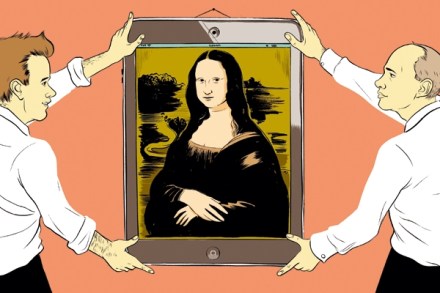
The best way to view some of the world’s greatest works of art is to go nowhere near them. Like other celebrities, the most famous paintings are hard to get close to and there are few less spiritual experiences than being cattle-prodded as part of a crowd through an overpacked exhibition. You may visit in the hope of communing with legendary art but, as often as not, gallery-going is anti-contemplative. While there is no way of replicating the experience of standing in front of a masterpiece, technology can at least allow you your personal space. Take Google Art Project, for example, a collaboration between the omnivorous internet search company and 151 museums, galleries and collections in 40 different countries.
Making Russia great

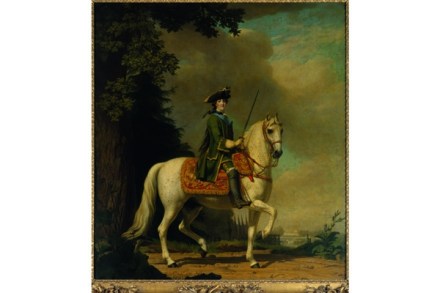
Catherine the Great was born neither a Catherine nor with any prospects of greatness. As Sophie Frederica Augusta of Anhalt-Zerbst she was a minor German princess with modest expectations, but when the Empress Elizabeth of Russia chose her to be the consort of her nephew and heir, the Grand Duke Peter, Sophie’s and Russia’s fates were transformed. In 1744 the 15-year-old Sophie arrived in her new country, converted to Orthodoxy, changed her name to Catherine and set about becoming history’s ultimate self-made woman. She was to rule Russia for 34 years and turn it into a global power. She overhauled Russia’s economy, foreign policy, legal system and education; she expanded its boundaries and encouraged its arts and sciences.

Miniatures to dazzle

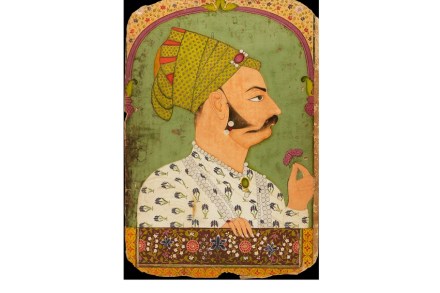
Alongside his distinguished career as a painter, Howard Hodgkin has also long been a collector of note. As a schoolboy at Eton he was given to bouts of running away but while briefly in situ his art master, Wilfrid Blunt (the brother of Anthony), borrowed a 17th-century Indian painting of a chameleon from the Royal Collection to enliven a lesson and Hodgkin was hooked. He started buying Indian pictures then and has continued ever since. ‘My collection has nothing to do with art history,’ he says. ‘It is entirely to do with the arbitrary inclinations of one person.’ It is a method that has, nevertheless, resulted in one of the world’s great collections of Indian art.

Opportunity knocks

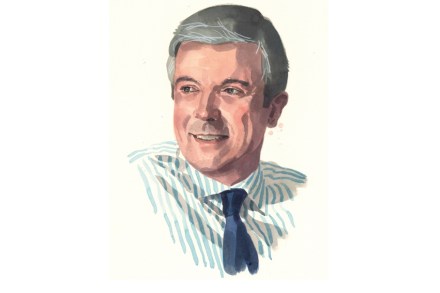
Tony Hall tells Michael Prodger about how he transformed the Cultural Olympiad into the London 2012 Festival The most obvious gift possessed by Tony Hall, or Baron Hall of Birkenhead to give him his proper title, is for cleaning up an almighty mess. When he joined the Royal Opera House in 2001, after a long career at the BBC where he had been director of News and Current Affairs, the place had just chewed through five chief executives in four years. Under his aegis turnover has more than doubled, the number of new operas performed is up, and he introduced £10 student tickets while lowering its reliance on the government grant. However, when he was asked in 2009 to take over the running of the Cultural Olympiad as well, the mess he faced was of even more Augean proportions.

Claude Lorrain: The Enchanted Landscape

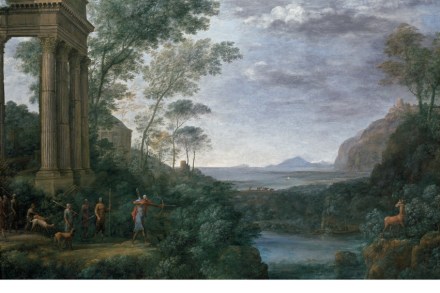
Claude Gellée (c.1600–1682), known as Claude Lorrain, started life as a pastry cook and despite turning his attentions from pies and patisserie to painting he never lost his love for confection. Although he is revered as the father of the landscape tradition and was hailed by Constable as ‘the most perfect landscape painter the world ever saw’ there is precious little that is natural in his paintings. Claude instead mixed his pictorial ingredients — a tree, a ruin, a river — just as he had his butter, flour and eggs and whisked up poetry-frosted views that delighted the delicate palates of his noble patrons.

We are the mockers, too

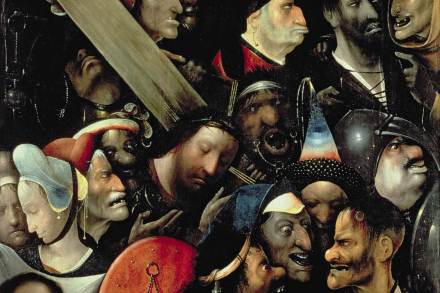
Hieronymus Bosch had a distinctive view of our debased humanity, most distinctly expressed in his paintings of Christ’s Passion, says Michael Prodger Carl Jung described the painter Hieronymus Bosch as ‘the master of the monstrous...the discoverer of the unconscious’. He was, however, only half right. While it is true that Bosch has no peers as a conjurer of phantasms and grotesques, he was no proto-psychologist: he was a man of his times. Bosch lived c.1450–1516 so his times were the late Middle Ages and there was no such thing as the unconscious then — there was the Bible. All human behaviour, good or ill, could be ascribed either to God or to the Devil. And, in Bosch’s worldview at least, the Devil was in the ascendant.

A true portrait

In painting, as in music and literature, artists whose work in old age is comparable to that of their youth are rare beasts: Titian, who traditionally if implausibly lived to be 99, was one; Goya, who died aged 82, was another. But of neither can it be claimed that they saved their greatest work for last. George Stubbs, on the other hand, painted the finest picture of a long and fecund career, and quite possibly the greatest equine portrait in the whole of art, at the age of 75, six years before his death in 1806. ‘Hambletonian, Rubbing Down’, which hangs in Mount Stewart House in Northern Ireland, will not, however, feature in the forthcoming exhibition of his work that opens at the National Gallery at the end of June.

The word made flesh

Alongside the Easter Week story of sacrifice and salvation runs a second narrative – the story of Christ's body. Each stage of Jesus's spiritual journey – from the entry into Jerusalem to the Ascension – has its corporeal counterpart. As the last few days of his earthly life passed by so his physical appearance deteriorated: he was stripped, scourged, crowned with thorns, crushed by the weight of the cross, crucified and pierced by a lance. It is no surprise that Christ's death should become the single greatest life-giving force in art – from the first depiction of Jesus on the cross in about 420 and for the next 1,000 years and more. The Passion narrative provided artists with a ready-made series of set-piece scenes, and each was a painting waiting to happen.

An artist for our times

If faith can be said to have fashions, then it has been worn loosely for several seasons. The Christian belief that underlies the great religious paintings of the Renaissance is for many people an alien concept: it can appear, to modern eyes, too structured, too certain, too sentimental. At this time of year in particular, surrounded by painted-by-the-yard Nativities, the faith that brought them into being seems as distant as the age in which they were created. The German painter Caspar David Friedrich, 1774-1840, is perhaps a type of artist more suited to our times. His Christianity is not insistent but comes wrapped in another - more widely practiced - religion: Nature. He offers the consolations and beauties of both.