Michael Mosbacher

Michael Mosbacher is the co-founder of Standpoint magazine

The Church of England is obsessed with racial self-flagellation

The Church of England has been displaying distinctly masochistic tendencies of late. The Church has previously tried to return its tainted Benin bronzes, even though their specimens were crafted 80 years after the Kingdom of Benin succumbed to British forces and its palaces were looted in 1897. This week the Archbishops’ Commission for Racial Justice – chaired by the Blair-era Labour minister and subsequently High Commissioner to South Africa Lord (Paul) Boateng – issued its first report; there are five more to come over the next three years, so we can anticipate much more self-abasement.

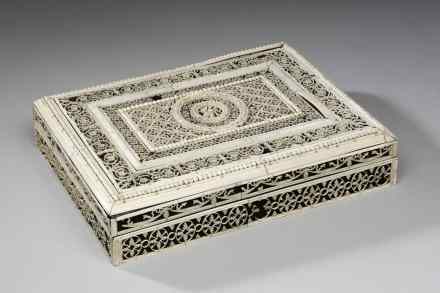
Britain’s ivory ban is needlessly draconian

The world’s most draconian ban on the trade in ivory came into force in the UK this month. It does not increase the legal protections already enjoyed by all living elephants, but rather extends these protections to elephants that have been dead for decades. Trade in ivory and most ivory products from elephants killed after 1947 was already illegal; now all trade in ivory except that covered by five narrow exemptions is banned and subject to a maximum penalty of a £250,000 fine or five years’ imprisonment­­ – even if the tusks were last attached to a living elephant centuries ago.

Will Stroud’s ‘racist’ blackboy clock fall?

Britain’s statue wars are rumbling on. Stroud District Council wants to take down an historic Jacquemart or jack – a mechanised figure which strikes the time with a hammer on a bell – clock located on Castle Street in the centre of the Gloucestershire town. Whilst jack clocks are fairly common in France and Germany, there are only 20 in the UK, most showing knights or similar striking the bell. Stroud’s jack, however, is a thick-lipped black boy in a leaf skirt and hence offends today’s mores.

Don’t bash private schools for educating oligarch kids

Bashing fee-paying schools is a popular sport – and Russia’s invasion of Ukraine is as good an excuse as any to engage in it. Labour MP Ian Mearns has called for schools to lose their charitable status if they take fees from oligarchs linked to the Putin regime. Meanwhile, Tory MP Nickie Aiken has said oligarch kids should be sent back to Russia. Yet these claims risk painting a misleading picture of Russian children at British schools. The reality is that many Russian children educated at our top private schools have nothing to do with Putin, so it's wrong to punish them for his war. There are around 2,300 Russian children at Britain’s fee paying schools, according to the Independent Schools Council’s 2021 census.

Engels mustn’t fall

Should a 3.5 metre high Soviet statue of Karl Marx’s collaborator and patron Friedrich Engels – brought over from Ukraine five years ago – stay up in central Manchester? The concrete likeness of communism's co-founder, dating from 1970, lorded over Mala Pereshchepina, a village a few hours drive from Kharkiv, until 2015. In the aftermath of Russia’s annexation of Crimea and the stoking of pro-Russian insurgents in Donbas, Ukraine decreed that all Soviet era symbols be removed – and Marxism’s co-founder was felled there, only to rise again in Manchester. This Engels from Ukraine was not erected to celebrate Anti-Dühring, his 1877 polemic against the wrong kind of socialist.

Why is the National Portrait Gallery cutting ties with BP?

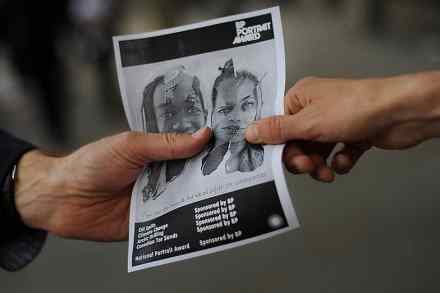
When is money so soiled that merely accepting it makes you tainted? It has been reported today that the National Portrait Gallery (NPG) and Scottish Ballet are ending their sponsorship deals with the oil and gas company BP following years of protests. Climate activists argue that these sponsorships launder the reputations of those responsible for despoiling the planet. BP has long been a significant arts sponsor; the NPG’s annual portrait exhibition has been supported by the company since 1989. And in 2016 BP announced renewed sponsorship deals with the British Museum, NPG, the Royal Opera House and the Royal Shakespeare Company, pledging a total of £7.5 million over five years, starting in 2018.

The Tate’s grubby cancellation of Rex Whistler

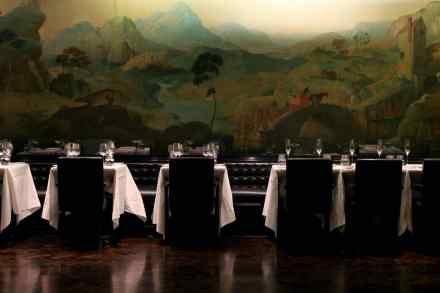
Tate Britain’s Rex Whistler restaurant will never reopen the gallery announced yesterday. The restaurant – once known for its excellent and well priced wine list – won’t reopen due to the apparent offensiveness of the mural on its walls. Diners used to be embraced by the mural, The Expedition in Pursuit of Rare Meats, a painting by Rex Whistler, an artist best known for his decorative murals in grand country houses. He was killed in France in 1944 fighting the Nazis, in other words engaging in anti-racist action. When the Tate restaurant first opened in 1927 it was described as ‘the most amusing room in Britain’. It was a favourite spot for BBC political editors to lunch their political contacts.

Martin Vander Weyer, Laurie Graham, Michael Mosbacher

15 min listen

On this week's episode, we’ll hear from Martin Vander Weyer on the crash of crypto. (00:47)Next, Laurie Graham on the difficulties of downsizing. (04:20)And finally, Michael Mosbacher on the history of the fur industry. (12:20)Produced and presented by Sam HolmesSubscribe to The Spectator today and get a £20 Amazon gift voucher:spectator.

The rise and fall of Britain’s fur trade

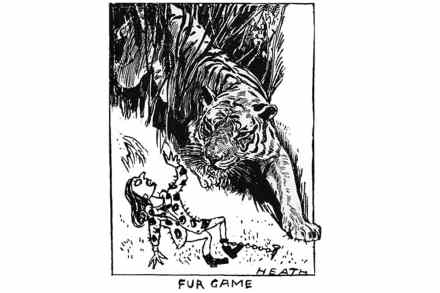
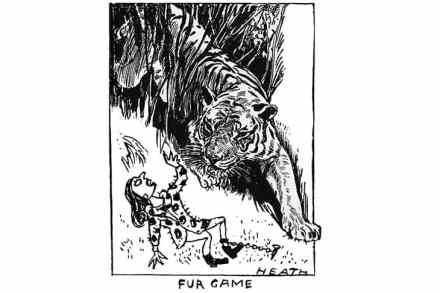
We in Britain have long been much more squeamish about fur than other Europeans. I still well remember the snide comments I would get even in the 1980s when my German mother would collect me from my London school in the fur coats she insisted on wearing. The ocelot number especially raised eyebrows. The UK’s domestic retail market for fur has always been small. Britain’s half--dozen fur farms were closed when Tony Blair’s government legislated to ban them in 2000. As it was, British manufacturing could never compete with Italy on quality, or with Hong Kong, and then China itself, on price. But the wholesale trade has been a very different matter.

Hogarth framed

From our US edition

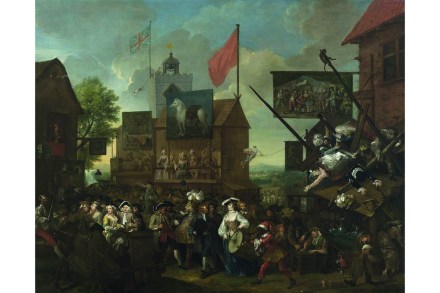
Visiting public art galleries has become a dangerous undertaking — at least if one wishes not to be accosted by ludicrously woke signage and unnecessary trigger warnings. In the past, one might have, justifiably, seen warnings before entering a room exhibiting, say, the garish and pornographic sculptures and photos of Jeff Koons going hard at it with Hungarian-Italian “actress” and part-time politician Ilona Staller, aka Cicciolina. Today, such warnings are found outside galleries exhibiting not such ephemera but the greatest works in the Western canon. Last autumn’s Titian show at the Isabella Stewart Gardner Museum in Boston warned visitors before entering that “Titian: Women, Myth and Power explores themes of sexual assault and violence.

Hogarth

Christ’s Hospital shouldn’t lecture pupils on white privilege

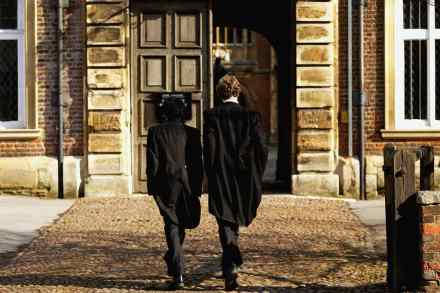
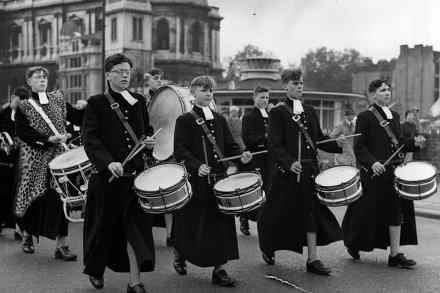
Students and teachers at Christ’s Hospital, a £36,600-a-year boarding school in Horsham, West Sussex, are set to be given ‘diversity training’. The plans, announced in June 2020, mean lessons will be given on ‘micro-aggressions and stereotyping’. Christ’s Hospital is far from the only public school to march headlong down this route; they are following a path previously trodden by the United States’s private schools. But this doesn't mean they aren't making a big mistake.

Why Jesus College shouldn’t have returned its Benin bronze

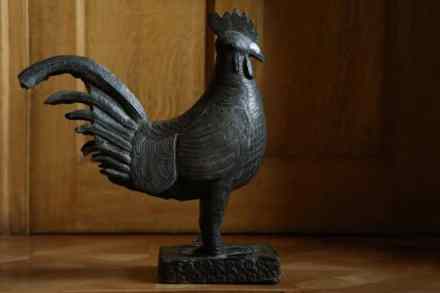
Jesus College Cambridge can claim a world first. It is the first institution, at least in the twenty-first century, to return a so-called Benin Bronze because it was looted in a British punitive raid in 1897 on the historic Kingdom of Benin, now part of the territory of Nigeria. The College’s Master Sonita Alleyne has today handed over its Okukor – a brass statue of a cockerel that took pride of place in the college’s dining hall peering over generations of students – to Nigeria’s National Commission for Museums and Monuments.

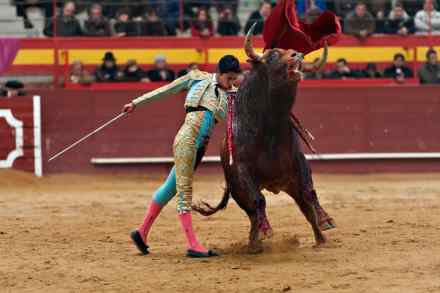
Bullfighting and the fight for Spain’s future

Being sanctimonious about foreigners and their cruelty to animals has long been a British tradition. The taste for dog meat in parts of Asia seems to incense many who perhaps should have matters closer to home to worry about – such as our collective addiction to cheap, factory farmed meat. When I was a child in the 1980s, ghoulish Spanish practices usually involving donkeys at some out of the way fiesta were a mainstay of Esther Rantzen’s unfathomably popular Sunday night programme, That’s Life. But sentimentality about animals has a way of catching on: South Korea’s President Moon Jae-in has suggested banning the consumption of dog meat and Spain is now debating whether children under the age of 16 should be prohibited from going to bullfights.

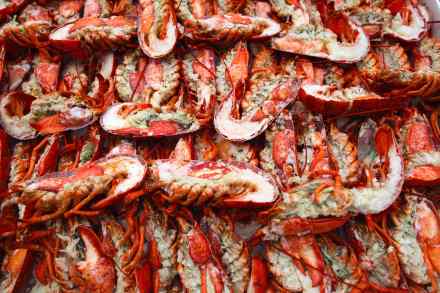
In defence of cruel foods

Fishmongers are an endangered species in London. Thankfully, 15 minutes walk across Westminster from The Spectator’s offices there is an excellent fish stall on Tachbrook Street market in Pimlico. Jonathan Norris’s stall — much frequented by 1990s Tory politicians — does a thriving trade in live lobsters. He will happily boil the crustaceans for you in his lobster kettle, but buying them alive is more fun, especially if you have children in tow. At this time of year the lobsters are Cornish; in the winter live lobster flown in from Canada will have to do. Buying — and then boiling — live lobsters is a sure way of getting children interested in their next meal, at least it is with my two boys.

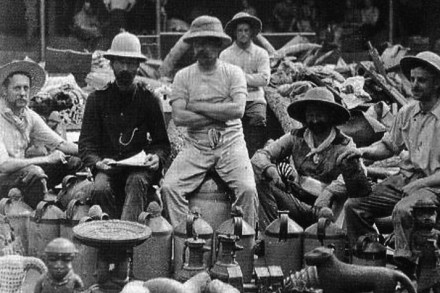
Who really owns the Benin bronzes?

Statues must fall. Bronzes must be ‘returned’. The artefacts in question are the famous ‘Benin bronzes’ taken by the British from the royal court of the Kingdom of Benin in 1897. The present demand is that they be returned to Nigeria; confusingly the kingdom’s former territory is now part of Nigeria, not the modern day Republic of Benin. In 2016 Jesus College, Cambridge announced it would be discussing the return of a bronze cockerel. In May, Germany agreed in principle to the return of the Benin objects in its public collections — Germany holds nearly 300 of the most prized items. In June, New York’s Metropolitan Museum of Art stated it would be returning two plaques.