Michael Ledger-Lomas

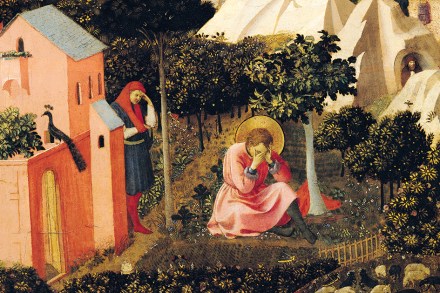
The spiritual journey of St Augustine

When I lived in south London, my Algerian barber used to tell me that he came from Souk Ahras, ‘the home town of Augustine’. I found it strange to hear a forbidding doctor of the early church described as a local boy made good, but Catherine Conybeare shows me that I should not have done. Algerians have remembered what the Church has often overlooked: that Augustine’s thinking owes everything to his birth in 354 in what was then Roman North Africa. Although five million of his words survive, they come to us from the hands of medieval copyists who were more interested in setting out his doctrines than in recording his life. They cut up his sermons and letters, removing irrelevant or cryptic local allusions.

There’s much to be said for nostalgia

Michel Barnier, the chief negotiator for the EU Commission, called Brexit an expression of ‘hope for a return to a powerful global Britain, nostalgia for the past’ – a mood that ‘serves no purpose in politics’. Popular historians have echoed his view of nostalgia as a syndrome which affects declining societies such as Great Britain. The yearning for a happier past got Donald Trump elected and may re-elect him; it breeds xenophobia and locks societies into a doom loop of reruns, remakes and Facebook feeds of photographs from olden times. Or does it? Two new histories of nostalgia are sceptical about how pervasive or dangerous it really is. Agnes Arnold-Forster’s shrewd, digressive book is the more accessible of the two.

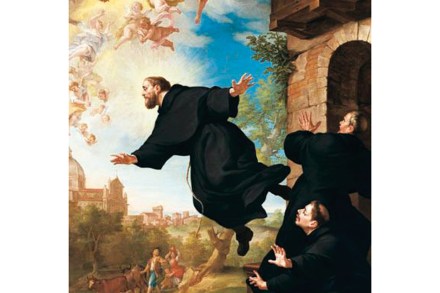
Leap of faith: the miraculous phenomenon of levitating saints

The ‘ordinary academic mind’, William James wrote, struggles to recognise things which ‘present themselves as wild facts with no stall or pigeonhole’. The Yale professor Carlos Eire has a passion for them. His erudite, wilfully eccentric study of baroque Catholicism glories in the supernatural powers of holy persons. He showcases two kinds of miracles they performed: levitation and bilocation, the ability to be in two places at once. Through him, we meet St Joseph of Cupertino, who liked to nest in the tops of trees, and Sister María de Ágreda, a Spanish nun who made 500 trips to missionise the New World without once leaving her convent. Although their feats were facts – widely attested and discussed at the time – we now know them to be impossible.

Our struggle to concentrate is nothing new

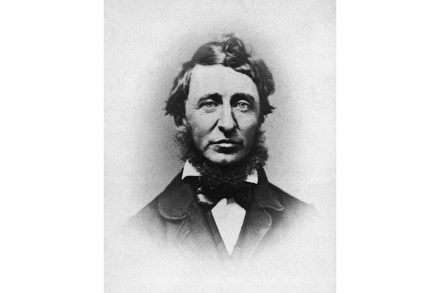
Our ruined attention spans seem to be the consequence of a recent fall from grace. Big Tech was our tempter. Having tasted its dopamine, we got hooked on its likes and notifications. Even Thoreau got bored with practising his ‘habit of attention’ at Walden Pond But while the digital attention economy is new, the struggle to concentrate is not. Caleb Smith’s elegant anthology of American anxieties over attention begins with the perplexities of Henry David Thoreau in early19th-century England. Believing that the ‘mind can be permanently profaned by attending to trivial things’ and that a commercial age allowed ‘no sabbath’ for our thoughts, Thoreau fled Boston for a shack on the quiet borders of Walden Pond.

What has become of the 19th-century explosion of religiosity?

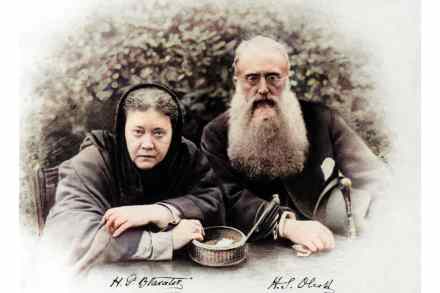
Matthew Arnold cannot have been much fun on holiday. Watching waves crash on the pebbles at Dover Beach, he heard only metaphors for the decay of religion. The ‘Sea of Faith’ had once been full, but now its ‘melancholy, long, withdrawing roar’ filled his ears. Dominic Green thinks he was much too gloomy. He prefers Arnold’s chirpy contemporary Ralph Waldo Emerson, who perceived that faith was not so much ebbing as flowing into new channels. From the time of the 1848 revolutions to the century’s close, railways, industrialised wars and questions raised by geologists and biologists shook people’s faith in Christianity. But the crisis of religion fuelled the expansion of religiosity.