Michael Hann

Mick Hucknall on women, rejection and cultural appropriation

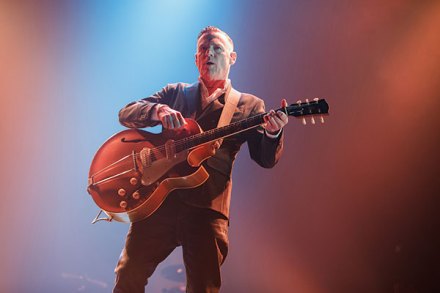
What makes someone become a pop star? Sometimes, it’s true, pop stardom arrives by accident, and its recipient responds not with joy, but horror. More often, though, pop stardom is sought, sometimes to make up for things that are missing in life, and the newly minted star embraces all the benefits fame brings, until those benefits — unlimited sex, unlimited drugs, unlimited drink — become more of a burden than a pleasure. Mick Hucknall appears to fall very much into the latter camp. What was missing was, first, a mother: she left his father when he was an infant, and records became some sort of surrogate as he grew older.

The open-hearted loveliness of Hot Chip

Squeeze and Hot Chip are both great British pop groups. But they never defined a scene. Their ambitions extended further than being hailed by a few hundred people in bleeding-edge clubs. Squeeze piggybacked on punk, but they were quite evidently never a punk group, even if they dressed up as one. They were of the street rather than the art school, but they had no interest in gobbing, and Chris Difford was able to turn vignettes of everyday London life into three-minute comic dramas. (Perhaps he had more in common with John Sullivan — another south Londoner whose characters combined humour and pathos in his scripts for Only Fools and Horses — than he did with Joe Strummer.

Witty, clear-eyed and free of self-pity: Slowthai at Brixton Academy reviewed

Those who cherish the notion that the current prime minister really is ‘electoral Viagra’ should have paid a visit to Brixton last Friday evening to see what actual young people think about him. Before Slowthai — the young rapper from Northampton who ignored complaints about the toxification of political discourse by brandishing a dummy of Johnson’s severed head at this year’s Mercury Prize ceremony — even took to the stage, the 5,000 or so kids took up a chant of their own volition: ‘Fuck Boris! Fuck Boris!’ The Britain of Slowthai and his fans is not one in which anything can be overcome with a bit of Dunkirk spirit.

At their best the Psychedelic Furs are fantastic

It’s amazing what the movies can do. In 1986, the John Hughes teen flick Pretty in Pink — the one where poor girl Molly Ringwald and rich kid Andrew McCarthy get it together despite their friends’ disapproval — took its title from a Psychedelic Furs song, which featured heavily in the film. Whoosh! Suddenly they were proper stars. Or rather they were for a year or so. They reformed in 2000, but were just another band on the nostalgia circuit. Then along came another movie, the 2017 arthouse hit Call Me By Your Name, which featured their 1982 single ‘Love My Way’. Since then, the venues have grown again, the reviewers returned and the notices have been glowing. There are even whispers of another album.

An eight-year-old’s dream: Muse at the O2 reviewed

‘Butterflies and Hurricanes’ by Muse was on heavy rotation on MTV at a time, 15 years ago, when my infant son could be magically coaxed away from tears and back to sleep by pop videos. The only lasting effect of this proved to be my developing a deep and lasting aversion to Muse, because I saw that video what felt like 160 times a day for three months. Having watched them at the O2, I wish to apologise. Muse, my disdain was misplaced. You really are terrific. I’m still not sure I would want to listen to an unadulterated diet of their albums — a Christmas dinner of prog, glam and metal, seasoned with quasi-classical interludes and attempts to sound like Prince — but I’d run, not walk, to see them again from a good seat in an arena.

The most exciting band I have seen for years and years: the Murder Capital reviewed

It’s entirely possible for a band to be quite the most brilliant thing in existence for the briefest of times, and for them to leave almost no trace on the world. The writer Jon Savage has been known to say that Vic Godard and the Subway Sect were the best band in the world for a few months in 1977, but that year’s mythology celebrates the Sex Pistols and the Clash. In the late 1980s, after seeing a handful of extraordinary, incandescent shows, I truly believed the House of Love would dominate rock music for the next decade. The House of Who? Quite. But I wasn’t wrong about how great they were for that short time.

Real rock

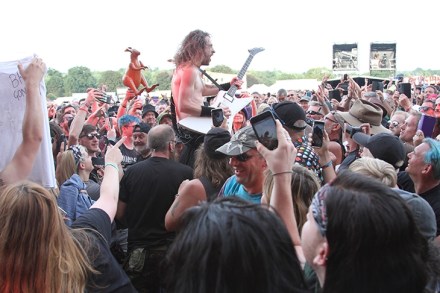
Last weekend, in a pleasant park outside Maidstone, a most unusual rock festival took place. For one thing, it was a rock festival. Despite ‘rock festival’ being a common term for any live music event featuring multiple artists taking place outdoors, there are very few actual rock festivals any more. There are festivals for specific forms of rock — the metal events Download and Bloodstock — and there are festivals that have a few rock bands amid everything else. But not festivals that feature a broad range of bands, all of whom can be called ‘rock’ — hard rock, prog rock, country rock, blues rock. For another, there was the crowd.

King of rock

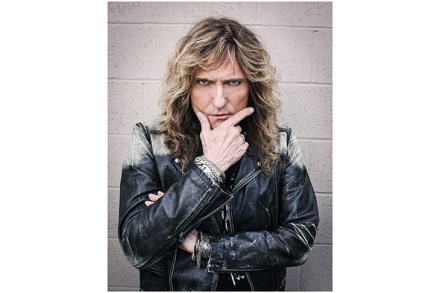
‘Invest in your hair,’ advises David Coverdale, a man with a shag of the stuff glossier than a supermodel’s and as big as a guardsman’s bearskin, even at the age of 67. (He won’t say that number. He insists his age is ‘three score and seven’.) ‘People say to me: “Do you colour your hair?” And I say: “Absolutely not.” ’ He pauses for half a beat. ‘ “I have a super hairdresser who does it for me.” Some guy came on Instagram, telling me: “Come on, David, it’s time to get rid of the wig.” It’s not something I bought from Frederick’s of Hollywood, you silly bastard! It’s a crowning glory!’ David Coverdale’s hair matters because of who and what he is.

Fashion victims

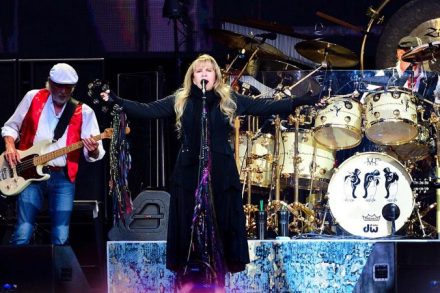
There is something inexplicably exciting about pop’s notion of a ‘scene’: young musicians of similar outlooks drawn together by a common aim to transform music, referring to the past to create something of the present. But enough of Fleetwood Mac and the British blues boom. Instead, to fashionable Dalston, where a young quartet called Black Midi played to an uncomfortably full room in a converted cinema.

The grrrls are back in town

The last time Bikini Kill played in London was in a room that now serves as the restaurant of a pub in Kentish Town. What a change 26 years can bring: on their return to the city last week, they filled the 5,000-capacity O2 Academy, Brixton, for two nights. That changed status, in truth, is not the result of the timelessness of their music — scrappy punk rock that at its most tuneful was pleasingly familiar and at its least tuneful approximated the sound of fingernails scraping down a blackboard at extreme volume. So why had 10,000 people bought tickets to see them in London?

The weakest link

May was a cruel month for those middle-aged liberals who treasure their old alternative rock heroes. There was Morrissey, appearing on American TV wearing a For Britain badge. There was XTC’s Andy Partridge tweeting that ‘the holocaust is not holy writ, it isn’t a religion, it can be historically revised’. And there was Bobby Gillespie of Primal Scream — the idiot inter pares of rock stars who foment revolution from the gates of their kids’ private school — appearing on Newsnight to say Madonna was ‘a total prostitute’ for performing at the Eurovision Song Contest in Israel (has he said the same to his friend Nick Cave, who has played Israel and called the cultural boycott ‘cowardly and shameful’?).

The odd couple | 23 May 2019

Many is the pop star who has craved gravitas. Only Sting, however, has pursued it by covering John Dowland on an album on which he played the lute. Only Sting has released an album of winter-themed madrigals. Only Sting has written a musical about the closing of the shipyards in Wallsend. He’s the rare pop star who could, should he wish, have a pop at Slavoj Zizek for being just a bit too populist and crowdpleasing. All of which makes his current activities — an album and a tour with Shaggy, the reggae star who’s the reduced-for-quick-sale ready meal of the genre, and a man who is to gravitas as Chris Grayling is to competence — rather astonishing.

Yesterday once more

Being old is big business in live music nowadays, in a way it wasn’t even 25 years ago. When Take That were still a boy band in the early 1990s, as opposed to a man band, the idea that in middle age they would be one of the most successful live groups in Britain would have been laughable. Yet here they are, playing eight nights at the O2 Arena, making it a total of 34 shows they have played there since it opened, more than any other act. Just as fanciful would have been the idea that Pink Floyd’s drummer could put together a group featuring Gary Kemp of Spandau Ballet, and tour the world performing only songs Pink Floyd recorded before 1973’s The Dark Side of the Moon, the ones his former bandmates David Gilmour and Roger Waters don’t play. Yet here they are, too.

Ecstatic misery

Last autumn, anyone who a) has an interest in pop music, and b) reads the weightier end of the press, would have come to the conclusion that the world was shortly to enter some kind of musical singularity, in which all of civilisation would be transformed by the 39-year-old Swedish pop singer Robyn. ‘After more than a half-decade of psycho-analysis, a relationship meltdown, the death of one of her closest collaborators and four years spent working on her masterpiece… a new Robyn is ready to return,’ a profile in the New York Times solemnly pronounced, ahead of Honey, her first album for eight years. The Guardian devoted 6,000 words — 6,000! — to her ‘seismic cultural impact’.

Playing dead | 21 March 2019

In March 1968, Frank Zappa released an album called We’re Only in it for the Money. Presumably, then, Zappa — who died a little over a quarter of a century ago — would be delighted to discover that he begins his latest tour next month, with a series of shows in the US followed by a visit to the UK in May, including a show at the Palladium in London. Zappa will be appearing in holographic form, using footage filmed in a Los Angeles rehearsal space in 1974, his disembodied voice backed by a live band. The show is to be made up of ‘footage that no one has ever seen, as it has been locked in the vaults since the early 70s,’ says Jeff Pezzuti of Eyellusion, the company that produced the hologram.

Everything he’s done

On 29 June 1991, a record called ‘(Everything I Do) I Do It For You’ by Bryan Adams entered the UK charts, at No. 8. At that point, I was blissfully in love with my girlfriend, had just got a first at university and had won a scholarship to a postgraduate journalism course. By the time it departed from the charts, on 14 December — after a run that included a still-record 16 weeks at No. 1 — I had been dumped by my girlfriend, had dropped out of the journalism course, and my dad, who had been poorly when the record entered the charts, was a month away from dying. During the course of one single’s chart run, all the certainties in my life had been overturned.

Today’s Specials

It was summer 1981, and the towns and cities of Britain were alight. There had been riots in Brixton, south London, that April and on 10 July there were more — and not just in Brixton. Other parts of the city followed. And so did a long list of other places, from the unsurprising — Sheffield, Preston, Leicester — to the ones where the idea of a riot might have been expected to have disappeared with Captain Swing: Cirencester, Aldershot. ‘I was sitting in my flat watching the news, the riots happening all over the place,’ says Horace Panter, the bass player of the Specials. ‘And “Ghost Town” was No. 1.

It’s a girl thing

The teenage girls are often right. They were right about Sinatra and they were right about Elvis. They were right about the Beatles and the Stones. They were right, too, about the 1975, whose emergence in 2013 playing tuneful and accessible pop-rock with unusually self-questioning lyrics was driven by a large and voluble following among those teenage girls. Naturally, that led a swathe of male critics to write them off. One dismissed them on the baffling grounds that their songs were ‘ridiculously catchy’, as if that were a bad thing; the NME proclaimed them the worst band in the world Six years on, the critics have caught up.

Renaissance man | 13 December 2018

The first thing Gary Kemp bought when Spandau Ballet started making money was a chair. He’s very proud of that chair. He talks about his chair in tones midway between one of Monty Python’s four Yorkshiremen and Nicholas Serota. ‘I wasn’t making any money until “True” was successful, in 1983,’ he says. ‘The first thing I really bought was a William Morris chair. What the fuck is a 22-year-old boy living in a council house with his mum and dad doing going out and buying a William Morris chair?’ It was the first chair anyone in the Kemp family had ever owned outright, he says. ‘Everything in our house was on HP, apart from the cat. It’s very different to the old Alan Clark thing. We were handed down no furniture.

Once in a lifetime

Let’s get the ‘was-it-good?’ stuff out of the way first. Yes, it was good. It was better than good. It was incredible, fabulous, dazzling. It was whatever adjective you want to throw at it. I can’t recall seeing a more engrossing pop production, ever. You don’t just get great songs — come on, you’re not going to quibble about ‘Once in a Lifetime’, or ‘Burning Down the House’, or ‘Slippery People’, or ‘Road to Nowhere’, are you? — played by brilliant musicians. You get them presented in a way no one has thought to present a rock show before. That way was to remove all fixed points from the stage.