Michael Hann

Wispy, gauzy beauty: This Is The Kit, Barbican, reviewed

From our UK edition

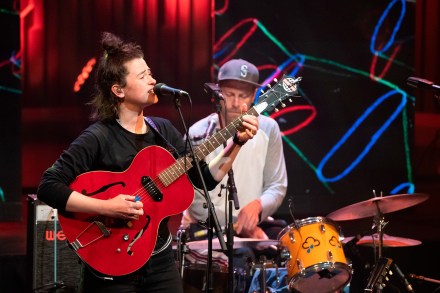
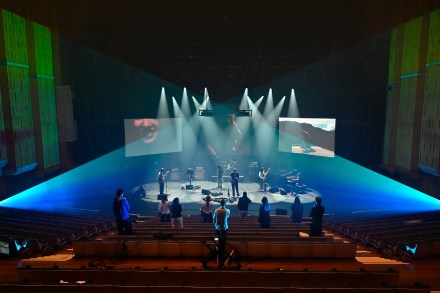
On the way home from This Is The Kit’s show at a socially distanced Barbican, I listened to Avalon by Roxy Music, which had been brought to mind by the previous 90 minutes or so of music. It’s perhaps worth saying that This Is The Kit — the nom de chanson of Kate Stables, backed by a three-piece band and three horn players — have absolutely nothing in common with Avalon by Roxy Music, visually or musically. Stables, hair piled on top of her head, and dressed for comfort, not speed, did not look as though she intended to boost the Colombian export trade after the show; perhaps, instead, she would be offering forthright opinions about agribusiness over a lentil bake.

A perfect welcome back to live music: Sarathy Korwar at Kings Place reviewed

From our UK edition

There is a reason music writers tend to stick with music writing rather than transferring their manifold talents to the business side of things. Our dirty secret is that, for all our exquisite taste, most of us — with a few exceptions — have no conception of what the rest of the world actually wants from their music. The first piece I ever wrote was a student newspaper review of a gig in a Leeds pub, in which I gushed about the headliners but noted, with a sneer, the fact that the support didn’t appear to have any actual tunes. We would be hearing no more from them, I cautioned. The headliners were a long-forgotten band called Tad. I forget what happened to the other band; their name was Nirvana.

‘I’m not interested in moral purity’: St Vincent interviewed

From our UK edition

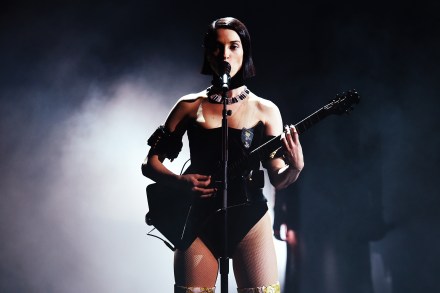
St Vincent — Annie Clark, a 38-year-old singer-guitarist of prodigious gifts — spends a lot of time confounding people. She confounds them with stage shows that are less gig than theatre, ostentatiously choreographed and fabulously provocative (though not in any crude sense). She confounds them with an image that morphs from album to album (for her sixth, Daddy’s Home, she has adopted the dissolute Cassavetes-heroine look). She confounds them by, in a puritan age, placing sex squarely within her work, though usually in a plausibly deniable way (the title Daddy’s Home refers to her father’s release in 2019 from prison after serving nine years for his part in a stock-manipulation scheme. She says of the title: ‘It’s pervy’).

Watch kids go giddy in Niamey: Mdou Moctar live in Niger reviewed

From our UK edition

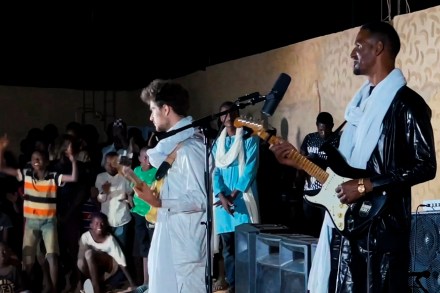
The other week someone posted on Twitter a link to a YouTube clip titled ‘Family Lotus and D.J. Cookin’ at the Golden Inn, July 4 1981’. It showed a bunch of long-haired people on a makeshift stage in the New Mexico desert and a handful of people dancing around in the dust to the music, which was a weird, trippy, hyper-freaky form of electrified banjo music: ‘psychedelic bluegrass’, apparently. Watching the stream of the Tuareg guitarist Mdou Moctar was an unnervingly similar experience: he and his three-piece backing band were set up in the dust outside a friend’s house, watched by whoever came along. And Moctar’s guitar playing — blurrily deft repeating patterns — was deeply reminiscent of the banjo playing in the YouTube clip.

The Decemberists are the only band I adore who have a number of songs I actively despise

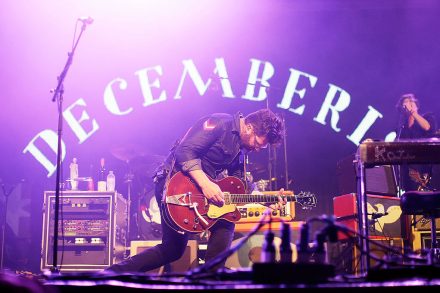
Sixteen years ago I interviewed a young American musician whose band had just signed to Rough Trade. We met in a café in west London, and he had with him a bag of records he’d just bought. In that bag were a handful of classic albums from the English folk revival, and in the intervening years Colin Meloy has steered the Decemberists to a frankly unlikely level of success, even topping the US album charts with The King Is Dead. Over three April weekends they have been performing shows to mark their 20th anniversary (which was actually last year, but pandemic and all that), which highlighted just what an idiosyncratic band they are. The English folk came through in the beautiful ‘January Hymn’, but also in one of Meloy’s other loves — the prog-metal side of folk.

decemberists

Moments of pure wonder: Folk Weekend Oxford reviewed

From our UK edition

Has any musical moment extended its tendrils in so many unexpected directions as the English folk revival of the mid-1960s? In its beginnings, it was a source of pilgrimage for Bob Dylan and Paul Simon, who pinched his arrangement of ‘Scarborough Fair’ from Martin Carthy way back in the dim and distant past when the Beatles walked the earth. It spread into progressive rock and heavy metal (the black metal musician Fenriz, of the Norwegian band Darkthrone, told me recently that he considered Steeleye Span to be an important band in promoting pagan traditions).

The songs are still as fresh and appetising as a hot loaf: The Lightning Seeds livestream reviewed

From our UK edition

One thing about a streamed festival is that the toilets are better than at the real thing. The other thing, though, is that it’s not really a festival. That’s not to knock the North Will Rise Again (TNWRA), which took place over Saturday and Sunday nights a few weeks back, the first featuring Liverpudlian bands and filmed in that city, the second coming from Manchester, with Mancunian groups. The simple fact is, you can’t replicate a festival online: what the best festivals offer is chance, when one stumbles across something wholly unexpectedly on some outlying stage at an unpromising time of day. Simple economics make that impossible for an event charging a tenner: unless you were to get Woodstock levels of attendance, there would be no way to pay the bands.

Reminiscent of Roxy Music’s cocktail sound: The Weather Station reviewed

From our UK edition

One of the unforeseen consequences of the rise of streaming was a change in the very structure of the pop song. Listeners who needed only to click a button to explore an unfathomable amount of music rapidly lost patience. They were less willing to listen to long songs; they were less willing to wait for songs to develop, even over the course of three minutes; they liked songs that sounded the same as other songs they were familiar with. And so, over the past decade or so, pop has adopted a formula: songs now tend to open with a huge hook, then throw more hooks on top of that, and then — because a small cadre of songwriters and producers are viewed as safe hands — they get remade in barely different forms again and again.

Revelatory and grubby: Framing Britney Spears reviewed

From our UK edition

The most headline-grabbing of these three pop docs was Framing Britney Spears, part of the New York Times Presents documentary series, and a bit of a worldwide sensation. It was both revelatory and grubby. As many have noted, the footage of interviews with Spears as a prepubescent and teenager was so deeply unpleasant, so unrelentingly sexual, that it seemed to come not from 20 years ago, but from Neanderthal times. The simple accumulation of the public record was horrifying. No wonder people such as Jimmy Savile were able to thrive. If television interviewers could ask a teenage girl about her breasts, about whether she was having sex, then is it any wonder young women could be treated as sexual chattels behind closed doors?

The death of the mainstream band: Black Country, New Road reviewed

From our UK edition

Twitter was awash with mockery last week, after Adam Levine, the singer of the American group Maroon 5, was interviewed on Apple Music and told Zane Lowe: ‘It’s funny, when the first Maroon 5 album came out there were still other bands. I feel like there aren’t any bands any more, you know?’ Out came the outraged, citing their favourite bands with fanbases numbering in the dozens. What about the fertile deep sludge scene based around Pimple Nose Records of Butt Wipe, Montana, eh? Then there were the K-Pop stans, demanding BTS — a seven-piece vocal group who, had they been formed in England in the 1990s, would clearly have been a boyband — be recognised as functionally equivalent to the Rolling Stones (there’s no moral judgment there, BTS stans.

‘I like upsetting people’: Steven Wilson interviewed

From our UK edition

Steven Wilson is going about becoming a pop musician entirely the wrong way. For one thing, he’s into his fifties, not typically the point in life at which budding chart-botherers launch their assault on hearts and minds. For another, in an age in which pop stardom and identity politics have become entwined — in cultural discourse, at least, even if not necessarily in your teenager’s listening habits — he has everything going against him. ‘I come from a very well-adjusted family. I’m heterosexual. I’m white.’ Of course, Wilson doesn’t really expect to be competing against Stormzy and Dua Lipa and Cardi B.

Epic prog rock without the widdly-woo solos: Mogwai at the Tramway reviewed

From our UK edition

You very possibly know the music of the Glaswegian band Mogwai, even if you don’t think you do. You might well have not listened to a note of their ten studio albums, their three live albums, or their four compilations. You may never have seen one of their pulverisingly loud live shows, or heard them on BBC 6 Music, their natural home. But you may well have heard them on TV, either as background music, or on one of their commissioned soundtracks — seven of them now, including the current Sky Atlantic mob series ZeroZeroZero.

Makes me nostalgic for an era when music was more than a click away: Teenage Superstars reviewed

From our UK edition

In Teenage Superstars, a long and slightly exhausting documentary about the Scottish indie scene of the 1980s and ’90s, there was a moment when a man revelling in the name of Stephen Pastel — his real name is Stephen McRobbie, and he must be pushing 60 now — was described as ‘the mayor of the Scottish underground’. Such a position — even one, as this, necessarily unelected — would be all but impossible to occupy today. With the internet and democratisation of music — its creation, its distribution, its consumption — has come the fallowing of what were once its most fertile fields: the local scenes created and inhabited by small numbers of interconnected people and encouraged by confident tastemakers — such as Pastel.

Proudly ridiculous and wholly glorious: KLF’s Solid State Logik reviewed

From our UK edition

Grade: A What a miracle the KLF were: an elaborate practical joke at the expense of the music industry, seemingly both wholly cynical and completely sincere, who for a short period at the start of the 1990s bestrode the singles charts like a novelty colossus. A reissue of their greatest hits album wouldn’t seem cause for celebration — doesn’t the world have quite enough singles collections? — but the nature of the KLF’s disappearance (they burned a million quid and deleted their entire back catalogue) makes this unexpected reappearance a bit of an event. These are hit singles that fizz with silliness in a uniquely British way.

Meet the front man of ‘the most revolting band in the world’

From our UK edition

Corey Taylor, the singer of Slipknot, laughs when I observe that he is disappointingly well adjusted. He had just been explaining that he does his own cleaning at home, that he ‘hates seeing privilege and entitlement’, that he can get from place to place without needing his hand held (you might scoff, but many musicians get infantilised by a life of indulging and being indulged). ‘I have a very healthy ego,’ he says. ‘But I also know to keep it in check as much as I can, because I don’t want to be that dude.’ Which is not to say Slipknot’s career has been free of incident. Far from it. Though they have released only six studio albums over the past 21 years — the last three all US No.

One of the few genuine British visionaries at work today: Richard Dawson at the Barbican reviewed

From our UK edition

How hard must it be to make music that sounds like no one else? And how unrewarding, often, as well? Music consumption has been refined by streaming services to encourage listeners towards songs that sound like ones you already like; pop songwriters, driven by those same algorithms, strive to write songs whose entire purpose is to deliver something familiar within the first 30 seconds. Richard Dawson, a partially sighted and portly Geordie with lank, greying hair, who walked on to the Barbican’s stage wearing a vintage Newcastle United tracksuit top and blinking as if he’d expected the room to be empty, makes music that sounds like no one else, even with the sparsest of accompaniment.

There’s a magic to hearing music in such small audiences: Divine Comedy reviewed

From our UK edition

Three shows in a week! Why, it was just like the first week of March. There was, however, little of that last-days-of-Weimar giddiness about these. How could there be, when there were 300-odd people dotted around Barbican Hall’s 2,000 seats, and 50 or so of us at Oslo — normally a packed, standing-only club — sat on stools, unable even to waggle a hip? One felt sad for Working Men’s Club, a young quartet from Yorkshire whose first album — released earlier this month — had critics cheering. They should have been swanning around the country, heading off to Europe, maybe popping across the Atlantic, to play in New York and LA at least. Instead, their tour was three half-hour shows in one evening in a single London club.

‘Cocaine addiction is time-consuming’: the rise and fall of Kevin Rowland and Dexys

From our UK edition

When Dexys Midnight Runners reached No. 1 in the singles charts in spring 1980 with the song ‘Geno’, the band had to travel to London for their coronation appearance on Top of the Pops. For the first time they could afford the train fare. But Kevin Rowland — their singer, leader, creative director, boss, whatever you want to call him — insisted they continue to jump the barriers at Birmingham New Street. ‘I said, “Come on lads, we’re still going to bunk the trains.” And they went, “What?” “Come on, the inspector’s coming. We’ve got to get in the toilets.” And the drummer said, “Kev. We’re No. 1 in the charts and we’re bunking the trains…”. “GET IN!

The people who were idiots at gigs in early March are still idiots

From our UK edition

Is the world ready for the return of live rock music? On the evidence of the first gig in London since lockdown, no. The people who were arseholes at gigs in early March are still arseholes at gigs, but there’s rather more than an obstructed sightline at stake now. Miles Kane was the guinea pig for the experiment, playing to 150 people who’d applied for tickets and who stood in a summer downpour watching him play acoustically. More on Kane later, but his presence was the least important thing here. The gig was the first in a series of small shows in Camden Market, and the organisers had taken care: masks were compulsory and the ground was marked with green dots to ensure everyone stood where they were supposed to.

The problem with livestreaming heavy metal? No moshpits

From our UK edition

There was only so long anyone could put up with the live musical performances of the early days of lockdown: musicians in their living rooms, performing stripped-back versions of their songs in broadcasts that froze or stuttered. The time would come, inevitably, when everyone wanted more. Viewers would want something more closely approximating a full show; musicians would want to be paid. Laura Marling was early through the gates: last month, she promoted her latest album with two concerts at the Union Chapel in London, played to an empty hall but streamed for UK and US audiences.