Michael Hann

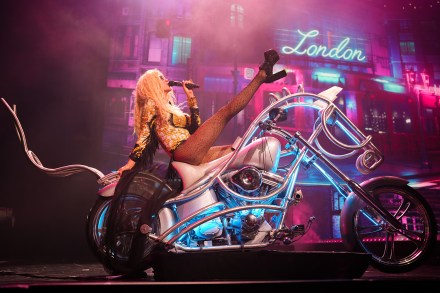
Virgin on the astonishing: Madonna, at The O2, reviewed

From our UK edition

When I was a kid listening obsessively to AC/DC and Iron Maiden and Black Sabbath, I despaired of music writers. How come none of them – except the staff of Kerrang! magazine and a couple of writers on Sounds – could see the majesty and splendour of this music? Why were they always banging on about flipping Echo and the Bunnymen and Joy Division, or harking back to old man Dylan? These days, all three of those bands are to some degree or another as revered. Not everyone loves them, but you won’t find many serious critics – even those who don’t personally care for ‘Whole Lotta Rosie’, ‘The Number of the Beast’ or ‘War Pigs’ – who’ll simply write them off as worthless. ‘A wandering worthless exercise’, wrote NME of Madonna’s Like a Virgin.
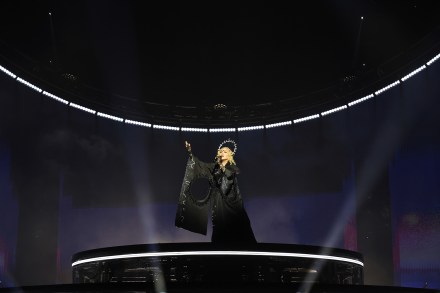
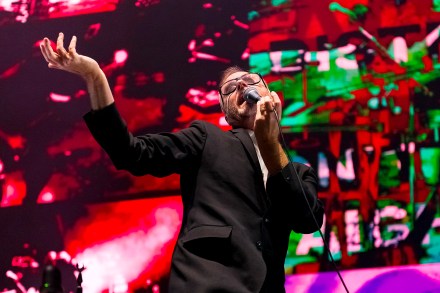
An awfully long night for a band without any bangers: The National, at Alexandra Palace, reviewed

From our UK edition

Over the past few years, the National have become the most important band in modern rock music. The strange thing is that this has happened at a point when their own work has perhaps lost a little of its earlier intensity. They’ve become important because they have come to represent something to other artists: a kind of adventurous but accessible integrity. The brothers who are the musical core of the band – guitarists Aaron and Bryce Dessner – have been so in demand that they have worked with, between them, (deep breath) Taylor Swift, Ed Sheeran, Michael Stipe, Sharon Van Etten, Bon Iver, Philip Glass, Steve Reich, Paul Simon, Sufjan Stevens, Nico Muhly, Jonny Greenwood, Bruce Springsteen and Ryuichi Sakamato. And those are just the ones you might have heard of.

If you can’t get something out of the songs of Shania Twain, you’re a lost cause

From our UK edition

Pop critics routinely make the mistake of assuming the most important acts are the ones copied by the groups they like. So to a generation of writers who grew up listening to 1980s and ’90s indie, the Velvet Underground are the second most important group of all time, after the Beatles. Don’t get me wrong, I love the Velvet Underground, and they are hugely important in rock history. But in reality the second most important group in rock history is Van Halen, because for a decade or so the vast majority of hard-rock bands – who in the 1980s were commercially huge – were trying to imitate them in one way or another.

The Strokes are always terrible – why do I keep going back to see them?

From our UK edition

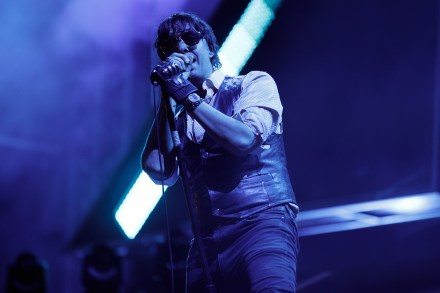
Quite when the concept of coolness became a thing is uncertain, even to etymologists. As early as 1884, an academic paper noted the expression ‘Dat’s cool!’ among African-Americans. But it’s about 100 years since ‘cool’ entered the lexicon as an unambiguous description of something to aspire to (via jazz, inevitably), and it’s still a crucial concept in the world of pop: it’s being cool that meant the Strokes could attract 50,000 or so people to east London, even though most of those present were at primary school when the band released their two first two albums, which are the two on which their reputation rests, and songs from which comprised nearly half their set.

It was midnight in a field in Wales and I was lying face down in six inches of mud: Green Man Festival reviewed

From our UK edition

I love Green Man. The smallish festival is the second most beautiful site I’ve ever visited (after G Fest, which is situated on a beach in a fjord in the Faroe Islands). Nestled in a valley between the mountains of the Brecon Beacons, it has great bills, it’s impeccably organised and I feel nourished by it. But, in the interests of being honest about festivals for those who have never been, I should also confess that this year it supplied the single most miserable experience of my music-watching life. It was midnight, in a field in Wales, and I was lying face down in six inches of mud Friday was the kind of day Noah might have felt a little discombobulated by. It began raining before dawn and it never let up. Come nightfall, the wind picked up too.

Is it all an elaborate practical joke? Mac DeMarco, at Hackney Empire, reviewed

From our UK edition

It’s not just who our pop heroes are that marks the passing of the generations; it’s how those heroes present themselves. Kevin Rowland, who turns 70 next week, appeared on stage for his London album launch in a jaunty sailor’s hat and striped top, looking as though he’d just come from a fashion shoot. Mac DeMarco, aged 33, ambled on in baseball cap, shlubby T-shirt and jeans. Rowland was upstanding, commanding and just a little forbidding. DeMarco sat on a stool and told a long story claiming that he and his keyboard player had been Oregon miners: a story which extended to include coprophagia, hair fetishism and maple syrup. Rowland is total commitment; DeMarco is total detachment. Both were adored above and beyond the usual level of dedication.

A giddy delight: Regina Spektor, at the Royal Festival Hall reviewed

From our UK edition

We’ll get on to the brilliance of Regina Spektor in a moment. But first a question: why are pop music fans treated so abysmally? The afternoon of Spektor’s second sold-out show at the Royal Festival Hall, the venue tweeted that she would be on stage at 7.30 p.m. She actually took to the stage a few minutes past 8 o’clock. Spektor was absolutely magnificent once she did come on. She filled the room with charisma, charm and wit If that were a one-off, so be it. But anyone who goes to a lot of shows is familiar with how malleable the concept of stage-time is in pop music. Lana Del Rey had her Glastonbury set cut short because she was so late coming on – apparently she was having her hair done. It’s maddening. Why can they not meet their call times?

Intoxicating: Bruce Springsteen, at BST Hyde Park, reviewed

From our UK edition

Seven years ago, I asked Bruce Springsteen what he meant when he talked of the covenant between himself and his audience. It was a long, thoughtful and thorough answer, and when I transcribed it, I realised he would have won Just a Minute, so clear was his reply. Part of what he said was this: ‘I have built up the skills to be able to provide, under the right conditions, a certain transcendent evening, hopefully an evening you’ll remember when you go home. Not that you’ll just remember it was a good concert, but you’ll remember the possibilities the evening laid out in front of you, as far as where you could take your life, or how you’re thinking about your friends, or your wife, or your girlfriend, or your best pal, or your job, your work, what you want to do with your life.

Why aren’t Spoon filling stadiums?

From our UK edition

Here’s a mystery for you. Why were Spoon, one of the most dynamic, sharpest rock bands in the world, playing a single night in a north London town hall (capacity 890) while Arctic Monkeys were playing three nights at Arsenal’s ground (capacity 59,000) as part of a UK tour that encompassed eight other stadiums in the UK, plus one arena, one park and Glastonbury? It’s not that Arctic Monkeys aren’t good – no one gets that kind of critical unanimity without being good. It’s just that Spoon are better, and better than almost everyone else. Onstage in London, aided by a genius sound engineer, Spoon were perfection So why aren’t Spoon filling stadiums? First, they rarely come to the UK.

Brilliantly unhinged: Grace Jones, at Hampton Court Palace, reviewed

From our UK edition

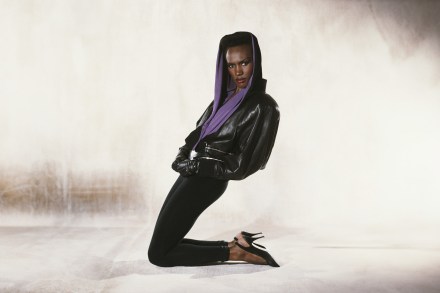
Some artists need flash bombs to make an impression on stage. Some need giant screens. Some need to run around like hyperactive toddlers. All Grace Jones needed was a hula hoop – not the delicious potato snack, but the plastic ring. For the ten minutes or so of ‘Slave to the Rhythm’ that ended her set on a balmy evening in the courtyard of Hampton Court Palace, she languidly rotated the ring around her hips, all while she strode across the stage, then climbed a set of stairs. Not a single revolution was missed. I realise that you don’t come to these pages for reviews of hula hooping, but by God, it was astonishing. I like to think it was what Henry VIII would have wanted. It was a fitting end to a brilliantly unhinged show.

One of the most tuneless, vapid, dismaying things I’ve ever seen: Mötley Crüe, at Bramall Lane, reviewed

From our UK edition

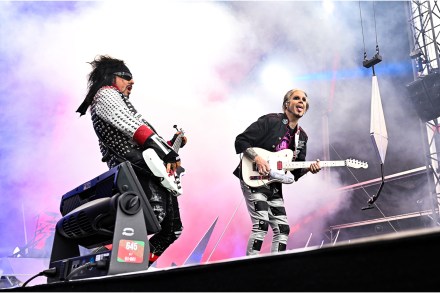
I’m not sure I’ve ever seen anything worse than Mötley Crüe in Sheffield. Nothing more tuneless, empty, vapid and dismaying. The Los Angeles glam-metal band became superstars in the 1980s, largely by wearing lots of make-up and doing terrible things, but I’ve never understood why. Even those who weren’t repulsed by the band members’ behaviour and personalities surely couldn’t have detected any actual tunes in there. At Bramall Lane, with a viciously loud PA, the few melodies that were there were largely undetectable. And the band – now in their sixties – still gloried in their obnoxious infantilism.

In praise of goths – the most enduring of pop subcultures

From our UK edition

More than 40 years on, every town still has them, wandering the streets with pale skin, more make-up than you can find in Superdrug, swathed in acres of black fabric. Goths, rather unexpectedly, have turned out to be the great survivors among pop subcultures. Others have risen and faded, but the goths – laughed at, ignored, dismissed – have endured, seeing their style and their musical tastes slowly incorporated by everyone else (there’s even a goth version of hip-hop, known as ‘horrorcore’). Goth was a fitting name for the music: overbearing and foreboding; delivering ecstasy through the building and releasing of tension rather than through major chords and primary colours; drawing on punk, Bowie, the Doors and the Stooges.

The new Pogues: The Mary Wallopers, at O2 Forum Kentish Town, reviewed

From our UK edition

I was listening the other week to a solo album by an ageing rock guitarist, once terrifically famous. It was really very good, but I couldn’t bring myself to care about it because it clearly didn’t matter: this man’s career is static and it is likely to remain so. The album will make no impact on the wider world and, despite liking it, I felt no need to listen again. Had it been the debut by a band of 21-year-olds, on the other hand, I would have been all over it. Rock and pop musicians are most interesting in the transitions; that is, on the way up or on the way down. The journey up always – but always – accounts for the most interesting bit of any musician’s memoir, because they’re remembering when life was exciting.

A phenomenally exciting new band: The Last Dinner Party, at Camden Assembly, reviewed

From our UK edition

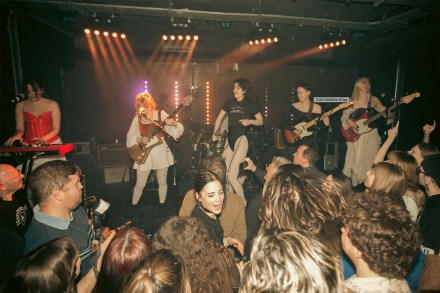
A user’s guide to how pop music works in the 21st century. Step one: you see a great new band. Step two: you tweet about them being very good. Step three: you get told by people that they are clearly nepo babies, denying crucial exposure to other bands. Step four: you discover that newspaper articles are using these Twitter conversations as evidence of a backlash about said new band. That’s what happened after I went to see the Last Dinner Party. For reference, the Last Dinner Party have released precisely one song: their debut single ‘Nothing Matters’, which had come out a few days before. On YouTube you can find complete recordings of some of the few shows they have played, filmed by zealous young fans.

Glorious: Elton John’s farewell tour, at the O2 Arena, reviewed

From our UK edition

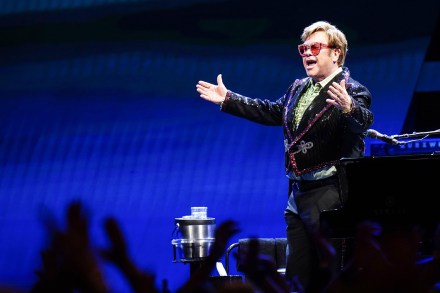
Elton John has now been retiring for nearly five years. The Farewell Yellow Brick Road tour began in Allentown, Pennsylvania, in September 2018. Why there? Because it’s a hop and a skip from the small town of Lititz in Amish country, where scores of the big arena shows are built – it’s the real rock’n’roll capital of the world. Since then, with breaks for Covid and other health worries, he has played roughly 300 shows, grossing north of $800 million as of January this year – this is the most commercially successful tour ever. Retirement, or the threat of retirement, has always been a canny career move: Frank Sinatra played more than 1,000 concerts and recorded ‘Theme From New York, New York’ after he quit the business in 1971.

Pretty, charming and largely unremarkable: Devonte Hynes & the LSO reviewed

From our UK edition

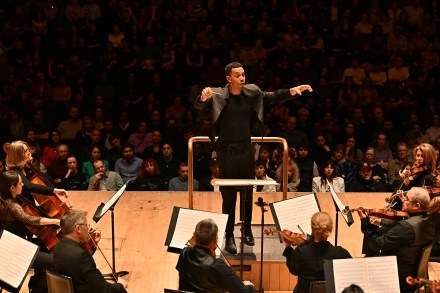
Think of pop music as being like the parable of the sower. These days the seed falling on stony ground comes from the young rock bands, while the stuff that’s finding fertile earth is on the edges of R&B where it shades into other styles, especially psychedelia. It works from both ends: the Australian group Tame Impala went from being a workaday psychedelic rock band to being festival headliners by bringing dance music into their sound. Meanwhile within black music, Janelle Monae – perhaps better known as an actor – and Solange Knowles are regarded by critics as something not far short of deities for their Afrofuturist, trippy takes on R&B. In the UK, Devonte Hynes has become our leading representative of the unlimited possibilities of combining genres.

Full of love: Butler, Blake and Grant, at the Union Chapel, reviewed

From our UK edition

Years ago, I asked Robert Plant what he felt about the world’s love of ‘Stairway to Heaven’. He said he no longer really knew what the song was about, and it didn’t mean an awful lot to him. But, he added, that didn’t really matter because the people who loved the song had given it their own meaning. Songs don’t have to be as ubiquitous as ‘Stairway to Heaven’, however, to work their way into your soul. It’s perhaps even easier to develop a personal connection with a song that one doesn’t have to share with the entire world. Lots of people just wanted to feel 21 all over again Last weekend I went to two shows that were very specifically about the past.

Widescreen pop-rock that deserves to be better known: Metric, at the Roundhouse, reviewed

From our UK edition

Why aren’t Metric stars? In their native Canada, several of their albums have gone platinum, but the rest of the world? Not so much. Twenty-five years after Emily Haines and James Shaw formed the band, here they still are, playing to a not-quite-full Roundhouse to promote their eighth album, Formentera. It was a pretty good turnout – about 3,000 people on a Wednesday night in January – but I doubt anyone ever formed a band thinking: ‘In a quarter of a century, we might be able to not quite fill one of London’s mid-sized venues!’ Writing very good songs isn’t enough to take a band to the top, but Metric do write very good songs All of which is a shame because they were flatly brilliant.

A brilliant show : The 1975, at the O2, reviewed

From our UK edition

The great country singer George Jones was famed not just for his voice, but also for his drinking. Once, deprived of the car keys, he drove his lawnmower to the nearest bar. In the very good Paramount+ drama about Jones and Tammy Wynette – entitled George and Tammy, so there’s no excuse for forgetting – Michael Shannon, playing Jones, is asked time and time again why he keeps on making such a mess of his life and his career. ‘That’s what the people want from me,’ he shrugs in reply. That came to mind watching the 1975’s return to British arenas, in a tour grandiosely and amusingly billed as ‘In Show and In Concert – The 1975 At Their Very Best’.