Melanie McDonagh

Melanie McDonagh

Melanie McDonagh is an Irish journalist working in London.

Roe v. Wade and Britain’s non-existent abortion debate

From our UK edition

Judge Samuel Alito was incontrovertibly right about one thing in his leaked, draft ruling on Roe v. Wade: ‘Abortion presents a profound moral issue on which Americans hold sharply conflicting views.’ Well yes. So we’ve seen with the reaction to the leak – which really is unprecedented. We are reminded that the original Roe v. Wade decision itself was leaked in 1973, but that was just a few hours before publication. A leak at this stage, of a draft opinion which could yet be revised, can only have had one intention: to bring intense pressure to bear on the Supreme Court members who supported the draft to reverse their decision. The reaction from Hillary Clinton, Elizabeth Warren and Planned Parenthood et al in the US has been predictable.

The surprising middle-class gadget that cuts energy bills

From our UK edition

If there’s one company that’s a kind of stock market indicator of the condition of the British middle classes, it’s Lakeland. It specialises in very good household stuff – cleaning and cookware and any number of ingenious gadgets (the catalogues are, I have to say, addictive) – and it has an uncanny knack of registering where popular tastes are going. Its annual Trends report is seized on as an indicator of what normal families are up to, and so it’s proved, on everything from passing trends like the spiraliser (courgette pasta, anyone?) to the inexorable move to recyclables. So, what’s the Lakeland index suggesting now about the British consumer? She and he are trying to do something about the bills, chiefly the energy bills.

Justin Welby is wrong about Rwanda

From our UK edition

The Archbishop of Canterbury’s Easter sermon was quite something; forcefully delivered, arrestingly put. At the heart of it was his corruscating criticism of the Government plans to deport asylum seekers to Rwanda; it was framed to capture the news agenda and released in advance of its delivery. ‘The details [of the plan] are for politics and politicians’, he said. ‘The principle must stand the judgement of God and it cannot. It cannot carry the weight of resurrection justice, of life conquering death. It cannot carry the weight of the resurrection that was first to the least valued, for it privileges the rich and strong.

The best films about faith to watch this Easter

From our UK edition

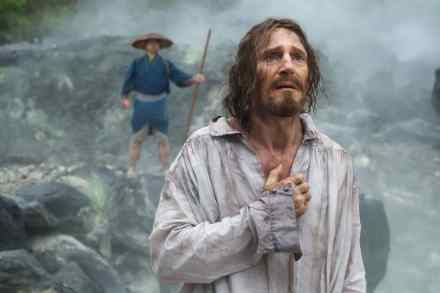
The best religious films aren’t always the obvious ones, featuring either clerics or bible stories (though there are some good movies of both kinds – and an awful lot of terrible ones). Rather, some of the best capture Christianity sideways, expressing the numinous or the fundamentals of faith through a human story or through a portrait of a way of life. This being Holy Week, when we’re right in the middle of The Greatest Story Ever Told (one to watch), it’s a good time to explore how film reflects religion, straight or infused. The Passion of the Christ, Mel Gibson, 2004 https://www.youtube.com/watch?v=4Aif1qEB_JU It’s hard to imagine how even Mel Gibson got away with a film not just not in English, but in Hebrew, Aramaic and Latin.

What Madeleine Albright got right – and wrong – on Kosovo

From our UK edition

Unsurprisingly, it’s Kosovo where Madeleine Albright, former US Secretary of State, is remembered with particular gratitude: today there’s an official day of mourning for her there. Why? Because without Albright, there might well not be an independent Kosovo. It was she who unequivocally backed the bombing of Serbia that brought an end to the Serbian ethnic cleansing in Kosovo and ultimately led to Kosovo breaking away from what was left of Yugoslavia. Left to himself, Bill Clinton wouldn’t have done it. Albright had both a knowledge of the region – she spoke perfect Serbian, a product of her time in Belgrade as a child – and a visceral antipathy to Slobodan Milosevic. And she had no fear.

How Mother’s Day became big business

From our UK edition

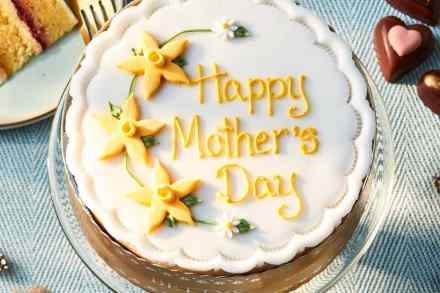
As ever, the Romans got there first. Their version of Mothering Sunday or Mother’s Day was the feast of Juno Lucina, the patroness of childbirth, which happened on the first day of the year, 1 March. Roman mothers wore their hair down and their tunics loose. Their husbands and daughters gave them gifts. It was also one of the few days when slaves got time off and were, for once, waited on. Obvious parallels, then. Fast forward 1,500 years, and Mothering Sunday is a thing, but the origins aren’t entirely clear. Was it connected with the medieval custom whereby parish churches sent parishioners to their mother church or cathedral?

The dos and don’ts of Mother’s Day gifts

From our UK edition

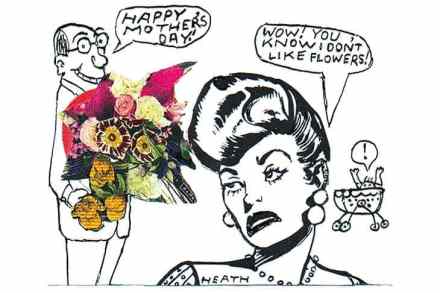
Mother’s Day (more properly, Mothering Sunday) is an occasion when it really is the thought that counts. You can give your mother a bunch of daffodils and a home-made card, and tea in bed if you live at home, and, unless your mother is Cruella de Vil, it’ll make her day. When I was a child I used to rob the daffodils from people’s gardens in the country. Now, at a pound a bunch, you really don’t have to. Just buy lots … they look fabulous in quantity. But if you are going to spend money – and it’s not obligatory - then you may as well get something good that she’ll actually like. I’m getting tetchy at the retail sexism out there.

Banning foie gras and fur was never really about animal suffering

From our UK edition

Well, too bad Carrie and Zac. It looks like the government is going to drop its commitment to banning imports of foie gras and fur. A combination of Jacob Rees-Mogg objecting to the foie gras ban on the grounds of consumer choice and Ben Wallace, Defence Minister, agitating for the Guards to continue to have their bearskin hats, seems to have seen that off. Issues such as these are interesting in that they combine otherwise incompatible groups and individuals in opposition. In Tory terms, the kind of people who campaign about foie gras and fur tend to be posh Tories – it was no accident that Zac Goldsmith first promised the ban – who regard animal welfare issues as part of their stewardship of the environment, which in turn derives from land ownership.

We could learn a thing or two from Swiss democracy

From our UK edition

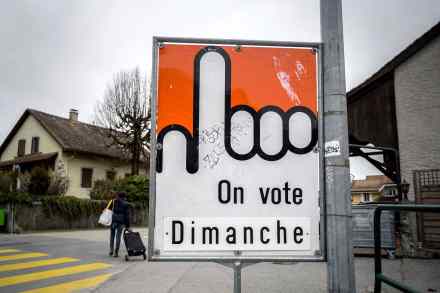
There was another referendum in Switzerland over the weekend. This one was about protecting the young from the evils of tobacco by banning advertising anywhere children might see it. This strikes me as a good deal more liberal than the measure from New Zealand’s mildly fascistic Jacinda Ardern, who insists that young people must never smoke at all, ever, or indeed the situation here where none of us is allowed actually to see a cigarette packet in case it gives us ideas. But it’s not just cigarette advertisements that the Swiss were voting on. There are other referendums on animal (and human) experiments in research as well as a couple of lesser measures to do with stamp duty and the media.

Raymond Blanc is right about convenience food

From our UK edition

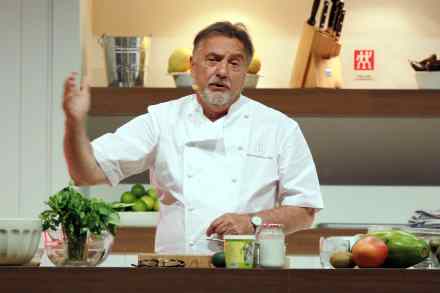
Hooray for Raymond Blanc for stating the absolutely obvious. He’s got an ITV series coming up, which, if I had a television, I’d be watching compulsively, called Simply Raymond Blanc. He’s an instinctively brilliant, self-taught chef, who really was a game changer on the Eighties restaurant and cookbook scene. And in an interview for the Radio Times he declared that Delia Smith was absolutely right to make use of convenience food in her most controversial cookbook, including frozen mashed potatoes. As he observed, ‘Delia Smith was the first TV chef to really simplify food. She was heavily criticised for using tinned and frozen food in her recipes, but she was absolutely right. ‘Take the frozen pea.

The Pope is right: it is selfish to choose pets over children

From our UK edition

Well, we’ve been terrifically amused and amusing at the expense of Pope Francis, who this week declared at a Vatican audience that: ‘Many couples do not have children because they don’t want them, or have just one because they don’t want any more, but have two dogs, two cats… oh yes, dogs and cats take the place of children.’ It was, he said, proof of a ‘certain selfishness… it makes us laugh but it’s true. Renouncing parenthood diminishes us. It takes away our humanity.’ This was inevitably cue for British commentators to weigh up the merits of cats and dogs versus children, and for some to pronounce in favour of the cats.

The churches must stay open

From our UK edition

Hooray for Cardinal Vincent Nichols, who used the one day of the year when his pronouncements are amplified by the season to 'sincerely appeal that [the government] do not again consider closing churches and places of worship.' He said in a BBC interview he believed it had been demonstrated that the airiness of churches meant they are 'not places where we spread the virus'. Mind you, Catholic churches weren’t as bad as the Church of England This is, of course, entirely sensible. It was nuts for churches to close at the start of lockdown, at least as spaces for prayer if not for communal worship. Pretty well any church is 'Covid-safe', in that there’s lots of room for people to spread themselves out.

A gourmand’s guide to Christmas chocolate

From our UK edition

Christmas is coming and you know what that means? More Lindor truffles than any human being can decently put away, family size boxes of Quality Street and, for the upwardly mobile, Ferrero Rocher. My friends, I am as keen on Lindor truffles as the next greedy pig but there is another way. There is a whole world of chocolate out there which is respectful of the defining ingredient, cocoa, often imaginative and delicious. The starting point, the founding principle, for decent chocolate is, More Cocoa, Less Sugar. Simple as that. And this principle doesn’t just apply to Christmas chocolate, obviously, but to chocolate all year round.

Children’s books for all ages: the best of 2021

From our UK edition

She’s done it again: J.K. Rowling has written a captivating children’s book. The Christmas Pig (Little Brown, £20) is about a toy pig, Dur Pig (DP for short), a boy called Jack and what happens when DP gets chucked out of a car and is replaced with an unwelcome Christmas Pig. It’s also about how horrible divorce is for children, what happens to lost things and how the least prepossessing creatures can show courage and self-sacrifice. It’s also a rattling adventure story about Jack and the Christmas Pig’s progress across the Land of the Lost, pursued by a scary ogre called the Loser.

Alice Sebold, Anthony Broadwater and a terrible miscarriage of justice

From our UK edition

There are few more terrible fates than to be condemned and imprisoned for a crime you didn’t commit; but to have borne witness in a trial that led to a man being unjustly punished must be terrible too. The writer Alice Sebold has apologised for the wrongful imprisonment of Anthony Broadwater. He was convicted based on Sebold's evidence, and other testimony, for her rape in 1981 when she was a student. There is no doubt that she was raped and beaten; it was, as she wrote in her best-selling memoir, Lucky, a trauma that shaped her life. But there is also now no doubt that it was her identification of Broadwater on the witness stand, as well as flawed forensic evidence based on microscopic hair analysis, that contributed to his conviction.

What the BBC show trial of Michael Vaughan tells us

From our UK edition

After dropping Michael Vaughan in punishment for what he said (or might not have said) many years ago, the BBC has now given him the chance to explain himself. It took the form of Dan Walker, a BBC1 Breakfast host, confronting the accused with examples of his wrongthink and hearing his defence. That defence is pretty academic now, given that Vaughan has already been dropped from covering the Ashes this winter and may now disappear from the screens entirely. But it has given us an example of what may now lie ahead in the cancel culture we are adopting. Ten years after the Tweets comes the outrage. Then the cancellation. Then, last of all, the show trial. It was unpleasant seeing Vaughan, a former England cricket captain, squirming on the hook as Walker went through the charge sheet.

Advent has become overindulgent

From our UK edition

Every year there are more of them; more extravagant, more utterly pointless. I refer to Advent calendars, which used once to be rather a quaint German thing: a way of counting down the days of Advent by opening little windows on a cardboard, paper or wooden Nativity or winter scene to reveal some pointer to Christmas until the pictures culminated in the arrival of baby Jesus – or the worship of the shepherds at the crib – on 25 December. It was the sense of anticipation, opening the windows one at a time which represented the point of Advent, which is a waiting time, until finally we get the big reveal on Christmas Day.

Why is Ofqual trying to dumb down English exams?

From our UK edition

If you wanted a good working example of the concept of dumbing down in practice, look no further than Ofqual, the exams regulatory board, the one that covered itself in ignominy when it oversaw the exam algorithm fiasco during lockdown. Its latest idea is to get exam boards for English to replace ‘complex’ language elements, such as idiom, sarcasm and metaphor, with simpler alternatives in some assessments to make the tests more accessible for pupils. The temptation at this point to respond with sarcasm, irony, idiom and metaphor – not at all nice ones either – is almost irresistible, but let’s not go there.

How the pumpkin hijacked Halloween

From our UK edition

You see them everywhere in vast orange mounds: pumpkins, piles of pumpkins, large enough to be turned into a coach in Whole Foods, a bargain 65p in M&S. Halloween, in terms of retail, means orange for pumpkin and black for witches. Round our way, a pumpkin outside the front door means that the household is receptive to tots and teenagers coming round in costume looking for sweets. Pah! When I was small in Ireland, there was none of this pumpkin lark. We never saw pumpkins, except in Cinderella, where it was the exotic element of the story. Pumpkins are a visible symbol of what happened to All Hallows’ Eve, when the celebrations for the feast of ghosts and divination were taken to America with Irish emigrants… and then somehow came back again.

Giving up meat won’t make us greener

From our UK edition

There was a nifty about-turn last week when the so-called Nudge Unit, the government’s behavioural policy advisory body, abandoned its proposals to get us to shift towards a plant-based diet and away from eating meat. Among other exciting intiatives it suggested 'building support for a bold policy' such as a tax on producers of mutton and beef. It pointed out that the government could get people used to a vegetarian diet through its spending in hospitals, schools, prisons, courts and military facilities – you can just imagine how that would go down with soldiers, prisoners and patients – and declared that a 'timely moment to intervene' would be when people are at university. But it also acknowledged that an 'unsophisticated meat tax would be highly regressive'.