Melanie McDonagh

Melanie McDonagh

Melanie McDonagh is an Irish journalist working in London.

We need the nanny state to stop gambling ruining men’s lives

From our UK edition

My own relationship with the gambling industry is almost entirely framed by horse-racing. If I’m at a race, I’ll put a couple of quid each way on a horse I like the look of with a bookie. If I’m absent from the event, I’ll go for an Irish trainer and a name I like. My family had a weakness for betting on races; my grandmother spent happy hours studying form, and my grandfather had his own stool in the betting shop. As an activity, this does have the possibility you can lose your shirt – and lots of people did and do. But it’s a world – a whole world – away from contemporary joyless gambling on fixed-odds betting terminals, where the scope for human skill and insight is precisely zero. You can never, ever, beat the system.

Why should gardeners learn to love weeds?

From our UK edition

Dirt, is, as the anthropologist Mary Douglas famously put it, 'matter out of place'. For her, 'there is no such thing as absolute dirt' and 'no single item is dirty apart from a particular system of classification in which it does not fit'. It is a label for 'all events which blur, smudge, contradict or otherwise confuse accepted classifications'.   This is a long way of getting round to saying that the Royal Horticultural Society is now encouraging us to embrace weeds. Four of the dozen show gardens at the Chelsea Flower Show are to include them. Indeed Sheila Das, the garden manager at RHS Wisley, is anxious that we should eschew the derogatory term 'weeds'; she prefers 'weed heroes' or 'superweeds'. 'We used to call them plants in the wrong place', she said. 'They are not.

The trouble with censoring Jeeves and Wooster

From our UK edition

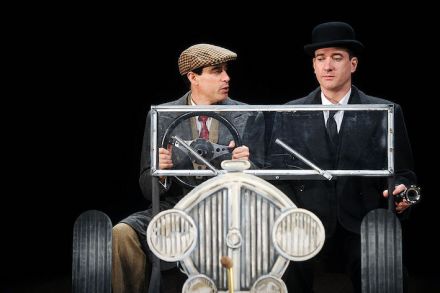
It would take longer than I’ve got to comb through copies of Thank you, Jeeves and Right Ho, Jeeves, to find out the ways in which they’ve been edited, 'minimally', to remove offensive language, but I think we can work out which bits may have fallen foul of the thought police. Penguin Random House have informed readers of the latest edition: 'Please be aware that this book was published in the 1930s and contains language, themes and characterisations which you may find outdated. In the present edition we have sought to edit, minimally, words that we regard as unacceptable to present-day readers.'  I can only say that, reading Young Men in Spats and a few other PGW stories lately, I found myself hoping that it wouldn’t occur to anyone to submit it to sensitivity readers.

Simnel vs colomba: which is the best cake for Easter?

From our UK edition

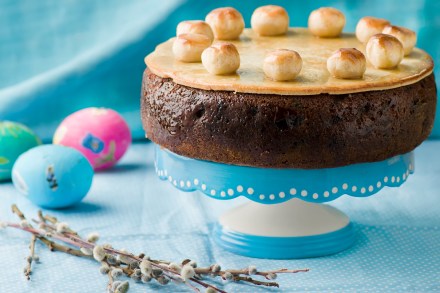
When it comes to Easter cake, there are two possibilities. From the home front, there’s simnel cake, which has 11 marzipan balls on the top – one for each of the apostles, apart from bad Judas. Or there’s colomba, the Italian dove-shaped panettone-style cake, with all its symbolic resonances. Not that the colomba actually looks like a dove, unless you try very hard – more like a cross with round ends (the wings and tail) and a wonky top (the head). Anyway, that’s the idea.  Colomba cake [iStock] So, which is the more perfect? Simnel cake is a lightly spiced and fruited cake, with marzipan in the middle as well as on the top. Made with homemade marzipan, which is easy, it’s a thing of beauty.

The BBC has ruined Great Expectations

From our UK edition

The insanely irritating advertisements for BBC Sounds – 30 seconds to make the spirits sink – have recently included one exhorting us to watch the new BBC adaptation of Great Expectations – by the man who brought us Peaky Blinders! It’s a real achievement to lose every vestige of humour in Great Expectations Poor Dickens can’t pull in the punters on his own; it seems it takes Stephen Knight to draw a contemporary audience. Yep, the Stephen Knight who brought us A Christmas Carol, which should have made the Corporation think twice before letting him near Great Expectations, the first episode of which aired last night.

Euthanasia has become a backdoor to capital punishment in Belgium

From our UK edition

Those who back assisted dying/euthanasia/assisted suicide – and no doubt Prue Leith on her nationwide tour will be returning to her differences on this one with her MP son, Danny Kruger – have rarely suggested that it might usefully serve as a backdoor return to capital punishment. This, however, seems now to be the case in Belgium. Genevieve Lhermitte who murdered her five children – a son and four daughters – in 2007 has been killed by doctors at her own request. It was the conclusion to the tragedy that she originally intended. She had tried to take her own life after the murders, unsuccessfully, and was first convicted for life imprisonment in 2008 and later consigned to a psychiatric hospital in 2019.

It’s not all roses: 6 alternative Valentine’s Day gifts

From our UK edition

We can blame Robbie Burns. That line about my love being like a red, red rose didn’t actually specify Valentine’s Day, but it has meant that 14 February is forever associated with roses at a time of year when they’re not in bloom. Not here anyway, which means that all the red roses around are from far-flung places. Plus they’re not really scented. No. Hold the red roses. Keep them for June and send them for midsummer or something. Here are six suggestions for Valentine’s gifts that don’t entail actual roses. And on the whole, let’s steer clear of pink, shall we? The usual line up of pink items for Valentine’s, from bears with hearts on their paws to hear-shaped chocolates, can be a bit yuck.

Why do we associate Christian funerals with burial?

From our UK edition

Ashes to ashes, dust to dust is all very well, but nowadays the melancholy business of disposing of human remains can be expedited with caustic soda. I only know this because the Church of England’s General Synod has been asked to consider the burial alternative of water cremation, or resomation, which uses a bath of hot water and potassium or sodium hydroxide to dissolve flesh and bones. The family ends up with the ashes from the bones, and the biofluid from the process is disposed of in the sewers. This is legal in the UK, but so far water companies have been reluctant to embrace human remains.

Assisted dying is a slippery slope

From our UK edition

What are your thoughts on assisted dying and assisted suicide? That's the question asked by a Health and Social Care Committee consultation, closing today, that could shape changes to the law on euthanasia. Having had intimate experience of what can happen when a vulnerable person feels themselves to be a burden, I'm against. My mother had Parkinson’s, and once she burst out to me that: 'You’d have so much more time and money if it weren’t for me'. It would be the easiest thing in the world to push someone in that condition towards feeling that it would be better for everyone if she were given a dignified death. Actually my mother did have a dignified death, at home, even though, by then, she had to have everything done for her.

Don’t vilify Prince Harry for picking on Camilla

From our UK edition

Prince Harry has a point. That's a sentence I thought I'd never write. Making money from exploiting your royal connections, while also complaining about them, as Harry is doing, is singularly unattractive. But there is one part of Spare that does merit sympathy: Harry's views about his stepmother Camilla. Harry has written that he and his brother 'begged' their father not to marry Camilla. In an interview with CBS's Anderson Cooper he said, 'She was the third person in their marriage. She needed to rehabilitate her image'. That pretty well gets to the heart of the thing, quite apart from the interesting question of the extent to which Camilla traded information with journalists.

Six more years: how long can Biden go on?

From our UK edition

43 min listen

On the podcast this week:  The Spectator’s deputy editor Freddy Gray writes the cover piece looking ahead to the possibility of another 6 years of President Biden. He is joined by Amie Parnes, senior staff writer at The Hill and co-author of Lucky: How Joe Biden barley won the presidency, to discuss whether anyone can stop Biden running in 2024 (01:00).  Also this week:  In the magazine Fr Patrick Burke writes a moving tribute to Pope Benedict XVI. He joins the podcast to discuss Benedict’s intellectual legacy and what the Church gained from his theological work (16:05). We are also very lucky to have a special recording from Melanie McDonagh who dials in from St Peter’s Square to give her reflections on the late Pope’s funeral (29:43).

It’s time to tuck into Twelfth cake

From our UK edition

This week we get to Epiphany, the Twelfth Day of Christmas, when the wise men finally make it to baby Jesus in Bethlehem. Properly, the feast starts the night before, so Twelfth Night is the evening of the 5th, which in some parts of Europe is the climax of the Christmas season. And, as with every good thing, it’s an occasion for cake – king cake to be precise. There are several variants from different parts of Europe. The best-known here is the galette des rois, which features in French patisseries: a lovely almond paste encased in puff pastry, and, in shops, surmounted with a cardboard golden crown for whoever gets the bean on the inside. I make it in a version by Joël Robuchon with slices of pineapple. Delicious.

Pope Benedict: a theologian with a profound belief in reason

From our UK edition

Pope Benedict is dead; now only Pope Francis remains in the Vatican. And the Catholic Church is diminished by his passing, at least in a here-and-now sense. He was controversial for those who wanted the church to identify with the values of the age, and was cordially detested by liberal Catholics – I know of one progressive journalist who burst into tears at the news of his election – but in any serious audit of his life’s work, he emerges as a figure with a claim to the attention of secularists as well as Catholics.  ‘The thing you have to know’, said my friend who was on Pope Benedict’s staff during his time in charge of the Congregation of the Faith, ‘is that everyone, but everyone, who worked for him, loved him.

Life is hard for Bethlehem’s Christians

From our UK edition

O Little Town of Bethlehem, how still we see thee lie: except the place is, in fact, buzzing in the run-up to Christmas. I had to squeeze between groups of American tourists to get into the little Church of the Nativity, built on the site where Christ was born. When I made it in, I created an impediment to the flow of pilgrims by kissing the ground near the star marking the place of his birth. Everyone who followed me did the same, with some effort on the part of the chunkier pilgrims.   It’s good news that Bethlehem is getting back to business. The shops selling nativity figures, Christmas decorations, pilgrim tat and olivewood rosary beads are hopping – the Nativity store where I got my souvenirs was stuffed with Polish pilgrims.

Should it be a crime to pray outside an abortion clinic?

From our UK edition

When MPs backed the enforcement of 'buffer zones' around abortion clinics, there were warnings that the measure might backfire. Two months on from that vote, those consequences are now clear for all to see. The director of an anti-abortion group is facing prosecution after praying in front of an abortion clinic in Birmingham. Isabel Vaughan-Spruce of UK March for Life is accused of breaching a public space protection order – but she insists she was only exercising her freedom of religion 'inside the privacy of my own mind'.  Vaughan-Spruce is not accused of harassing anyone. The 45-year-old simply said a prayer inside an exclusion zone. It’s come to something, hasn't it, when you can be prosecuted after praying, silently or otherwise, under English law?

Quentin Blake’s long history with The Spectator

From our UK edition

The Christmas present that comes with this article is an original artwork by Britain’s greatest living illustrator, Quentin Blake. By happy chance, this Friday – 16 December – is also his 90th birthday. Hip hip hooray! It is not the first illustration he has drawn for this magazine, which is why it’s very apt that he depicts an old Quentin speaking to a younger version of himself. From 1959, when he created one of the first illustrated Spectator front pages, through the 1960s, and occasionally after that, he has produced enticing Spectator covers to illustrate either the content or the season, including eight Christmas issues. His first Spectator cover was the issue of 29 May 1959.

Turkey isn’t the only option for a Christmas feast

From our UK edition

Christmas is coming – but if the geese are getting fat, the turkeys aren’t terribly happy, cooped up indoors on account of avian flu. Around half of the free-range birds produced for Christmas in the UK have been culled or died due to the illness, according to the British Poultry Council – and for those that remain, the government’s anti-infection measures mean they aren’t ranging anything like as freely as before. Some butchers, including the Ginger Pig chain, have announced they aren't selling turkey at all. So if we can’t get a happy turkey, what should we be eating on Christmas Day? Turkeys might seem like the stalwarts of the Christmas feast but they are, after all, New World birds, so latecomers to the festive table in these islands.

The year’s best children’s books, featuring animals real and imaginary

From our UK edition

It’s not often that my tastes are validated by Netflix, but Jonathan Stroud’s brilliant series about teenage ghost hunters, Lockwood & Co., is being turned into a series. If you haven’t read it, give it a go. The mordant talking skull alone is worth it. Stroud has already embarked on another series about a tough nut sharp-shooter, Scarlett, and her amiable sidekick, Albert Browne, who, handily, can read or sieve minds.   The Notorious Scarlett & Browne: Being an Account of the Fearless Outlaws and their Infamous Deeds (Walker Books, £7.99) is the second in the series, and the subtitle gives the gist. Here they carry out an impossible heist, complicated by ghouls.

Mesmerising and eye-opening: Courtauld Gallery’s Fuseli and the Modern Woman reviewed

From our UK edition

It’s not until you see this exhibition of drawings by Henry Fuseli that you realise that most artists have really not done anything like justice to women’s hair. Fuseli was obsessed with it, particularly that of his wife Sophia, a former artists’ model 20-plus years his junior. Hers was wildly extravagant even by the standards of the time – late 18th, early 19th century. For most art buffs, Fuseli, one of the most idiosyncratic artists of his age, is best known for ‘The Nightmare’, his lurid Gothic painting of a curvaceous sleeping woman with a demon squatting on her belly, shown in the Royal Academy exhibition of 1782; the drawings in this Courtauld exhibition show another side.

The strange chair appointment of Oxford’s Vice Chancellor

From our UK edition

To enormous fanfare last week, the Dame Louise Richardson Chair of Global Security was established at the Blavatnik Business School in honour of the soon-departing Vice Chancellor. It was a remarkable event in a couple of respects – first, global security is frankly a dud subject for a chair at Oxford. More to the point, the Dame was appointed to this vanity project when she was still in office, which was an extraordinary departure from usual custom and protocol. Normally an honour of this sort would be proposed after the departure of the scholar it’s named after – normally an individual of exceptional distinction in an established field – and left to their successors to promote.