Melanie McDonagh

Melanie McDonagh

Melanie McDonagh is an Irish journalist working in London.

Monte Carlo isn’t glamorous

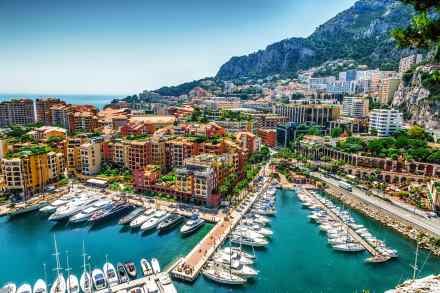
What does Monte Carlo conjure up? A glamorous casino where fortunes can be won and lost, but mostly lost? Men in evening dress at baccarat tables with beautiful women standing by? A tax haven for the glitzy rich on the Cote d’Azur? Fabulous Belle Epoque buildings? A refuge for Edwardian English invalids to escape the cold? Grace Kelly? The Grand Prix?  It was here that Max de Winter met the girl who became the second Mrs de Winter at the beginning of Daphne du Maurier’s Rebecca. ‘What do you think of Monte Carlo, or don't  you think of it at all?’ he asked her.
The art of flowers

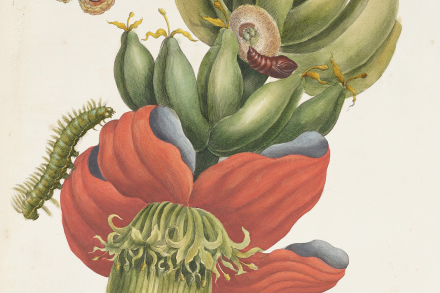
Multi-sensory exhibitions are old hat, but in the case of In Bloom – How Plants Changed Our World at Oxford’s Ashmolean Museum, it feels just right to sit in a space given over to flowers with the sound of gurgling water in the background, mingled with the cries and chirrups of birds. At intervals there are scent stations where you can smell damask rose or green and black tea from flower-shaped chalices. From the ceiling hang swathes of green muslin. I could have stayed here all afternoon. Right in front of me were also two delicious studies of tulips to illustrate the Dutch craze of the 1630s. Frankly, if it came to a choice of two-tone tulips or Bitcoin as a way of squandering money, I know which I’d prefer.

Oxford’s grand new building reveals the university’s misplaced priorities

From our UK edition

The Schwarzman Centre for the Humanities in Oxford is well and truly open; there was an Open Day this weekend. It’s the product of a big donation of £185 million from Stephen Schwarzman, CEO of the Blackstone Group. It’s an ambitious development close to the old Observatory on the Radcliffe site. There’s a large and airy central atrium with cafes. As well as libraries and lecture rooms, there’s a concert hall and theatre and cinema and high tech exhibition spaces. The place is designed with the University's net zero carbon emissions policies in mind on the principles of Passivhaus; the building is ultra energy-efficient.

It’s little surprise that an Israeli soldier was caught desecrating a crucifix

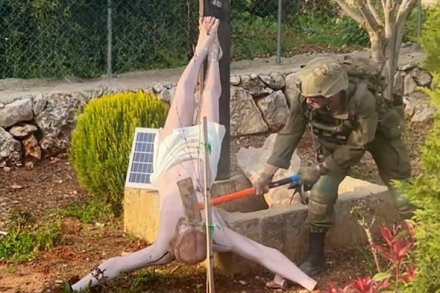
There’s something apposite, I suppose, about the desecration of a crucifix. In this case, it was an Israeli soldier in southern Lebanon who took a sledgehammer to one on private property and smashed the Jesus figure on the cross. The original crucifixion, as anyone who heard the gospels over Easter will recall, was marked by the humiliation of Jesus; this attack on the figure of one who took on suffering willingly was another humiliation, through the image. Mind you, if the charmer with the sledgehammer had reflected that the Christ-figure is, in Christian belief, not just God-made-man but God-made-Jew, he might have eased off a bit.

Is it any wonder people don’t send letters?

From our UK edition

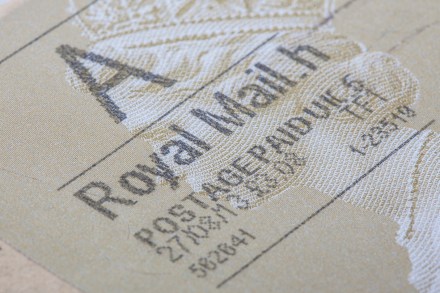
Was there some failure of communication, do you think, when the Czech billionaire Daniel Kretinsky bought Royal Mail (with the full support of government and opposition) last year? I only ask because it seems to have been taken aback by the full extent of its obligations – to deliver mail to every part of the UK and in the case of a first-class stamp, to do so, with some exceptions, by the next day. If you increase the cost of a service sixfold and reduce the level of service, it shouldn’t be a complete surprise if the number of people using it goes down This week we see the price of a second-class stamp go up 4p to 91p and first-class stamps increase by 10p to £1.80.

London’s St James’s is losing its soul

From our UK edition

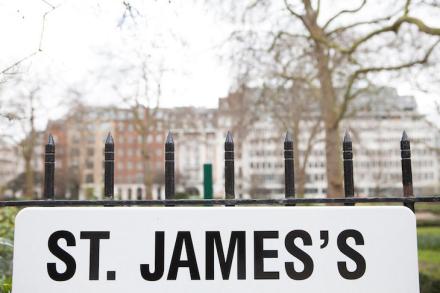
London is full of little ecosystems: areas that are distinctive by virtue of their purpose or history and where individual elements make up a sum greater than the whole. St James’s is like that: a patch south of Piccadilly where the pleasures of a walk down the street are all to do with being able to look at the windows of the art galleries. There’s a succession of independent dealers selling paintings – Old Masters in some cases – drawings, objects d’art and art books. You probably can’t afford to do more than look, but there’s pleasure in fantasising like a Dorothy Parker character about what you might buy if you only could.

Sarah Mullally makes me grateful to be a Catholic

Granted, I was not the most obvious person to appreciate the installation of Sarah Mullally in Canterbury, even though I think her a splendid Christian pastor and indeed, an exemplary Christian. Her kind, homely face radiates charity and good will; the simplicity of her speech speaks of sincerity. But as a bolshie Catholic, it’s not possible to spend long in Canterbury cathedral during this very Anglican celebration without the subversive thought surfacing that this cathedral is, by rights, Catholic, the Reformation being an unfortunate blip in the great scheme of things.

Brussels is making your perfumes worse

From our UK edition

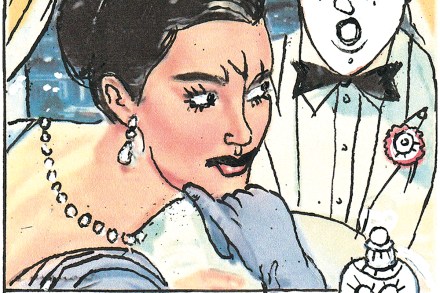
‘Heliotropin,’ said the Frenchman mournfully. I was midway through lunch in Mayfair with Benoit Brosseau, whose father, Jean-Charles, created the fragrance Ombre Rose, and who now leads the company of the same name. I had asked the question I always put to fragrance people, in the full knowledge it will make them either sad or furious: how do they cope with Ifra, the Brussels-based regulatory, or representative, body of the fragrance industry? One of the latest in the list of ingredients Ifra may be curbing is based on heliotrope, which not only gives a powdery aspect to scent, but conjures up the elusive smell of cherries. (If you know that marvellous, evocative Guerlain scent L’Heure Bleu, that has it.) M. Brosseau was fed up.

Did Hannah Spencer’s outfit distract from her maiden speech?

From our UK edition

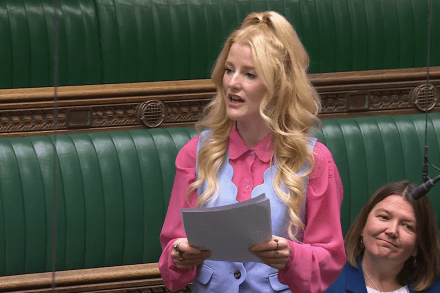
Hannah Spencer’s maiden speech in the Commons – a cheerful and upbeat performance – was pegged to International Women’s Day. We learned that some girls went to school that day actually dressed as Hannah the plumber, complete with trademark hair. She was understandably chuffed about this. It is, to be honest, hard to imagine little boys going to school dressed as Matthew Goodwin, her defeated Reform rival, which is one of the unfairnesses of gender politics. I was intending to write about what she didn’t talk about, namely anything to do with Green issues – biodiversity, sustainable farming, the energy cost of data processing centres – but I was frankly distracted by her clothes.

Tracey Emin’s victimhood is a poor foundation for art

From our UK edition

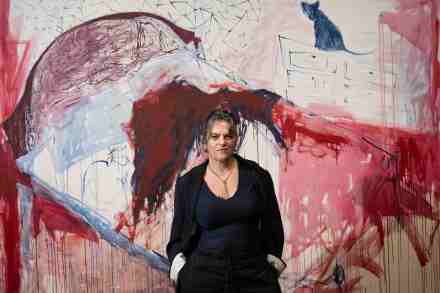
It was a given that the critics would indulge in emotional onanism when they covered the Tracey Emin retrospective at the Tate Modern – apt enough when you consider the sexual content of so much of it. But what surprised me was that it wasn’t just women. For the art is almost entirely about Being Tracey: her abortions, her sexual abuse as a teenager by horrible men, her diaries, her cancer with pictures of the bloody stoma, her famous unmade bed, with its used condoms, granny slippers and teddy (it sold in 2014 for £2.5 million) and her death mask, which was done in life … obviously. That, you might have thought, would put off the men.

‘Happy Friday!’: resist the tyranny of faux niceness

From our UK edition

Five people I never met wished me a Happy Friday last Friday by email. You can pretty much be wished a happy anything nowadays, except perhaps Easter, since this assumes you share in the joy of the Resurrection. The London lights now say Happy Ramadan. Actually, if I were wished a Happy Lent it’d be the equivalent of telling me ‘Happy Abstinence’. The point is it is one more notch in the creeping commodification of goodwill, the conformity of niceness. Happy Friday is a way for strangers to introduce themselves on a note of cheer, since they’re trying to get you interested in an event or a product. But they don’t know you. It’s the assumption that you’re already friends that’s so galling.

Was Picasso a Catholic artist?

From our UK edition

There’s a new exhibition on Picasso which is actually transgressive: Picasso and the Bible. That promises to stir things up among worshippers of the great man, who was known for being Republican, Communist and atheist.   The premise of the exhibition – which was opened this week with great fanfare at Burgos Cathedral in Spain – is that an artist can leave the Church, but the Church never really leaves him. The real theme of the exhibition isn’t Picasso and the Bible; it’s Picasso and Catholicism, a more explosive subject.

Don’t remove Andrew from the line of succession

From our UK edition

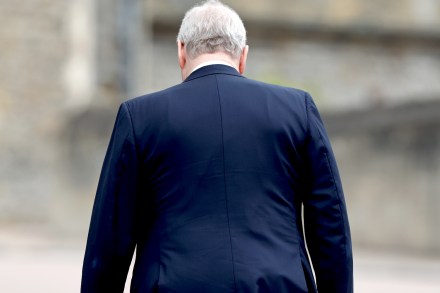
The Sun, as ever, put it pithily: ‘Andrew’s Out of Line’, its front page says today. ‘Shamed Royal to be Axed from Royal Succession’. It is one of those facts of which nearly all of us were unaware until five minutes ago, that Andrew Windsor – can we drop the Mountbatten bit? – is in fact eighth in line to the throne, and until five minutes ago, none of us gave much thought to the matter because it was pretty well academic. That remains true, but I was brought up short to learn that ‘Andrew remains eighth in line to the throne behind the Prince of Wales and his three children and the Duke of Sussex and his two children’. Hold it right there. If by some tragic mishap, William and his children were to die, the country would be left with Prince Harry?

The two missing words in the King’s Andrew statement

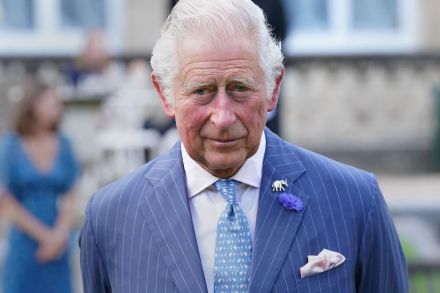
There are, you’ll note, two little words missing from the King’s statement on Andrew’s arrest on suspicion of misconduct in public office. It goes as follows: ‘I have learned with the deepest concern the news about Andrew Mountbatten-Windsor and suspicion of misconduct in public office.  What now follows is the full, fair and proper process by which this issue is investigated in the appropriate manner and by the appropriate authorities.  In this, as I have said before, they have our full and wholehearted support and co-operation.  Let me state clearly: the law must take its course. As this process continues, it would not be right for me to comment further on this matter.

Do we need another Gruffalo book?

From our UK edition

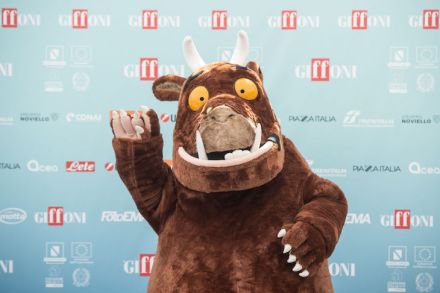
Oh Lordy. Here we go. The Gruffalo is back – or rather, the Gruffalo Granny – a new take on the most famous children’s character of the last 30 years other than Harry Potter. So, we’re going multi-generational with the monster; the last one, published over 20 years ago, was The Gruffalo’s Child…now it’s the oldie coming on the scene like Grendel’s mother, except not. Julia Donaldson really does churn ‘em out The publisher, Macmillan, for whom Julia Donaldson must have seemed like their very own JK Rowling – 18.2 million copies of the two titles and counting – announced that Granny Gruffalo would drop on 10 September, and crucially, it’s illustrated by Axel Scheffler, who is as critical to The Gruffalo as Quentin Blake was to Roald Dahl.

Piers Morgan, Melanie McDonagh, Matt Ridley & Rachel Johnson

From our UK edition

24 min listen

On this week’s Spectator Out Loud: Piers Morgan reveals what Donald Trump told him from his hospital bed; Melanie McDonagh ponders the impermanence of email, amidst the Peter Mandelson scandal; Matt Ridley argues that polar bears – which are currently thriving – pose problems for climate enthusiasts; and finally, Rachel Johnson attends the memorial service for Dame Jilly Cooper – and says she made a fool out of herself. Produced and presented by Patrick Gibbons.

Piers Morgan, Melanie McDonagh, Matt Ridley & Rachel Johnson

The Epstein files are a reminder that emails live forever

From our UK edition

Still they keep coming: email after email from Jeffrey Epstein’s personal correspondence, along with the almost unmanageable amount of other material in the Epstein files. They span two decades and an astonishingly wide range of topics: his Amazon purchases, missing laundry, the banning of his Xbox Live account, his reaction to photos of young women, how he considered potential plea deals and exchanges with famous people. There’s Sarah Ferguson’s message: To: Jeffrey Epstein [jeevacation@gmail.com] From: Sarah Sent: Sat 1/30/2010 10:22:44 PM You are a legend. I really don’t have the words to describe, my love, gratitude for your generosity and kindness. Xx I am at your service. Just marry me.

The enigma of Melania Trump

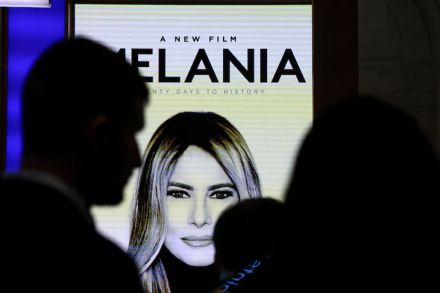
To the question whether the Melania Trump documentary is as bad as the critics are saying, my answer would be: it depends what you’re looking for. My own view is that it’s pretty well what it is billed as: Melania’s take on Melania, with the lady herself in iron control over the direction. So, not a documentary in the normal sense, for better and worse. It’s her account of the 20 days up to and including her husband’s inauguration, with the emphasis exactly where she decides to put it. The benefit of this is that we see what she regards as important, not what other people do. She’s calling the shots, thank you very much. What kind of life is it, to be forever worrying about an assassin?

Are more fathers about to lose access to their children?

From our UK edition

It takes a strong stomach to confront the details of the way in which Claire Throssell’s two sons – Paul, nine, and Jack, 12 – were killed by their father in 2014 after he was granted access to the boys by the family court. The case was explored in grim detail in Rob Rinder’s admirable crime show. This was a man whom their sons feared, but a family court judge made the decision to allow Throssell’s ex-husband unsupervised access to the children for five hours a week. The children did not feel safe with him. As their mother said, ‘he saw our children as possessions’.

Why are the number of abortions so high?

From our UK edition

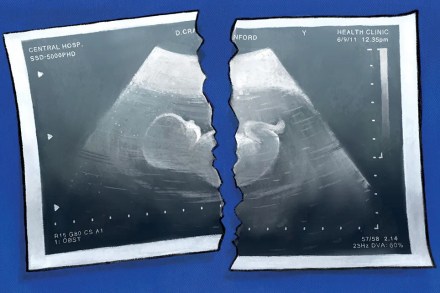
Consider this: at a time when we’re agonising about the demographic winter and the unwillingness of Gen Z to procreate, something else is going on… There were nearly 300,000 abortions in the UK in 2023, according to the latest figures published by the Department of Health. So, whatever else the problem of insufficient babies is to do with, it’s not about a fertility crisis. Nor, does it seem, is it entirely about people not having sex. It’s rather a problem of women not wanting the natural result of sexual intercourse, pregnancy. If those pregnancies had or were to go to term, that is, if the babies in question had been born, we might have something near a million extra Brits in three years.