Maxwell Marlow

Maxwell Marlow is Director of Policy at the YIMBY Initiative and Director of Public Affairs at the Adam Smith Institute


Tim Shipman, Ben Clerkin, Maxwell Marlow & Hermione Eyre

24 min listen

On this week’s Spectator Out Loud: looking back to 1973, Tim Shipman wonders how bad the energy crisis could get; Ben Clerkin interviews Steve Hilton, the former Cameron aide running to be California’s next governor; Maxwell Marlow explains how to solve the student debt crisis; and finally, ‘disorientatingly enjoyable’ is the verdict of Hermione Eyre as she reviews David Hockney at the Serpentine. Produced and presented by Patrick Gibbons.

Tim Shipman, Ben Clerkin, Maxwell Marlow & Hermione Eyre

How to solve the student debt crisis

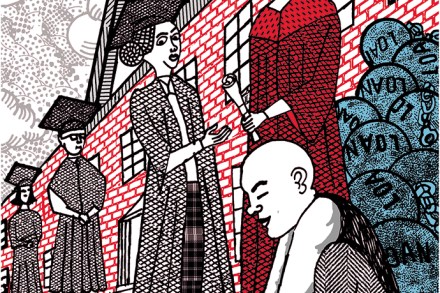
England’s student debt is staggering. It comes to £270 billion – that’s larger than the budget for the NHS and two and a half times larger than the education budget. This arsenal of taxpayer-backed cash has seen the creation of 34 new universities just to feed an ever-hungrier mass of undergraduates. It’s forecast that by the late 2040s, this loan balance will reach £500 billion. These loans are not standard financial arrangements. They don’t affect the debtors’ credit ratings, only their mental health when they check their bank balance. Crucially, most loans are also wiped after 30 years from graduation.

It’s time to abolish the minimum wage

Forty-five per cent of 24-year-olds who are not in education, employment, or training – known as 'NEETs' – have never had a job. Not a Saturday shift at a café, not a summer stacking shelves, not an entry-level role that teaches you what an invoice or balance sheet looks like. Alan Milburn, former Labour health secretary and now chair of the government's own young people and work review, delivered this verdict this week with the weary authority of a doctor who knows the patient is deteriorating but cannot persuade them to change the treatment. The latest figures from the National Institute of Economic and Social Research (NIESR) confirm what anyone with a passing familiarity with employing people will know.

Why Britain needs more Yimbys

21 min listen

Chris Curtis and Maxwell Marlow may have different political ideologies, but they agree on one key diagnosis: Britain is broken. Their solution can be found on baseball caps and bucket hats across social media and SW1: ‘Build Baby Build’. Less than a week before the Budget, Chris – MP for Milton Keynes and chair of the Labour Growth Group – and Maxwell – policy fellow of the Yimby Initiative, alongside his day job at the Adam Smith Institute – join our economics editor Michael Simmons to talk about the pro-growth measures they champion to radically change Britain. Produced by Patrick Gibbons.

The Waspi women don’t deserve a penny

Worry not, dear taxpayer, there are more bills for you to pay. Not only must you pay for the lockdown that kept you in your cramped apartment for a disease that didn’t affect you, and don’t forget the deficit payments of over £100 billion a year – really, you should just shrug it off. Even if you have your expensive degree, which creates negligible returns, and levelled with record living costs and taxation, you can of course pay for more benefits for a small minority of retired people who didn’t pay attention to changes in their state pension benefit.

What’s the point in a Generational Smoking Ban?

With the Tobacco and Vapes Bill travelling through the House of Lords, I think it’s high time we looked at the data justifying this almost unprecedented assault on liberty. Public health lobbyists and their politicians argue that without the incoming Generational Smoking Ban, smoking would continue to be prevalent amongst young people (16-24), which is when the vast majority of smokers initiate their lifetime consumption habit. So, what happens to this argument – the fundamental argument behind the Generational Tobacco and Vapes BIll – when we look at the data provided by the ONS? Look at the graph below.

The abolition of stamp duty can’t come soon enough

A rare kernel of hopefully good news has been circulating the Treasury. No, we haven’t yet paid off the £2.7 trillion debt, and the state pension is still on path to imploding in a decade’s time. Instead, Britain’s most destructive and ambition-killing tax is for the chop and is to be replaced with a much more sensible system. Property prices have risen by 259 per cent since 1997, with wages only rising by a lowly 68 per cent Stamp Duty Land Tax has its origins in Regency England, and as the name suggests, it originally was levied on stamped documents in order to fund Britain’s war against Napoleon. In 1815, the stamp duty on a newspaper was an extortionate 4d – James Mill, father of John Stuart, wrote that the tax amounted to censorship by taxation.

Young people are becoming increasingly authoritarian

‘It has been said that democracy is the worst form of government except for all those other forms’, Winston Churchill once declared in the House of Commons. Britain may not feel like much of a free country at the moment, with protestors being arrested for holding placards and the police hauling people away in the dead of night for choice social media posts. But it is still a democracy at least, and an alright one at that. The radicalisation of young people is not just about the slow immiseration of Britain, with declining living standards and crumbling infrastructure It seems though that many young people do not agree. Polling this week shows that one third of 18-30 year olds are increasingly in favour of authoritarianism.

Britain’s state pension is about to blow

Health Secretary Wes Streeting says that the changes to the Welfare Bill will 'give people peace of mind'. Perhaps for some, but certainly not economists. Britain’s welfare crisis is staggering – £313 billion a year is spent on disability payments, Universal Credit, winter fuel payments, Motability, child benefit, and, most expensive of them all, the state pension. Currently, the state pension costs  over £150 billion a year, and is engineered to grow at the highest of either inflation, wage growth, or 2.5 per cent. When you factor in our rapidly aging population, the welfare state is quite literally primed to blow. Whitehall is on a collision course of its own making.