Max Pemberton

Max Pemberton is a consultant psychiatrist and columnist for the Daily Mail

Is your wellness smoothie giving you cancer?

There’s a question I’ve started being asked at work. Given I’m a psychiatrist, it isn’t one I’d ever expected to hear: ‘Do I have cancer?’ A young woman with anxiety wants to know whether the lump on her neck is sinister; she has been watching a great deal of TikTok. A man in his late thirties, in for a routine review, mentions in passing that his sister has been referred for a colonoscopy and wonders whether he should be too. At a dinner party a few weeks ago, a friend leant across halfway through her low-alcohol natural wine and asked me, in a small voice, whether it was true her generation was getting cancer in their thirties. Yes, I said, perhaps a little too bluntly. She looked rather panicked for the rest of her evening.

The madness of using cannabis to treat mental health

Some days I wonder if I’m going mad – and you don’t need to be a psychiatrist to know that’s not a good sign. I work in a specialist NHS service for people experiencing first episode psychosis – young people at their most vulnerable, teetering on the edge of severe and enduring mental illness, some of them already sliding towards schizophrenia. Day in and day out, I watch how cannabis has destroyed people’s minds. It is, frankly, heart-breaking. So you can perhaps imagine how I feel when those same patients mention, almost in passing, that a private doctor has prescribed them cannabis.

The West’s right turn, Michael Gove interviews Jordan Peterson & the ADHD trap

45 min listen

This week: the fight for the future of the right From Milei in Argentina to Trump in the US, Meloni in Italy to the rise of the AfD in Germany, the world appears to be turning to the right, say James Kanagasooriam and Patrick Flynn. One country, however, seems to be the exception to this rule: our own. Britain under Keir Starmer appears to be putting on a revival of the old classic Socialism in One Country. However, beyond Westminster, the data show that Britain is not moving to the left in line with its government. While the Conservatives and Reform are locked in a near-constant struggle for supremacy, polling shows that the public are moving to the right.

How real is your ADHD?

Why does everyone suddenly seem to have ADHD? It’s a question that many of us working in mental health have been asking each other recently. Just a decade or so ago I rarely saw anyone in clinic with ‘attention deficit hyperactivity disorder’; now I see at least one case a day. It’s bewildering. Have all these people simply been undiagnosed for years? Is ADHD a medical fad? No one yet knows. The increased awareness of mental health problems has been a boon for private doctors. It’s a gold mine ADHD used to be mainly diagnosed in children, but more and more people are now getting a diagnosis in adulthood.

Could Ozempic bankrupt the NHS?

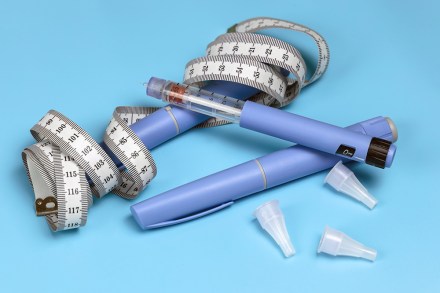
The NHS spends around £6.5 billion every year treating obesity. People who are overweight cost the health service twice as much as those who maintain a healthy weight. Half of all cancer cases are linked to obesity and being severely overweight significantly increases the risk of other conditions, such as diabetes, strokes and heart attacks. No public health campaign or intervention has ever worked. Obesity rates have nearly doubled in the UK since the 1990s. More than 60 per cent of adults are overweight. It’s hoped that weight-loss injections, known as GLP-1 agonists – semaglutide (also known as Wegovy or Ozempic) and the more recent market entry tirzepatide (Mounjaro) – could reverse this trend.

Beware the ‘K Hole’

Go to any nightclub and, if you know what to look for, you will see people on ketamine. You can spot them because, unlike those who have taken ecstasy or cocaine, they stand nearly motionless, struggling to move. They appear lost in a self-inflicted paralysis. This is called a ‘K-hole’– a state induced when ketamine is taken in large doses, causing a person to slip into a dissociative state. It can be terrifying: they are temporarily unable to interact, and even move. Users feel separated from their body and reality. Time is grossly distorted: hours passing can feel like a few minutes. Anyone who works in A&E will see people in K-holes regularly.

The unstoppable rise of the locum doctor

The career trajectory for doctors used to be relatively simple. After graduating, you would step on the conveyer belt of post-graduating training, keep your head down and sooner or later come out the other end either a fully-fledged GP or consultant. More and more I hear junior doctors talking about throwing the towel in and signing up to locum instead of trundling down the well-worn medical career path Of course, there were always exceptions. Careers were interrupted by children, some pursued careers outside of medicine and some doctors chose to work as ‘career grade’ doctors – who chose not to continue training up to consultant level but instead worked as independent doctors under a named consultant.

Kate Andrews, Katy Balls and Max Pemberton

24 min listen

Kate Andrews talks crumbly concrete, overcrowded trains, NHS waiting lists, and describes the general air of despair and asks – who broke Britain? (01.15). Katy Balls analyses Keir Starmer’s reshuffle and describes the appearance of a New Labour restoration as the party prepares for power (11.20), and Max Pemberton outlines the worrying increase of Tourettes and tics in children, neglected during lockdowns and possibly damaged for life (17.25). Produced and presented by Linden Kemkaran.

TikTok is giving our children Tourette’s

Shortly after the first Covid lockdown ended, doctors began to notice something so strange that at first they struggled to explain it. There appeared to be a sudden rise in the number of children being referred with Tourette’s syndrome. Tourette’s is a rare neurodevelopmental disorder characterised by repetitive, involuntary movements or sounds called ‘tics’. While mild tics are relatively common in children, specialists suddenly started seeing large numbers of children displaying complex and debilitating symptoms. Dr Alasdair Parker, president of the British Paediatric Neurology Association, said in 2021: ‘The most severe tics disorders I have seen over the past 20 years have all presented in the last five months to my practice.

The Premier League’s sleeping pill problem

The footballer Dele Alli was applauded recently after he spoke of his sleeping pill abuse. ‘It’s a problem not only I have. It’s going around more than people realise in football,’ he said during a filmed interview with Manchester United’s former captain Gary Neville. It’s not the first time we’ve heard this. Footballers are ‘taking too many sleeping tablets and painkillers’ and addiction is becoming a ‘big issue’, former pro Ryan Cresswell warned last year. (He said his own addiction left him ‘gripping on for dear life’.) He claimed the problem is affecting stars at the very top level: ‘For me, it started with one after every game… to one a day to two a day and then I knew I was addicted.

The petty cruelty of the GMC

Doctors make mistakes. We mess up, have lapses in judgment, do stupid or downright wrong things. Some break the law, some violate trust. Patients place their wellbeing, and sometimes their lives, in our hands. So it’s only right that we are held to account. All good doctors want scrutiny. Our regulator, the General Medical Council (GMC), is supposed to be there to uphold the standards of the medical profession. It’s meant to help maintain the trust that the public places in us. This, of course, gives it an extraordinary amount of power: it can take away livelihoods. But the GMC has lost our trust. Many doctors feel that the organisation is now out of control, hellbent on pursuing petty indiscretions above all else.

Turkey’s dilemma

39 min listen

In this week’s episode: could President Erdogan broker a peace deal between Putin and the West?  For this week’s cover piece, Owen Matthews has written about how Turkey’s President Erdogan became a key powerbroker between Vladimir Putin and the Western alliance. On the podcast, Owen is joined by Ece Temelkuran, a political thinker, author, and writer of the book How to Lose a Country. (1:13)Also this week: a look at Tina, the drug devastating the gay community.Dr Max Pemberton has written about Tina, a dangerous drug often used at chemsex parties. Max joins us now along with Philip Hurd, a chemsex rehabilitation professional and trustee of Controlling Chemsex. (14:02)And finally: Are The Oscars losing their relevance?

Tina: the drug devastating the gay community

Something is ravaging through the gay community, leaving death and misery in its wake, yet few are willing to talk about it. If I’d written that sentence a generation ago, I’d have been referring to the Aids crisis. But this time the enemy isn’t a virus, but a substance called ‘tina’ or ‘ice’. It is a methamphetamine – a stimulant drug that is either smoked or injected into the veins. Tina is also called crystal meth, made famous by the Netflix series Breaking Bad. It causes a rapid increase in dopamine, serotonin and noradrenaline, which leads to euphoria, alertness, energy and self-confidence. It also triggers an almost insatiable increase in libido. It’s easy to see the appeal. But the downsides are horrific.

Why legalising cannabis is safer than decriminalising it

I hate weed. Week after week, I see the tragic effects of this substance and how it destroys the minds of the young. I work on a mental health ward which, like many around the country, is home to some of the victims of our current lackadaisical attitude towards cannabis. This drug is particularly dangerous to the developing brains of young people and yet we know that this age group are the most likely to be experimenting with it. Despite protestations from the powerful pro--cannabis lobby, it has been proved beyond doubt that cannabis use is associated with depression, anxiety, psychosis and avolition (poor motivation).

Prince Harry could learn from Kate Middleton’s mental health work

I wonder if the royal family realise how lucky they are to have Kate? She may have been born a commoner, but she is proving herself to be the best asset the Firm have. As naff as this sounds, she comes across as actually caring and wanting to use her position of power and influence to do some good which is quite refreshing in today’s self-obsessed, navel-gazing world where those in the public eye only seem to care if there’s a long-lens camera trained on them while they do their good deeds. Along with William she has championed causes such as mental health which were profoundly uncool when they first adopted them and are now considered in vogue in no small part thanks to their involvement. Kate is showing herself to be a thoroughly modern royal.

Max Pemberton, Andrew Watts, Ysenda Maxtone Graham

20 min listen

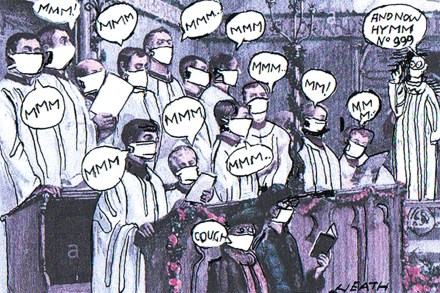
On this week's episode, Dr Max Pemberton explains that while just as many people are seeing their GP as before the pandemic, something has changed. (00:55) After, Andrew Watts argues that you shouldn't buy a second home in Cornwall. (09:15) Ysenda Maxtone Graham finishes the episode, lamenting the loss of indoor singing.

Why are doctors still hiding behind Zoom screens?

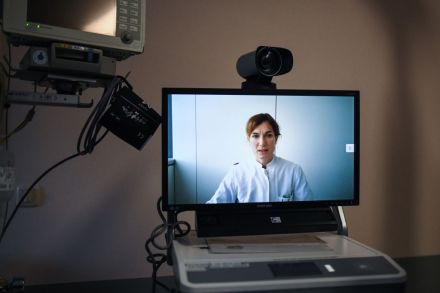
Where have all the GPs gone? Doctors were among the first to be double-jabbed, ahead of teachers in the queue precisely so they could resume seeing patients in the flesh. But while schools have long been back, GPs have retreated behind their laptops never to be seen again (at least not in the flesh). The stethoscope has been replaced by a headset — to the despair of patients with ailments that are hard to diagnose over the phone or via a laptop. In theory, GPs can claim normal service has resumed. In the pandemic the number of appointments almost halved to just over three million a week — in spite of attempts to keep healthcare running. The consequences of this drop can only be guessed at.

The horrifying toll of lockdown on the poor and mentally ill

I start the week with someone throwing faeces at me. I thought people were supposed to clap for doctors these days, not hurl poo at them? Never mind. Thankfully I’m fast on my feet despite it being the early hours of the morning, and dodge the mess, which hits the wall behind me. I’m working a week of nights covering A&E for mental health and this kind of mayhem is not as unusual as you might expect. The naked man, covered in excrement, runs around screaming. The nurse with me doesn’t even flinch. I love A&E nurses. They’ve seen and heard it all. I’m sure if there were a nuclear Armageddon, it would only be cockroaches and A&E nurses who would survive.

The NHS is letting down thousands of patients

I’m embarrassed every Thursday. I don’t mean to sound ungrateful. The outpouring of love for NHS workers at 8 p.m. each week has been touching. Who wouldn’t want to be clapped and cheered? But quietly among ourselves, many of us in the health service have increasingly felt it’s misplaced. I’ve come to dread it. It makes me wince. The fact is that the NHS is currently letting down thousands upon thousands of patients. When the dust has settled, I fear that we will be responsible for the death or morbidity of countless people. Since the pandemic hit, entire NHS services have completely stopped. I fear that this will have catastrophic consequences for the health of the nation.

On the NHS front line, we’re braced for what’s coming

From the moment when Boris Johnson announced that the country was moving from containment to ‘delay’ in handling coronavirus, the world’s biggest healthcare organisation has been on a war footing. What doctors like me have witnessed over the past days and weeks has been nothing short of extraordinary. Trusts in the NHS declared a ‘major incident’ on the evening of the announcement, and emergency plans swung into action within hours. By the time I came into work the next morning, managers, who had been up all night, had already started to implement profound changes to the way in which the hospital and services were run, and this continued over the following days. It was replicated in every hospital across the country.