Matthew Sinclair

The coalition can do more for less on benefits reform

From our UK edition

There is a lot to like about Iain Duncan Smith's new proposals for welfare reform.  The chance to move towards a radically simplified benefits system is enormously exciting.  As I wrote for Coffee House last week, the current system is a complete mess and failing on just about every criteria.  It is so complicated that £4.5 billion a year is lost to error and fraud; working at the minimum wage of £5.80 an hour can be worth as little as 26p an hour; and too many families slip through the net so that the number living in severe poverty has actually increased from 5 to 6 per cent in the last decade.

Meeting the cost of welfare reform

From our UK edition

As far back as last September, Iain Martin wrote that Iain Duncan Smith’s plans to reform the welfare system were going to run into trouble over cost: 'But there is no way these proposals, as drafted, will be implemented by a Conservative government, for one simple reason: they carry an estimated up-front increased cost of £3.6bn. A Treasury and Tory Chancellor desperate to find massive savings quickly will never nod that through even if advocates of these proposals promise vast “long-term” savings. Officials will simply say: how many times have we heard such talk before?' It would be a real tragedy if the political will built up to take serious action on this issue was wasted out of a failure to make the sums add up.

George Osborne must put spending cuts ahead of tax rises

From our UK edition

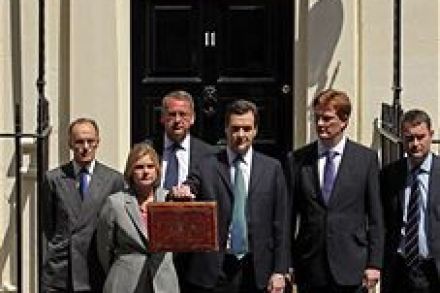
In 2009, Britain borrowed more, as a share of its national income, than any country that isn't being bailed out by the IMF and the Eurozone (Greece) or already making drastic spending cuts (Ireland).  That huge deficit is the critical challenge to our economic stability that George Osborne needs to tackle with the Budget today.  We have got away with high borrowing so far on the understanding that cuts are coming now the election is out of the way.   If you think tax hikes are the answer, then you're asking the wrong question.  Our present fiscal crisis is built on a decade of bumper rises in spending, not tax cuts.  Over the last decade, spending rose from 36.6 per cent of GDP to 53.4 per cent this year according to OECD data.

Why must VAT rise? Because not enough will be cut

From our UK edition

There is plenty of very good news in the Budget.  A two year public sector pay freeze, the abolition of the Child Trust Fund and cuts in welfare spending are all longstanding TPA recommendations that will be absolutely key to getting the public finances under control.  As a result of all the measures proposed, annual spending will be £31.9 billion lower than planned by 2014-15.   The Government are also scrapping more organisations.  The Emergency Budget report says (page 31) that "Regional Development Agencies will be abolished through the Public Bodies Bill.

Darling, what about the deficit?

From our UK edition

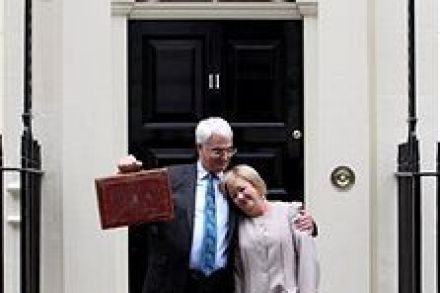
Alistair Darling was terribly proud of the Government's record in his Budget speech today.  But he again dodged the question of how he'll get the deficit under control.  Ruth Lea has called this his "do little" Budget. With the country still facing hundreds of billions in borrowing, the few billion being saved are virtually neglible.  There are huge downside risks for those borrowing forecasts as we get onto the more contentious growth projections from 2011-12 onwards, which are way above City expectations.  And everything will get much worse if borrowing costs rise - Mike Denham has explored the frightening possibilities in a blog for the TPA. We had a proud boast that Britain has "the fastest deficit reduction plan of any G7 country", a massive Brownie.

The unelected bodies that just won’t die

From our UK edition

Unruly, bizarre and hungry for your money, Britain’s quangos must be stopped, says Matthew Sinclair They are our longest-running political horror story. And, under Labour, they have been ever more unruly, increasingly dangerous and always ready to suck the blood of taxpayer’s wealth. For several decades politicians have been discussing cutting the number of Quasi-Autonomous Non-Governmental Organisations (quangos). Back in 1991, even Gordon Brown was talking about it. But it seems Britain’s vampire quangos cannot be killed. The most recent TaxPayers’ Alliance survey found that there are now 1,148 national quangos and other arm’s-length bodies in the UK, spending over £90 billion of taxpayers’ money and delivering huge areas of policy.

The spectre at the climate change feast

From our UK edition

Today the TaxPayers' Alliance is releasing a new report which sets out the huge and excessive burden that green taxes impose on families and business across the UK. At the moment, 14 percent of domestic bill costs are the result of climate change policies.  Increasing the price of energy hits the poor and elderly hardest - which, in turn, increases poverty and benefit dependency.  At the same time, 21 percent of industrial electricity bills are the result of climate change policies.  If we want to make our economy less dependent on financial services, driving up a major part of many manufacturing firms' costs isn't the way to do it. Despite these costs, the current approach doesn't appear to be achieving the desired cuts in emissions.

50p tax rate will discourage entrepreneurship

From our UK edition

At the TaxPayers' Alliance, we've released a new report, Tax and Entrepreneurship, today looking at how the tax system affects the incentives for entrepreneurs.  The report sets out how the new 50p top rate will mean fewer new businesses and, as a result, fewer jobs. In order to make it worth a potential entrepreneur's while to bear the risks that come with starting a new venture, instead of sticking with an existing organisation, there needs to be a big reward if things go well. Often, the pay off will be more than the entrepreneur needs and the real reward will be money that can be saved, invested in a company and then left to their children.  That's why Theo Paphitis, on the BBC's Dragon's Den, refers to the money he invests as his children's inheritance.

The Sunday Essay: How cutting corporate tax rates raises revenue

From our UK edition

Many thanks to Matthew Sinclair, of the Taxpayers' Alliance, for the Sunday Essay below.  We accept Sunday Essay submissions from any of our readers - be they MPs, policy wonks or nothing to do with politics at all.  For more information on how to submit an essay, please click here - Pete Hoskin With the public finances deep in the red many are arguing that there simply isn’t the money for tax cuts.  Britain has one of the largest deficits in the developed world and, as the economic slowdown leads to greater unemployment, borrowing could easily spiral out of control.  However, maintaining Britain’s high tax rates is not the way to control that deficit. Spending has increased by around £30 billion at each Budget for the last five years.