Matthew Sinclair

The Climate Change Committee’s suspiciously opaque report

From our UK edition

The Climate Change Committee, a quango set up to advise the Government on its emissions targets, make a big claim in their report today. They have, they suggest, disproved the argument that climate policy is set to drive substantial increases in energy bills by 2020. They say that ‘policies to achieve a low-carbon economy will add a further £110 to bills in 2020, almost entirely due to support for investments in low-carbon power generation’, less than other estimates. And so the Guardian have used that as a pretext to let climate attack dog Bob Ward accuse the TaxPayers’ Alliance and Nigel Lawson’s Global Warming Policy Foundation of an attempt to ‘confuse and misinform the public with blatantly inflated figures’.

Whatever Chris Huhne says, Durban hasn’t changed anything

From our UK edition

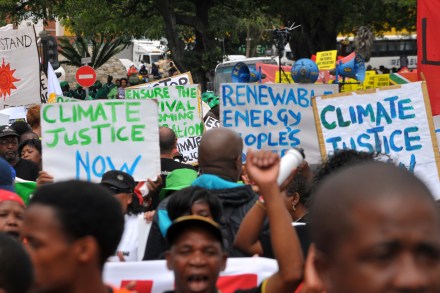
This morning the Department of Energy and Climate Change (DECC) told us that the climate summit in Durban, which concluded over the weekend, has been ‘heralded a success’. As they say, the ‘talks resulted in a decision to adopt the second commitment period of the Kyoto Protocol next year in return for a roadmap to a global legal agreement covering all parties for the first time’. Should anyone be heralding that as some kind of step forward? Was I wrong to be sceptical last week? As it happens, the various parties were actually trying to secure that ‘global legal agreement’, covering all of them, two years ago in Copenhagen — not just talking about securing it in the future.

Disappointment in Durban

From our UK edition

Will Durban break the cycle of climate change meetings that repeatedly disappoint those hoping to replace Kyoto with an upgraded model? With so much else on, most people seem to be ignoring the latest summit entirely. Scanning the major newspaper websites, only the Guardian and the Independent mention “Durban” on their homepages.    First Copenhagen failed to live up to the massive hype. Then Cancun continued the stalemate on the big picture and negotiators contented themselves with addressing some relatively minor points. But Kyoto’s commitment period ends at the end of 2012, so those hoping for new mandatory targets can’t content themselves with stalling forever.

The unions’ pension myths

From our UK edition

This morning I debated the President of the Association of Teachers and Lecturers live on Sky News.  It was incredible how few answers she had when confronted with the facts about the strike. According to research at the Office for National Statistics, public sector workers are paid 7.8 per cent more than those in the private sector after controlling for things like age and qualifications. And they get far more generous pensions, worth about a quarter of their pay (see here, p35), on top of that — with most of the cost paid for by taxpayers. But they striking and opposing quite modest reforms, creating yet more disruption for the families who pick up the bill for their pay and pensions.

How much are we paying towards next week’s strike?

From our UK edition

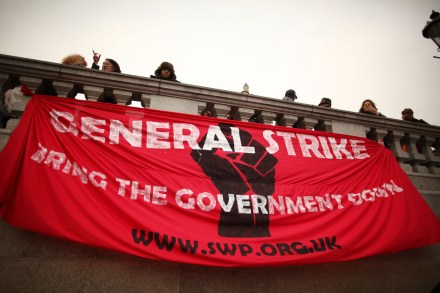
Next week, millions of public sector workers will go on strike over proposed changes to their pensions. And yet, even after the reforms, those pensions will still be far more generous than most taxpayers working in the private sector — who will pick up the bill — can expect. It's going to be hard to convince people of the ‘fairness’ of paying more into public sector pensions than they do into their own. The unions will do their best though. And the real irony is in how their campaigns are funded. Guess who is paying for unions to organise strikes that will disrupt the public services that taxpayers pay for? Yep — taxpayers. The unions enjoy £32.

What does the ‘carbon floor price’ mean? More emissions and fewer jobs

From our UK edition

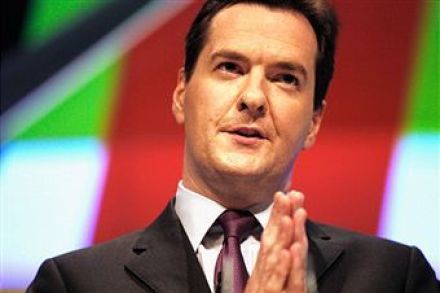
After the Conservative Party Conference, Fraser described this statement in George Osborne’s speech as the Osborne Doctrine: ‘Let’s at the very least resolve that we’re going to cut our carbon emissions no slower but also no faster than our fellow countries in Europe.’ The Government’s current climate policy clearly fails that test, as I set out for this site at the time, and there is no more egregious violation than the carbon floor price. It is one of those policies that can sound reasonable in theory: the EU Emissions Trading System creates a carbon market. That market produces a carbon price that is supposed to encourage business to invest in cutting emissions by doing things like building nuclear plants.

Tax busting

From our UK edition

Back in June 2008, when Gordon Brown's government was young but already so weak it looked like it might not last, James Foryth wrote about one positive legacy it might leave. The Union Flag all around Whitehall on the top of public buildings. Whether you saw that cynically as an attempt by a Scotsman to win over sceptical English voters, or as a genuine attempt to support a sense of British identity, James was right and those flags are still flying. We can all debate over what the great legacy of this Government should be or will be, and only time will tell which of its most important initiatives will prove most enduring: free schools, welfare reform, the fiscal adjustment or something else.

Executive pay: don’t believe the headlines

From our UK edition

Open yesterday's or this morning's papers, and you'll find plenty of reports about the snouts of FTSE100 chief execs being in the trough again, while the rest of us suffer. Their pay is up 49 per cent, we read. Most people’s first and only response to these accounts of the Incomes Data Services' (IDS) latest findings will be anger — and understandably so. But much of this anger and reportage is based on a mis-reading of the actual report. The BBC's influence is huge. Its original report compared the rise in base salaries (which wasn’t 49 per cent, but a much less impressive 3.2 per cent) with a median rise for private sector workers of 2.

How to untie the tax knot

From our UK edition

Yet another HMRC scandal this week, as a new HMRC computer discovered millions who have paid too much or too little in tax. A letter from the tax man will land on their doorstep in the next few months. Some will enjoy the dubious pleasure of getting money back that should never have been taken in the first place. Others face the painful task of finding the money to catch-up on tax they didn’t pay before.   As Pete said in his post on Wednesday, this isn't the first time. When the House of Commons Public Accounts Committee looked at similar problems last year, they said that the Department had 'failed' in its duty to process people’s taxes 'accurately and on time'.

Osborne’s carbon conceits

From our UK edition

George Osborne told a Conservative Party increasingly wary of expensive climate policies that Britain needs to "cut [its] carbon emissions no slower but also no faster than our fellow countries in Europe. That’s what I’ve insisted on in the recent carbon budget."  What he actually insisted on was what Chris Huhne described as "a review of progress in early 2014 to ensure our own carbon targets are in line with the EU’s".  Even if that review is serious, and energy intensive industries have every reason to be sceptical, it is only going to hold our policy to the same standard as today.  The current targets require us to cut our emissions faster than our European competitors, and the policies we are adopting to meet them are far more draconian.

Huhne, the Lib Dems’ black comedian

From our UK edition

Today we got the black comedy follow up to Sarah Teather’s stand-up routine.  Chris Huhne is going to drive down our energy bills! For those of us wondering how families and businesses can afford his expensive climate policies, it is a bit of a joke. The basic issue – as I set out in the new book Let them eat carbon – is that we need to invest an absolute fortune to meet the range of environmental targets that the government has put in place. Citigroup estimated last September that we need to invest about €229 billion (about £200 billion) in the energy sector this decade.  That is far more than any other major European economy.

Let Them Eat Carbon

From our UK edition

After a Spectator debate on climate change in March, Fraser Nelson wrote about whether or not we should try to engage in the debate ourselves or “trust the expert”. Simon Singh had argued in the debate that the most credible experts supported the view that the human contribution to potential global warming was real and serious. The response to my new book Let Them Eat Carbon shows how much that kind of debate is turned on its head when it comes to policy. The science is much less important than people make out. No argument about historical bristlecone pines is going to settle whether or not we should pay handsome subsidies to offshore wind farms. Policymakers often have to make decisions with only a vague sense of the likely results.

Solving the government’s aid conundrum

From our UK edition

Earlier this week, Jonathan Jones reported on the problems facing the government on international development spending.  Their plan to increase the DFID budget is deeply unpopular. Today we’ve released a new YouGov poll that sheds a lot more light on the situation, and suggests a way out whereby the government can still fund their most prized objectives but take the heat out of public anger on the issue. The first thing to understand is that the public doesn’t just resent any money being spent on international development. Freezing the budget is significantly more popular – with 69 per cent support and 12 per cent opposed – than scrapping it outright – with 43 per cent support and 33 per cent opposed.

High-speed rail isn’t about North versus South — it’s about wasting taxpayers’ cash

From our UK edition

Yesterday the campaign for high-speed rail, endorsed by the Government, made clear the way they want to frame the debate over the new line. They want to make it about Northerners vs. Southerners. Their adverts featuring a bowler-hatted caricature putting the integrity of his lawn above jobs in the North went up on buses in Manchester. By the evening, it was already clear that their strategy — which Tim Montgomerie has described as "backwards-looking" — was backfiring as the BBC went from house to house in Ruislip talking to locals who said, "I don't wear a bowler hat, and I don't imagine that many people around here do".   Today the TPA has launched three new videos looking at the real clash of interests in the debate over HS2.

Merging Income Tax and National Insurance Contributions – Simples?

From our UK edition

“I am announcing today that the Government will consult on merging the operation of National Insurance and Income Tax.” The word ‘consultation’ in the Budget drew the longest, loudest sigh from me. Some commentators had hinted that Osborne was considering merging Income Tax and National Insurance Contributions (NICs), which would be a fantastic move towards simplifying our tax system.  Of all the pre-Budget leaks, this was one that sounded truly exciting and innovative.  But, alas, this idea is only in infancy and all that was promised was a consultation.  Of course, the Chancellor can’t rush into this. He has to get this right if it goes ahead, so a consultation is probably prudent.

The case for abandoning HS2 restated

From our UK edition

The government release a claim that HS2 will bring 40,000 new jobs. They are so desperate to let the public know that figure they breach proper practice by briefing it ahead of the publication of the consultation document. When the consultation document comes out, I will look at whether creating that number of jobs is actually impressive, for an investment of £17 billion. The wider economy produces four times as many jobs per pound of capital, so it actually doesn't look very impressive at all. Professor David Begg, eminent representative of an endangered quango, is furious though. He attacks me for making an unfair comparison.

The failing business case for HS2

From our UK edition

Under a week ago, when James Forsyth wrote about how the government was successfully mobilising third party groups to support high-speed rail, it looked like Philip Hammond was going to get the neat debate he wanted. The script was simple: the new high speed line was urgently needed and in the national interest, a small number of people ardently opposed it because it would spoil their views. Since then that message has come unstuck. I think it is understandable that some people are very upset at the aesthetic disruption that could come with HS2.  But that isn't the only objection. Plenty of people who have no particular attachment to Wendover, Aylesbury or Great Missenden are opposed.

Putting a stop to taxpayer funded environmentalism

From our UK edition

It’s that time of year again, time for the world to pay attention to climate change policy for a few weeks.  Most of the year, schemes like the EU Emissions Trading System and the Renewables Obligation just wallow in dysfunction and quietly cost us a fortune, adding to our electricity bills in particular.  Manufacturers pay attention, and higher energy costs threaten to drive industrial jobs abroad, and the poor and elderly feel the effects, even if they don’t know why their bills are rising.  But the only people who really have the staff and the organisational clout to pursue this issue all year round are the environmental campaigns.   Many of them, like Friends of the Earth, have multi-million pound budgets and dozens of staff.

The British taxpayer should not be bailing out Ireland

From our UK edition

Everyone is talking about the royal wedding today.  It will be a great occasion but the public finances are tight and people are already asking about the cost.  There is a bigger issue for British taxpayers, though.  Our politicians have arranged for them to get hitched to the bride from hell: the ongoing fiscal disaster in the eurozone.   Under current plans it is reported that we could be liable for up to £7 billion in any Irish bailout.  At the TaxPayers’ Alliance, we have just this morning started a petition against British taxpayers’ money being put at risk for a euro-bailout of Ireland; you can sign it here.   The eurozone is fundamentally broken.

What we know already

From our UK edition

At the Comprehensive Spending Review tomorrow, we will get a much clearer picture of how the Government plans to manage spending cuts.  There are a few things we already know, though: 1) The overall cuts will be modest.  As Fraser has pointed out, the overall cut in spending is small.  Spending is going down to around the level it was at in 2006-07.  It will remain several percentage points of GDP above the level at the start of the last decade. 2) Cut in some areas will be much sharper.  The higher bill for Government debt interest, the ringfencing of Health and International Development and the relatively soft deal for some other departments means quite drastic cuts in other areas.