Matthew Parris

Matthew Parris

Matthew Parris is a columnist for The Spectator and The Times.

There’s no housing shortage. It would be easier if there were

Britain does not have a housing shortage. We have a problem with the cost not the availability of homes. This can’t be solved by building more houses, because it is not caused by an insufficiency of houses. I’m no economist. My understanding of the dismal science is rudimentary. I may be shot down in flames as an ignoramus. But here goes. Residential property has become a kind of currency, prized more for value than utility; and its role as a financial asset is messing with its ability to perform the function of actually housing people. Straining to increase the supply of housing will no more restrain price than straining to increase gold production would make much difference to the price of gold.

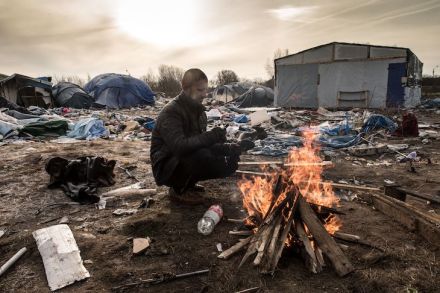
Nigel Farage is wrong: the French are doing us a big favour in Calais

Last week Nigel Farage described the deal we’ve done with France over the refugee camp near Calais as a ‘humiliating capitulation’. His was the most disgruntled voice among a number of others. The disgruntlement arose from the ‘Sandhurst’ deal struck with France during President Macron’s visit to Britain. The Prime Minister had agreed (at Sandhurst) to pay some £44.5 million more for the maintenance of security on French soil, mostly around Calais, and undertaken to speed up the snail’s-pace processing of applications from refugees with family connections in Britain.

No, minister: the John Worboys case should stay closed

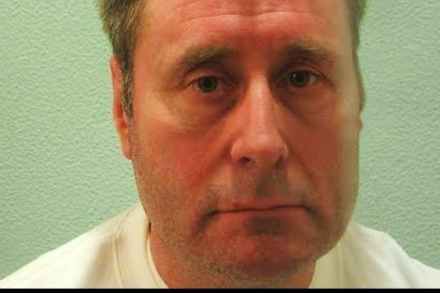
Hard cases make bad law. The release on parole of the ‘black cab rapist’, John Worboys, is a hard case. But ministers should not be panicked into throwing open parole board decision--making to public inspection. The police have blundered, the sentence was surely too lenient, and the failure to inform his victims was disgraceful. But it was not upon some careless whim that Parliament barred parole boards from giving reasons, and the new Justice Secretary, David Gauke, should think hard before reversing the interdiction. Much of the furore provoked by the release of this serial attacker of women after ten years in prison really arises not from the parole board’s decision but the original sentence and the flawed prosecution process which helped produce it.

Leave Brexit alone and get on with governing

I return often to Cambridge and was there recently. Julian Glover, my partner, was talking to the History Society at Trinity about his new biography of Thomas Telford, the 18th-century roads, bridges and canals engineer. We spent the night at Trinity, and I had time to update my acquaintance with this fast-changing city. ‘Fast’ hardly does justice to the speed of change. ‘Silicon Fen’ may be a smart-Alecky sobriquet, but something huge is happening here, something very much of our time. Though the university nucleus remains reassuringly familiar, the river Cam sits at the centre of the biggest and most sustained expansion and boom I’ve ever seen in England.

The royals don’t exist, so they have my full support

Prince Harry does not exist and soon Meghan Markle will cease to exist too. None of the royal family exist. This truth, which has come to me rather late in life, has taught me how to stop worrying and love the monarchy. Despite my boyhood admiration for King Sobhuza II of Swaziland, I was always a bit of a republican. Not a tumbrils and guillotine kind, nor even, really, a campaigner for abolition, because as the decades have rolled it has become impossible not to feel respect for the Queen’s hard work; and besides, as the Australians have learned, there’s not a lot of point in removing the monarchy unless you can agree on the alternative. What alternatives suggest themselves?

The era when you could love a car is over

There are four of us in this relationship: my partner and I, his horse and my truck. His horse is 12, my truck 18. I’m jealous of his horse. He’s beastly about my truck. In our household Julian has only to say ‘nitrogen dioxide’ over dinner and my jaw tightens. ‘Particulants’ saps my appetite. ‘Scrappage scheme’ will drive me from the table. But, yes, I cannot dispute it: my beloved machine is a filthy polluter. The grey 1999 Vauxhall Brava five-seater ‘king-cab’ pickup illuminates every red light on the Guardian environmentalist George Monbiot’s dashboard. It’s noisy, smelly and smoky, and it’s older-generation diesel. But it’s my faithful friend and has barely done 100,000 miles.

The sex scandal is what psychologists call ‘displacement activity’

There are three reasons why Britain’s political and media world finds itself in the present ludicrous uproar over sexual misbehaviour at Westminster, and only one of them has anything to do with sexual misbehaviour. But let us start with that. And, first, a caveat. Can there be an organisation anywhere in discovered space which, subjected to the intense media scrutiny that the House of Commons now attracts, would not generate a comparable stock of report and rumour? Imagine a workplace — indeed imagine a workplace like our own august Spectator offices – peopled by a lively mixture of creatives, eccentrics, wannabes, rascals, saints, absolute bricks, total pricks and drones.

Go naked on the green mountain

‘I was last night sent officially to witness the execution by harakiri (self-immolation through disembowelling) of Taki Zensaburo… As the harakiri is one of the customs of this country which has excited the greatest curiosity in Europe… I will tell you what occurred…’ In The Spanish Ambassador’s Suitcase, my anthology of dispatches from British diplomats abroad, this one, dating from 1868, is the oldest. The first eye-witness account of harakiri ever given by a European, it’s also the most grisly. I cannot match the horror or novelty, nor can I match its author, Bertie Mitford, in fine writing.

Why May must stay | 12 October 2017

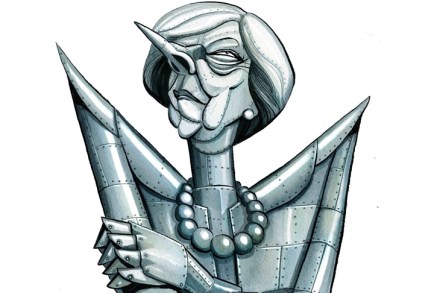
As from the Manchester conference hall I watched Theresa May’s big moment falling apart, as I buried my head in my hands while her agonies multiplied, I suppose I thought this could spell the end for her premiership. But even as I thought that, then reminded myself that the same failure of the larynx has afflicted me in front of a big audience and could strike anyone and is in itself meaningless, I knew such an outcome would be unjust. There may be reasons why the Tories should find a new leader, but the triple-whammy of a frog in the throat, some joker’s idiotic stunt, and the failure of two magnetic letters to stick to a board, can hardly count among them.

At last! The subversion of Brexit has begun

The Brexit crowd are right to smell a rat. In any great national debate a columnist may feel tempted to go beyond openly rooting for one side. Rooting for one side is acceptable, of course. Though some Brexiteer readers do struggle with the idea it could be legitimate for a columnist to dis-agree with the verdict of a referendum, I will merrily insist that the word ‘Comment’ at the top of a page allows for the expression of an opinion. But what if the columnist detects a possible conspiracy to help his own side win? And, further, suspects that for the plan to work, it would be better not to write about it for the time being?

The African bush took me back to my boyhood

Entering the Bulawayo Club, you step out of the blinding African sunshine on that safe and friendly city’s wide streets, and into the cool of a generous, mahogany-lined reception hall, its glorious art-deco doorways and fittings taking you back to another age: the early 1930s when the Club, already about 40 years old, rebuilt the clubhouse in the grand style of a confident colonial southern Rhodesia. Facing you are two large portraits. One is of Cecil John Rhodes in tunic and wing collar. This you would expect, though the finest representation of that capable, restless, vainglorious, morally ambiguous and sometimes duplicitous achiever hangs in the Lobengula room: a light and sensitive pencil sketch of Rhodes as a very young man.

May’s opponents are the mad and the bad

I first met Theresa May, or met her properly, way back in the last century. I’d been invited to speak at a constituency dinner for Maidenhead Conservatives on a Saturday night, and sat at her table. She was with her husband, Philip; I remember only my suspicion that he didn’t desperately want to be there. Of her I remember the pallor, and a certain shyness; but the couple were pleasant and welcoming to me, and as I’m not one to pump people for political news and gossip, and she isn’t one to volunteer such things, this was not the sort of evening that would have prompted an entry in the diary I don’t anyway keep. I suspect hundreds who’ve dined with Mrs May, asked to recall the occasion, would struggle — as I do here — to say much more.

In my other life, I’m a water engineer

Friends arrived last week to find me in a mudhole, inside a cave-like tunnel into the hill, fiddling around with our spring-fed water supply. Hearing their car, I slithered out to greet them, covered in slime like a monster from the deep. It would be natural to say this took them by surprise. It did not. They know me. Since infancy I’ve loved playing with water. Every river I could dam, every channel I could dig, every pond I could drain or fill, every stream I could divert, every castle wall I could build against the encroaching tide, seemed to point to a promising career as a water engineer. Sadly I showed no talent for any of this; and, later, the maths bored me. I just loved digging, damming and diverting: a master of my little water world.

We need ideology in politics

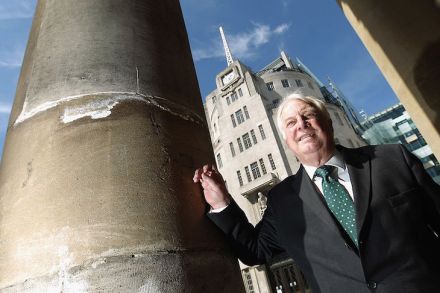
‘Studying history at Balliol,’ writes Chris Patten, ‘I knew that the one thing which made me uneasy was a grand theory or over-arching generalisation.’ The remark comes from a Lord Patten’s latest book, First Confession. Henry Keswick wrote an unpleasant review in this magazine, and I’ve spent some time recently discouraging mutual friends from bothering to protest (‘Leave it, Jono, he isn’t worth it’). To hear Patten himself talking about this honest, engaging and very personal memoir, I went recently to see him in a packed opera house at the Buxton Festival. I count Chris, who as director of the Conservative Research Department in 1977 gave me my first job in politics, as a friend and as a politician whom I admire tremendously.

Dear Leavebugs, it’s time to admit your mistake

‘Brexit,’ says my friend David Aaronovitch, ‘is dying.’ We Remainer irreconcilables certainly hope so. But there’s a slim chance the grisly Brexit project could yet pull through, and it’s right to acknowledge this. So in a spirit of candid friendship I write this letter to die-hard Leavers, of whom a small — but vigorous — colony survives on these Spectator pages… Dear Leavebugs, You know I am not of your number, but I understand you. I even feel for you. The Leave/Remain split is not a divide between two halves of the British population, but a war within the breast of each person. Every feeling you’ve had, I’ve experienced too. Civil wars are always bitter; wars within ourselves the most bitter of all.

How not to handle an independence referendum

If David Cameron seeks any testament to his handling of Britain’s difficulties with Scottish separatism, the mess that Spain is making of a very comparable demand from Catalan separatists could stand as grisly evidence of how not to do it. The government of Catalonia in Barcelona has defied Madrid by announcing an October referendum on independence. The Spanish government calls the referendum illegal and threatens to suspend Catalonia’s autonomous administration should it go ahead, if necessary by force. ‘Send in the tanks’ is the shorthand for Madrid’s apparent threat, and somebody is going to have to climb down or the prospects are dire.

What should party leaders be allowed to believe?

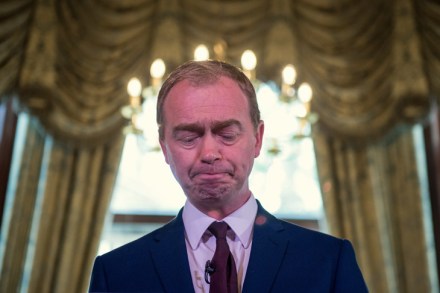
‘If he can’t be in politics,’ the Archbishop of Canterbury tweeted last week after Tim Farron resigned the leadership of his party, ‘media & politicians have questions.’ So prelates now think complex theological concerns can be despatched within the Twitter limit of 140 characters. They cannot. Let me now unpack Dr Welby’s abbreviated consideration of this subject and examine what’s behind it, because the subject is of profound importance —and not only for Christians. Nobody has said Mr Farron can’t be in politics. He has been returned as MP for Westmorland and Lonsdale with the support of 26,686 voters.

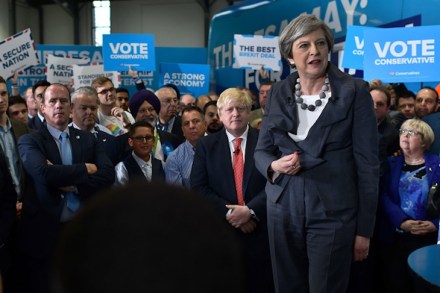
The Tories have been diminished by this election

There’s an expression used in football to describe an approach to the game that discounts the virtues of elegance, style, beauty, originality and daring, and — concentrates on blocking, frustrating and grinding down. It’s called ‘winning ugly’. While degrading the game, it often works. But having won a match, a football team does not have to govern the country for five years. It does not need our love, our patience or our intellectual respect. The Conservative party attempted to win the general election by winning ugly, and in doing so, they have lost some of our love and our respect. That, I reflect, is what, without direction from the top, ‘professional’ modern campaigning risks achieving.

A dementia tax would be a euthanasia bonus

Had Theresa May not on Monday summarily abandoned her manifesto threat to raid the savings of those who end up senile in care homes, I had planned to defend the idea here in terms that might have added to her woes.  I’ll do so regardless. The so-called dementia tax would, over time, have become a euthanasia bonus. And that would be a good thing. As I argued on this page two weeks ago, morality is the father of religion, and not the other way around. Secular morality can be largely explained by social Darwinism.

Why it’s obvious that morality precedes religion

At a beautiful church service recently I encountered again a Gospel parable that left me, again, torn between sympathy and doubt. You will recognise Matthew 25: 35-40, for its phrasing has entered the idiom: ‘I was hungry and you gave me food … sick and you visited me … in prison and you came to me … a stranger and you took me in … naked and you clothed me … ’ The story is of a king praising his subjects for these kindnesses to him. This puzzles them: ‘When did we see you hungry, and feed you … a stranger and take you in…’ (etc)? The king replies: ‘Inasmuch as you did it to one of the least of these, my brethren, you did it to me.