Matthew Lynn

Matthew Lynn is a financial columnist and author of ‘Bust: Greece, The Euro and The Sovereign Debt Crisis’ and ‘The Long Depression: The Slump of 2008 to 2031’

Can Elon Musk save Twitter?

From our UK edition

Teslas will be permanently trending. So perhaps will space rockets. Petrol cars will be quietly forgotten about. And if you get enough likes and followers perhaps you might win a place on the planned space colony on Mars. With the news that Elon Musk, the founder of Tesla, and one of the richest men in the world, has today taken a 9.2 per cent stake in Twitter there will be lots of jokes about how he might change the social media site. But by far the most significant one is this. He could shift it to the libertarian right. That really would be significant. Twitter shares soared by 25 per cent in early trading on Wall Street today as news broke that Musk had bought a huge slice of the company’s shares. So far, he insists that the stake is merely ‘passive’.

Is Biden trying to crash the economy?

From our UK edition

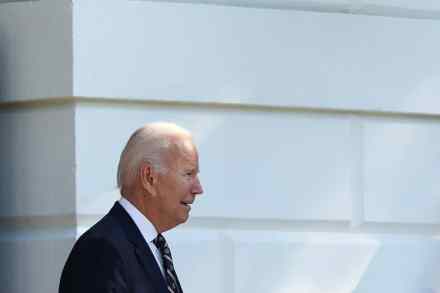
A war is raging in Ukraine. Inflation has risen to a 30-year high and may have started to spiral out of control. The country is on the brink of recession, and a gaffe-prone leadership is under increasing fire. You could be forgiven for thinking that President Biden has more than enough problems right now. But he is about to make his already miserable term in the White House a whole lot worse. How? By adding a stock market crash, and the destruction of America’s best companies, to the already worryingly long list of self-inflicted disasters. It is hard to think of a single tax that could be worse for growth This week, Biden is set to unveil a ‘billionaire's tax’ targeted at the country’s super-rich.

China’s zero Covid strategy is a threat to the global economy

From our UK edition

Aside from deterring a few tourists, and people filming fantasy epics, closing down New Zealand during the Covid pandemic didn’t make much difference to the global economy. Neither, come to think of it, did Mark Drakeford’s determination to keep Wales free from Covid-19, and even Australia’s dedication to closing itself down didn’t matter that much as long as the mines stayed open. For most of the last two years ‘zero Covid’ policies have mainly affected the people unfortunate enough to live under them and those trapped from returning home. But China? That is something different. And right now Beijing’s almost certainly doomed attempt to crush the virus is as much of a threat to the global economy as the war in Ukraine.

Putin’s neo-communism is doomed to fail

From our UK edition

It is responsible for inequality. For financial instability. And probably for poverty, racism and global warming as well. We have heard a lot about neoliberalism over the last 20 years. But now Vladimir Putin’s Russia is going in completely the opposite direction. The world is about to witness an experiment in what can only be described as neo-communism. The twist is that, unlike its liberal counterpart, it will be a complete failure – and the best thing the West can do is wait for it to implode. A Big Mac is not going to be any better when it is grilled by the Russian government Over the last three weeks since Russian soldiers moved across the border into Ukraine it has become clear that Putin is trying to recreate a Soviet empire.

Sanctioning Roman Abramovich will change football forever

From our UK edition

With refugees fleeing Ukraine, shells raining down on civilians, and threats of chemical weapons being used on the battlefields of Ukraine, it was surely only a matter of time. Today the British government finally added Roman Abramovich to the list of sanctioned Russian oligarchs, freezing his assets, and making sure that he could not profit from any sales. That will impact his entire fortune, of course. But most of all, it will hit Chelsea Football Club – and radically re-shape the fortunes of the Premier League. Abramovich’s departure will mark the beginning of an exodus of global money from British football In the two decades since a then relatively unknown Russian tycoon took control of Chelsea, the economics of the game have been completely transformed.

Ethical investors have weakened the West’s defences

From our UK edition

It won't be the first, or indeed the most serious, casualty of the war in Ukraine. It probably won't be the second, third or even fourth. Even so when the final reckoning of the Russian onslaught is tallied up, there can be no question that the ESG – environmental, social and governance – will be on the list. Why? Because its self-righteous concentration on progressive causes like race and gender, and crucially its wishy-washy pacifism, have undermined the West's ability to defend itself. Under the influence of left-wing activists, many investors decided that making weapons was wicked and destructive Rewind just a few weeks and much of the City was obsessing over ESG issues.

Macron’s energy intervention has seriously backfired

From our UK edition

He intervened decisively. He showed the ability of the state to make a difference. And he demonstrated that greedy, self-interested corporations should not be allowed to exploit ordinary consumers. Only a few weeks ago, the French President Emmanuel Macron was being celebrated by left-leaning economists and pundits for forcing the French energy giant EDF to slash the cost of power. But hold on. Now, the government has had to bail-out the company from the inevitable financial hit. It turns out that the government can’t dictate the price of energy after all – and it just creates a bigger mess when it tries to.

Why ‘Ukraine carnage’ in the markets won’t last

From our UK edition

Oil will shoot up to $130 a barrel. The prices of natural gas will double in a few hours, tipping a few more energy companies into bankruptcy. The tech stocks will crash, currency traders will panic, and the bond markets will crater. If Russian tanks do start to roll across the Ukrainian border this week then we can expect carnage in the financial markets. Indeed, they have already fallen sharply in anticipation of a possible war. And yet, the important point is surely this: it won’t last. True, the most serious armed conflict on European soil since the end of world war two is a serious matter. But geopolitical events rarely make much difference to the markets for more than a few days. We have plenty of evidence to tell us that, after a few days, the impact quickly fades.

Kirstie Allsopp is wrong about house prices

From our UK edition

They could cancel their Netflix subscriptions, stop drinking chai tea or go a little easier on the avocados and the smoothies. And perhaps most of all they could get on their bikes and start searching for some cheaper places to live. Kirstie Allsopp, the presenter of popular TV shows such as Location, Location, Location, probably always knew she was going to stir things up with her comments this weekend. Allsopp said that if young people simply cut back on some self-indulgent luxuries, and explored some alternative areas to live, then they would be able to get on the property ladder in their twenties just the way she did:  'I don’t want to belittle those people who can’t do it. But there are loads of people who can do it and don’t. It is hard.

The flaw in Boris’s levelling up agenda

From our UK edition

Regional agencies pumping money into research and development. Targets for education and healthcare. Another layer of meddling local government, and possibly a new bus route or two. The government plans for 'levelling up' unveiled today are a mixture of 1960s statism, which could have been taken straight from Harold Wilson’s government, mixed up with some wishful thinking. But don't despair: there is a far better strategy. The Tories should simply offer some meaningful tax breaks and incentives and let the private sector do the hard work for us. That approach can't be worse than what has been offered up by the government. Even by the recent dismal standards of the Johnson administration the ‘levelling up’ plans outlined today are thin stuff.

The WFH bubble has burst

From our UK edition

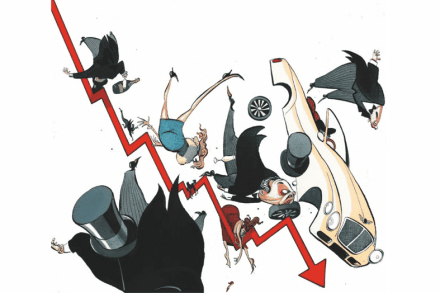
We would work over Zoom. We would all exercise on our Peletons. We would order in organic vegetable boxes, stream live shows, and network globally from our kitchens. At the height of the pandemic, with most of the major economies locked down, a group of work-and-live-from home companies boomed. And yet, right now that is starting to turn. The headlines might be dominated by stories of a stock market crash. In fact, however, something else is happening. The WFH bubble is bursting. There are a whole series of reasons why the stock market has turned very wobbly this month. Inflation is soaring and central banks, led by the Federal Reserve, are about to raise interest rates to control that.

Has Macron shot France’s energy industry in the foot?

From our UK edition

Gas prices are soaring. Europe could be about to witness electricity shortages. Power companies are collapsing by the day, and, on top of all that, the government is set to phase out traditional energy to meet its net zero target.  So might think that a cable to ship in cheap, greener electricity from the other side of the Channel is something of a knight in shining armour. Yet the government blocked the proposal today, and it was absolutely right to do so. Britain may need all the electricity it can get its hands on right now — but the last thing it should do is increase its dependence on Macron and Putin.

The real crisis that could finish the Tories

From our UK edition

Endless drinking parties at No. 10. Expensive flat refurbishments paid for by someone else. And plenty of ambitious rivals jostling to take the crown. There are plenty of threats to Boris Johnson and to the Conservative party right now. But the real one is buried in the small print of the labour market report today. Real wages are starting to fall sharply. On the surface, today’s data from the Office for National Statistics was very encouraging for the government, especially at a time when very little has been going right for it. Despite the end of the furlough scheme, the partial closure of businesses during the latest wave and chaotic supply global supply chains, the British economy remains a formidable machine for creating new jobs. There are now 29.

Joe Biden has lost control of the economy

From our UK edition

A nudge on interest rates from the Federal Reserve. A gradual winding down of quantitative easing. No more stimulus cheques flying out of the White House window. And rising energy prices dropping out of the annualised headline rate. This was meant to be the month when the spurt of inflation in the United States turned out – as president Joe Biden and his officials insisted it would – to be mostly transitory. We were told that it would die down over the course of this year. For Biden and the US economy, there is now no easy way back But, whoops, if that was the plan, it has already gone badly off the rails. Today’s inflation figure for the US was genuinely shocking.

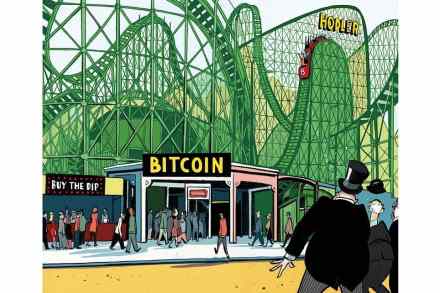
When will the Tesla bubble burst?

From our UK edition

How much would you pay to park a shiny new Tesla on the driveway? Perhaps fifty thousand pounds? Or seventy thousand? If you were looking at a top-of-the range Model X, which retails in the UK at £81,000, but allows you to look down smugly on all the gas-guzzling SUVs also clogging up the streets of Chelsea, perhaps ninety or a hundred thousand?  Well, here is an odd fact: the stock market is valuing each of those cars at more than a million dollars (£750,000). This is surely the clearest sign yet that the company’s extravagant valuation has reached bubble territory. Does the absurd stock market valuation of Tesla make any sense? Earlier this week, the electric vehicle manufacturer announced blockbuster delivery figures.

The hypocrisy of Elon Musk

From our UK edition

Tesla's sleek, if expensive, electric cars are leading the battle against climate change. Its batteries are moving renewable energy into the mainstream, while its founder Elon Musk, the world’s richest man, likes to present himself as a free-thinking radical. It is hard to think of a company more right on than Tesla — well, okay, perhaps Unilever — or one that depends more on its politically correct credentials. But hold on. There turns out to be one opposed minority that Tesla couldn’t care less about: China’s Uighurs. Most of the corporate world will sooner or later have to make a tough decision: do they care about human rights?

What happened to the great Brexit turkey shortage?

From our UK edition

Fights breaking out at the checkout counters in Waitrose as angry shoppers battled for the few remaining stocks. Reports of black market birds changing hands for thousands in the posher parts of London. Twitter feeds cluttered with pictures of nut roasts, tofu crowns, and chestnut bakes taking pride of place on the Christmas table, as people desperately tried out the alternatives. You probably noticed the Great Turkey Shortage this year. Christmas went ahead more or less as normal, but of course Brexit meant there weren’t any turkeys available anywhere, just as the farmers had warned. Only a couple of months ago, we were all being told that turkeys would inevitably be in short supply this year.

Is the EU heading for a booster crisis?

From our UK edition

The Omicron variant spreads far more quickly. It infects far more people. And it is already rampant around the world, and probably unstoppable no matter how quickly borders are closed, or restrictions on socialising are put in place. Still, despite that, the one thing we already know for sure is that booster jabs are very good at controlling serious disease, and governments are scrambling to get as many shots into arms as quickly as possible. There is just one problem. If you happen to live in Germany, there are not enough of them to go round. And, even more worryingly, that may be the first sign the European Union is about to head into a booster crisis every bit as serious as the vaccine crisis that delayed the roll-out of the inoculation campaign at the start of this year.

The Bank of England is right to hike interest rates

From our UK edition

The Omicron variant of Covid-19 is rampant. Bars and restaurants are in crisis as thousands of bookings are cancelled. And travel restrictions are back in place, with a full lockdown looming. To make matters worse, so far there is little sign of the Chancellor Rishi Sunak stepping in with any support.  Most businesses probably imagined that the very last thing they would have to cope with right now was a rise in interest rates. As a result, there will be plenty of business owners complaining that the Bank of England’s decision to up rates to 0.25 per cent will be the final blow that will push the economy back into recession. But hold on. In fact, the Bank is completely right to hold its nerve and raise rates – and Omicron was no reason for postponing.

Joe Biden is running out of other people’s money

From our UK edition

Abba have reformed. Nato is working out how to deal with an aggressive Russian president. And there are shortages of everything. There were already plenty of clues, but now it is surely official: the 1970s are back. The United States has recorded its highest inflation rate for 32 years, with a 6.8 per cent rate that far surpassed anything even the most pessimistic forecasters expected. In truth, Joe Biden is about to turn into the new Jimmy Carter, a lame duck Democratic president presiding over a failing economy – and the crisis is entirely of his own making. We already knew the US was witnessing a bout of inflation. Even so, the latest numbers still came as a shock. At 6.