Matthew Lynn

Matthew Lynn is a financial columnist and author of ‘Bust: Greece, The Euro and The Sovereign Debt Crisis’ and ‘The Long Depression: The Slump of 2008 to 2031’

Working from home is the new British disease

From our UK edition

Over mighty trade unions. Short-termist management that prioritises profits over investment. And an education system that doesn’t produce enough scientists or engineers. There have been many different versions of the ‘British disease’ over the years to explain the consistent under-performance of our economy compared to some of our main rivals. But right now there is a new one: the British don’t want to go back to the office – and that is hitting output hard.  According to a survey by the consultancy AWA published this week, the British are more reluctant to go back to the office than workers in almost any other major developed country. Even as bosses plead with them to go back in, the average office worker in this country is only showing up at their office 1.

Wilko is just the first zombie company to come a cropper

From our UK edition

It will be harder to pick up a last-minute light bulb. You might have to rely on Amazon Prime for a quick delivery of new tea towels. And your local shopping centre will look even more dismally empty than it already does.  There will, in fairness, be some disadvantages to the hardware chain Wilko disappearing. And yet there is no point in pretending that it is any great loss. In reality, it was one of many ‘zombie’ companies, kept alive by artificially low interest rates. Now that capital costs money again, many more will go bust.  Wilko announced today that it was going into administration, and that its 400 stores are now likely to close, with the potential loss of 12,000 jobs. The chain had been looking for a savior for months.

Sunak can’t blame landlords for not stopping illegal immigration

From our UK edition

Small companies will face massive fines for not checking the papers of everyone they hire. Landlords will be put out of business for renting rooms to anyone without permission to be in the UK. With its Rwanda policy stalled, and with the numbers of illegal immigrants still at record highs, the government has a big new idea for trying to stem the numbers of people coming into the country. It will get small businesses to police the system. The only trouble is, that will damage the economy, and we will all suffer from that.  The government’s latest big idea for controlling immigration is to make it a lot harder for anyone who is here illegally to work or find somewhere to live.

Britain’s growing army of pensioners should be delivering pizza

From our UK edition

Over-50s could deliver pizza. They could try their hand at Uber driving. Or they could put in the occasional shift at the Amazon warehouse. Mel Stride, the work and pensions secretary, won’t have done his political career any favours this week with his suggestion that retired people who are struggling to make ends meet could earn extra cash in the gig economy. But whether voters in the leafy shires like it or not, Stride is spot on: many pensioners can, and should, work part time and they can’t be too fussy about what jobs are available. The Prime Minister Rishi Sunak is probably already wondering how quickly he can fire Stride, or at least demote him to a couple of days a week making coffee at Pret.

Why the CEO of Coutts had to go

From our UK edition

In the end, the only real surprise was that it took so long. The chief executive of NatWest, Dame Alison Rose, had already been forced to step down after it became clear she had leaked confidential information about Nigel Farage’s personal financial affairs to the BBC. The board has been under sustained pressure all week. And now the man at the very heart of the scandal, Peter Flavel, the CEO of Coutts, has stepped down as well. If the bank is to have any future there is a lot of repair work to be done – and Flavel was hardly the man to lead that That was surely the right decision. A private bank only exists to be discreet and to provide exceptional service. It was clear that under Falvel, Coutts had long since stopped doing that.

NatWest needs radical change after the Farage scandal

From our UK edition

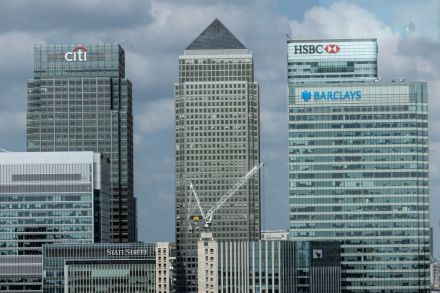
There are probably worse things a senior banker could do. Taking all the money and running off to the Bahamas, or rescuing Credit Suisse, for example. But leaking confidential information about a client to the BBC is right up there with the worst sins imaginable. After it became clear that the NatWest boss Alison Rose was the source of the BBC’s report that Nigel Farage’s account with Coutts had been closed for financial reasons, and had nothing to do with his politics, the pressure on her to quit became unstoppable. It will have come as no surprise to anyone that by this morning Rose had resigned. Even so, that can hardly be the end of the story. NatWest still needs to change radically, and so does a banking industry captured by pious compliance departments.

Elon Musk has launched X to kill Twitter

From our UK edition

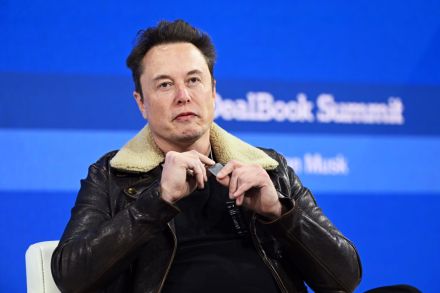
It will trash the brand. It will alienate its core users. And relaunching and rebranding a failing business almost never works. As Elon Musk drops the Twitter blue bird and swaps it for an X, we will hear plenty of arguments about why the world’s second richest man has made another critical commercial mistake. In fairness, some of them have a point. Yet Musk's critics are making a mistake by missing the real purpose of the new name. X only exists to kill off Twitter. The rebrand was announced in a typically haphazard way. As of today, Twitter will be known simply as X. It was Musk’s boldest move yet since his $44 billion (£34 billion) takeover of the social media site, and one that went down about as well as his other changes to the company since taking it over.

Britain should place a big bet on the petrol engine

From our UK edition

Ministers should be hailing it as a major vote of confidence in the economy. King Charles should be clearing his diary to make sure he is available for the opening ceremony. And the broadcasters should be leading the news with it. In normal circumstances, you might expect the announcement that two major global corporations will headquarter their new €7 billion joint venture in the UK to be greeted as a huge win for the country. It may not be popular with the green elite, but it is a lot more likely to be successful The trouble is, the Renault joint-venture with China’s Geely has been designed to produce petrol and hybrid engines and not fashionable battery powered cars. But hold on.

Jeremy Hunt’s City reforms are far too timid

From our UK edition

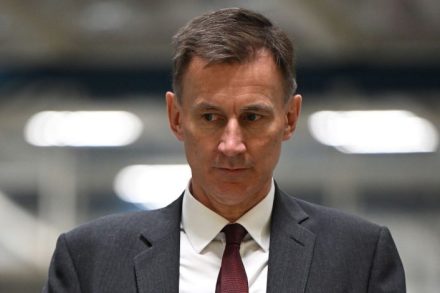
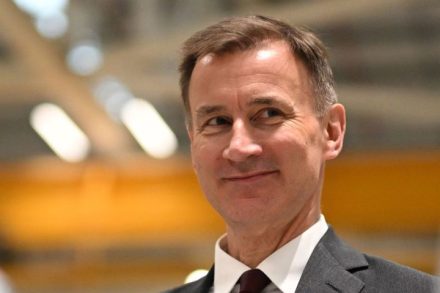
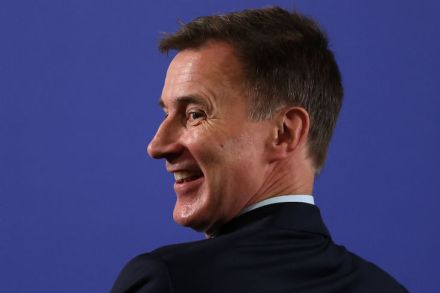
There will be some tweaks to the way that pension funds are allowed to invest their money. There will be some modest rewriting of EU rules on the way investment banks can provide analysis of company performance. And there will be some reduction in the big bundles of paper a company needs to issue before it can sell new shares. And, er, that seems to be about it. The Chancellor Jeremy Hunt may be trying to sell his latest round of City reforms as a significant reduction in red tape that will allow the financial sector to grow again. But, in keeping with his tepid, managerial style, they lack any real vision or guts – and won’t make much difference to anyone.

Will Threads tame Elon Musk’s Twitter?

From our UK edition

We will need tighter regulation. We will need new laws and controls. And we will have to organise boycotts of advertisers to bring it into line. Ever since Elon Musk took over Twitter, and started to try and make the liberal-left’s favourite mouthpiece slightly more balanced, not to mention slightly more profitable, there have been endless demands to stop the libertarian billionaire from changing anything about it. Politicians such as the American democratic senator Amy Klobuchar have called for more content moderation and harsher punishment for spreading hate speech. Last October, the EU internal market commissioner Thierry Breton taunted Twitter, saying 'In Europe, the bird will fly by our European rules'.

Labour must resist jumping on the mortgage bail-out bandwagon

From our UK edition

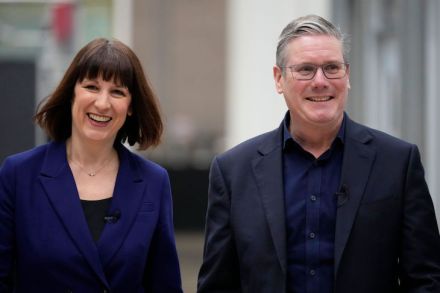
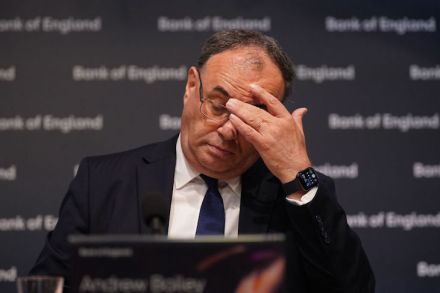
Millions of potential voters in marginal constituencies face punishing rises in their mortgage repayments over the coming months and years. The government is in disarray on the issue and is largely to blame for the mess. Labour has spied an opportunity to hammer the Conservatives: it is talking about a 'Tory mortgage penalty' and shadow chancellor Rachel Reeves is jumping on the bandwagon clamouring for mortgage payers to get help. But, if Labour goes too far in its demands, it could pay a heavy price. With inflation stubbornly high, and the Bank of England rapidly losing credibility, mortgage rates are soaring.

Rishinomics isn’t working

From our UK edition

Tax rises would bring debts under control. The Bank of England would bring inflation back down again. The government would steadily win back the confidence of the financial markets, repair relations with the EU, remove some of the obstacles to growth and, once all that was in place, try and cut a minor tax or two. When he became Prime Minister, Rishi Sunak promised a very orthodox, centrist economic programme, and one that would have the full backing of the IMF, the financial markets and just about every respectable commentator. There is just one problem, however, and it is not exactly a minor one. It is failing, and failing badly. In truth, Rishinomics is in tatters.  Today’s inflation data was genuinely shocking.

Keir Starmer is clueless about energy security

From our UK edition

It will create lots of well-paid jobs, especially in Scotland. It will reduce our electricity bills. And it will make sure the lights can still be switched on regardless of what is happening in the rest of the world. Labour leader Sir Keir Starmer has made a big pitch today for ‘energy security’, promising to rip up planning rules for onshore wind power and create a state-owned green energy giant that will provide all the power the UK needs, as well as hitting all our targets on climate change. But hold on. On closer inspection, it seems that Sir Keir knows barely anything about energy security.

Is France finally changing its tune on Brexit?

From our UK edition

The waiters can sometimes be a little surly. That holiday villa you booked in the Loire may not always be as desirable as it looked in the pictures. And you can never be entirely sure which side they will be on in a major war. Still, despite occasional inconsistencies, there is one thing you could always rely on the French for. They will insist forever that leaving the EU has been a catastrophe for the British economy, and by far the stupidest decision any major country has ever made. But hold on. What’s this? In a note this morning BNP Paribas, a bank right at the heart of the French establishment, finally admitted Brexit had not made much difference. At this rate, perhaps even the EU’s chief Brexit negotiator Michel Barnier will be arguing it was all fairly irrelevant all along.

The Vodafone-Three merger could be a Brexit win

From our UK edition

There are plenty of reasons for viewing today’s huge merger deal between the UK mobile networks of Vodafone and Three with suspicion. It could reduce choice for consumers. It may lead to job losses. And it is possible that they will downgrade their service even more than they already have, cut back on investment, and squeeze more money out of a captive market. Yet that is not quite the whole story. In fact, done right, the merger could even turn out to be a rare Brexit win.  Today’s tie-up between Vodafone and Three was widely expected. The two companies will combine their British networks, and will have 27 million users between them, taking them ahead of Virgin Media O2, with 24 million and BT Group with 20 million. It will become the leading provider in the industry.

Sunak has hitched a ride on Biden’s climate gravy train

From our UK edition

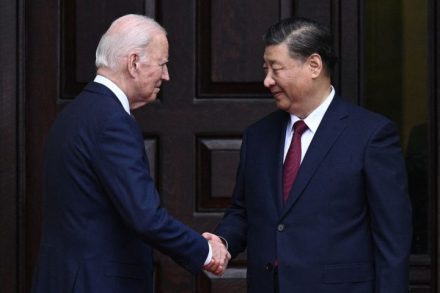
Sometimes it helps to have a banker as Prime Minister. They have plenty of faults. They can be dry, calculating, and they are typically far too rich to connect with ordinary people. But if they have one thing going for them it is this: they can spot free money when they see it. And Rishi Sunk has seized a chance for the UK to take a percentage of the unlimited cash that President Biden is spraying at American industry.  Hundreds of billions in corporate bungs are available, and because it is all in tax credits there is hardly any oversight Most people will dismiss the Atlantic Declaration that Sunak negotiated with President Biden on his visit to Washington this week as meaningless guff. And, in fairness, most of it would struggle even to hit that low benchmark.

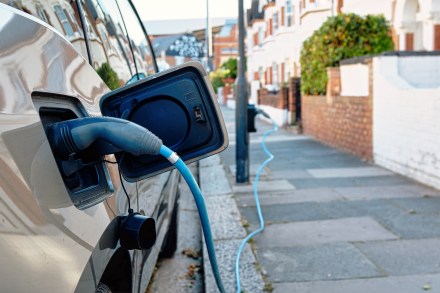
Britain should get out of the electric vehicle business

From our UK edition

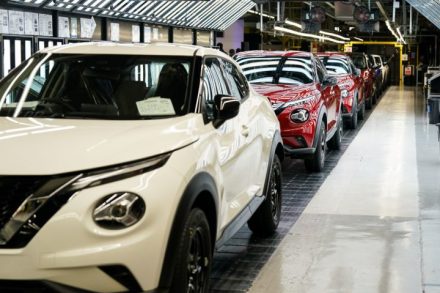
A frantic round of last-minute lobbying is already underway. Officials are trying to stitch together a deal. And the Prime Minister Rishi Sunak is pushing hard to find a compromise that works for both sides. There are lots of negotiations over ‘rules of origin’ for electric vehicles that will allow Vauxhall to keep its plants open. But hold on. Although we should expect a deal to be done, as it usually is between the UK and the European Union, that should not obscure the bigger point. We are not going to be big players in EVs, and there is no point in trying to become one now.  We are not going to be big players in EVs, and there is no point in trying to become one now ‘Rules of origin’ is the kind of subject that keeps trade nerds up at night.

Why Liz Truss fans might come round to Keir Starmer

From our UK edition

We might have thought Trussonomics was dead and buried for a generation after its author’s short-lived premiership last autumn. But all of a sudden it has a high-profile, if slightly unexpected, convert: Sir Keir Starmer. In an interview with BBC Radio 4's Today programme this morning, Starmer was sounding a lot like Kwasi Kwarteng last September: We’ve got the highest tax burden since the second world war. What we’ve had from the government is tax rise upon tax rise on tax rise. If they’ve proved one thing, it’s that their high-tax, low-growth economy doesn’t work. The Labour leader is absolutely correct, even if he is a little late to the party.

Will the Fed torpedo Joe Biden’s re-election? 

From our UK edition

Hollywood will be backing him en masse. The major newspapers will be rooting to put him back in the White House. And most of corporate America, in between filling in the forms for the next round of ‘green subsidies’, will be quietly hoping for another four years of lavish spending and protectionism to keep out all those irritating foreign competitors. As he launched his re-election campaign this week, President Joe Biden could count on plenty of mainstream support. There is just one problem: the Federal Reserve is about to torpedo his campaign – by tipping the American economy into recession.  GDP figures for the US released today showed an economy slowing down sharply. Over the first quarter of the year, output rose by 1.1 per cent , a sharp deceleration from the 2.

The UK’s treatment of Activision shows it is closed for business

From our UK edition

It was, admittedly, not quite as thrilling as an action sequence from Call of Duty. Even so, the statement put out by Bobby Kotick, chief executive of US video game publisher Activision, following the UK’s bizarre decision to block the company’s acquisition by Microsoft was about as bloodthirsty as any ever put out by a major corporation. The ruling ‘contradicts the ambitions of the UK to become an attractive country to build a technology business,’ he argued. Even worse, ‘it does a disservice to UK citizens, who face increasingly dire economic prospects’, and, to cap it all off, it shows that Britain is ‘closed for business’. Of course, it would be easy to dismiss that as sour grapes from a man who has just seen $70 billion of Microsoft’s money slip through his fingers.