Matthew Lynn

Matthew Lynn is a financial columnist and author of ‘Bust: Greece, The Euro and The Sovereign Debt Crisis’ and ‘The Long Depression: The Slump of 2008 to 2031’

Why fears of US recession are justified

From our UK edition

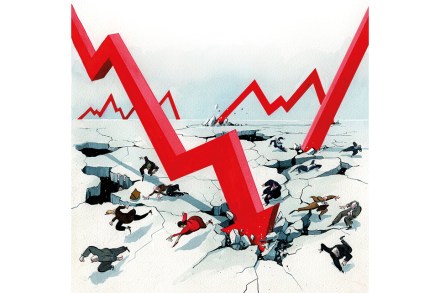
The bubble in artificial intelligence stocks has started to pop, two decades of easy money in Japan have finally started to come to an end, and (after hitting all-time highs) share values are being reassessed. There are plenty of plausible explanations for the sudden plunge in stock markets around the world over the last few days. And yet the big one is this: investors have started to worry that the global economy is heading into a recession, and they are surely right to do so.  The markets are often volatile.

Why has Donald Trump embraced crypto?

From our UK edition

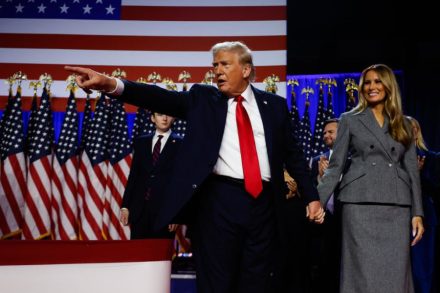
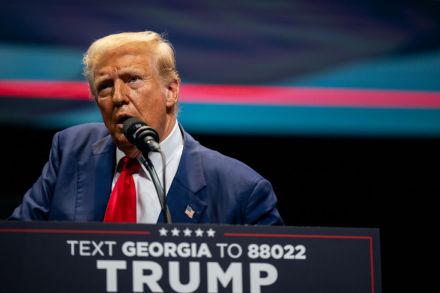
No one ever accused Donald Trump of ideological consistency. And yet, even by the standards of a man who often seems capable of switching positions several times in the same speech, and sometimes in the same sentence, it is quite a turnaround. As president he condemned Bitcoin and other crypto currencies ‘a scam against the dollar’. And yet, during this campaign he has turned into an enthusiastic convert, promising to govern as a Bitcoin President if he retakes the White House in November. That raises an intriguing question. Could the Crypto Bros turn Trump into a small state libertarian?

We will miss 1p and 2p coins when they’re gone

From our UK edition

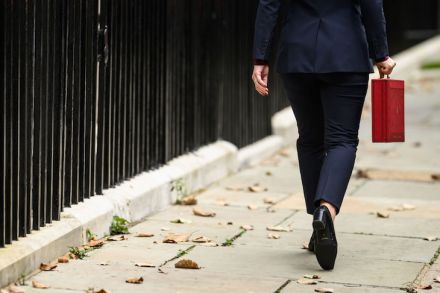
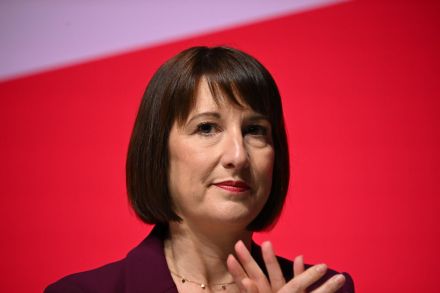
It doesn’t buy anything anymore. It is not enough to put into a charity box, and it just takes up space in your pocket or a purse. On one level, it will save us all a lot of trouble when one penny and two penny coins finally become extinct. The Treasury has told the Royal Mint not to make any new ones this year; and although there are plenty behind a sofa somewhere, this means they could eventually vanish completely. We will miss them when they are gone.  Rachel Reeves, the new chancellor, is keener on increasing government budgets than reducing them. One cut that may well be made, however, is scrapping the smaller coins. Indeed, over the next few years, we may stop minting new coins completely.

Labour will struggle with its plan to get Britain back to work

From our UK edition

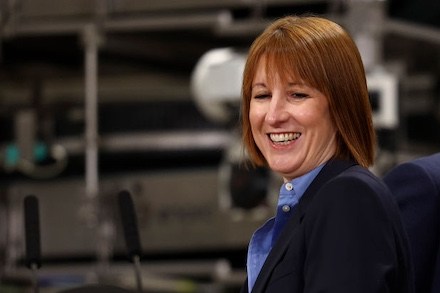
Liz Kendall wants Britain to get back to work. The Work and Pensions Secretary has unveiled a target for the country to reach an 80 per cent employment rate. But hold on: that 'ambition', as the government is calling it, is completely unrealistic. Labour's plan to reverse the dire labour market and drive up Britain’s employment rate seems certain to fall short of its ambitious target. Spending on sickness and disability benefits is set to increase by £30 billion over the next five years Britain is the only country in the G7 whose employment rate has still not returned to pre-pandemic levels: 2.8 million people are out of work because of ill health or disability; one in eight young people are not in education, employment or work.

Ursula von der Leyen only cares about power

From our UK edition

The Green New Deal will be watered down. There will be a drive to roll back rules and regulations. And there will be far tougher control of the borders. The President of the European Commission Ursula von der Leyen secured the support of the bloc’s parliament today by promising a radical overhaul of the policies of the last four years. There is just one problem. This is the same leader who implemented all the policies she has just ditched.  Von der Leyen has been exposed as a politician who believes in nothing It is all changing in the EU. The Green New Deal, a Europop version of Bidenomics, is going to be diluted. For example, cars running on ‘green fuels’ will still be permitted, instead of only electric vehicles, while agricultural rules will be relaxed.

Labour will regret making the OBR all powerful

From our UK edition

It might seem like smart politics. And it will reassure the markets. The legislation in the King’s Speech today to ensure all Budgets are assessed by the Office for Budget Responsibility (OBR) no doubt seems like a good idea right now. And yet, there is a catch. The incoming Labour government has now completed the job started by Gordon Brown as chancellor back in 1997, and completely outsourced economic policy to ‘independent experts’. At some point, it is going to regret that decision. It is not hard to understand why the powers of the OBR have been increased in the King’s Speech unveiled today.

Dyson won’t be the last business to cut jobs

From our UK edition

A major new factory from one of the American tech giants perhaps? Or a new lab from one of the pharmaceutical giants? Or, best of all, a huge new green energy fund. The newly appointed Chancellor Rachel Reeves was probably hoping for some positive investment news for her first week in office, especially as she has decided, in an unprecedented move, to make ‘growth’ a ‘national mission’. Instead, one of the UK’s best businesses has cut almost a third of its UK workforce – and that will just be the start of the corporate exodus from Labour’s Britain. Dyson will argue that its decision to axe 1,000 jobs in the UK, announced today had nothing to do with the election of a new government. It had been planned for months. Well, perhaps.

Would Rishi Sunak really be welcome in Silicon Valley?

From our UK edition

Rishi Sunak's bags are probably packed. The plane tickets are booked. And no doubt he has found somewhere for the family to stay while they look for a permanent home. It is widely assumed that, having lost the election, Sunak will soon disappear to Silicon Valley as quickly as possible to restart his career. But hold on. Sure, it is easy to understand why Sunak would want to get as far away as possible from the car crash he has presided over. Yet after running one of the most spectacularly inept election campaigns in history, will the tech giants still want him?

What the markets have wrong about the French election results 

From our UK edition

The Paris stock market is soaring. French bonds are rising once again, and the banks are suddenly looking a lot healthier. As the results of the French elections came through overnight, and it looked less likely that Marine Le Pen’s National Rally would have enough votes to form a government by itself, investors started to buy into France. Sure, the result might be messy, but chaos is a lot better than the shambolic mix of protectionism and welfare spending that passes for an economic plan for the NR. But hold on. In reality, the crisis has just been postponed – and the crash when it comes will be far worse. The blunt truth is that France is heading into a long period of political chaos It was certainly a good morning for French assets.

Markets are readying for a Trump victory

From our UK edition

If you didn’t have time to watch the presidential debate between Donald Trump and Joe Biden last night you could have just watched the share price of a little-known Chinese company called Wisesoft instead. Its Chinese name ‘Chuan Da Zhi Sheng’ sounds very like ‘Trump Wins Big’ in Mandarin, and local speculators piled in as it became clear just how catastrophically the incumbent had performed. In reality, that verdict is going to be repeated when Wall Street opens later today. Investors, though, have already made up their minds. Trump is going to win, and nothing can change that now.  The markets are already buying up all the assets that will benefit from a Trump victory in November It was probably the most painful TV debate any of us have ever watched.

Marine Le Pen’s plan for France is a recipe for stagnation

From our UK edition

Big business will be brought onside. The bond markets will be mollified. And there will be plenty of reassuring words about dealing with the budget deficit. With the first round of voting in France’s parliamentary elections set for this week, Marine Le Pen's Rassemblement National is preparing for government. This week it has set out a programme designed to keep investors, if not exactly happy, at least under control. There is just one catch. It is also a programme for stagnation – and that means France’s out-of-control debts are going to grow and grow.

Will Christine Lagarde crush Marine Le Pen?

From our UK edition

The National Rally is comfortably leading in the polls. The charismatic Jordan Bardella is set to become the next Prime Minister. And Marine Le Pen looks to be heading for power in France. When she gets there, however, she faces a potentially far more lethal opponent than the bruised and increasingly powerless President Emmanuel Macron. The President of the European Central Bank, Christine Lagarde. In reality, the next big issue in Eurozone politics will be whether Lagarde crushes Le Pen – and whether that risks compromising the independence of the Bank for good.  Lagarde has the power to crush Le Pen.

London can thank Macron for becoming Europe’s largest stock market

From our UK edition

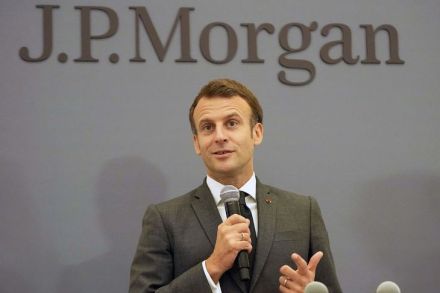
When Paris overtook London as the continent’s largest stock market two years ago, it was widely seen as a significant milestone in Britain’s relative decline. It was a sign of the City of London’s weakness – and it was evidence that the UK’s departure from the European Union was slowly destroying its once powerful financial markets. But hold on. This week, London has reclaimed top spot. French president Emmanuel Macron’s high-risk gamble on a general election has already backfired, at least financially, and he has now gifted financial leadership back to London.  Thanks to France's president, the smart money is leaving Europe On Monday, the total value of all the equities quoted on the London market hit $3.18 trillion (£2.5 trillion), compared with $3.13 trillion (£2.

France could pay a heavy price for Macron’s Liz Truss-attack on Le Pen

From our UK edition

As Emmanuel Macron heads into a fraught election, France's president is repeatedly warning voters of the calamitous consequences of electing Marine Le Pen’s National Rally into government. In doing so, he is effectively weaponising the bond market. His allies point to what unfolded under Liz Truss's government. The message to voters is clear: don't even think about. The debt crisis is largely of Macron’s own making Throwing a ‘grenade’ at those considering backing National Rally might be smart politics, but it is very dangerous economics – and the consequences may be catastrophic for the country he leads. You can hardly blame Macron for panicking: his decision to call a snap general election last week does not appear to be working out very well.

The London Stock Exchange is in serious trouble

From our UK edition

It has impeccable green credentials. It is crucial to the country’s power grid. And it is one of the UK’s largest private companies. A floatation of Octopus Energy should have been just the kind of event that would give the London Stock Exchange a much needed boost. And yet it now emerges that it may well choose a rival market to list its shares. If that happens, it will accelerate the City’s decline into global irrelevance – and an incoming Labour government may well finish it off.  It is probably the worst news the London market could have had. The chief executive of the giant Octopus Energy, the largest electricity supplier in the UK, revealed today that the company might list elsewhere.

France can’t afford a Le Pen government

From our UK edition

It is possible that President Macon had some clever plan when he called a general election in the wake of catastrophic European election results last night. After all, he has a reputation for always being several moves ahead on the political chessboard. And yet one point is surely clear. France can’t afford a Le Pen government – and its election may well trigger a crisis in the French debt markets.  Le Pen, after all, is a high welfare, big state, economic nationalist It is, perhaps, not quite such a foregone result as Britain’s election a few days earlier. And yet after the second round of voting on 7 July, it looks almost certain that Marine Le Pen’s National Rally will emerge as the largest party in the French parliament, and will be able to form a government.

The logic behind Labour’s foie gras ban

From our UK edition

It was never very impressed by the opportunity to strike trade deals across the fast-growing Pacific. It didn’t much like the idea of deregulating the tech industry. Nor did it think much of diverging on financial standards to re-boot the City. The Labour party may have accepted our departure from the European Union, but it never found any ‘Brexit freedoms’ it actually liked. Until today that is. The party has just worked out we can be kinder to geese – and, slightly surprisingly, in doing so, it may have just closed the door on the UK ever rejoining the EU.  As it prepares for government, the Labour leader Sir Keir Starmer has been getting rid of policy commitments as fast as he possibly can.

A Musk-Trump White House collaboration will only end badly

From our UK edition

He has created a major automobile company. He has built space rockets, taken over X, made himself hundreds of billions, and even found time to father lots of children. Elon Musk has plenty of achievements. And yet he may soon have one more. A cabinet post in the next Trump administration. But hold on: Musk may look an attractive candidate, but it will surely ends badly. According to a report in the Wall Street Journal, Musk and Trump have been discussing an advisory role for the billionaire if he wins the White House in the election in November. Musk apparently might help out on economic policy, as well as border security. Heck, who knows. Perhaps Musk could be treasury secretary, or maybe even vice president. Whatever it is, he would be a high profile member of the government.

Daniel Kretinsky may come to regret buying Royal Mail

From our UK edition

Foreigners are stripping the UK of its assets. Vulture capitalists are swooping down on our historic companies. We need a strategy to defend jobs and services. We will hear lots of arguments over the next few days about why the Czech billionaire Daniel Kretinsky should not be allowed to complete his agreed takeover of Royal Mail. And yet, the more interesting question is this: why on earth would he want it? In reality, Royal Mail is a dog of a business, and one that is likely to be very difficult to turn around. Kretinsky may well come to regret his latest acquisition. Royal Mail has been a poorly performing business for years, and it is not about to get any better After months of negotiations, Kretinsky has today finally won control of Royal Mail.

Why is Rachel Reeves so proud of working at the Bank of England? 

From our UK edition

We don’t know much about what taxes she will impose. Nor do we have many clues as to how she will boost growth, or find the money to improve public services. Still, not to worry. It turns out that we can, at least according to her feed on X, trust the shadow chancellor Rachel Reeves to ‘run the economy’ for a very simple reason. She used to work at the Bank of England, and apparently they know about that kind of stuff over there. There is just one problem. In reality the Bank is not as brilliant as Reeves seems to think it is – and it is questionable, to put it mildly, if working for it really qualifies you for anything. For anyone wondering if the Labour government is likely to improve the UK’s dismal economic outlook, Reeves had some reassuring words this weekend.