Matthew Lynn

Matthew Lynn is a financial columnist and author of ‘Bust: Greece, The Euro and The Sovereign Debt Crisis’ and ‘The Long Depression: The Slump of 2008 to 2031’

The Trump Bitcoin bonanza has only just begun

From our UK edition

One of the main trading platforms collapsed, and its founder ended up being sent to jail. Two years ago, in the wake of the failure of the FTX, it looked as if Bitcoin had finally been exposed as a flimsy bubble, with the price plunging to just $16,000 in the middle of November 2022. And yet, it turns out that the critics of the digital currency, as so often, had celebrated its demise too soon. This week, Bitcoin hit $97,000 per unit, a fresh all time high. And in reality it will go higher still – because the Trump Bitcoin trade has only just started.  Trump is nothing if not a deal-maker, and he is always willing to help his friends It is not hard to understand why crypto currencies are soaring in price all over again.

The EU is heading for fresh financial doom

From our UK edition

If it came from Nigel Farage no one would be very surprised. Or from one of the band of German professors who launched the far-right AfD party. But the latest warning of a fresh crisis in the eurozone comes from a far more unexpected source: the European Central Bank (ECB). In its financial stability review published today, the ECB warns that the single currency could soon be plunged into a replay of the trauma of 2011 and 2012. Unfortunately, it is almost certainly right.  The review, published twice a year, is intended to warn the markets of impending risks to the system. Today’s update explores a familiar cocktail of risks, from the potential for a bubble in AI stocks to the danger that the return of tariffs might pose to the trading system.

Britain should side with Trump over Europe

From our UK edition

It may well be the biggest and most significant choice the Starmer administration will have to take. If Donald Trump decides to impose huge tariffs on China, potentially sparking a global trade war, the UK will have to decide whether it backs America, or tries to steer a softer path with the European Union. All the indications are that it will choose Europe. The trouble is, that will prove a huge mistake – the British economy is very different from the rest of Europe, and we will be thrown overboard as soon as it is convenient.  The contrast has ground to a halt, and it makes little sense to tie yourself to a failing bloc Trump is not a man who is bothered by consistency.

Andrew Bailey will regret reopening the Brexit debate

From our UK edition

Business taxes are soaring. Employment rights have been massively extended, the trade unions are getting more powers, companies are too dependent on low-skilled immigrants, and the planning system still makes it impossible to build anything. There are plenty of challenges facing the British economy that the Governor of the Bank of England Andrew Bailey could have drawn attention to in his Mansion House speech last night. And yet, instead he decided to reopen the Brexit debate. That was surely a mistake. There are two big problems with Bailey’s decision to reopen that can of worms Addressing the City alongside the Chancellor Rachel Reeves on Thursday, Bailey argued that relations with the European Union were crucial to getting the British economy moving again.

If anyone can fix America’s bloated state, it’s Elon Musk

From our UK edition

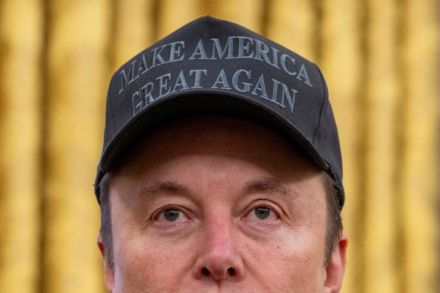
Perhaps he will walk through the lobby of the Pentagon with a kitchen sink. Or fire the entire IT department at the Fed, shift the IRS to Mars, while replacing traffic police with fully autonomous Tesla robo-cops. No one has any real idea yet what Elon Musk, the entrepreneur behind Tesla and SpaceX, might come up with now he has been appointed by Donald Trump to head up a new Department of Government Efficiency (or ‘Doge’). One point is certain, however. There will be some spectacular fireworks. And it will throw down a challenge to bloated governments everywhere.

Labour is doomed if it is blamed for price rises

From our UK edition

It emerged over the weekend that Tesco might have to start putting up prices. So, we have learned over the past few days, will Sainsbury’s, BT, and even JD Wetherspoons, a company that is usually committed to keeping prices as low as possible. One by one, many of the major consumer brands in the UK have said they will have to push up the amount they charge their customers, and are pinning the blame for that on the Chancellor Rachel Reeves’s Budget. The trouble is, the government seems unable to find a response. It is losing control of the narrative, and will soon find itself blamed for a fresh spike in inflation.

Elon Musk’s support for Donald Trump is a masterstroke

From our UK edition

Elon Musk contributed huge sums of money. He campaigned relentlessly. And his social media network X provided a platform for the candidate. Of all the architects of Donald Trump’s return to the White House this week, arguably none was more influential than Musk, and certainly none were playing for such high stakes. If he had lost, the X owner would have faced a furious regulatory backlash. As it happens, however, the election has been a triumph for Musk – and will make him more powerful than ever. Even from this side of the pond, it was hard to escape Musk’s presence during the US election.

Why the market reaction to Trump 2.0 has been muted

From our UK edition

Truth Social rocketed. Bitcoin soared in price. The dollar rose, and bond yields were up, while Chinese equities wobbled. Over the course of last night, as it became clear that Donald Trump had won the US presidential election, the markets responded to the news. The trouble is, no one really knows what Trump 2.0 means for the global economy.  Investors will have no idea until he forms an administration in January The initial price moves were very obvious. With the backing of the main crypto tycoons, a Trump White House will be a lot friendlier to digital currencies, although even that had to be kept in perspective. A 7 per cent rise in Bitcoin is hardly a massive move for an asset that often moves by huge margins every day.

The true cost of Labour’s Budget is impossible to calculate

From our UK edition

No sombre music accompanied Rachel Reeves's Budget, nor was there a reading from Corinthians. Yet, those details aside, one point is surely clear: Labour's first Budget in 14 years was a requiem for entrepreneurial Britain. The four decades from the Thatcher reforms of the early 1980s, that turned the UK into one of the best places, at least in Europe, to start and build a company, are now officially over. Britain's economy will be a lot poorer thanks to the Labour government. In Labour land, entrepreneurs might as well not exist True, the Budget might not have been quite as bad as some of the advanced speculation suggested. Even so, no one should be under any illusions.: this Budget was a full-on attack on entrepreneurs and small businesses.

Volkswagen’s woes are no surprise

From our UK edition

Where did it all go wrong for Volkswagen? The German carmaker is said to be planning to shut several factories and lay off thousands of staff. Workers who do keep their jobs could see their pay cut by as much as ten per cent, according to VW's top employee representative, Daniela Cavallo. If the revelations are correct, the three factories will be the first to be shuttered in the company’s 87-year history. It is hard to overestimate the scale of the shock that the claims about VW, a company that has always been emblematic of the country’s post-war economic miracle, has delivered to the German economy today. Yet Germany – and, indeed, VW – only has itself to blame.

Has Rachel Reeves lost control of spending?

From our UK edition

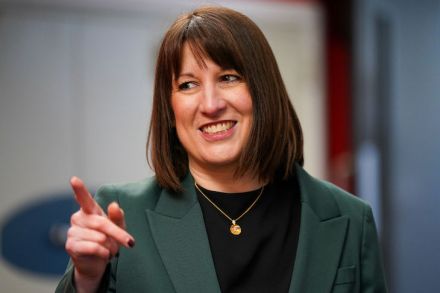
Some thought Rachel Reeves’s experience at the Bank of England meant she ‘knew how to run the economy’. She would keep an iron grip on budgets and demand value for money. The reliability of her management of the Treasury would unlock a wave of support from global finance. Ahead of the election, Reeves, along with fanboys such as the former Bank of England Governor Mark Carney, boasted endlessly about her financial and economic expertise. But only four months into her time in No. 11, there are already alarming signs she has lost control of spending.  The public sector borrowing figures published today were far worse than expected. The government borrowed another £16.6 billion over September, which was £2.1 billion more than the same month last year.

Let’s see if ‘Patriotic Millionaires’ really want more tax

From our UK edition

Dubai, Italy or perhaps the Bahamas? Many multi-millionaires are discussing where they should flee to as the Rachel Reeves prepares to raid their bank accounts in the ‘Horror Budget’ scheduled for the end of this month. But not, as it turns out, Patriotic Millionaires, the group that campaigns tirelessly for higher taxes on the rich. Its members want Reeves to take more of their money. The papers are dominated by reports of wealthy entrepreneurs, and the few remaining non-doms, securing a bolt hole somewhere where Reeves will not be able to reach them, but Patriotic Millionaires has a very different message.

Does Kamala Harris think black men can’t be trusted with crypto?

From our UK edition

There have been plenty of accusations made against crypto currencies such as Bitcoin over the years. It is too flimsy, you can't buy anything with it, and it is wildly volatile. All fair enough. But is it racist? That appears to be the view of Kamala Harris, the Democratic nominee for US president. The US vice president has unveiled a set of policies designed to help black men, an important group of voters who have been showing worrying signs of drifting towards her rival Donald Trump. It included pledges to improve healthcare, education, and to legalise marijuana, presumably on the grounds they think that black guys smoke a lot of weed. It also included a pledge ‘to protect cryptocurrency investments so black men who make them know their investment is safe'.

Rachel Reeves’ Budget is falling apart

From our UK edition

It could be 30 per cent. Or 35 per cent? Or perhaps 39 per cent? Heck, who knows, if Rachel Reeves wants to keep the accountants on their toes, perhaps 39.657 per cent. The Treasury is, according to the latest leaks to the Guardian, looking at an increase in Capital Gains Tax as it scrabbles around for tax rises to fund the Chancellor’s spending plans, while not putting up the amount ordinary people are paying. The trouble is, whatever number she picks it is not going to work – and Rachel Reeves is fast gaining a reputation as a shambolic Chancellor.

The break-up of Google is long overdue

From our UK edition

It’s innovative, it generates huge wealth, and it offers great products for completely nothing. The lobbyists for Alphabet, the parent company of Google, will make plenty of familiar arguments about why the internet giant should be left intact. And yet, as the US Department of Justice pushes for it to be broken up, it is going to be hard to convince anyone it can carry on as it is. In reality, breaking up Google may be the best thing that has happened to the tech industry in years – and it is long overdue. It promises to be a long and bitter fight, and Google certainly has the resources to oppose it all the way.

Are bankers still welcome in Paris?

From our UK edition

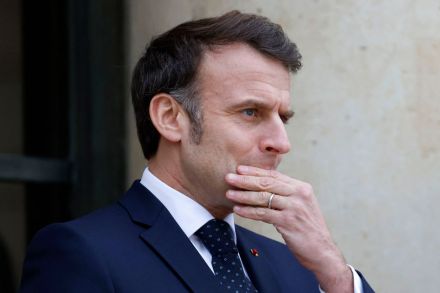
In the wake of the UK’s departure from the European Union, French president Emmanuel Macron made a big effort to woo London’s bankers and hedge fund managers across the Channel. Macron wanted to use Brexit as an opportunity to turn Paris into the key hub for European finance. Trust me, he told Britain's bankers: I'm one of you and will look after you. Those who did make the move may now be regretting their decision. France's credibility as a welcoming place for top earners is on the line France’s prime minister Michel Barnier is pushing through a tough budget after discovering a ‘black hole’ in the finances that might even make our Chancellor Rachel Reeves feel queasy. The country's budget deficit could top 6 per cent of economic output this year.

It’s too late for tariffs to save British steel

From our UK edition

Cheap Chinese imports will flood the market. Even more jobs will be lost, and the country’s industrial base will be even weaker than it already is. UK Steel, the lobby group for the industry, has today called for tariffs to stop the last remaining steel mills being wiped out by unfair competition from lower cost rivals. It would hardly be any great surprise if a protectionist, union-dominated Labour government agreed to that. There is, however, just one snag. The steel industry has already long been neglected – and there is no point in trying to rescue it now.

Andrew Bailey should be wary of helping Labour

From our UK edition

Business confidence has plummeted back to the levels last seen in the wake of Liz Truss’s unfortunate mini-budget. Hiring has slowed down as employers worry about all the new rights Labour is about to award their staff. Consumer confidence has fallen, as people worry about the tax rises that will be imposed in the ‘Horror Budget’ set for the end of the month. And the economy, which was growing at a decent clip when the Conservatives left office, has now stalled, with zero growth in the latest quarter. The new Chancellor Rachel Reeves was facing a spluttering economy. But, hey, never mind. It turns out that the Bank of England is here to help – the only problem is its Governor Andrew Bailey may come to regret that decision.

Donald Trump’s tariff talk is just bluster

From our UK edition

Donald Trump is campaigning hard on protectionism, promising to bring skilled manual jobs back onshore. What will that look like? Huge tariffs on imports, foreign companies unable to ‘steal’ American jobs, a re-industrialisation of the heartlands of the United States. But here’s the catch: a trade war on the scale that Trump is promising is simply not feasible. He is bluffing.  There is no question that Trump is ramping up protectionist rhetoric. ‘American workers will no longer be worried about losing their jobs to foreign nations,’ he told a rally yesterday. ‘Vote for Trump, and you will see a mass exodus of manufacturing from China to Pennsylvania, from Korea to North Carolina, from Germany to right here in Georgia.

We don’t need Rachel Reeves’ ‘industrial strategy’

From our UK edition

It is not hard to imagine what will be in Rachel Reeves' 'industrial strategy'. There will be lots of ‘green industries’, along with plenty of ‘cutting-edge technologies’, all designed to nurture ‘national champions’ in the ‘sectors of the future’. And presumably Lord Alli, the Labour donor who has been footing the bill for Keir Starmer's wardrobe, will be put in charge of overseeing all the details. Alongside the tax rises in the Budget planned for next month, the Chancellor's promise of a full-blown industrial strategy is a troubling prospect.