Matthew Lynn

Matthew Lynn is a financial columnist and author of ‘Bust: Greece, The Euro and The Sovereign Debt Crisis’ and ‘The Long Depression: The Slump of 2008 to 2031’

Smart meters aren’t so clever

Smart meters were meant to make our lives easier. They were designed to help us reduce energy consumption and cut bills. Over the last five years, the government has been pushing energy firms to install these meters as quickly as possible. Millions of homes have been fitted with one. The flashing screen monitoring how much power is being used has become a ubiquitous feature in households across Britain. We’re constantly nudged to switch off a couple of lights, or skip a load in the washing machine, as we see what this energy use is costing us. But there’s a big problem with smart meters: millions of them don’t work properly.

Electric vehicle targets are completely pointless

Labour might relax the ban on the sale of new petrol cars that is scheduled to come into force in six years' time, according to reports today. The government will reportedly allow hybrids to still be sold until 2035, on the grounds that they are proving far more popular with consumers than the entirely battery driven cars. In truth, this tinkering doesn’t really matter: government targets for electric vehicles are completely meaningless anyway. By definition, it is impossible to know what technical breakthroughs may be made over the next few years The 2030 ban already looks ambitious. The European Union is only aiming for 2035, with the German auto-makers putting on plenty of pressure to postpone it. We can all argue about whether that is the right decision or not.

The real reason the Treasury can’t find the fiscal ‘black hole’

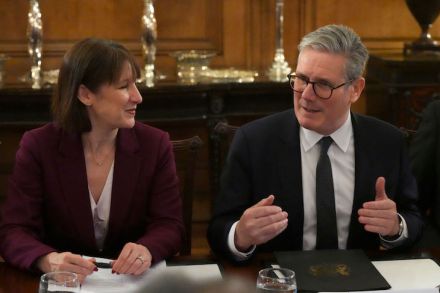
The Chancellor was so shocked when she received the briefings from Treasury officials that she had no choice but to scrap her election commitments. It was so serious that it was about to crash the markets. It had to be fixed so urgently that the winter fuel allowance had to be cut, and we will need huge tax rises in a ‘Horror Budget’ next month. The Chancellor Rachel Reeves and the Prime Minister Sir Keir Starmer have made the ‘black hole’ in the public finances central to their government agenda. But hold on. In the kind of twist that would puzzle even the most distinguished astro-physicist, when you look closely it turns out that the ‘black hole’ doesn’t exist.

Starmer’s social contract with the unions won’t work 

There may be a few warnings about pay, and the inevitable references to the ‘black hole’ that has mysteriously appeared in the government’s finances since Labour won the election in July. And yet despite that, the Prime Minister Sir Keir Starmer will deliver the most positive speech a Labour leader has delivered to the Trades Union Congress in more than half a century later today. ‘I call now, as before the election, for the politics of partnership. With us in government, with business, and most importantly of all, with working people… the mood is for partnership,’ he will tell the comrades. ‘And not just on pay – on everything.’ In effect, Starmer is pledging a revival of the Social Contract of the 1970s. There are just a couple of snags.

Why London must get back to work

The commute is often unreliable, expensive and crowded. It is easy enough to understand why so many of London’s 5 million strong workforce are so reluctant to go back to the office. There is a catch, however. Working from home is costing the British economy a huge amount of lost output. In reality, the UK can’t afford for Londoners to carry on WFH for much longer.  According to a study just published by the Centre for Cities, London is one of the slowest major cities in the world to go back to the office full-time. Of the six cities it studied, London had the second lowest attendance rate, with full-time staff spending just 2.7 days on-site. That was similar to Sydney and Toronto, but well behind the 3.1 average in New York City, or the 3.

Von der Leyen’s quest for gender parity is a pointless distraction

The EU's three largest economies are stuck in a deep structural slump. The budget is a mess, with money running out. And the bloc is rapidly losing competitiveness. Meanwhile, populist parties committed to overthrowing the organisation are coming closer to power all the time. You might think that the President of the European Commission, Ursula von der Leyen, had enough serious problems to deal with it. Yet somehow she is finding time for something else: aiming for gender parity. There’s just one problem: jobs for the girls won’t rescue the EU. It is hard to see how carving out lucrative jobs for a handful of women is going to fix anything As she sorts out the roles in her soon-to-be-announced commission, von der Leyen faces a tricky issue.

Labour must beware crying wolf about a run on the pound

As winter approaches, and fuel prices go up, Keir Starmer's honeymoon period is well and truly over. The Labour government is clearly getting a little nervous about Chancellor Rachel Reeves’s decision to scrap the £300 given to millions of pensioners to help keep warm over the winter. It is now claiming that it had no choice but to save some money somewhere. 'If we hadn’t taken some of these tough decisions we could have seen a run on the pound, interest rates going up and crashing the economy,' argued Commons Leader Lucy Powell over the weekend. 'It’s something we were left with no alternative but to do.' 'If we hadn’t taken some of these tough decisions we could have seen a run on the pound,' Powell said Seriously?

Labour is exposing its economic ignorance

It must be the worst kept secret in the country. At almost every opportunity, the Prime Minister Sir Keir Starmer, and his Chancellor Rachel Reeves, keep telling us that the Budget in October will have to be ‘very painful’, that ‘taxes will have to rise’ and that the ‘broadest shoulders will have to bear the heaviest burden’. It now seems inevitable that there will be a big rise in capital gains tax. The trouble is, there is a catch. Almost everyone will have avoided it by then – and all Labour is doing is exposing its hopeless ignorance of how the economy actually works. Neither Starmer nor Reeves have worked out that taxes impact the way people behave A rise in CGT from the current 20 per cent to 40 per cent or even 45 per cent now seems certain.

If Ford can’t crack electric cars, no one can

It had the history, the manufacturing muscle, the capital, and the brand to make it work. When Ford announced plans to create an all-electric SUV, it looked like the moment the major auto manufacturers could finally bring battery-powered cars into the mass market. Until today. The American company has abandoned its plans to build the new electric car, and announced a $1.9 billion write-off on the project citing cost pressures. The trouble is, if the company that more or less invented the mass production of cars a century ago can’t make electric vehicles (EV) work, then it is very hard to believe that any of the Western manufacturers can. If Ford is now scaling back, it is hard to see how anyone can compete This is the latest blow to the struggling EV industry.

Rachel Reeves has already run out of cash

It was easy to mock it as a piece of political grandstanding. On taking office, the Chancellor Rachel Reeves almost immediately discovered a ‘black hole’ in the public finances, and started warning of tax rises in the autumn. To many of her opponents, it looked like pure opportunism. And yet, now it turns out that she was right. The latest data on public finances show that the British government really is running out of cash. There is just one snag. Everything Reeves’s colleagues are doing will make that even worse, and her threatened tax rises won’t raise anything close to enough money to make the numbers add up.  The public sector borrowing figures published by the Office for National Statistics today made for dire reading. The government borrowed £3.

Why don’t more millionaires make ‘patriotic gifts’?

The rich are happy to pay more, the broadest shoulders should bear the heaviest burden, and the climate emergency means more money is urgently needed to save the planet. We keep being told that the better off are more than willing to contribute plenty to the government if only they were asked. Groups such as Patriotic Millionaires UK have campaigned for wealth levies, even projecting light shows reading 'Tax our wealth' onto the Bank of England to make their point. Meanwhile billionaires such as Sir Jim Ratcliffe and John Caudwell backed Labour at the last election, presumably comfortable with their plans to put up taxes for the better off. In reality, no one believes that giving more money to the government actually achieves anything And yet, here is something odd.

Kamala’s economic plans are bonkers

She didn’t have to slog around New Hampshire, there were no debates, and there were few opportunities for voters or journalists to ask Kamala Harris any questions. The Democratic nomination for President fell into her lap when it became painfully clear that Joe Biden was far too old and too unwell to run for a second term. That may turn out to be very lucky, at least for her. Later today (Friday), Harris will unveil her first new policy of the campaign. The trouble is this: it is completely idiotic. After a campaign that has so far been strong on vibes, and weak on anything that vaguely resembles a detailed plan for government, Harris will make what has been billed as the first major policy speech of her run for the presidency in Raleigh, North Carolina, today.

Why is Germany still cosying up to China?

Growth is slowing down. The property market is wobbling. And the government is tightening its grip on every form of economic activity. Global investors have made a decision about China over the last few months. It may have one of the biggest markets in the world, but the risks are simply too high. Over the second quarter of this year, foreign investors pulled a record amount of money out of China. A total of $15 billion was taken out of the country, and if that continues for the rest of the year it will be the first time the total has turned negative since 1999. There is, however, one exception: Germany. In total, German companies invested €4.8 billion in China in the second quarter, almost double of what they invested in the first quarter, according to the Bundesbank.

The stock market tumble is no reason to panic

The markets are tumbling. Investors are bailing out. And there are already fears that the plunge in equities is a sign that a recession is just around the corner in America. With a presidential election only a few months away, the Federal Reserve will come under intense pressure to bail out the market with a cut in interest rates as it has done so often over the last quarter of a century. So will central banks in the UK and the Euro-zone. This time around, though, it would be madness to cut rates: it will just make the asset bubble much worse.  The FTSE-100 has fallen sharply again this morning, and the brief rally experienced by the markets earlier this week has already run out of steam.

Why fears of US recession are justified

The bubble in artificial intelligence stocks has started to pop, two decades of easy money in Japan have finally started to come to an end, and (after hitting all-time highs) share values are being reassessed. There are plenty of plausible explanations for the sudden plunge in stock markets around the world over the last few days. And yet the big one is this: investors have started to worry that the global economy is heading into a recession, and they are surely right to do so.  The markets are often volatile.

Why has Donald Trump embraced crypto?

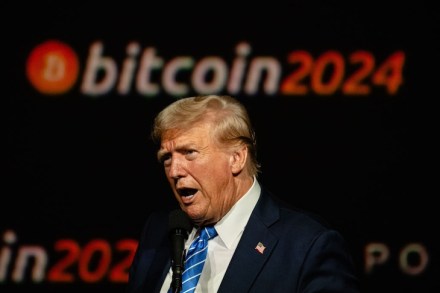
No one ever accused Donald Trump of ideological consistency. And yet, even by the standards of a man who often seems capable of switching positions several times in the same speech, and sometimes in the same sentence, it is quite a turnaround. As president he condemned Bitcoin and other crypto currencies ‘a scam against the dollar’. And yet, during this campaign he has turned into an enthusiastic convert, promising to govern as a Bitcoin President if he retakes the White House in November. That raises an intriguing question. Could the Crypto Bros turn Trump into a small state libertarian?

We will miss 1p and 2p coins when they’re gone

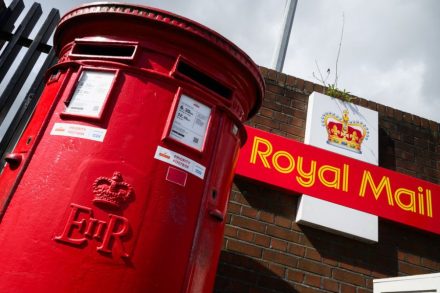
It doesn’t buy anything anymore. It is not enough to put into a charity box, and it just takes up space in your pocket or a purse. On one level, it will save us all a lot of trouble when one penny and two penny coins finally become extinct. The Treasury has told the Royal Mint not to make any new ones this year; and although there are plenty behind a sofa somewhere, this means they could eventually vanish completely. We will miss them when they are gone.  Rachel Reeves, the new chancellor, is keener on increasing government budgets than reducing them. One cut that may well be made, however, is scrapping the smaller coins. Indeed, over the next few years, we may stop minting new coins completely.

Labour will struggle with its plan to get Britain back to work

Liz Kendall wants Britain to get back to work. The Work and Pensions Secretary has unveiled a target for the country to reach an 80 per cent employment rate. But hold on: that 'ambition', as the government is calling it, is completely unrealistic. Labour's plan to reverse the dire labour market and drive up Britain’s employment rate seems certain to fall short of its ambitious target. Spending on sickness and disability benefits is set to increase by £30 billion over the next five years Britain is the only country in the G7 whose employment rate has still not returned to pre-pandemic levels: 2.8 million people are out of work because of ill health or disability; one in eight young people are not in education, employment or work.

Ursula von der Leyen only cares about power

The Green New Deal will be watered down. There will be a drive to roll back rules and regulations. And there will be far tougher control of the borders. The President of the European Commission Ursula von der Leyen secured the support of the bloc’s parliament today by promising a radical overhaul of the policies of the last four years. There is just one problem. This is the same leader who implemented all the policies she has just ditched.  Von der Leyen has been exposed as a politician who believes in nothing It is all changing in the EU. The Green New Deal, a Europop version of Bidenomics, is going to be diluted. For example, cars running on ‘green fuels’ will still be permitted, instead of only electric vehicles, while agricultural rules will be relaxed.

Labour will regret making the OBR all powerful

It might seem like smart politics. And it will reassure the markets. The legislation in the King’s Speech today to ensure all Budgets are assessed by the Office for Budget Responsibility (OBR) no doubt seems like a good idea right now. And yet, there is a catch. The incoming Labour government has now completed the job started by Gordon Brown as chancellor back in 1997, and completely outsourced economic policy to ‘independent experts’. At some point, it is going to regret that decision. It is not hard to understand why the powers of the OBR have been increased in the King’s Speech unveiled today.