Matthew Lynn

Matthew Lynn is a financial columnist and author of ‘Bust: Greece, The Euro and The Sovereign Debt Crisis’ and ‘The Long Depression: The Slump of 2008 to 2031’

Volkswagen’s woes are no surprise

From our UK edition

Where did it all go wrong for Volkswagen? The German carmaker is said to be planning to shut several factories and lay off thousands of staff. Workers who do keep their jobs could see their pay cut by as much as ten per cent, according to VW's top employee representative, Daniela Cavallo. If the revelations are correct, the three factories will be the first to be shuttered in the company’s 87-year history. It is hard to overestimate the scale of the shock that the claims about VW, a company that has always been emblematic of the country’s post-war economic miracle, has delivered to the German economy today. Yet Germany – and, indeed, VW – only has itself to blame.

Has Rachel Reeves lost control of spending?

From our UK edition

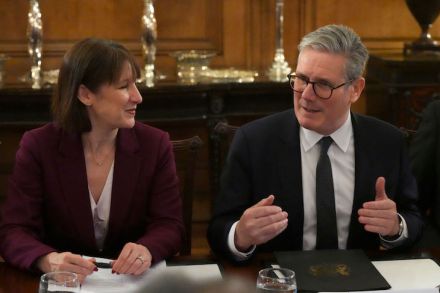
Some thought Rachel Reeves’s experience at the Bank of England meant she ‘knew how to run the economy’. She would keep an iron grip on budgets and demand value for money. The reliability of her management of the Treasury would unlock a wave of support from global finance. Ahead of the election, Reeves, along with fanboys such as the former Bank of England Governor Mark Carney, boasted endlessly about her financial and economic expertise. But only four months into her time in No. 11, there are already alarming signs she has lost control of spending.  The public sector borrowing figures published today were far worse than expected. The government borrowed another £16.6 billion over September, which was £2.1 billion more than the same month last year.

Let’s see if ‘Patriotic Millionaires’ really want more tax

From our UK edition

Dubai, Italy or perhaps the Bahamas? Many multi-millionaires are discussing where they should flee to as the Rachel Reeves prepares to raid their bank accounts in the ‘Horror Budget’ scheduled for the end of this month. But not, as it turns out, Patriotic Millionaires, the group that campaigns tirelessly for higher taxes on the rich. Its members want Reeves to take more of their money. The papers are dominated by reports of wealthy entrepreneurs, and the few remaining non-doms, securing a bolt hole somewhere where Reeves will not be able to reach them, but Patriotic Millionaires has a very different message.

Does Kamala Harris think black men can’t be trusted with crypto?

From our UK edition

There have been plenty of accusations made against crypto currencies such as Bitcoin over the years. It is too flimsy, you can't buy anything with it, and it is wildly volatile. All fair enough. But is it racist? That appears to be the view of Kamala Harris, the Democratic nominee for US president. The US vice president has unveiled a set of policies designed to help black men, an important group of voters who have been showing worrying signs of drifting towards her rival Donald Trump. It included pledges to improve healthcare, education, and to legalise marijuana, presumably on the grounds they think that black guys smoke a lot of weed. It also included a pledge ‘to protect cryptocurrency investments so black men who make them know their investment is safe'.

Rachel Reeves’ Budget is falling apart

From our UK edition

It could be 30 per cent. Or 35 per cent? Or perhaps 39 per cent? Heck, who knows, if Rachel Reeves wants to keep the accountants on their toes, perhaps 39.657 per cent. The Treasury is, according to the latest leaks to the Guardian, looking at an increase in Capital Gains Tax as it scrabbles around for tax rises to fund the Chancellor’s spending plans, while not putting up the amount ordinary people are paying. The trouble is, whatever number she picks it is not going to work – and Rachel Reeves is fast gaining a reputation as a shambolic Chancellor.

The break-up of Google is long overdue

From our UK edition

It’s innovative, it generates huge wealth, and it offers great products for completely nothing. The lobbyists for Alphabet, the parent company of Google, will make plenty of familiar arguments about why the internet giant should be left intact. And yet, as the US Department of Justice pushes for it to be broken up, it is going to be hard to convince anyone it can carry on as it is. In reality, breaking up Google may be the best thing that has happened to the tech industry in years – and it is long overdue. It promises to be a long and bitter fight, and Google certainly has the resources to oppose it all the way.

Are bankers still welcome in Paris?

From our UK edition

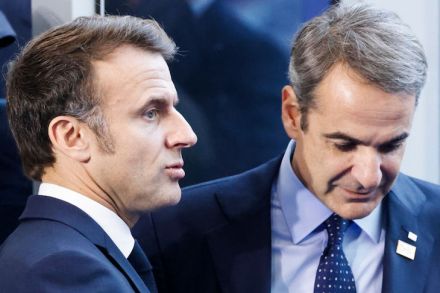
In the wake of the UK’s departure from the European Union, French president Emmanuel Macron made a big effort to woo London’s bankers and hedge fund managers across the Channel. Macron wanted to use Brexit as an opportunity to turn Paris into the key hub for European finance. Trust me, he told Britain's bankers: I'm one of you and will look after you. Those who did make the move may now be regretting their decision. France's credibility as a welcoming place for top earners is on the line France’s prime minister Michel Barnier is pushing through a tough budget after discovering a ‘black hole’ in the finances that might even make our Chancellor Rachel Reeves feel queasy. The country's budget deficit could top 6 per cent of economic output this year.

It’s too late for tariffs to save British steel

From our UK edition

Cheap Chinese imports will flood the market. Even more jobs will be lost, and the country’s industrial base will be even weaker than it already is. UK Steel, the lobby group for the industry, has today called for tariffs to stop the last remaining steel mills being wiped out by unfair competition from lower cost rivals. It would hardly be any great surprise if a protectionist, union-dominated Labour government agreed to that. There is, however, just one snag. The steel industry has already long been neglected – and there is no point in trying to rescue it now.

Andrew Bailey should be wary of helping Labour

From our UK edition

Business confidence has plummeted back to the levels last seen in the wake of Liz Truss’s unfortunate mini-budget. Hiring has slowed down as employers worry about all the new rights Labour is about to award their staff. Consumer confidence has fallen, as people worry about the tax rises that will be imposed in the ‘Horror Budget’ set for the end of the month. And the economy, which was growing at a decent clip when the Conservatives left office, has now stalled, with zero growth in the latest quarter. The new Chancellor Rachel Reeves was facing a spluttering economy. But, hey, never mind. It turns out that the Bank of England is here to help – the only problem is its Governor Andrew Bailey may come to regret that decision.

Donald Trump’s tariff talk is just bluster

From our UK edition

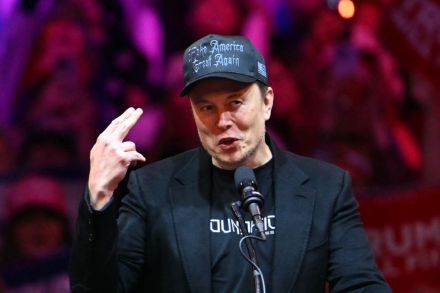
Donald Trump is campaigning hard on protectionism, promising to bring skilled manual jobs back onshore. What will that look like? Huge tariffs on imports, foreign companies unable to ‘steal’ American jobs, a re-industrialisation of the heartlands of the United States. But here’s the catch: a trade war on the scale that Trump is promising is simply not feasible. He is bluffing.  There is no question that Trump is ramping up protectionist rhetoric. ‘American workers will no longer be worried about losing their jobs to foreign nations,’ he told a rally yesterday. ‘Vote for Trump, and you will see a mass exodus of manufacturing from China to Pennsylvania, from Korea to North Carolina, from Germany to right here in Georgia.

We don’t need Rachel Reeves’ ‘industrial strategy’

From our UK edition

It is not hard to imagine what will be in Rachel Reeves' 'industrial strategy'. There will be lots of ‘green industries’, along with plenty of ‘cutting-edge technologies’, all designed to nurture ‘national champions’ in the ‘sectors of the future’. And presumably Lord Alli, the Labour donor who has been footing the bill for Keir Starmer's wardrobe, will be put in charge of overseeing all the details. Alongside the tax rises in the Budget planned for next month, the Chancellor's promise of a full-blown industrial strategy is a troubling prospect.

Smart meters aren’t so clever

From our UK edition

Smart meters were meant to make our lives easier. They were designed to help us reduce energy consumption and cut bills. Over the last five years, the government has been pushing energy firms to install these meters as quickly as possible. Millions of homes have been fitted with one. The flashing screen monitoring how much power is being used has become a ubiquitous feature in households across Britain. We’re constantly nudged to switch off a couple of lights, or skip a load in the washing machine, as we see what this energy use is costing us. But there’s a big problem with smart meters: millions of them don’t work properly.

Electric vehicle targets are completely pointless

From our UK edition

Labour might relax the ban on the sale of new petrol cars that is scheduled to come into force in six years' time, according to reports today. The government will reportedly allow hybrids to still be sold until 2035, on the grounds that they are proving far more popular with consumers than the entirely battery driven cars. In truth, this tinkering doesn’t really matter: government targets for electric vehicles are completely meaningless anyway. By definition, it is impossible to know what technical breakthroughs may be made over the next few years The 2030 ban already looks ambitious. The European Union is only aiming for 2035, with the German auto-makers putting on plenty of pressure to postpone it. We can all argue about whether that is the right decision or not.

The real reason the Treasury can’t find the fiscal ‘black hole’

From our UK edition

The Chancellor was so shocked when she received the briefings from Treasury officials that she had no choice but to scrap her election commitments. It was so serious that it was about to crash the markets. It had to be fixed so urgently that the winter fuel allowance had to be cut, and we will need huge tax rises in a ‘Horror Budget’ next month. The Chancellor Rachel Reeves and the Prime Minister Sir Keir Starmer have made the ‘black hole’ in the public finances central to their government agenda. But hold on. In the kind of twist that would puzzle even the most distinguished astro-physicist, when you look closely it turns out that the ‘black hole’ doesn’t exist.

Starmer’s social contract with the unions won’t work 

From our UK edition

There may be a few warnings about pay, and the inevitable references to the ‘black hole’ that has mysteriously appeared in the government’s finances since Labour won the election in July. And yet despite that, the Prime Minister Sir Keir Starmer will deliver the most positive speech a Labour leader has delivered to the Trades Union Congress in more than half a century later today. ‘I call now, as before the election, for the politics of partnership. With us in government, with business, and most importantly of all, with working people… the mood is for partnership,’ he will tell the comrades. ‘And not just on pay – on everything.’ In effect, Starmer is pledging a revival of the Social Contract of the 1970s. There are just a couple of snags.

Why London must get back to work

From our UK edition

The commute is often unreliable, expensive and crowded. It is easy enough to understand why so many of London’s 5 million strong workforce are so reluctant to go back to the office. There is a catch, however. Working from home is costing the British economy a huge amount of lost output. In reality, the UK can’t afford for Londoners to carry on WFH for much longer.  According to a study just published by the Centre for Cities, London is one of the slowest major cities in the world to go back to the office full-time. Of the six cities it studied, London had the second lowest attendance rate, with full-time staff spending just 2.7 days on-site. That was similar to Sydney and Toronto, but well behind the 3.1 average in New York City, or the 3.

Von der Leyen’s quest for gender parity is a pointless distraction

From our UK edition

The EU's three largest economies are stuck in a deep structural slump. The budget is a mess, with money running out. And the bloc is rapidly losing competitiveness. Meanwhile, populist parties committed to overthrowing the organisation are coming closer to power all the time. You might think that the President of the European Commission, Ursula von der Leyen, had enough serious problems to deal with it. Yet somehow she is finding time for something else: aiming for gender parity. There’s just one problem: jobs for the girls won’t rescue the EU. It is hard to see how carving out lucrative jobs for a handful of women is going to fix anything As she sorts out the roles in her soon-to-be-announced commission, von der Leyen faces a tricky issue.

Labour must beware crying wolf about a run on the pound

From our UK edition

As winter approaches, and fuel prices go up, Keir Starmer's honeymoon period is well and truly over. The Labour government is clearly getting a little nervous about Chancellor Rachel Reeves’s decision to scrap the £300 given to millions of pensioners to help keep warm over the winter. It is now claiming that it had no choice but to save some money somewhere. 'If we hadn’t taken some of these tough decisions we could have seen a run on the pound, interest rates going up and crashing the economy,' argued Commons Leader Lucy Powell over the weekend. 'It’s something we were left with no alternative but to do.' 'If we hadn’t taken some of these tough decisions we could have seen a run on the pound,' Powell said Seriously?

Labour is exposing its economic ignorance

From our UK edition

It must be the worst kept secret in the country. At almost every opportunity, the Prime Minister Sir Keir Starmer, and his Chancellor Rachel Reeves, keep telling us that the Budget in October will have to be ‘very painful’, that ‘taxes will have to rise’ and that the ‘broadest shoulders will have to bear the heaviest burden’. It now seems inevitable that there will be a big rise in capital gains tax. The trouble is, there is a catch. Almost everyone will have avoided it by then – and all Labour is doing is exposing its hopeless ignorance of how the economy actually works. Neither Starmer nor Reeves have worked out that taxes impact the way people behave A rise in CGT from the current 20 per cent to 40 per cent or even 45 per cent now seems certain.

If Ford can’t crack electric cars, no one can

From our UK edition

It had the history, the manufacturing muscle, the capital, and the brand to make it work. When Ford announced plans to create an all-electric SUV, it looked like the moment the major auto manufacturers could finally bring battery-powered cars into the mass market. Until today. The American company has abandoned its plans to build the new electric car, and announced a $1.9 billion write-off on the project citing cost pressures. The trouble is, if the company that more or less invented the mass production of cars a century ago can’t make electric vehicles (EV) work, then it is very hard to believe that any of the Western manufacturers can. If Ford is now scaling back, it is hard to see how anyone can compete This is the latest blow to the struggling EV industry.