Matthew Goodwin

Matthew Goodwin is an academic, writer and speaker known for his work on political volatility, risk, populism, British politics, Europe, elections and Brexit.

AI didn’t write my book

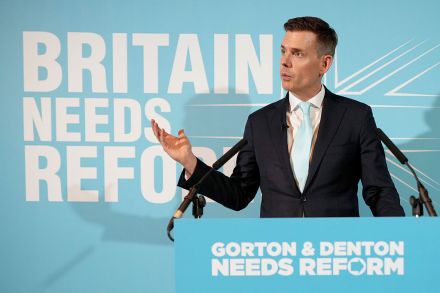
It’s been a rather unusual month. In the last four weeks, I’ve gone from being renamed ‘Matt Badloss’, after finishing behind the Greens at the Gorton and Denton by-election, to ‘MattGPT’, on the basis, my many critics claim, that parts of my new book were written not by me but artificial intelligence. Many of my critics, I genuinely believe, have seized on a few minor imperfections to try and stigmatise a major argument about how demographic change is destroying Britain While even I accept that my new moniker of MattGPT is amusing – prompting even my own mother to call and ask ‘what’s ChatGPT?’, unfortunately for my critics the underlying claim is categorically untrue.
How mass immigration is worsening the housing crisis

Sometimes, what matters in politics is how one issue merges with another to produce an explosive reaction. In the 2010s, it was the fusion of immigration with the European Union which collided to pave the way for Nigel Farage, Brexit, and then Boris Johnson, dramatically expanding the amount of space for these populist revolts. But what about the years ahead? The 2020s and the 2030s will likely see immigration become steadily linked with a very different issue – housing – in a way that will produce a similarly explosive result. The blunt reality is that millions of ordinary people up and down Britain are utterly fed-up with how immigration is driving up house prices, rents and flooding social housing.

It’s time to move on from Boris Johnson

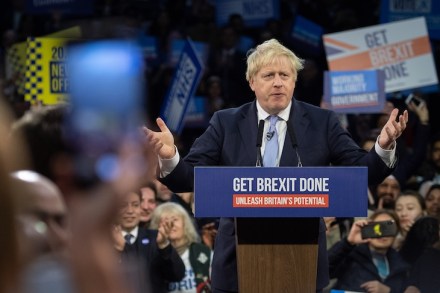
Boris Johnson, so the joke goes, will always be remembered as the third prime minister to have been brought down by…Boris Johnson. After bringing down his old rival David Cameron by campaigning for Brexit, and then helping to bring down Theresa May by campaigning against her soft Brexit, Johnson then set the stage for his own exit by presiding over the partygate scandal. And now, last night, that scandal culminated in Boris Johnson essentially jumping out of Westminster before he could be pushed – choosing to resign as an MP before the findings of the Commons Privileges Committee, which has been investigating whether he misled parliament, are published.

Coffee House Shots Live: Coronation special

71 min listen

The coronation will commemorate the start of a new era, but what will this mean for the United Kingdom? How will Charles III secure his place in history – and what kind of monarch will he be? From pageantry to the polls: will the coronation distract voters from the Tories’ predicted heavy losses in the local elections? And will Rishi Sunak be able to turn his party’s fortunes around for the general election? Fraser Nelson speaks to Katy Balls and special guests Camilla Tominey and Matthew Goodwin for a special edition of Coffee House Shots Live.

Brexit regrets? Britain has a few

A creeping sense of Bregret is taking hold in Britain. A majority of Brits now say that the vote for Britain leaving the EU was a mistake. Only one in five think Brexit is going well – and seven in ten say that it has gone as badly, or worse, than they feared. In the past year alone, there has been a ten-point swing toward rejoining the EU. This is leading to a shift in how the major parties are positioning themselves on the question of Europe. With Labour enjoying a comfortable lead in the polls and appearing to be on course to win the next election, might Keir Starmer's party pivot fully to calling for a return to EU membership? That seems unlikely, at least in the short term.

Britain needs to take back control of its borders

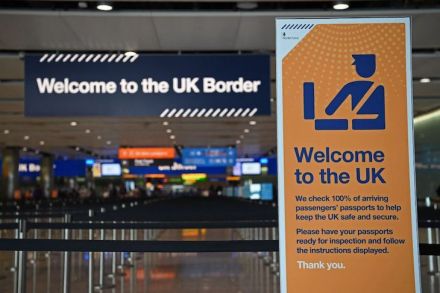
Britain has lost control of its borders. Over the last four years, the number of asylum-seekers and illegal migrants who have arrived unlawfully in Britain in small boats, after passing through safe countries, has rocketed from just 299 to nearly 40,000.  This year, so far, the number of people crossing the Channel each month has surged from 1,000 back in January to more than 7,000 in September. Last week, nearly 1,000 people in 24 boats crossed the Channel in a single day.  Make no mistake. Many of the people who are making this perilous journey are genuine refugees fleeing war and persecution — including conflicts that were started by hapless western leaders.

Boris won’t save the Tory party

In the aftermath of Trussfall, amid the victory of the lettuce, the Conservative party has today crashed to just 14 per cent in the polls. This is the party’s lowest level of support in British polling history. The previous low, 17 per cent, was recorded during the Brexit meltdown in the spring of 2019, amid Theresa May’s resignation and the Brexit party insurgency.  Today’s new low comes amid the resignation of Truss, the complete failure of her project and a governing party that has gone from being one of the most successful parties in the Western world to where it is today – on life support. Here’s what I think happens next.  Liz Truss has gone. Trussonomics is dead.

Can the next Tory leader avoid John Major’s fate?

The wheels are coming off the Conservative party. In recent days, in the polls, the party averaged just 31 per cent of the national vote. This is John Major in 1997 territory, or William Hague in 2001, both of whom were humiliated at the ballot box. Britain’s governing party is now in the fast lane toward electoral wipeout. In fact, remarkably, half the people who voted for the party only 989 days ago have now abandoned it. This has given Keir Starmer and the Labour party a commanding 11-point lead. Meanwhile, the share of voters who think the next election will deliver another Conservative majority has collapsed to just 19 per cent. And they are right to think this way.

Boris Johnson’s coalition of voters is falling apart

Boris Johnson enters the third year of his premiership in a much weaker position than when he started it. Alongside major rebellions inside his own party, humiliating by-election defeats and growing speculation across Westminster about who will succeed him, he has another problem: the coalition of voters who propelled him into Number 10 Downing Street is now rapidly falling apart. One reason why Johnson emerged with the biggest Conservative majority since Margaret Thatcher’s third and final majority in 1987 is because he united Leavers; those who have felt ignored, neglected and even held in contempt by much of the ruling class. While this process began under Theresa May, Johnson’s ‘Get Brexit Done’ strategy took it to its logical conclusion.

University Challenge: the next education mess

31 min listen

While the government’s U-turn on A-level and GCSE results has been widely welcomed, universities are still in a dire state – why? (00:55) Plus, has Boris Johnson got the right approach in his war on fat? (15:00) And finally, are illegal raves during the pandemic socially irresponsible, or just young people sticking it to The Man? (25:45)  With academic and author Matthew Goodwin; chair of the Education Select Committee Robert Halfon; Spectator columnist Lionel Shriver; weight loss doctor Andrew Jenkinson; Spectator contributors Leaf Arbuthnot and James Delingpole. Presented by Cindy Yu. Produced by Cindy Yu, Max Jeffery and Alexa Rendell.

Boris Johnson could quickly come unstuck

The Conservative party is no longer the party of the rich, while the Labour party is no longer the party of the poor. That is the central finding of my new report for the Joseph Rowntree Foundation (JRF). Boris Johnson is certainly a prime minister under pressure. Public disapproval of his government is drifting upwards. Public confidence in the economy has collapsed. Johnson's approval ratings have shed more than 20 points in just two months. MPs openly complain about the workings of his government. And, for the first time, when voters are asked who they think would make the 'best prime minister', Labour's Keir Starmer is now in first place.

Will coronavirus revive liberalism – or deliver it a fatal blow?

Politicians, said the historian A.J.P. Taylor, do not create the current of events. They can only float along with them and try to steer. But he was talking about the long contours of European history, not the sudden and shocking arrival of a global pandemic. How to float along and steer through something that looks like an overwhelming tsunami is, largely, unknown. The outbreak of coronavirus has already put much of the world in lockdown. It has pushed the global economy into freefall, killed more than 13,000 people and could yet kill hundreds of thousands more, perhaps millions. It will also have big political effects. Leaders, governments, even ideologies will be judged according to how well they meet the crisis and the fallout.

The death of populism has been greatly exaggerated

Have we reached peak populism? This is the question being asked after a recent regional election in Italy delivered a setback to Matteo Salvini, the de facto head of Europe’s populist family. In the affluent and historically left-wing region of Emilia Romagna, Salvini’s right-wing alliance finished more than seven points behind the Left. It wasn’t even close. It is not a surprise that some have breathed a sigh of relief. For much of the past three years, Salvini has seemed unstoppable. While the 46-year-old has miscalculated – like last summer when he tried but failed to bring down the government – he has transformed his 'Lega' movement from a small northern separatist party into a serious national force. He has swept south and into first place in the polls.

Nine lessons from the election: Boris was lucky – but he also played his hand right

The 2019 general election will be remembered as one of the most consequential elections in Britain's recent history. Aside from rejecting a more economically radical Labour Party, the British people used the election to provide what their elected representatives had been unable to provide: an answer to Brexit. For Boris Johnson and the Conservative party, the election was a triumph. They won their largest majority since 1987 and the largest majority for any party since New Labour's second landslide in 2001.

Brexit party voters will decide Boris Johnson’s fate

The fate of Boris Johnson’s premiership will be determined by Nigel Farage and the Brexit party. Even if a Brexit deal can be agreed, another extension to the deadline of 31 October still seems possible. If the can is kicked down the road, the question of how Farage’s voters will react is key. Without the support of Brexit party voters, Boris Johnson could wake after the next election to find himself and his party still trapped in a hung parliament. But if he wins over half of Farage's supporters, while the Remain camp is divided between Labour and the Liberal Democrats, then he could land nearly 350 seats and a comfortable majority. Win over three-quarters and Johnson enters landslide territory.

Railway nationalisation could be Jeremy Corbyn’s route to power 

Few things can kill the Christmas spirit as effectively as news about rail fare rises. This was demonstrated again this week as an annual announcement, which feels more predictable than some of my local trains, revealed that the average cost of tickets is up 3.1 per cent. The news has already generated countless vox pops with angry commuters and public protests across the country. Jeremy Corbyn was quick to brand the hike a ‘disgrace’ and said: ‘Our railway system should work for the interests of everybody, not just the profits of a few’. The Labour Party revealed new research, claiming that our trains have never been so packed. There is no doubt that the issue represents an open goal for Labour.

Freshers week is torture for an ageing academic like me

A fellow academic once said that working at a university is one of only a few places where you grow older while everyone around you stays the same age. It was this remark that occupied my mind this week as I trundled through campus, smiling and greeting our ever-younger-looking first-year undergraduates. The whole idea of ‘Welcome Week’ was no doubt conceived by a university bureaucrat with good intentions. But having experienced it first-hand, and as the one doing the welcoming, I can only conclude that it is torture. Once a year, like clockwork, we older folk must be visibly reminded not only of the relentless passing of time but also of our general insignificance amid life’s great generational churn.

Ukip reborn

The UK Independence Party might be about to make a comeback. Ever since Theresa May’s Chequers deal on Brexit, which went down very badly indeed among grassroots Conservatives and Leavers, the opinion polls have been kind to the Purple Army. The week after the Chequers deal went public, one pollster found support for the party had surged by five points to 8 per cent. It might not sound like much, but it is its best showing since March last year. Furthermore, such numbers are more than enough to tilt the balance at the next general election toward Jeremy Corbyn and Labour.