Matthew Dennison

Matthew Dennison is the author of Over the Hills and Far Away: The Life of Beatrix Potter as well as four royal biographies.

Fifty years of Inspector Wexford – and a new detective on the block

Early on in The Girl Next Door, Ruth Rendell gives the reader a sharp nudge. ‘Colin Quell had very little interest in people, what they might think, how they might act in the future.’ The novel is Rendell’s latest stand alone mystery, the uninterested Quell its detective inspector. Forcibly she announces that neither physically nor temperamentally is this Wexford territory. Quell’s stomping grounds are the outer suburbs of London, where the capital spills into Essex, specifically Loughton, where once the octogenarian Rendell herself attended the County High School. In the present day, though not at the time of the novel’s buried crime, Loughton lacks the residual rural outlook of Wexford’s Kingsmarkham, itself inspired by Midhurst in West Sussex.


You’ll never look at dried pasta in the same way again

A calculated ordinariness unites the protagonists in Graham Swift’s new collection of short stories. In each of these mini fictions, as in his novels, Swift revisits his conceit of the narrator as man (or woman) on the Clapham omnibus. Invariably he endows these blank ciphers with aspects of the extraordinary — percipience, insight or understanding — or exposes them to feelings and events which place them in extraordinary positions and offer them opportunities to behave remarkably while remaining apparently run of the mill. Swift revels in the trappings of Pooterishness while denying his protagonists Mr Pooter’s silliness. His vision may be contrived but it never patronises.

Not quite romantic fiction, or literary fiction, or commercial fiction – but still quite good

Elements of Raffaella Barker’s new novel, her eighth for adults, suggest commercial fiction: a narrative that oscillates between the aftermath of the second world war and the present day, and two failsafe locations, Cornwall and the Norfolk coast. But From a Distance is not commercial fiction. Barker’s narrative is sparingly studded with quotations, but this is not literary fiction either. There is a strong love interest, which does not blossom into romantic fiction. Barker’s novel is a hybrid, enjoyable, ultimately heart-warming. It lacks the freshness and charm of the earlier Hens Dancing, but recalls some of its vividness and forensically detailed scrutiny of family life. In 1946, Michael, a demobilised soldier, avoids returning to his prewar life.

Margaret Drabble tries to lose the plot

Halfway through her new novel, Margaret Drabble tells us of Anna, the pure gold baby of the title, ‘There was no story to her life, no plot.’ That statement is partly true. It is also a challenge, a gauntlet cast by this very knowing writer at the reader’s feet; in terms of Drabble’s narrative, it is something of a mission statement. Seven years after her last novel, and despite suggestions (by herself) that her fiction-writing days were over, Drabble has written a novel that consistently resists readers’ simplest assumptions. The Pure Gold Baby is a fiction apparently based on fact, which works hard to suggest that it has no pattern, no plot and will reach no neat ending.

The imitable Jeeves

For as long as I can remember — I take neither pleasure nor pride in the admission — I have been one of those people who feels an irresistible curling of the lip at reviews of the ‘I laughed till I cried’ variety. Something about that hackneyed claim, invariably trumpeted in bold letters outside West End theatres, inspires absolute scepticism. No longer. At two memorable moments in Jeeves and the Wedding Bells I did indeed laugh until I cried. To readers unfamiliar with his role as a team captain on Radio 4’s The Write Stuff, the literary quiz which culminates each week with a pastiche of an author’s style, Sebastian Faulks, still best known for his novels Birdsong and Charlotte Gray, may appear an unlikely candidate for donning the mantle of P.G.

Mrs Bridge and Mr Bridge, by Evan S. Connell – review

A policeman encountering Mrs Bridge on the home furnishings floor of a Kansas City department store recognises her at once for what she is: ‘a bona-fide country-club matron’. Had she been asked to identify herself, Mrs Bridge would have said the same, after asserting unequivocally that she was first and foremost the wife of Mr Walter Bridge, successful Kansas City lawyer, as entirely constrained by her status as professional spouse as Chaucer’s Wife of Bath or Jan Struther’s Mrs Miniver. Like Mrs Miniver, Mrs Bridge inhabits an interwar world shaped by a promise of certainties — domestic, social, cultural and sexual — which are never wholly realised and remain frustratingly elusive.

Another bleak house on the Fens

Some years ago, Susan Hill stated in an interview: ‘It’s not plot that interests me but setting, people in a setting, wrestling with an abstract subject.’ In her ghost stories, of which Dolly is the latest, Hill exploits the impact of setting on character: the role of atmosphere and environment in shaping human suggestibility and the dramatic and sensational possibilities of this encounter. Hill’s ghost stories are consciously literary creations. Beginning with The Woman in Black, she revels in the long shadow of Henry James’s The Turn of the Screw.

Old lovers…

If it is true that we demand of our favourite authors above all consistency — a certain fidelity to the territory that they have earlier marked out as their own — Ancient Light contains ingredients certain to please Banville aficionados. ‘Images from the far past crowd in my head and half the time I cannot tell whether they are memories or inventions,’ the novel’s narrator tells us at the outset. On the instant we are transported back through four decades of Banville’s writing: ‘We imagine that we remember things as they were, while in fact all we carry into the future are fragments which reconstruct a wholly illusory past,’ he asserted in an earlier novel, Birchwood, written in 1973. And so, in Ancient Light, it proves to be.

Bookends: Tilling tales

Several years ago, I listed as my literary heroes Herbert Pocket in Great Expectations and E. F. Benson’s Lucia. The latter was the more damaging admission. Lucia is an egotist of monstrous proportions, ruthlessly selfish and staggering in her snobbery. But she is also a life force and, in her flawed but thrusting glory, profoundly life-enhancing. Since her debut in 1920, Lucia has inspired her fair share of loathing — and a corresponding degree of ardour. That ardour stimulated Tom Holt’s two Lucia sequels in the mid-Eighties, and now the second of Guy Fraser-Sampson’s Lucia forays, Lucia on Holiday (Elliott & Thompson, £7.99).

Prince of progress

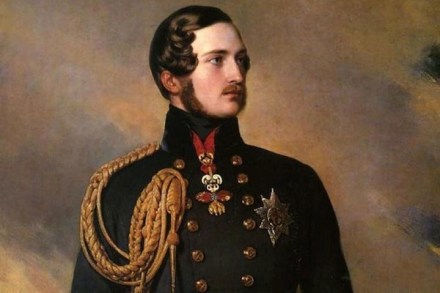
The tragedy of Prince Albert was not that he died at the age of forty-two 150 years ago this month, but that his quick-tempered and lusty Hanoverian wife loved him too well. Queen Victoria’s orgiastic response to widowhood — her determination through four decades of sorrowful singledom never again to be amused — kicked over the traces of the real Albert and replaced him with that earnest-looking paragon who stares cheerlessly at pigeons and commuters alike from some 20 or so heavyweight sculptures and monuments scattered across the British Isles. Victoria’s grief was elemental: ‘My life as a happy one is ended! The world is gone for me!’ So absolute was her absorption in her suffering that it became her raison d’être.

Death of the Author

The death of the Polish-born British novelist Joseph Conrad is the central event of David Miller’s debut novel. The death of the Polish-born British novelist Joseph Conrad is the central event of David Miller’s debut novel. A reimagining of Conrad’s final days, Today explores the nature of bereavement. Within the novel’s confines, Conrad exists simply as a character — a dying man whose profession has been that of a writer and whose working life has necessitated the presence of a secretary, Lillian Hallowes, who, up to a point, offers the reader a commentary on the novel’s happenings. Miller attempts no assessment of Conrad’s work, his literary status or psychology.

UnEnglish triumph

Sometimes an exhibition does what it says on the tin. The Pre-Raphaelites and Italy, the Ashmolean’s first major show post-revamp, is such an exhibition. Sometimes an exhibition does what it says on the tin. The Pre-Raphaelites and Italy, the Ashmolean’s first major show post-revamp, is such an exhibition. This fidelity is simultaneously its strength and its weakness. In a dazzling and far-reaching show, the exhibition organisers ultimately leave us questioning the nature and meaning not only of Pre-Raphaelitism but also of 19th-century concepts of Italy. This may be part of the exhibition’s achievement. It does not make for the easy ride exhibition-goers have come to expect from the Pre-Raphaelites.

Pass the cheese, Louise

Widowhood in 1955 was not a desirable state. Not, at any rate, for Louise Bickford, heroine of The Winds of Heaven (first published in 1955, now reprinted by Persephone). Louise is 57. She has a small, inadequate income from her parents. From her ghastly husband Dudley she has inherited nothing but debts. She has lost her house and all her possessions, save a few clothes, and with them her way of life, her identity and her place as an adult invested with those attributes. In middle age, she has been downgraded to second chilhood. None of which is her fault. Within the parameters of Monica Dickens’s mid-century, middle-class world, such is the inevitable result of financial ruin and dependency. At a time of economic uncertainty, this is a troubling suggestion for readers today.

More than a painter of Queens

The last words of Hungarian-born portraitist Philip de László, spoken to his nurse, were apparently, ‘It is a pity, because there is so much still to do.’ As Duff Hart-Davis’s biography amply demonstrates, for de László, art — which he regarded as ‘work’ as much as an aesthetic vocation — was both the purpose and the substance of his life. The last words of Hungarian-born portraitist Philip de László, spoken to his nurse, were apparently, ‘It is a pity, because there is so much still to do.

Big frocks, silk stockings and lissom ladies

Matthew Dennison on the life of Augustus Harris, the Victorian showman who invented the Christmas pantomime and pioneered sex, celebrity and excess as an art form Forget Lord Leighton and his fleshy goddesses forced to bare all in the interests of classical scholarship. Forget Wilkie Collins and Mary E. Braddon, and those sensational stories of exciting young women with a past. Foremost among 19th-century efforts to cloak titillation in the garb of respectability is the invention of the principal boy of pantomime. You know the scenario. The stage is set. Young boy is looking for love.

Dog days for British breeds

Imagine the scenario. You are a military man who retires at 40. Able-bodied, cushioned by a small army pension and the income from a rural estate in west Wales, you turn your back on soldiering. You remain through and through a sportsman. Across your peaceful acres foxes, badgers and otters carve their busy paths. In barns and hedgerows rats and rabbits run amok. How to rout out so much quarry? Only one way presents itself to the resourceful mid-Victorian landowner: breed your own terrier. It is 1848. Meet Captain John Tucker Edwardes. Edwardes knew what he wanted: a sporting little dog, low to the ground, tenacious, brave and mostly white in colour — in every way a characteristically 19th-century British ideal.

Strangely familiar

In 1935, Noël Coward included in his series of playlets, Tonight at 8.30, a jaunty, song-filled exposé, in Victorian dress, of fam- ily relationships, Family Album. Penelope Lively’s novel of the same title, her 16th, covers similar territory — without the jauntiness or predisposition to burst into song. It is an apt title. Lively’s novel is an extended meditation on the meaning of family, the nature of blood relationship and our interconnectedness based on the accident of birth. In place of conventional plot, it proceeds by snapshots and vignettes, a series of portraits and first-person narratives, not so much a story as a sequence of word pictures held together like beads on a string by the flexible thread of the subjects’ kinship.

The day the music died

An earnest young man upbraids his singing teacher. ‘Why don’t you sing classical more often?’ It is Bombay in the early Eighties. The young man’s father has enjoyed a successful career in management, with the result that ‘his childhood had been almost entirely chauffeur-driven’. His singing teaching, peddling remarkable gifts to earn an unremarkable living in the rambunctious city in which his talent is only one among many, is older and pragmatic. You cannot practise art on an empty stomach. Let me make enough money from these lighter forms; and then I’ll be able to devote myself entirely to classical. The argument is not a new one.

Distinctive vision

Holman Hunt and the Pre-Raphaelite Vision Manchester Art Gallery, until 11 January 2009 Needlepoint nose-dived during the 19th century. This came about, like so many errors of taste, through a process of democratisation. The ladylike pursuit of the leisured classes penetrated the parlours of the many. In place of hand-drawn designs devised by the stitcher, mass-produced penny pattern sheets overflowed the haberdasher’s stall. Berlin woolwork planted its beefy cabbage roses across a nation’s bell pulls and tea cosies. Facilitated by new synthetic dyes, it did so in a dazzlingly gaudy palette.

Passionate collector

Masterpiece Watercolours and Drawings Lady Lever Art Gallery, Port Sunlight, until 9 November Even passion has its limits. The first Lord Leverhulme — that ‘Soapy Billy’ who founded Lever Brothers — was a man of many passions. Uxoriousness, philanthropy and, of course, hygiene swayed this confident, capable Victorian magnate. So, too, did art. Leverhulme devoted his final decade to the creation of the Lady Lever Art Gallery in his model village of Port Sunlight. A memorial to his adored wife, it is also a pantechnicon of the vast collection of artworks he amassed lifelong, but particularly during the 12 years of his widowerhood. Leverhulme had an omnivorous passion for art. Within that passion, inevitably, were blindspots and lacunae of indifference.