Mary Wakefield

Mary Wakefield

Mary Wakefield is commissioning editor of The Spectator.

One year of Pope Leo – a promising start?

37 min listen

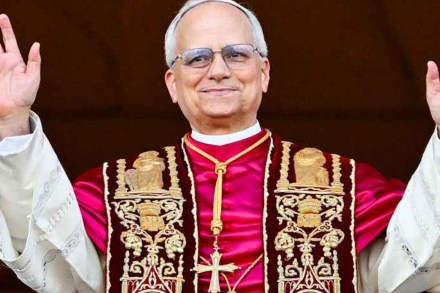
One year on from when Pope Leo became head of the Catholic church and he remains a bit of an enigma. Is he a Conservative or Liberal? What did we learn from his clash with Donald Trump? Damian Thompson is joined by editor of The Pillar Ed Condon and two Spectator favourites – Freddy Gray and Mary Wakefield.

One year of Pope Leo – a promising start?

Shameless Britain: we are a nation of shoplifters

It’s been more than a week since Sean Egan, a manager at Morrisons in Aldridge, announced that he’d been sacked just for doing his job – for stopping a thief nicking booze – and national outrage over the whole affair is still running high. Sean is on morning TV as I write, donations to pay for his appeal rising steadily. In part, the fuss is a measure of sympathy. Sean worked at Morrisons for 29 years and was liked by the people of Aldridge. He was sacked, the supermarket says, because it has a ‘deter, don’t detain’ policy – though what it thinks could possibly have deterred this thief, given his long list of previous convictions, is anyone’s guess. But the feeling for Sean isn’t just a swell of support for one man; it’s also a symptom of wider frustration.

What happened to Britain’s fighting spirit?

When war is in the air, young men traditionally sign up – and they traditionally sign up, disproportionately, from the north-east of England, where I grew up. The country must be prepared for war, says Air Chief Marshal Sir Richard Knighton, head of our armed forces. But what use is all this puffed-up talk of a battle-ready Britain if we have no soldiers? In the north-east, the supply of soldiers has slowed not just to a trickle but to a drip. Sunderland, for instance, home to nearly11,000 veterans, sent just ten men into the army last year. A reporter called Fred Scul-thorp went to Sunderland for Dispatch magazine last month, to work out what had happened to the north-east’s fighting spirit, but all Fred found was apathy: why sign up when you can sign on?

Why I failed my Lent resolution

From our UK edition

It’s the end of Lent as I write this and I’ve almost entirely failed to give up X, which is what I said I’d do. The webpage just seems to materialise in front of me, and I find I’ve been slapping little hearts on Peter Hitchens’s posts for 20 minutes before I realise what I’m up to. Then that deceitful little mental voice pipes up, the internal chatbot which specialises in justifying bad behaviour: ‘Keep scrolling! How else will you know what’s happening in the world?’ Yesterday, as I found myself ogling X again, the little voice really scraped the bottom of the barrel: ‘Now that you’re here,’ it told me, ‘you really may as well get stuck in. Have a long session, go on. It’ll still only count as one Lent infraction.

Ruaridh Nicoll, Angus Colwell, Mary Wakefield, Philip Hensher & Nicholas Farrell

From our UK edition

34 min listen

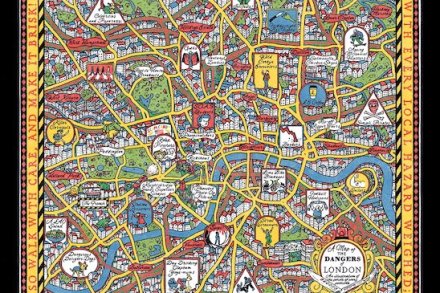
On this week’s Spectator Out Loud: Ruaridh Nicoll reads his letter from Havana; Angus Colwell takes us through an A-Z of London horrors; Mary Wakefield points out the glaring flaw in Keir Starmer’s 'cohesion plan; Philip Hensher reviews an increasingly reflective Alan Bennett; and finally, Nicholas Farrell reflects on Jeffrey Epstein, Silvio Berlusconi – and nudists in Italy. Produced and presented by Patrick Gibbons.

The glaring flaw in Keir Starmer’s ‘cohesion plan’

From our UK edition

On the way back home down Mile End Road, I stopped for a cup of tea in a nice-looking café. It was vast, once I’d stepped inside, extending out into a sort of gazebo – but empty. On display under glass, a good four metres of immaculate cakes: red velvet cake, baklava cheesecake, dipped doughnuts, Dubai chocolate cronuts. ‘Fast now, Iftar after,’ said a sign on the counter. It was the fourth week of Ramadan in Stepney Green, Tower Hamlets; the sun was low in the sky and the whole place seemed to be waiting for the fast to end. As I sat there with my tea, a woman of about my age entered and began to chat to the tidy young man at the counter. She was sick of life in London, she said, sick of this country. ‘You can’t even get a healthy lunch in Tesco.’ What, no carrots?

Screens in schools have been a catastrophic failure

About a decade ago, the people I dreaded meeting most at parties were the ed tech evangelists – men and women who lit up with zealous excitement about bringing screens into schools. If only every schoolchild had a laptop, they thought, then humanity could flourish, nurtured by the great river of the internet and by an exciting stream of educational apps. It was as if a school laptop was a Mary Poppins bag out of which whatever they most wanted was sure to appear. For the ed tech utopians of the right, what they dreamt of was a great stream of savvy little Einsteins, liberated from turgid teachers. For those on the left, it was about equal access, fairness, ‘pupil-centred learning’.

The new freakish shopping trend

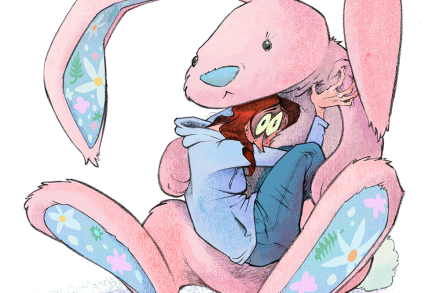
On the fourth floor of Selfridges, in London, is the children’s toy department. Most of the vast space is given over to soft toys – mounds of synthetic fur, thousands of little beady eyes – and when I visited last Saturday afternoon the customers were almost all adults. I spent two hours there, standing by a tower of little Paddington bears, watching the shoppers in the queue for the till, and it was eye-opening. Almost no one was buying for a child. I saw two Chinese women with white toy lambs, a 17-year-old boy with a dragon, what looked like drug dealers queuing for Pokémon cards, and a genuinely troubling number of sad-looking women in their mid-twenties clutching long-eared toy bunnies made by a company called Jellycat.

The poisonous truth about British universities

From our UK edition

This week it became clear that almost none of the adults whose job it is to teach students the truth are much inclined to do it. Even the doziest vice-chancellor must by now have twigged that gender ideology is dangerous bunk and that it lures in the most vulnerable – yet still they can’t bring themselves to speak out. This goes not just for academics, but for politicians in the education business too. For anyone minded to understand how poisonous the atmosphere in universities is, the story of poor Professor David Gordon is horribly instructive. His ordeal began more than a year ago when he invited another professor, Alice Sullivan, to give a talk to his students at the University of Bristol.

Stormy seas, Trump’s revolution & Gen Z’s sex recession

From our UK edition

43 min listen

Can Farage plot a route to Number 10, asks Tim Shipman in our cover article this week. He might be flanked by heavyweights – such as his head of policy Zia Yusuf and Conservative Party defector Danny Kruger MP – but he will need a lot more people to pull off his biggest upset for British politics yet. Where will they come from? And what’s the balance he needs to strike between being radical enough to win power but also without alienating significant chunks of the electorate? Plus, as former UK ambassador to the US Peter Mandelson breaks his silence – in this week's Spectator – to argue that Europe needs to adapt to a new reality, Freddy Gray ponders what Trump’s ‘Donroe Doctrine’ is actually all about. Immigration? Drugs? Oil? Or just plain chaos?

No sex please, we’re Gen Z

For many years now we have all been agonising over the fertility crisis. Why aren’t the kids having kids? It’s become a sort of parlour game, the swapping of the various theories. Is it the cost of living? Micro-plastics? Eco-anxiety? Tight underwear, I heard the other day, and snorted with scorn even as I tipped my son’s stretch-cotton pants into the bin. But now another, rather more fundamental explanation for the baby shortage has emerged. It’s not just that younger generations aren’t having babies – it turns out they aren’t really having sex at all. The Atlantic was first to properly examine this trend among young Americans, in a terrific piece which gave a name to the phenomenon: The Great Sex Recession.

Christmas I: James Heale, Gyles Brandreth, Avi Loeb, Melanie McDonagh, Mary Wakefield, Richard Bratby & Rupert Hawksley

From our UK edition

45 min listen

On this week’s special Christmas edition of Spectator Out Loud – part one: James Heale wonders if Keir Starmer will really have a happy new year; Gyles Brandreth discusses Her Majesty The Queen’s love of reading, and reveals which books Her Majesty has personally recommended to give this Christmas; Avi Loeb explains why a comet could be a spaceship; Melanie McDonagh compares Protestant and Catholic ghosts; Mary Wakefield explains what England’s old folk songs can teach us; Richard Bratby says there is joy to be found in composers’ graves; and, Rupert Hawksley provides his notes on washing up. Produced and presented by Patrick Gibbons.

What England’s old folk songs can teach us

I grew up in the 1980s but in many ways it was more like the 1880s. We lived with my grandmother on the Northumbrian coast and the routine of our days echoed the routines of her youth, perhaps her mother’s and grandmother’s, too. We were like an elephant family in an African game park, following our matriarch around ancient migratory routes, oblivious to the rise and fall of regimes outside. Lunch (no elbows on the table), a walk to the sea, sherry time (Amontillado dry); then my grandmother and my clever younger brother would play Piquet while the children of lesser focus played with the open fire.

William Atkinson, Andreas Roth, Philip Womack, Mary Wakefield & Muriel Zagha

From our UK edition

35 min listen

On this week’s Spectator Out Loud: William Atkinson reveals his teenage brush with a micropenis; Andreas Roth bemoans the dumbing down of German education; Philip Womack wonders how the hyphen turned political; Mary Wakefield questions the latest AI horror story – digitising dead relatives; and, Muriel Zagha celebrates Powell & Pressburger’s I Know Where I’m Going! Produced and presented by Patrick Gibbons.

Say hello to your AI granny

Doing the rounds on social media is the most disturbing advert I’ve ever seen. And I’m telling you about it because you need to be forewarned, just in case this Christmas a child or a grandchild happens to mention that it might be an idea to record a video for posterity, and opens the 2wai app. 2wai is the company responsible for the ad, and the service it offers is the creation of AI versions of family members so that relatives can talk to them after they’re dead. Catch ’em while they’re still alive, says 2wai; film a three-minute interview and Bob’s your AI uncle. ‘Loved ones we’ve lost can be part of our future.’ That’s its catchphrase. The 2wai advert is about ‘Baby Charlie’, and it goes like this.

How lawfare is killing the SAS

From our UK edition

Here’s a question for you to contemplate, this Remembrance Day: If you found yourself in the chaos of a terrorist attack, or if your child was kidnapped, who would you most like to come to the rescue? My particular hope is that the Prime Minister and his Attorney General, Lord Hermer, consider this question, because the honest answer has to be that they’d want men like the one sitting in front of me now, staring out at the grey north sea: George Simm, former Regimental Sergeant Major (RSM) of the 22 Special Air Service (SAS). George Simm’s love affair isn’t actually over.

Trump’s gilded age, the ‘hell’ of polyamory & is Polanski Britain’s Mamdani?

From our UK edition

31 min listen

A year on from his presidential election victory, what lessons can Britain learn from Trump II? Tim Shipman writes this week’s cover piece from Washington D.C., considering where Keir Starmer can ‘go big’ like President Trump. Both leaders face crunch elections next year, but who has momentum behind them? There is also the question of who will replace Peter Mandelson as ambassador to the United States. Can Starmer find a candidate who can get the Americans on side? Host Lara Prendergast is joined by The Spectator’s political editor Tim Shipman, features editor Will Moore and commissioning editor Mary Wakefield.

We have to stop looking away

From our UK edition

I learnt not to intervene on a late summer’s afternoon nine years ago. My son was still a baby and I was pushing him in his pram across a busy road in a responsible way, only after the green ‘walk’ man had lit up. I was about halfway over when a boy of about 14 on a moped scorched through the lights and past us, nearly hitting the pram. I yelled at him, and as I yelled felt the spirit of civic duty rise within me. If we middle-aged mothers don’t set the kids straight, who will? The boy skidded to a stop and turned to face me. I can’t now remember what he said, but the gist of it was that I’d radically misjudged the situation and that if I didn’t show him some respect, he’d have to hurt me.

Luke Coppen, Mary Wakefield, Daniel McCarthy, Michael Simmons & Hugh Thomson

From our UK edition

35 min listen

On this week’s Spectator Out Loud: Luke Coppen looks at a new musical subgenre of Roman Catholic black metal; Mary Wakefield celebrates cartoonist Michael Heath as he turns 90 – meaning he has drawn for the Spectator for 75 years; looking to Venezuela, Daniel McCarthy warns Trump about the perils of regime change; Michael Simmons bemoans how Britain is beholden to bad data; and, Hugh Thomson looks at celebrity terrorists as he reviews Jason Burke’s The Revolutionists. Produced and presented by Patrick Gibbons.

‘People can’t take a joke these days’: Michael Heath on wokeness, The Spectator and turning 90

When I joined The Spectator, the office was in Bloomsbury, in a four-storey Georgian house, and the further down the building you went, the more stylish, the more Spectator (I thought), everything became. On the top floor, blinds drawn, sitting in the half-dark, was Kimberly Fortier, the American publisher, often in long meetings with media alpha males. She was married to the publisher Stephen Quinn and having an affair with the home secretary, David Blunkett, but was always looking to widen her portfolio. One floor down was Boris Johnson, then editor, mostly immersed in meetings of his own with assistant editor Petronella Wyatt. We’d sometimes find him on the landing, staring mistily into the middle distance. ‘Petsy looks like a Bond girl. Doesn’t she look like a Bond girl?