Mary Wakefield

Mary Wakefield

Mary Wakefield is commissioning editor of The Spectator.

How to cure your phone addiction

From our UK edition

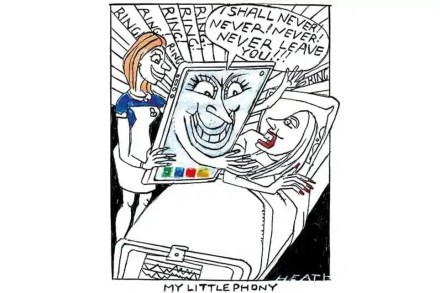
Somehow, I’ve lost the ‘Light Phone’ that I bought to replace the dumb phone that I hoped would break my addiction to the iPhone. The Light Phone is the latest bit of hipster kit, designed to mimic a smartphone but without the distracting internet connection. I don’t know if it works or not because, as I say, I’ve lost it – and I’m despairing but not surprised. It’s been three-and-a-half years since I first thought I’d try to escape the iPhone’s clutches, and over that time it’s outwitted me easily and consistently. A crop of articles have appeared recently by journalists who have made the leap and freed themselves from smartphones. I represent another, less admirable demographic. What I can offer you is not a view from the other side, but a cautionary tale.

The NHS says trans women should breastfeed babies. This is unforgivable

From our UK edition

There are a fair few trans women – men who want to be seen as ladies – who long to breastfeed real babies, and some who actually give it a good go. A few years ago this would have seemed unthinkably surreal, but I’m afraid this is the new reality and you’ll just have to get used to it. A man who wants to breastfeed first takes hormones to grow breast tissue. Then he uses a technique adapted from something called the Newman-Goldfarb protocol, which was designed to help adoptive mothers breastfeed: he takes hormones and a hefty dose of an anti-nausea medication called domperidone and then begins an intense breast-pumping routine after which, if he’s lucky, he produces something a bit like milk.

Inside the plot to take down Rishi Sunak

From our UK edition

42 min listen

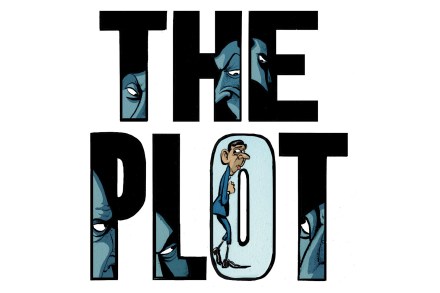
Welcome to a slightly new format for the Edition podcast! Each week will be talking about the magazine – as per usual – but trying to give a little more insight into the process behind putting The Spectator to bed each week.  On the podcast: The Spectator's political editor Katy Balls writes our cover story this week about 'the plot' to oust Rishi Sunak. When former culture secretary Nadine Dorries made the claim in her book that a secret cabal of advisors were responsible for taking down prime ministers, she was laughed at. But with shadowy backroom fixers assembling to try and take down the prime minister, did she have a point? Katy joins the podcast alongside the Financial Times' Stephen Bush to discuss what makes a successful 'plot'.

XL Bullies deserve to be banned

From our UK edition

Sometimes the realisation that you’ve been completely wrong for decades creeps up on you slowly, and at other times it’s a revelation, a light illuminating the entirety of your foolishness all at once. I had a revelation of this second sort on the London Overground train. I’ve been on the Bullys’ side but seeing one nose-to-nose with your child helps clarify things no end It was just days before poor 68-year-old Esther Martin was mauled to death by two XL Bully dogs in Clacton-on-Sea. Beauty and Bear, the dogs were called. The train had just pulled out of Haggerston station and my son was with me. He was hanging from an overhead bar and I was pretending not to notice, so as to be with my phone.

Richard Dawkins, Douglas Murray and Cindy Yu

From our UK edition

31 min listen

On this episode, Richard Dawkins explains how to convert an atheist like him to a Christian (00:37), Lisa Haseldine says the German army is in a dire state (05:53), Douglas Murray looks at the return of the Trump show (12:44), Cindy Yu reviews a Chinese intelligence officers account of life under the CCP (20:14), and Mary Wakefield wonders if it’s wrong to track her child (25:14).

Is it wrong to track my child?

From our UK edition

One evening a few weeks ago, I was pottering about alone when I became aware of a feeling of great relief, of joy almost, without quite knowing why. When you spend every waking moment with a seven-year-old, it often feels euphoric to be alone, but that wasn’t it. By mistake, I’d left my phone behind, but that wasn’t quite it either. It wasn’t that I couldn’t be contacted, I realised, so much as that I couldn’t be tracked. My iPhone, with its inbuilt GPS, was at home logging only its own dismal existence. The ‘Find My Friends’ function, which, at my family’s request I keep switched on, was defunct. I was unfindable. It was joyous.

Cindy Yu, Mary Wakefield and Natasha Feroze

From our UK edition

18 min listen

This week: Cindy Yu reads her piece ahead of the Taiwanese elections (00:54), Mary Wakefield discusses the US opioid crisis which she fears has come to the UK (07:13), and Natasha Feroze tells us about the rise of relationship contracts (13:26).  Produced and presented by Oscar Edmondson.

The US opioid crisis has come to Britain

From our UK edition

‘Never do drugs, you’ll be hooked instantly,’ my mother used to say, and though I nodded, I never even considered paying attention. So I don’t expect my young cousins or my godchildren or my pill-popping friends to take a blind bit of notice when I tell them the same, but I mean it: don’t do drugs. It’s not worth it. Not any more. One of the reasons not to do drugs back in the day was: ‘You never know what you’re taking.’ The trouble now is not so much that you don’t know, but that you do. The way things are going, pretty soon most street drugs will be made of the same synthetic Chinese-made poison, and it’s lethal. Look online at the videos of zombie-addicts in San Francisco twitching and lolling in the streets, and look at the stats.

‘The culture of complaint disgusts me’: Werner Herzog on walking without a backpack and the kindness of strangers

From our UK edition

When the American director Errol Morris saw Werner Herzog’s film Fata Morgana for the first time, he was heard to mutter: ‘I didn’t know anyone was allowed to write things like this.’ I didn’t know anyone was allowed to live like this. Herzog’s new memoir Every Man For Himself and God Against All is astonishing and – whether you know his films or not – potentially life-changing, at least for me. I made a list as I went along of all the situations in which Herzog has nearly died: in a crevasse on K2; under the hooves of a bull in Guanajuato, Mexico; in a giant wave in Peru; shortly after his own birth, when an Allied bomb hit his home in Munich.

James Heale, Michael Simmons and Mary Wakefield

From our UK edition

18 min listen

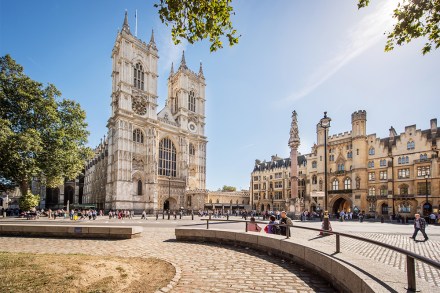
This week: James Heale reads his politics column on Sunak's migration minefield (00:55), Michael Simmons says that Scotland's 'progressive' teaching methods have badly backfired (05:53), and Mary Wakefield asks: why can't I pray in Westminster Abbey? (11:40) Produced and presented by Oscar Edmondson.

Why can’t I pray in Westminster Abbey?

From our UK edition

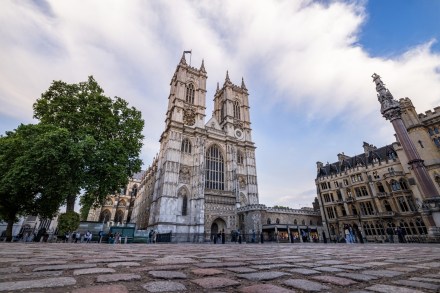
In the school chapel every morning, bored and tired, I’d rest my forehead on the back of the chair in front and try to doze. The chapel chairs were dignified and sturdy, each with its own wooden box for hymn books and a flat top, carved with the name of a generous old girl. As morning chapel progressed, that name would slowly etch itself into my forehead so that sometimes even at lunchtime I still had the name of a past and more perfect pupil stamped backwards above my eyebrows. This is very much how I feel now about the Church of England. When you’re brought up in an institution, however soporific, it leaves its mark on you. I converted to Catholicism nearly two decades ago but I’m still imprinted with the C of E.

The real reason the civil service needs reform 

From our UK edition

Just as Francis Maude was revealing his exciting plans for grand reform of the civil service, I received a message from a friend who once worked in Whitehall. In the subject field: ‘What fresh hell is this?’ Underneath, a screenshot of an email she’d just been sent by a civil servant. There was the name of the sender, Alex Smith, then underneath that another line: ‘SAY MY NAME: Aaa-Luhx Smeeth.’ My first thought was that Alex was taking the mick, making fun of people who couldn’t pronounce a simple name. Alex won’t be long in the job I thought. How wrong I was. It’s not just Alex.

Keeping the peace: the politics of policing protest

From our UK edition

41 min listen

On the podcast: In his cover piece for The Spectator Ian Acheson discusses the potential disruption to Armistice Day proceedings in London this weekend. He says that Metropolitan Police Chief Mark Rowley is right to let the pro-Palestine protests go ahead, if his officers can assertively enforce the law. He joins the podcast alongside Baroness Claire Fox to discuss the problems of policing protest.  Next: are smartphones making us care less about humanity?  This is the question that Mary Wakefield grapples with in her column in The Spectator. She says it’s no wonder that Gen Z lack empathy when they spend most of their lives on social media. She is joined by Gaia Bernstein, author of Unwired: Gaining Control over Addictive Technologies.

Are smartphones making us care less about humanity?

From our UK edition

Generation Z were the first to grow up attached to smartphones. They spent their adolescence bathed in screen-light and now they’re depressed and anxious. Should we have seen it coming? Until very recently my parent friends were in determined denial. Z is the best generation that has ever lived, they said, free from prejudice and determined to recycle. I remember a piece by Caitlin Moran in which she insisted that her children were far more noble and caring than her contemporaries. No one picks up their iPhone to grapple with complex ideological truths Well, those optimistic days are over. The stats are now too stark. We daren’t take the kids’ phones away – we fear their rage – but we mothers huddle in the pub and brood. What’s gone wrong? Is it Instagram? TikTok?

I regret not having more children

From our UK edition

Life doesn’t always work out perfectly. You can make the wrong decisions. You can leave things too late. I wish, though I’m not distraught about it, that I’d had another child, maybe two even, and given my small son siblings. The tacit assumption was always that children are an obstacle to the noble process of self-actualisation I’ve been thinking about this in the context of our shrinking population – the great global baby bust – and wondering why more women don’t express regrets. Often, for any number of reasons, the decision to have children is out of our control. But even so, there must be many hundreds of thousands like me who wish with hindsight that we’d got a move on, had some or more. Why don’t we say so?

Mexico’s progressive hell

From our UK edition

Every morning I check to see if Rodrigo Iván Cortés has published the ‘apology’ that the court in Mexico has written for him and which it has ordered him to post on his social media accounts for 30 days in a row. I still have a flicker of faith left in civilisation and the rule of law, but the day Cortés actually makes his forced confession is the day that flicker dies out. And I’d be interested to know what my progress--minded friends think about his case. Is this the sort of justice system you envision?

The insane craze for dog ice-cream

From our UK edition

During the few hot days we had in June, I came across my first tub of dog ice-cream nestled among the Häagen-Dazs in my local supermarket. Scoop’s vanilla: ‘Tubs that get tails wagging.’ My first thought was that it was a joke, or perhaps for people who identify as dogs. So I looked it up as I stood in the queue, and it was as if a door opened onto our national psychosis. Purina ‘Frosty paws’, Wiggles and Wags ‘Freeze-Fetti’, Frozzys dog ice-cream, Pooch Creamery Vanilla, Wagg’s Sunny Daze blueberry, Higgins dog ice-cream, Dogsters ice-cream-style treats, Jude’s, Smoofl, Ben and Jerry’s… the market for dog ice-cream is limitless and it crosses the socio-economic spectrum.

You don’t need to ‘Queer’ the Mary Rose

From our UK edition

I have an idea for the Mary Rose museum in Portsmouth. My idea is for a Mary Rose Ultimate Experience – a funfair ride which replicates the experience of those 500 young boys and men as they sank with the great Tudor warship. There’ll be no need for expensive visuals because it would have been dark down there below deck and I’m hoping the passengers on my ride will be flung violently from side to side because first aboard will be the director and trustees of the museum and there they will have to stay until they promise never again to publish anything remotely like the piece that has just appeared on the museum website. The blog is prominently displayed on the site and its title is: ‘How can we understand the Mary Rose’s collection of personal objects through a queer lens?

Supercops: the return of tough policing

From our UK edition

40 min listen

In this week’s cover article, The Spectator's political editor Katy Balls takes a look at the bottom-up reform that’s happening in some parts of the country, and asks whether tough policing is making a comeback. Katy joins the podcast together with Kate Green, Greater Manchester's Deputy Mayor of Crime and Policing. (00:50) Next, the war has finally gone to Moscow. Recently, a number of drone strikes have hit targets in the Russian capital. Though Ukraine hasn’t explicitly taken responsibility, in the magazine this week, Owen Matthews writes that it’s all a part of psychological warfare. Owen is the author of Overreach: The Inside Story of Putin and Russia’s War Against Ukraine and he joins the podcast.