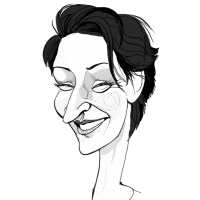
Mary Wakefield

Mary Wakefield

Mary Wakefield is commissioning editor of The Spectator.

Fraser Nelson, Cindy Yu, Mary Wakefield, Anthony Sattin, and Toby Young

From our UK edition

31 min listen

On this week’s Spectator Out Loud: Fraser Nelson signs off for the last time (1:30); Cindy Yu explores growing hostility in China to the Japanese (7:44); Mary Wakefield examines the dark truth behind the Pelicot case in France (13:32); Anthony Sattin reviews Daybreak in Gaza: Stories of Palestinian Lives and Cultures (19:54); and Toby Young reveals the truth behind a coincidental dinner with Fraser Nelson and new Spectator editor Michael Gove (25:40).  Produced and presented by Patrick Gibbons.

Pornography and the truth about the Pelicot case

From our UK edition

There have been protests in 30 cities across France, people marching in outrage over the case of Dominique Pelicot who drugged his wife Gisèle and raped her and invited more than 70 other men – strangers – to come to his house and rape her too. Pelicot is a monster, a modern-day Bluebeard. But what has shocked France most is how very many normal Frenchmen he was able to find, in and around his Provencal village, who were up for having sex with an unconscious woman. If the feminists of France really want to stand with Gisèle, they’d educate their sons to abstain from porn A firefighter, a painter, several businessmen… every week as the trial continues another set of these ordinary men shamble into the courthouse in Avignon and make their bad excuses.

The adult ADHD trap

From our UK edition

I was on the bus recently and bored when I decided not to ignore but to answer one of those online questionnaires about adult ADHD. It was on Facebook, I think. Question 1) Am I easily distracted? Well, yes. 2) Am I often late? 3) Do I regularly forget appointments? Yes and yes. By the time I had arrived at work I had signed up to something called Impulse brain training. And in a few days I was quite sure that I’d been bravely suffering with undiagnosed ADHD for decades. I was half-caught in the adult ADHD trap, though I didn’t know it yet. Are you always late? Do you let people down? Don’t worry! Don’t sweat it! That’s just your ADHD I asked my brother and my friends what they thought and instead of laughing, they nodded sadly. Yes, yes.

No one will change their mind about Hamas

From our UK edition

Earlier this summer, my son and I biked over to fashionable east Hackney where it’s normal to pay £4.20 for a coffee and £3 for a croissant and everybody complains about the cost of living. The croissants, by the way, must come from the Dusty Knuckle bakery. I don’t know if it’s the same in other parts of London, but here in the north-east we have our standards. ‘Israel is literally a fascist state. Literally criminal. Soon it won’t exist at all and that’s great’ We’d biked a fair distance, so we found a café that sold Dusty Knuckle croissants and settled in. My son read his book while I eavesdropped on the conversation between three interesting-looking youngish people at the next table. Interesting because they all looked so very typical it was almost surprising.

Why Britain riots

From our UK edition

33 min listen

This week: The Spectator’s Gus Carter was in Rotherham and Birmingham in the days after the riots. Locals tell Gus that ‘violent disorder isn’t acceptable but people from down south don’t know what it’s like up here’. A retired policeman in Birmingham adds that ‘it’s just yobs looking for an excuse – and yobbos come in all sorts of colours’. You can hear Gus’ report on the podcast. (02:25)  Next: Gus and Lara take us through some of their favourite pieces in the magazine, including Flora Watkins’ notes on ragwort and Isabel Hardman’s review of Swimming Pretty: The Untold Story of Women in Water.

Why children have stopped reading

From our UK edition

It’s only when you read the old stories again, to a child maybe, that you become aware of the extent to which the characters still live inside your mind, bobbing about just below the level of consciousness. I still find myself puzzling over the stories collected by the Brothers Grimm, decades after I first read them. How could Little Red Riding Hood have avoided being eaten? (We read the original, merciless version.) What should Hansel and Gretel have done? Any good book leaves its mark, but the characters from the books you loved as a child embed themselves. They inform the way you think as an adult, which is why it’s so sad and so significant that children all over the West have stopped reading.

Why Elon Musk is right to leave California

From our UK edition

Not long before Joe Biden finally accepted defeat, Gavin Newsom, the 56-year-old governor of California, was on the stump for him in Bucks County, Pennsylvania, shirt undone two daring buttons, sleeves rolled up, silver hair gelled just so. Newsom, who is now being mentioned as Kamala Harris’s running mate, models himself on Bill Clinton. People who’ve worked with him say he practises Clintonian gestures in the mirror, though the look he’s achieved is more Harley Street gynaecologist. How can Gavin Newsom sleep knowing he’s encouraged children to think of their parents as the enemy? ‘If Donald Trump succeeds, God help us, we will roll back the last half-century,’ Newsom told the Pennsylvania crowd. ‘It’s America in reverse.

Why was Jeremy Hunt SHOUTING AT ME?

From our UK edition

Robert Jenrick, once immigration minister and still, just, MP for Newark, said on Sunday that the Tories lost not because ‘they had this slogan or that slogan… but because they failed to deliver’. Yes, absolutely, they failed to deliver, but I think it’s important to acknowledge that the slogans were diabolical too. In fact it was because of how awful the Tory slogans were, and the tenor of their whole social media campaign, that I couldn’t in the end bring myself to vote Conservative, though I have no other natural political home. Messages from Conservative HQ, sent as if from different senior Tories, all had the same crazed voice When the election was announced, I somehow inadvertently signed up to receive messages from Conservative HQ.

America is in trouble if Gavin Newsom succeeds Biden

From our UK edition

Gavin Newsom, the governor of California is everywhere at the moment, earnestly assuring Americans of his unwavering loyalty to poor, senile Biden, while at the same time frantically pitching to replace him. This sort of deep duplicity comes quite naturally to Newsom, who is, God help America, a huckster of a very familiar sort.  It’s astonishing that anyone who’s presided over this mess could be a feasible candidate for president, yet here we are Back in the late 1990s, when I lived in Dallas, Texas, I became fascinated by television evangelists. They were snake-oil sellers to a man, offering healing or ‘financial blessings’ in exchange for donations – usually a very specific sum that the Lord had revealed to them.

Tory men are letting down women

From our UK edition

Some of my good male friends, Tories, are sick of terfs. I can see it in their shifty eyes, in the way they won’t quite look at me when terfy issues creep into conversation, but stare gloomily at the skirting board. Terf stands for Trans Exclusionary Radical Feminist, and terfs are women who insist that you can’t change your biological sex, and that the whole notion that some humans are born in the wrong body is not only daft, but catastrophic for our culture and our children.

Macron’s game: can he still outplay Le Pen?

From our UK edition

45 min listen

This week: Macron’s game. Our cover piece looks at the big news following the European elections at the weekend, President Macron’s decision to call early parliamentary elections in France. Madness or genius, either way the decision comes with huge risk. And can he still outplay Le Pen, asks writer Jonathan Miller. Jonathan joins the podcast to analyse Macron’s decision alongside Professor Alberto Alemanno, who explains how the decision is realigning French politics, and argues it must be seen in its wider European context. (01:58) Then: Will and Gus take us through some of their favourite pieces from the magazine, including Catriona Olding’s Life column and Sam McPhail’s notes on Madri.  Also on the podcast: who decides how we see the past?

There’s something very wrong with children’s history books

From our UK edition

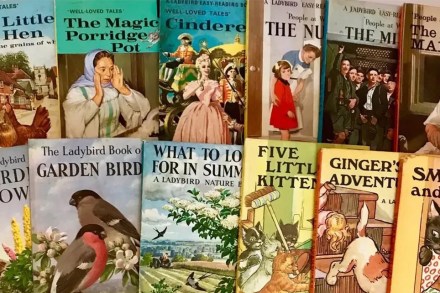
The first editor I worked for was Charles Moore and, like many of his old and ageing former staff, I still think of him as the boss. We’re like sleeper agents, the remaining skeleton crew of the old Daily Telegraph, ready to rise up at any moment and defend the right to hunt with hounds. I’m programmed to obey, so when Lord Moore recommended, in this magazine a few years ago, a series of out-of-print Ladybird history books for children written by a man called Lawrence du Garde Peach, I instantly bought the lot for my son: L. du Garde Peach on Cleopatra, Alexander the Great, Julius Caesar, Kings Alfred, Richard and Henry VIII. From Ramses II through to Queen Victoria, the fiercest humans are portrayed as giant babies Now I owe Lord Moore more than ever. Without L. du G.

I’m taking mental notes for my old age

From our UK edition

I know straight away, from the look on my friend Alice’s face, whether it’s a ‘bad carer’ day. Five years ago Alice had a fall and she can’t now do stairs, so she lives just on the second floor of her maisonette in north London. When I drop round, the carer is usually in the kitchen and Alice in her bedroom/sitting room next door. If it’s a bad carer day, she’ll look towards the kitchen, do a thumbs-down sign, purse her lips and shake her head, then she’ll wriggle her shoulders – hoity toity – to indicate that she feels bossed about. Alice is entirely dependent on the care company the council employs, and appeasement is all she has I suppose infirm 88-year-olds often need to be bossed about in a way.

Why are so many young people ‘asexual’?

From our UK edition

Who could have foreseen that half a century after the sexual revolution we’d be facing its exact opposite: an asexual revolution? There’s a crisis of fertility across the West, with birth-rates and sperm counts in free fall. But this isn’t only about microplastics, oestrogen in the water or tight underpants. It’s also that the children of the West are choosing to have less sex – even no sex. A growing proportion actually identify as asexual, and rather than wait to see if the absence of lust is just a reasonable, youthful response to all the porn around in schools, they announce their asexuality solemnly to their friends and family.

Why send children to therapy?

From our UK edition

I’ve been reading a book by the American journalist Abigail Shrier – Bad Therapy – which describes just how demented our obsession has become with unbuttoning the stiff upper lip. Nearly 40 per cent of American children have received treatment from a mental health professional, she says. Going by the number of kids I know who are on the waiting list here, we’d be approaching that proportion too if the NHS was functional. The desires of children came second to the desires of adults, and whingeing was frowned on What the book makes painfully clear is that all this 21st-century medicalising of normal emotion, the endless therapy, is worse than useless. How can it be working, if so many adolescents in the Anglosphere describe themselves as anxious or depressed?

Svitlana Morenets, Mary Wakefield, Max Jeffery, Sam Leith and Richard Bratby

From our UK edition

35 min listen

On this week’s Spectator Out Loud: In light of the help Israel received, Svitlana Morenets issues a challenge to the West to help Ukraine (1:15); Mary Wakefield questions the slow response to the Ministry of Defence being daubed in paint (7:33);  Max Jeffery discusses the aims and tactics of the group responsible for the protest, Youth Demand (13:25); Sam Leith reviews Salman Rushdie's new book (18:59); and Richard Bratby pays tribute to Michael Tanner, The Spectator critic who died earlier this month (27:34). Produced and presented by Patrick Gibbons.

Clean up the MoD graffiti!

From our UK edition

When I first saw the Ministry of Defence building splattered in blood-red paint, I assumed that it had only just happened. There were no police or protestors about but the damage was so extensive and so shocking, I felt sure it was recent. No decent government would put up with that for long. I was east-bound in a car at the time and as we drove past I craned out of the window for a last look. The Whitehall clean-up crew would arrive soon, I assumed, and I gawped because I wouldn’t see it again. I cannot for the life of me understand why it’s all right to leave the MoD looking like an abattoir But I did. The next day, there it still was, and the day after that, and the one following. I’ve been back every day since just to check.

The Starmer supremacy

From our UK edition

40 min listen

On the podcast this week: what could achieving a large majority at the next election mean for Labour; how much should parents worry about picky eating; and why are humans fascinated with the apocalypse?  First up: The Starmer supremacy. If the polls are correct, Labour could be on to a record landslide at the next general election. Any political leader would relish such a win. But can achieving such a large majority present internal problems of its own? Labour MP Harriet Harman joins The Spectator’s political editor Katy Balls to discuss. (1:32) Then: Lara and Gus discuss some of their favourite pieces from the magazine, from Charles Moore’s column to Christopher Matthew’s piece on A. A. Milne’s time at Punch magazine.

The ‘luxury beliefs’ that harm vulnerable children

From our UK edition

Now that everyone insists that the oppressed must be lifted up – or platformed, if you’re that way inclined: why does no one in the West give a second thought to the most obviously powerless group: kids in care – children who’ve been abandoned by or taken from their parents? An astonishing amount of kids brought up in care end up in jail or homeless or preyed on by gangs. Why no Facebook filter for them? Why no flag-in-bio solidarity? Opposite me now in a café in Cambridge is a man who might have answers. Rob Henderson grew up in institutions and foster homes in California – ‘I think it was like 16 different houses in total.