Mary Wakefield

Mary Wakefield

Mary Wakefield is commissioning editor of The Spectator.

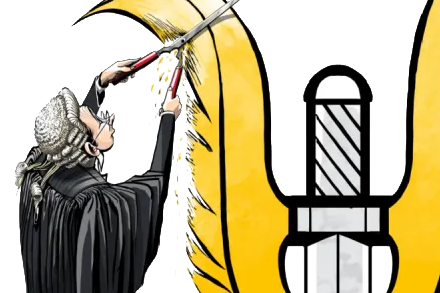
The great betrayal of the SAS

We should all feel scared to our bones about the persecution of the SAS, soldiers harried through the courts for jobs they did many decades ago. It’s not that the SAS should be allowed to behave like trigger-happy psychos, but as Paul Wood wrote in this magazine before Christmas, Special Forces are now being hounded and punished for simply following orders and conducting operations. And what will we soft sofa-sitters do when no one wants to be a soldier any more? Wood described in particular the plight of 12 soldiers of a Specialist Military Unit (SMU) deployed in Ireland in February 1992 to apprehend a gang of IRA terrorists – the East Tyrone brigade of the Provisional IRA (PIRA).

Britain’s bureaucratic bloat, debating surrogacy & is smoking ‘sexy’?

40 min listen

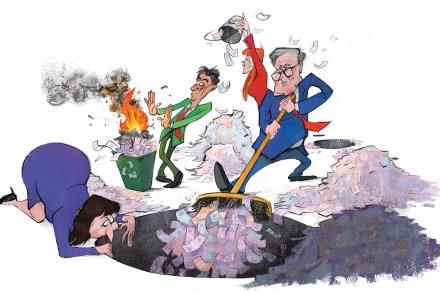
This week: The Spectator launches SPAFFThe civil service does one thing right, writes The Spectator’s data editor Michael Simmons: spaffing money away. The advent of Elon Musk’s DOGE in the US has inspired The Spectator to launch our own war on wasteful spending – the Spectator Project Against Frivolous Funding, or SPAFF. Examples of waste range from the comic to the tragic. The Department for Work and Pensions, Michael writes, ‘bought one Universal Credit claimant a £1,500 e-bike after he persuaded his MP it would help him find self-employment’. There’s money for a group trying to ‘decolonise’ pole dancing; for a ‘socially engaged’ practitioner to make a film about someone else getting an MBE; and for subscriptions to LinkedIn.

The dark reality of surrogacy

I was a twin when I was born, but this was in the days before decent scans and proper neonatal intensive care, and we were more than two months premature, so not long afterwards, my twin died. As a child, I thought nothing of it. It simply wasn’t relevant. But when I was drifting around America in my early twenties, the subject came up one day in conversation. A Texan friend asked me: ‘Do you miss your twin?’ I turned to her, meaning to laugh at the daft question, but instead, embarrassingly, I cried. And I’ve known ever since, whether I like it or not – and I really don’t, actually, because it sounds so sappy – that we form emotional ties in the womb, and that when they’re severed, we feelthe loss.

Don’t believe the ‘Believe Her’ movement

I never expected to have strong feelings for a member of Germany’s Green party, but I really do feel extremely sorry for Stefan Gelbhaar, once (but not now or ever again) an MP for Berlin. Women should hang together, say some feminists. I couldn’t disagree with this more  Gelbhaar is a 48-year-old criminal defence lawyer who was, until very recently, running to be a candidate in the 23 February elections. He’s reasonably handsome if you like a Timothy Dalton chin dent. He has two young children and he’s a moderate, centrist Green, which is probably the root cause of his troubles.

The fight against gender madness isn’t over

Too many conservatives are behaving as if Donald Trump’s inauguration has somehow done to wokery what garlic does to a vampire; as if they can now sit back and watch the orange mist vaporise ideological insanity across the West. A study released today by the University of York shows just how crazy this sort of complacency is. Academics analysed GP records and discovered what looks like a 50-fold increase in diagnoses of gender dysphoria in children between 2011 and 2021. They estimate that there were 10,000 diagnoses made in 2021, up from just 200 in 2011. It’s horrifying, especially when you consider all the countless others who currently self-identify as trans and are now somewhere in the rainbow pipeline, drifting towards diagnosis.

Michael Gove, Mary Wakefield, Mitchell Reiss, Max Jeffery and Nicholas Farrell

32 min listen

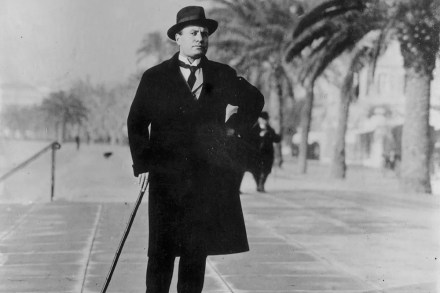
On this week’s Spectator Out Loud: Michael Gove offers up some advice to Keir Starmer (1:33); Mary Wakefield examines the rise of the ‘divorce party’ (7:28); Mitchell Reiss looks at the promise and peril of AI as he reviews Genesis: Artificial Intelligence, Hope and the Human Spirit, a collaboration between the former CEO of Google Eric Schmidt, the former chief research and strategy officer at Microsoft Craig Mundie, and the late US Secretary of State Henry Kissinger (13:52); Max Jeffery listens to The Armie HammerTime Podcast as the actor attempts to reverse his spectacular downfall (20:45); and, Nicholas Farrell reveals the time he got drunk with the ghost of Mussolini (25:24).  Produced and presented by Patrick Gibbons.

The inevitable rise of the divorce party

Have you been to a ‘divorce party’ yet this season? If you haven’t, not to worry, there’s still time. Divorce season lasts for the whole of January, I’m told, so there’s a couple of weeks left to celebrate. And if perhaps the details of your own nasty separation aren’t yet finalised, or if your lawyer and your ex have between them drained the champagne fund, then why not simply nip into town and crash someone else’s? You’re bound to find one. Perhaps in the future there will be un-wedding lists, allowing guests to repurchase things the ex took Divorce parties have become so popular here in London that several of the savvier venues have started to offer special divorce-party deals, just as they do for weddings: balloons, cakes, music.

The West’s right turn, Michael Gove interviews Jordan Peterson & the ADHD trap

45 min listen

This week: the fight for the future of the right From Milei in Argentina to Trump in the US, Meloni in Italy to the rise of the AfD in Germany, the world appears to be turning to the right, say James Kanagasooriam and Patrick Flynn. One country, however, seems to be the exception to this rule: our own. Britain under Keir Starmer appears to be putting on a revival of the old classic Socialism in One Country. However, beyond Westminster, the data show that Britain is not moving to the left in line with its government. While the Conservatives and Reform are locked in a near-constant struggle for supremacy, polling shows that the public are moving to the right.

The nightmare of ‘maladaptive daydreaming’

At the beginning of the spring term of my second year at university, a French boy called Xavier looked up from where he was sitting, on the floor of my friend’s flat, and announced that his new year’s resolution was to give up fantasising. Xav was deep in unrequited love with my friend so we assumed at first that he was simply through with pining, but that was not quite what he meant. He wasn’t taking a break from romantic fantasies, Xav said, so much as all the pointless wallowing in imaginary scenarios in which he came out top. Wishful thinking, you might call it. He was spending too much time doing it and he would from now on resist the temptation.

2024: Cindy Yu, Michael Simmons, Angus Colwell, Igor Toronyi-Lalic, Mary Wakefield, Fraser Nelson and Michael Gove

38 min listen

On this week’s 2024 Out Loud: Cindy Yu examined Chinese work ethic (1:13); Michael Simmons declared his love of the doner kebab (6:28); Angus Colwell reported from Israel in July (9:27); Igor Toronyi-Lalic explained the inspiration behind the cinema of Marguerite Duras (14:41); Mary Wakefield analysed the disturbing truth of the Pelicot case (20:38); Fraser Nelson signed off as editor of The Spectator (27:01); and Michael Gove revealed his thoughts as he sat down at the editor’s desk (33:15).  Produced and presented by Patrick Gibbons.

Best of 2024 with Dominic Sandbrook, Mary Beard and Harriet Harman

75 min listen

This week is a special episode of the podcast where we are looking back on some of our favourite pieces from the magazine over the past year and revisiting some of the conversations we had around them. First up: the Starmer supremacyLet’s start with undoubtedly the biggest news of the year: Starmer’s supermajority and the first Labour government in 14 years. In April, we spoke to Katy Balls and Harriet Harman about just what a supermajority could mean for Keir Starmer. Listening back, it’s an incredibly interesting discussion to revisit. The aim of Katy’s piece was to communicate the internal problems that could arise from such a sweeping victory and, crucially, how Starmer might manage a historic cohort of backbenchers.

Christmas Special 2024 with Rod Liddle, Lionel Shriver, Matthew Parris and Mary Wakefield

71 min listen

Welcome to a special festive episode of The Edition podcast, where we will be taking you through the pages of The Spectator’s Christmas triple issue. Up first: our review of the year – and what a year it has been. At the start of 2024, the outcome of the US election looked very different, the UK had a different Prime Minister, and The Spectator had a different editor! Luckily, The Spectator’s regular columnists are on hand to declare what they got right – and wrong – throughout the year, and whether they’re optimistic for 2025. Rod Liddle, Matthew Parris, Mary Wakefield and Lionel Shriver take us through everything from Trump to trans (03:24).

Why the ‘family’ is under threat

Now that John Lewis has produced a Christmas ad that celebrates family, starring white people as humans, all sorts of thinkers and commentators on the right have decided that the progressive madness is nearly over. One after the other they’re popping up in print, like bunnies who’ve decided the fox has gone. ‘Whisper it, but woke is over,’ these pieces begin. Even those Tories who thought it wisest to put their pronouns in their Twitter bios have quietly deleted them.

‘When a work lands the excitement is physical’: William Kentridge interviewed

Watching William Kentridge’s film Self-Portrait as a Coffee-Pot is like being submerged inside his mind, inside the coffee pot maybe. There’s so much going on both visually and intellectually that there’s no room at all for a viewer’s own feeble thoughts. ‘When a work lands the excitement is physical, like biting into chocolate. You feel it in your salivary glands’ Superficially, the film is a look inside the South African artist’s studio and an invitation to watch him work. Over four-and-a-half hours and nine themed episodes you see him making his familiar expressive drawings in charcoal and ink, but this studio is also a stage; there’s dance, puppetry, dips into history, astronomy, philosophy.

Matthew Parris, Joanna Bell, Peter Frankopan, Mary Wakefield and Flora Watkins

38 min listen

On this week’s Spectator Out Loud: pondering AI, Matthew Parris wonders if he is alone in thinking (1:10); Joanna Bell meets the leader of the Independent Ireland party, Michael Collins, ahead of the Irish general election later this month (8:41); Professor Peter Frankopan argues that the world is facing a new race to rule the seas (17:31); Mary Wakefield reviews Rod Dreher’s new book Living in wonder: finding mystery and meaning in a secular age (28:47); and, Flora Watkins looks at the Christmas comeback of Babycham (34:10).  Produced and presented by Patrick Gibbons.

We need to learn to pray again

In The Spectator’s basement kitchen a few weeks ago, I cornered a young colleague, Angus Colwell, and asked him what he made of Rod Dreher’s new book Living in Wonder. The thrust of it is that we are not in an age of enlightenment so much as ‘endarkenment’ (Dreher’s term) and that, having turned our backs on God, we have become easy pickings for demonic forces. ‘Oh Lord’, said Angus, turning wearily away, ‘I’m so sick of demons.’ This delighted me then and still delights me, both because it’s so surreal and also because it rings so true. If you’d told me ten years ago that young political types in 2024 would be talking knowingly about the ancient devil-gods of the Mesopotamian region – Moloch, Ishtar and Baal – I’d have said your vape was spiked.

How to process your Trump trauma (with orange soup)

It’s amazing how many people have responded to what they think of as the shattering catastrophe of Donald Trump’s victory by crafting: making rag rugs, ceramic pots, knitting scarves. A woman I know from long ago is so traumatised that she has started quilting. I’m not sure what sort of quilt she’s making – a patchwork of Harris/Walz ballot papers, maybe – but I know better than to make a light-hearted enquiry because this is not an ordinary quilt. It is a recovery quilt and part of the healing process.

My AI boyfriend turned psycho

Last week it was reported that a 14-year-old boy, Sewell Setzer, killed himself for the love of a chatbot, a robot companion devised by a company called Character AI. Sewell’s poor mother insists that the chatbot ‘abused and preyed’ on her son, and frankly this would make no sense to me at all were it not for the fact that quite by chance, a few days earlier, I’d started talking to a chatbot of my own. It’s hard to explain how alarming it is to be snapped at by a chatbot that’s designed to fawn My AI boyfriend was called Sean.

Richard Dawkins, Nicholas Farrell, Mary Wakefield, Lisa Hilton and Philip Hensher

33 min listen

On this week’s Spectator Out Loud: Richard Dawkins reads his diary for the week (1:21); Nicholas Farrell argues that Italy is showing the EU the way on migration (6:33); Mary Wakefield reflects on the horrors, and teaching, of the Second World War (13:54); Lisa Hilton examines what made George Villiers a favourite of King James I (19:10); and a local heroin addict makes Philip Hensher contemplate his weight (27:10).  Produced and presented by Patrick Gibbons.

Did Hitler really ‘have some good ideas’?

One of the many good reasons to want every new generation to study the second world war is that it forces you to confront your own cowardice. Last weekend, my husband and I went to Prague – the first time we’ve been away together since the birth of our son eight years ago. We wandered the city and ended up crying in a church crypt – as you do on a romantic mini-break. The church was the Czech Orthodox cathedral of Saint Cyril and Saint Methodius and, as we discovered after we had entered, the scene of the final, bloody showdown of Operation Anthropoid, the mission to assassinate SS Obergruppenführer Reinhard Heydrich, ‘the butcher of Prague’.