Mary Wakefield

Mary Wakefield

Mary Wakefield is commissioning editor of The Spectator.

How the Suzuki method changed my life

Do you ever wonder, as your little darling balks at doing her violin or piano practice again, what all the pain is for? All those battles, and then when she escapes your clutches she’ll give it up. In later life the blanket of amnesia will fall over those childhood years and it might be as if she’d never played at all. I learnt the violin by the Suzuki method from the age of three until about 14. It was a newish fad back then in London, although Shinichi Suzuki, the movement’s founder, was in his eighties and had been teaching in Japan since the war. Suzuki’s idea was simple and had come to him as he watched toddlers learn to speak: start a child young enough and he will learn music the way he does language — naturally and easily.

Being rich makes you mean: here’s proof

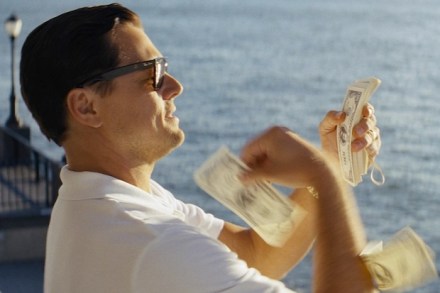
It’s all the rage these days to worry about the growing gap between rich and poor. Our fretting was fuelled by Capital in the 21st Century, by the French economist Thomas Piketty, which claims to show that over time this gap will grow inexorably. But we’ve been agonising about equality for aeons, and for aeons arriving at the same stand-off between rich and (relatively) poor. Here’s how the argument goes: those who don’t feel rich begin by saying that it’s disgusting how much of the world’s total wealth is owned by a small minority. Globally, the richest 10 per cent hold close to 90 per cent of the world’s assets. It’s just wrong, they say. To which the rich, aggrieved, reply: ‘Why? What’s wrong per se with being wealthy?

Is there any part of human life that hasn’t been turned into a medical condition?

When Greg, my old uni pal, came to stay from NYC he brought with him an extra bag for his pills: vitamins A, B, C, D, zinc, magnesium, selenium, ginseng. They decamped to the kitchen, the pills, and stood in rows beside the kettle awaiting their morning ritual. They were bigger than British versions, I noticed, and more violently coloured. Come breakfast, Greg requested pomegranate juice, not for taste but for antioxidants, and orange juice for electrolytes. Then there was lunch. We’d be nearing the end of a trek round some royal palace when suddenly Greg’s voice would flatten: ‘You know, I think my blood sugar’s getting low?’ Then, in a dangerous monotone: ‘I need to eat.’ At first I didn’t take much notice.

Theresa May’s right: the police need radical reform. Here’s why

One fine morning early this year I had tea with Stephen Greenhalgh, Boris’s pleasant if perspiring deputy mayor for policing, and discussed the two great crime mysteries of the 21st century. First: the weird fall in crime. For the past 15 years, all manner of crimes have been on the wane, even violent ones: carjacking, vandalism, burglary, murder — but why? Mr Greenhalgh was admirably quick to credit the Met, but given that it’s a global phenomenon, stretching across Europe and America, that seems unlikely. The truth is probably prosaic: better security and cheaper goods mean young thugs can’t be fished. It’s almost disappointing how apathetic evil turns out to be.

In defence of self-deprecation

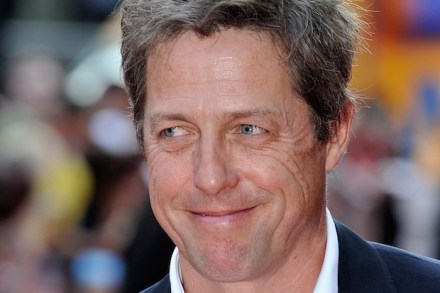
I think the ancient English art of self--deprecation may be dying. I don’t mean self-deprecation in its distorted and most exported form: pug-eyed rogues like Hugh Grant getting away with murder — more usually infidelity — by grinning and rubbing their hair. That’s different. That’s ‘bogus self-deprecation’, as my friend Stuart Reid used to say. What I mean is the assumption that you shouldn’t swank or push yourself forward; that in conversation it’s more polite, civilised, to downplay your own achievements, even and especially if you’re a great success. I began to worry at a conference I was invited to last week: a day of lectures and advice for young people wanting to get ahead.

I never thought I’d write about wallpaper. But I’d never seen wallpaper like Marthe Armitage’s

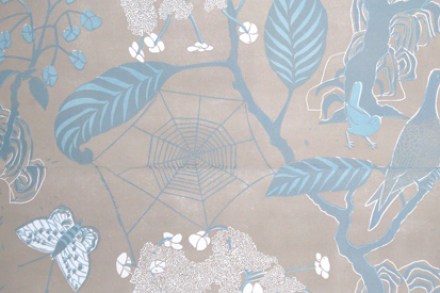
Every night, while my husband reads by screen-light, my mind runs like an invisible rat two miles north to the house we’re rebuilding in Islington. And there it scurries from room to room, around the rotten skirting boards, up walls, into corners: testing, considering, fretting. Carpets or wooden boards? Which doorknobs, latches, hinges? Which white for the walls? What will look best, and what (hang your head, o rat) will your friends envy and admire? Towards 1 a.m., the rat gets ideas, starts thinking: hmm, polished concrete floors? Maybe a hot tub? And I hear my mother’s voice: Oh darling, no. That won’t do. Tiles, mirrors, rails, plugs.

Tony Benn 1925 – 2014: a politician who actually believed in people

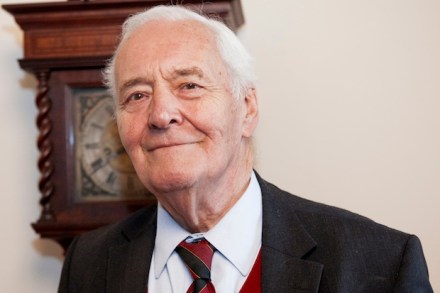
The former Labour Cabinet Minister, author and long-serving MP Tony Benn has passed away today, aged 88. In 2009, our deputy editor Mary Wakefield interviewed Benn about the financial crisis and the basic decency at the heart of all human beings. Here is the article in full. I’m standing in Tony Benn’s front garden, on my way out but dawdling, reluctant to leave. Once I’m back on my bike I’ll be in Broken Britain again, snarling at the buses. But right now I’m still in Benn-land, where all people are kindly and the future is bright with mutual concern. Even the outside of Benn’s house reflects the decency within.

Libya is imploding. Why doesn’t David Cameron care?

A few days ago I went to a talk about Syria; one of those events for the concerned layman, in which a panel of experts give a briefing. Everything sounded depressingly familiar until expert number three piped up: I hear people blame Saudi Arabia and Qatar for the Islamists in Syria, he said, but in fact, they more often come from Libya. The crowd shifted in discomfort. Isn’t Libya done and dusted? Oh no, said the expert, it’s full of al-Qa’eda training camps now, especially in Benghazi. My first thought, unusually, was to feel sorry for David Cameron. Remember how proud he was on his victory visit to Tripoli at the end of the Libyan war? There he stood in the five-star Corinthia hotel, by Sarko’s side, his arms full of flowers, his cheeks pink with pleasure.

Would you let parents destroy ‘gay’ embryos?

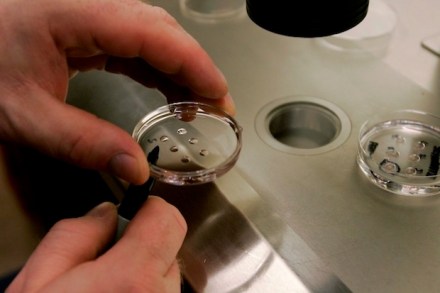
Because I’d like to have a child, and I’m getting on a bit, my husband and I have spent time recently with consultants. They’re an odd breed with distinct and shared characteristics. Invariably, after we’ve all sat down, their first move is to tilt their chair back, or give it a little twirl (design permitting), just to signal how free and easy it is at the top of the medical tree. When they speak it’s with a sort of hurried condescension, as if giving career advice to a hopeless niece. And they scribble as they go, on some scrap of paper. Ovary, ovary, arrow, hieroglyph, arrow, ‘Got that? Hmmm?’ Follicle, scribble, circle, square.

Would you screen for the ‘gay’ gene?

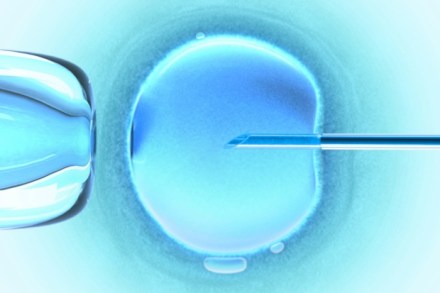
How would you feel about a couple doing IVF just in order to find the embryos most likely to to be gay… and chuck them out? Does that sound like eugenics to you? What about the other way round: what if a gay couple wanted to maximise their chance of a having gay baby — would you let them screen for and select embryos with the genes that made it more likely they were gay? Then bin the rest? It's time to make your mind up because after decades of panic about 'designer babies' (remember Gattaca?) the future is finally here. On the one hand, as I write in the Spec this week the genes that contribute to different human traits are rapidly being identified. For instance, a recent study of gay men concluded that that male sexual orientation is influenced by genes.

Why did Theresa May deport my homeless friend?

I’ve heard some excellent things about our Home Secretary, Theresa May. People who work in her department say she’s bright and hard-working, and that she runs around on her hamster wheel of ministerial duties as nimbly as any political hamster could be expected to. If she has a fault, it’s said, it’s that she doesn’t have a grand plan — the Home Office wheel spins round, but to no particular end. Well, that’s all to the good, say my sensible friends — who wants a reforming secretary of state? No good can come of a politician with ideas. It’s the one approving thing also said about Cameron: at least he doesn’t have an agenda. Well, I’m not so sure that isn’t a stupid thing to say.

Hearts – the next stage of the 3D printing revolution

I have seen the future — your future if you’re rich enough or brave enough to embrace it — and I have to tell you, it’s weird. Imagine this: it’s 2025 and you’re getting on, feeling your knees a bit. You’re bending over one day to pick up junk mail when you feel a terrible pain in your chest. You call 999 and within the hour (in this ideal world) you’re in hospital under the knife. But this isn’t heart surgery you’re having, it’s bottom surgery: the doctor’s taking a chunk of fat from your bum. Have they made a terrible mistake? No they have not.

The one man who makes me hope for peace in Syria

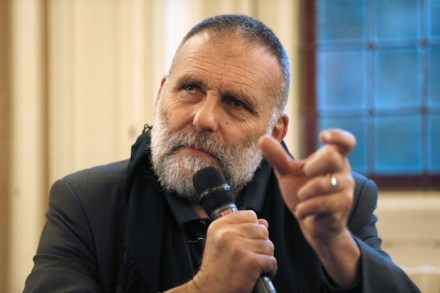
As Syria’s second peace conference looms, and we prepare ourselves for a lot of hot air drifting over from Geneva, I’ve been making a list of those players in the civil war who actually want peace and those who don’t fancy it one bit. The anti-peace side is easy. There’s Bashar al-Assad, of course. Hillary saw to that during the first conference. Perhaps she’s right that he shouldn’t be part of any transitional government, but if he loses all power, Assad and his Alawite clan are toast. So what use is peace to him?

The drones are coming!

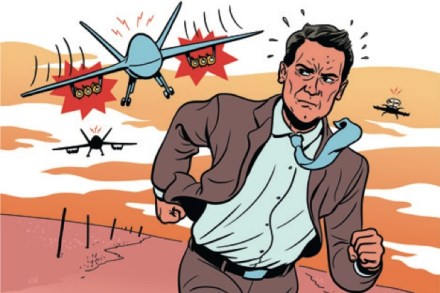
Amazon is testing unmanned drones to deliver goods to customers — whatever next? Well, the Spec can tell you exactly what. Last year we ran a cover story on drones, predicting that: 'Quite soon, it will be impossible to ignore the fact that a revolution is taking place. You’ll look up one day and the skies will be full of flying robots: pilotless drones or UAVS (Unmanned Autonomous Vehicles) — all programmed to carry out different tasks. There’ll be security drones circling shops, streaming video back to base, Royal Mail drones flying parcels to and fro. Even the birds and bees may not be what they seem. The tiniest drones on the market right now are called MAVs (Micro Air Vehicles) and their designs are inspired by nature.

The Lady lives on

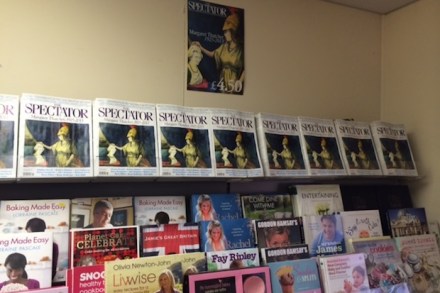
Margaret Thatcher's memory may be fading a little in England, but at least it still burns bright in Stanley. Here's a photo taken in a newsagent in the Falklands capital just this afternoon, where, six months after her death, copies of The Spectator's commemorative issue are still selling well. It does her — and us — proud.

Notes on…Sicily

It could be, in Sicily, there comes a time when you’ve had your fill of seaside calamari and cheap white wine. The sheer thrill of lying on a beach without goose-bumps never really fades, but by day four you may need a break from all the nakedness: Italians blackening in rows like sausages, or Brits, more lumpen, clumped in ones and twos, turning pink. If you can bring yourself to turn your back on the Med, it’s well worth it. From Palermo, take the coastal road, then turn right, inland on the A19 towards Catania. Or drive south on the world’s most surprising motorway, which leaps right over Monreale and lands on the cliffs above. Head south-east and soon the countryside will flatten into hills and plains of durum wheat baked yellow, waiting for harvest.

An improvement on Lord Finkelstein’s Syria analogy

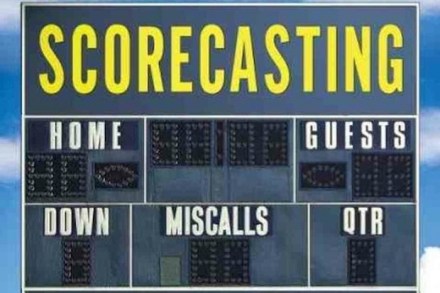
As Freddy Gray points out, Danny Finkelstein has wheeled out a very odd argument in the Times today (£), in favour of intervention in Syria. We are all subject to 'omission bias' says Finkelstein, and uses an example from Scorecasting, a sports psychology book — of the sort most bought by men who can't catch. Here's the example: 'Lets say there's a disease that kills ten in every 10,000 kids, and a vaccine that protects agains the disease, but kills five in every 10,000. Would you let the doctor inoculate your kid?' asks Finkelstein. The fact that most people say no, is an example of how prone to 'Omission Bias' we are. We'd rather not act if there's a risk, even if it would be rational.

Do Tiger Mothers have any effect at all?

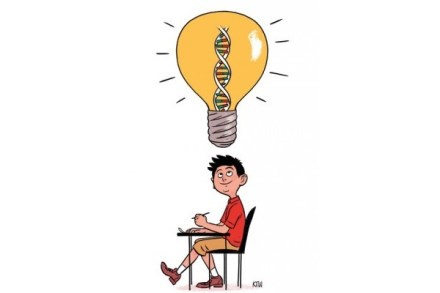
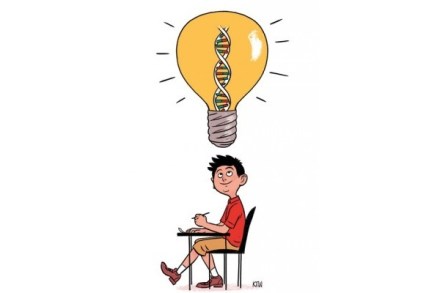
Remember all the fuss about ‘tiger-mothering’ sparked by Amy Chua’s book: Battle-Hymn of the Tiger Mother?  Mothers around the world began agonising about whether they were pushing their children hard enough. Well here’s a thought, sparked by our interview with the brilliant Professor Robert Plomin in the magazine this week. Maybe Amy’s children, the tiger cubs, would have got all those A+ results anyway, even without her cracking the whip so hard. Professor Plomin has studied over ten thousand pairs of twins and found that IQ is strikingly heritable – and that it becomes more heritable as kids grow up.

Revealed: how exam results owe more to genes than teaching

How pleasant it is to live in the 21st century, enlightened, no longer scared of science. We can marvel at the diversity of life with David Attenborough; face the vastness of the cosmos with Brian Cox. These days we talk of colliders and particles as casually as we shop for milk. Science is our oyster. Except of course when it comes to genetics. Just try starting an excited conversation about gene therapy, or about the young Chinese genius Zhao Bowen, who is, right now, hunting down the genes for intelligence. Faces will fall, there’ll be talk of eugenics, perhaps a sudden burst of inexplicable fury. This I know because I’ve felt it myself.

To infinity and beyond! George Osborne invests in space plane

Hooray for George Osborne! I never imagined I’d ever write those words, but George has done his country a great service. He’s put £60 million behind one of the most inspiring British inventions of our age: Skylon, a space plane with a revolutionary new engine. When Skylon’s up and running, it'll be able to transport satellites – well, anything -- into orbit for a 20th of the current price, and go at a scorching 3,500 mph. It’ll be the envy of the world – which sounds like hyperbole, but isn’t. The Spectator championed Skylon four years ago, pointing out that the world is on the brink of a new space race, and that the UK could lead the way, if only our government only had the balls to back British invention.