Mary Kate Skehan

Eating well at a time of inflation

From our US edition

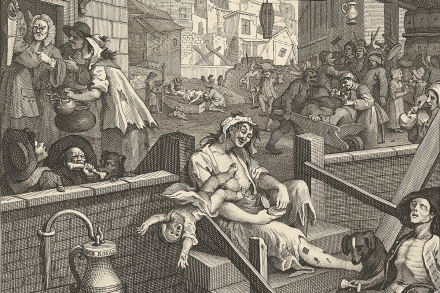
Inflation having topped 9 percent this summer, Americans are looking for ways to cut their spending. Rising prices at the grocery store are impossible to avoid, but we can learn to adjust. There’s no better inspiration than M.F.K. Fisher. Fisher, a food writer who hung around with Julia Child and James Beard during her lifetime, felt the pain of wartime rationing acutely. Her 1942 book How to Cook a Wolf addressed the problem of hunger — “the wolf on the doorstep” — with a few clever recipes and a great deal of philosophy. Survival of the crisis, she predicted, would require first and foremost an attitude of abundance. Fisher ascribes virtues like honesty, dignity and nobility to simply prepared foods.

Sheryl Sandberg leans out

From our US edition

There’s a revealing moment at the very end of “Why We Have So Few Women Leaders,” a 2010 TED talk delivered by Facebook’s then-chief operating officer, Sheryl Sandberg. After expounding on her vision of a world in which 50 percent of CEOs and heads of state are women, Sandberg shares a more personal dream: “I want my daughter to have the choice not just to succeed, but to be liked for her accomplishments.” Now, as Sandberg leaves Facebook’s parent company Meta after fourteen years, she leaves behind a mixed and controversial record in her public life. Sandberg has earned success, but she hasn’t won much public admiration.

Tales from the ER

From our US edition

I used to think I knew my hometown pretty well, after living here on and off for thirty years. And then I encountered my boyfriend, a third-year resident in the Emergency Department of the local hospital. It turns out, you only know a place as well as you know its emergencies. We met around July 4, when his days were filled with fireworks mishaps: burns, the occasional missing finger. “If I ever have children,” he said, with the tactical reserve of an early date, “no fireworks.” Fair enough! “And no ATVs,” he added. The four-wheelers and jury-rigged motorbikes that proliferate in the streets around my apartment every summer, annoying me with their noisy revving and curiously powerful stereo systems, also keep the ER busy with head traumas.

ER

The millennial kitchen

From our US edition

However else we may criticize the late 90s and early 00s — its politics, its fashion, its music — this was undeniably the golden age of the celebrity chef. Barefoot Contessa, 30-Minute Meals and The Iron Chef franchises all debuted in the first decade of this millennium, minting stars like Bobby Flay, Guy Fieri and Nigella Lawson. I once found a collection of my brothers salivating over Giada de Laurentiis making meatballs on Everyday Italian, though they’d never demonstrated more interest in cooking than microwaving the odd Hot Pocket. The mid-aughts brought on the glory years of the “hands and pans” videos: the aerial-view clips of disembodied hands assembling cheeseburger pretzel balls or eighteen-layer taco dip.

millennial

The increasingly expensive claustrophobia of Succession

Success is hard to come by in the Season 3 premier of Succession, which aired last night. As the media and the Department of Justice circle the doomed, dysfunctional Roy family, and patriarch Logan (Brian Cox) continues to waffle over his replacement, the Roy progeny are busy preening and plotting against each other, in increasingly expensive, claustrophobic environments. In other words, it’s another season of Succession, only more so. The fear with every new series of a hugely popular show such as this is that the makers will spoilt it. The first episode is a little suffocating, but that’s no bad thing. The board is being set.

Crypto casino

From our US edition

When I was in high school, I worked at an ice rink in the winter and a swimming pool in the summer. My friends toiled at Target and gofered at golf courses, making minimum wage and spending it on gas and low-rise jeans from Abercrombie: it was 2008, after all. These days, gas may still cost $4 per gallon, but now the jeans are high-waisted and the teens are more ambitious. My youngest brother Ted is 18. He spent the summer before his first year in college working in a cheese shop, sweeping floors and straining ricotta: a classic summer job, tedious and stress-free. Yet some of his friends are taking a different route. Ted’s buddy Tom just cashed out $3,000 in bitcoin winnings to buy a weeklong Airbnb in Ocean City, Maryland for all his friends.

crypto

Hot vax summer

From our US edition

Remember spring 2021? COVID cases dropped as the days lengthened, every balmy, breezy morning bringing happy news of America’s three-vaccine rollout. By the end of the season, vaccination wasn’t just for hospital workers and overweight asthmatics. As temperatures rose into the 70s in the Northeast, where I live, we heralded the arrival of ‘hot vax summer’: the triumphant return of fun to the 20- and 30-somethings whose social lives had been shut down tighter than last year’s Democratic National Convention. After a long, dark winter, hope sprang. Now it looks like hot vax summer didn’t quite pan out for many in our sex-recessed country.

summer

My role in our demographic disaster

From our US edition

When you come from a family of a certain size — in my case, one with eight children — you often get asked: ‘How many kids do you want?’ Innocent on its face, this question is carefully phrased in terms of my personal preferences, and I’m happy to answer: I’ll take what I can get! It’s an easier question every year, because biology has largely made the decision for me. My mother had four kids by the time she was my age, and as of this writing I don’t even have a boyfriend. Childlessness at 30 has its inadvertent blessings, of course: I get lots of rest and exercise; I spend my disposable income on haircare and loungewear and coffee, and the most stress I regularly endure is over WiFi connectivity.

children

The all-American pleasure of minor league baseball

From our US edition

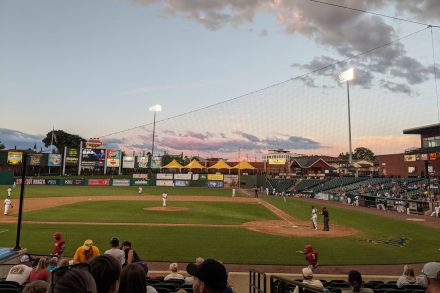
My first summer back in my hometown was a dreary affair — COVID closures, canceled parties and paranoid friends diminished the pleasures of small-town living. But all across the country, the end of the pandemic has brought back one of the joys of living in a non-metropolitan city like mine: minor league baseball. Sure, it’s great to be able to watch the MLB again on split-screens at the bar — and if you’re really lucky, to pay $12 for a hot dog at a major league stadium — but the joys of the minors are all their own. Where else can you watch your very own neighborhood kids dress up in Styrofoam foodstuff costumes to compete in increasingly complex and obscure contests between each inning? With a merry-go-round, fireworks, the smell of popcorn in the air and the sound of P!

minor league baseball

How to fight with your family

From our US edition

Like many families, mine is home to a diverse array of political orientations, ranging on an ideological spectrum from Calvin Coolidge to somewhere around Attila the Hun. In 2021, this means arguments can get quite heated. Should the government subsidize young families? Should tech companies be regulated? Should America reconsider its support for Israel? Should you, personally, get the vaccine? The first half-year of the Biden administration has already given even broadly right-of-center communities plenty to in-fight about. My left-leaning friends who have also spent more time with their families during the pandemic report a similar phenomenon: their good boomer liberal parents are skeptical about critical race theory, for instance, or are suddenly nervous about the national debt.

family

On the frontlines of the Pennsylvania gas station war

From our US edition

One afternoon towards the end of my first year of high school, as I filed through the crowded halls to my locker, I saw the news ripple as visibly as a breeze through a cornfield in August. A Sheetz was opening that very day, at the summit of Queen Street, off I-83. My little Pennsylvania city was on the map. We’d finally chosen a side in the great gas station wars. Now that the hit HBO show Mare of Easttown has brought the world’s attention to one of America’s greatest shames — Pennsylvania accents — it’s also reminded us of the fierce loyalty residents of the emptier parts of the mid-Atlantic have toward our convenience stores. Mare and her fellows refer to their Wawa hoagies and coffees with a curious, pointed frequency, satirized in a recent SNL skit.

wawa gas station

Help yourself to self-help

From our US edition

Self-help has been a popular American pastime at least since Dr Diocletian Lewis toured the countryside in the 19th century. Dr Dio preached to huge, rapt crowds about the salutary effects of gymnastics, chastity, sobriety and loose clothing. He eventually cofounded the temperance movement. Having deprived Americans of their preferred entertainment, Dr Dio went on to invent the beanbag. A century later, The 7 Habits of Highly Effective People by Stephen Covey sold tens of millions of copies and inspired spinoffs for families, companies and teens, as I learned when my mother gave me a copy during a particularly ineffective period of my adolescence. Covey, a Mormon, was the spiritual heir to the clean-living crusaders of the temperance movement.

self-help

Made of honor: the complexities of a COVID wedding

From our US edition

The birds are singing, the temperature is rising and I am frantically searching for a seamstress to hem three to four inches off a formal dress designed for a woman of normal height. You know what that means: it’s wedding season. This wedding season holds the uncertain distinction of being either the second under COVID or the first post-COVID, depending on your geography and luck. The pandemic was a tragedy for many couples who had planned their big day last year. According to the wedding website the Knot, less than half of couples who intended to get married in 2020 followed through with both their ceremony and reception.

wedding

The decadence of Taylor Swift’s re-recorded record

From our US edition

As a Taylor Swift fan, I’ve greeted the past year’s cornucopia of fresh content with joy and gratitude. Every day, I wake up and wonder: will there be a new Taylor Swift album today? With astounding frequency, there is! The latest entry into the T. Swift COVID-era canon, following folklore and evermore, is the re-recording of her 2008 smash-hit album Fearless, now available as a 27-track pop-country marathon known as Taylor’s Version. Of course, the original Fearless was also, strictly speaking, ‘Taylor’s Version’. But the master recordings of that album, which can be monetized through lucrative avenues like sampling and commercials, belonged to the label she signed with as a teenager, who refused to sell them back to her.

taylor swift

Is the truth about burn pits too toxic?

From our US edition

In June 2020, while COVID raged and cities rioted, my older brother Pat was promoted to major in the Marine Corps and diagnosed with thyroid cancer. I went down to the base at Quantico, Virginia on a Monday to see Captain-now-Major Pat get ceremonially ‘pinned on’ with the golden oak leaf before a formation of Marines. On Wednesday, Pat ran eight consecutive six-minute miles and went in for minor surgery to remove a suspicious growth on his thyroid. I’d packed my bags for a week to help out with my two- and four-year-old nephews while my sister-in-law drove back and forth to Walter Reed.

burn pits

Why Grüner is my go-to

From our US edition

The first person ever to tell me something true about wine was my first real boss, a generous and wise woman who toted me along to the Frankfurt Book Fair with her for several years in my early twenties. At the time I drank mostly sweet red blends that came in denominations of ‘box’ or ‘jug’. When she sensed (or perhaps shared) my fear of humiliating us both when I was asked for my wine order at a long, formal luncheon in a rather famous hotel, she leaned across the many forks of her place setting and whispered to me, ‘Get the Grüner.’ She elaborated that the American white wines I’d had were probably sweet or buttery, but German whites, like dry Rieslings and Grüner Veltliner, were mineral and fresh and lovely. They paired well with all foods.

grüner

The Windsors are the first and best reality TV family

From our US edition

Isn’t it nice to think about someone else’s problems for a change?  I think this must be the experience of the millions of Americans who tuned into Oprah’s exclusive interview with the Duke and Duchess of Sussex, Harry and Meghan, earlier tonight. Our politics are dysfunctional, sure, but have you heard about the British royal family, who in addition to a long history of presiding over murderous colonial regimes, are also not very nice?  Of course, there’s no reason that any American should care about the wife of a rich guy who’s sixth in line to an entirely symbolic office in a faraway country. Even if the British sovereign made meaningful policy decisions, Prince Harry is in no danger of becoming king.

harry meghan oprah

The Enneagram: a remarkably efficient way to handle a room full of people

From our US edition

To paraphrase Tolstoy, all happy people are alike but every unhappy person is unhappy in one of exactly nine ways. Thus contends the Enneagram, a personality-typing system popular among millennial Christians and lifestyle bloggers. Bestselling books and popular social-media accounts clarify and affirm each of the Enneagram’s nine ‘types’. There are Enneagram coaches, consultants and devotionals, and podcasts ranging from the whimsical (Say Enneathing) to the vaguely mystical (The Wisdom of the Enneagram). The Enneagram is frivolous, self-indulgent and indefensible before science or theology. But I would say that: a Type 6 is skeptical. The truth is, I love the Enneagram.

enneagram

No drink till Easter

From our US edition

It’s Lent again, and you know what that means: time for Christians to give up their favorite indulgences for 40 days in the spirit of penance and/or the hope of weight loss. I confess that in pandemic times, bagels and brownies have taken a backseat to booze as my preferred guilty pleasure. So I’m doing what I’ve got to do, for my soul if not my waistline, complexion, or sleep cycles: I’ve given up drinking for Lent. The uptick in my consumption over the past year is part of a broad and alarming trend. A study published last week in Psychiatry Research tracked respondents’ drinking over the first six months of the pandemic and found that ‘harmful alcohol use increased notably’. This surprises no one who remembers last spring’s huge spikes in at-home alcohol sales.

drink booze

Go figure

From our US edition

When I worked in a skyscraper in Midtown Manhattan rather than on my couch in Pennsylvania, I used to go skating in Bryant Park on clear winter mornings, for the fresh air and light exercise. A troupe of figure skaters claimed the center of the ice in the pre-tourist hours, commanding everyone’s admiration: they used the tight space to execute tidy jumps and corkscrew spirals without crashing into graceless pedestrians-on-ice like me. Now COVID-related restrictions have left me with buckets of free time where commutes and happy hours used to be, and I’m looking to learn a new hobby.

figure skating