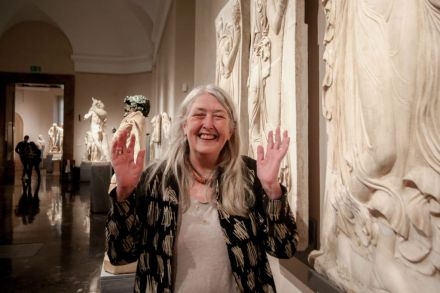
Mary Beard

Best of 2024 with Dominic Sandbrook, Mary Beard and Harriet Harman

75 min listen

This week is a special episode of the podcast where we are looking back on some of our favourite pieces from the magazine over the past year and revisiting some of the conversations we had around them. First up: the Starmer supremacyLet’s start with undoubtedly the biggest news of the year: Starmer’s supermajority and the first Labour government in 14 years. In April, we spoke to Katy Balls and Harriet Harman about just what a supermajority could mean for Keir Starmer. Listening back, it’s an incredibly interesting discussion to revisit. The aim of Katy’s piece was to communicate the internal problems that could arise from such a sweeping victory and, crucially, how Starmer might manage a historic cohort of backbenchers.

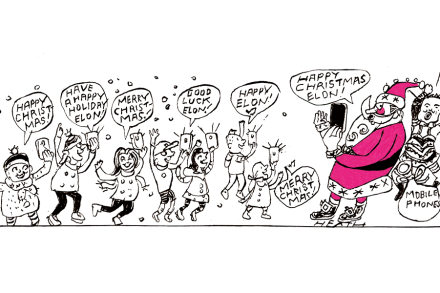
Elon Musk is wrong about the Roman Empire

I was in Washington D.C. during The Election, living halfway between the Capitol and White House. Concerned friends suggested I move to some boutique hotel in Virginia for election week, in case of ‘trouble’ in Washington. Or at least, they said, I should stock up the freezer, as I might not be able to get safely to the shops for several days if the results were bitterly contested. I took the freezer option (plus an enhanced cellar) and planned a week of working from home, to follow the news from each swing state, fortified by my supplies. It was all for nothing. By the time I woke up on the morning after the election, everything was settled: Mr Trump had incontestably won. So I gave up the working-from-home option and walked to my office on the Mall.

Team Trump, astrologers versus pollsters & debating history

43 min listen

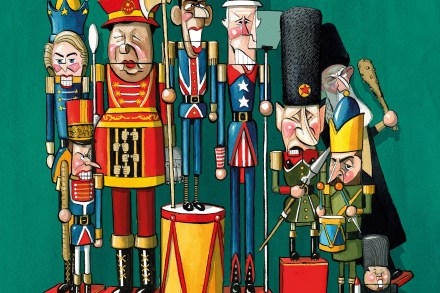
This week: Team Trump – who’s in, and who’s out? To understand Trumpworld you need to appreciate it’s a family affair, writes Freddy Gray in the magazine this week. For instance, it was 18-year-old Barron Trump who persuaded his father to do a series of long ‘bro-casts’ with online male influencers such as Joe Rogan. In 2016, Donald’s son-in-law Jared Kushner was the reigning prince; this year, he has been largely out of the picture. Which family figures are helping Trump run things this time around, and which groups hold the most influence? Freddy joins the podcast alongside economics editor Kate Andrews. What are the most important personnel decisions facing Trump if he wins next week? (0:58).Next: do astrologers predict elections better than pollsters?

Mary Beard: Emperor of Rome

48 min listen

My guest in this week’s Book Club podcast is the writer, broadcaster and academic Mary Beard. In her new book, Emperor of Rome, she explores what we can and can’t know about the men who ruled the Roman Empire, and what the lurid stories about so many of them tell us about the anxieties and fantasies of Rome’s ordinary citizens and the remarkable resilience of the regime. We also discuss, among other things: decapitated ostriches, fatal rose petals, and Mary’s robust reappraisal of Marcus Aurelius’s 'sub-Stoic' maundering.

Christmas Special

65 min listen

Welcome to the special Christmas episode of The Edition! Up first: What a year in politics it has been. 2022 has seen five education secretaries, four chancellors, three prime ministers and two monarchs. But there is only one political team that can make sense of it all. The Spectator's editor Fraser Nelson, deputy political editor Katy Balls and assistant editor Isabel Hardman discuss what has surely been one of the most dramatic years in British political history (01:13). Then: Christmas is a time to spare a thought for our neighbours. While in the UK we have our own hardships, families in Ukraine are facing a Christmas under siege.

Spectator books of the year: Mary Beard on how Clive James went viral

I am unashamedly sticking to my own home territory. Cambridge has become something of a literary hotspot. Last year it was Ali Smith (How to be Both) and Helen Macdonald (H is for Hawk). This year we have Clive James’s wonderful (and let’s hope not last) collection of poetry, Sentenced to Life (Picador, £14.99), including the marvellous ‘Japanese Maple’, which unusually for a poem went viral after it first appeared in the New Yorker. And then there is Ruth Scurr’s extraordinary literary reconstruction of the diary of John Aubrey: My Own Life (Chatto, £25), which has already been marked down as a ‘Desert Island book’.

How the smile came to Paris (briefly)

In 1787 critics of the Paris Salon were scandalised by a painting exhibited by Mme Vigée Le Brun. The subject was conventional enough: a self-portrait of the artist cradling her small daughter. The problem was that Vigée Le Brun was depicted smiling. You could even see her teeth. This was, as one critic put it, ‘an affectation which artists, connoisseurs and people of good taste are unanimous in condemning’. These outraged art lovers must have been rather out of touch with current trends. For, as Colin Jones shows in The Smile Revolution — his revealing history of 18th-century French smiling — the full-on, lips-parted sourire had been increasingly visible in Paris since at least the 1740s.