Martin Vander Weyer

Martin Vander Weyer

Martin Vander Weyer is business editor of The Spectator. He writes the weekly Any Other Business column.

Never mind bashing ‘profiteers’, slash fuel taxes and green levies

From our UK edition

As chairman of the value-for-money Iceland frozen-foods chain, Richard Walker might be expected to know what he’s talking about in his newly ennobled role as the government’s ‘cost of living champion’. But he was also one of the few recognisable names on the list of 121 ‘business leaders’ who endorsed Labour’s clueless economic programme ahead of the 2024 general election. So we should be wary of his intervention on Rachel Reeves’s behalf, warning ‘profiteers’ not to ratchet up prices in response to the Iran crisis, having already ‘hauled petrol retailers and energy producers into Downing Street’ to tell them ‘opportunistic rip-offs will not be tolerated’.

Has Rachel Reeves secured a rare victory for growth?

From our UK edition

There’s very little to celebrate in Downing Street these days but it must have been vodka shots all round in Chancellor Rachel Reeves’s office last week when Revolut, the City’s glossiest fintech start-up, finally secured the banking licence it has been pursuing for the past five years. Founded as a currency payments app in 2015 by two tech entrepreneurs, Russian-born Nik Storonsky and Ukrainian Vlad Yatsenko, Revolut acquired customers at an explosive rate and first sought recognition as a UK bank – able to accept deposits under the umbrella of the Financial Services Protection Scheme – in 2021.

If oil prices stay high, you can bet on a recession

From our UK edition

Shares everywhere dived for cover as missiles started flying. But one stock ahead of the pack, and responding to a different alarm, was Barclays, which has dropped 20 per cent since early February, having quadrupled over the preceding two years. I’ll declare an interest as custodian of a modest family holding – making me all the keener to understand what this rise and fall is telling us. All banks were deeply devalued after the 2008 financial crisis and remained so, long after their balance sheets were repaired in the 2010s. More recently, the market narrative was that they were behaving sensibly again and their shares were shiny bargains. Barclays – run since 2021 by C.S.

Brace for higher inflation

From our UK edition

All eyes on the Strait of Hormuz, the 24-mile-wide choke point between Iran, the United Arab Emirates and Oman, through which moves, in normal times, around a fifth of the global supply of liquified natural gas and a quarter of all seaborne oil. But with Iran threatening to set fire to any ship in the strait, LNG production halted in Qatar after missile attacks, and gas stocks in user countries low at the end of winter, prices are soaring as they did at the outbreak of the Ukraine war. You may hear it said that the UK is relatively well placed for this supply crunch because we import only a small portion of LNG from the Gulf and much more from the US and Norway; and because almost half of UK electricity now comes from renewables, with wind to the fore.

The no.1 quango that deserves the axe

From our UK edition

There are elements of economic life, such as the impact of President Donald Trump’s ever-changing tariffs, that are far beyond national control; others, including the supply of most consumer goods, that are best left to free markets; and others which naturally benefit from state intervention. New housing, wholly dependent on planning and building regulations, clearly falls into the last category. So we might well ask how the Labour government plans to solve a homebuilding crisis so extreme that its target of 1.5 million new homes within this parliament is likely to be undershot by 50 per cent or worse.

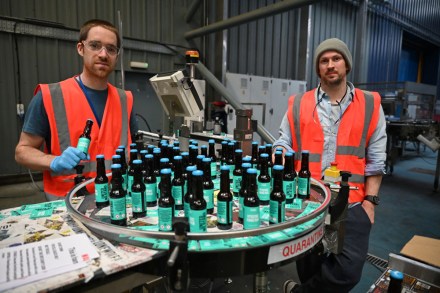
Is it last orders for BrewDog?

From our UK edition

‘Nostalgia is not a strategy,’ declared Schroders chief executive Richard Oldfield after announcing that the investment firm, descended from a City banking house founded in 1804, is to be sold for £9.9 billion to Nuveen – which sounds like a brand of cooking oil but turns out to be a Chicago-based manager of retirement savings. The two together will hold £1.8 trillion of assets, placing them tenth in a global league headed by the giant American ‘passive’ investors BlackRock and Vanguard. Oldfield is right that there’s no point looking backwards in a tech-driven sector that’s rapidly consolidating to keep pace with those leaders.

Japan’s female leader is a bright beacon, but do her sums add up?

From our UK edition

My scepticism towards soaring markets with unconvincing fundamentals was nurtured by working in Tokyo in the mid-1980s, when the Nikkei index took off like a rocket. Shamelessly boosted by traders and analysts alike, share prices rose to absurd heights before crashing in the early 1990s and taking with them any notion of Japan as the next great economic power. The Nikkei took 34 years to regain its 1989 peak of 38,916. Since passing that benchmark, the index has roared upwards again – despite Japan’s chronic problems of stagnant growth, ballooning public debt, sclerotic corporate leadership, expensively ageing population and fears of inflation.

The role of ABBA in the Ajax fiasco

From our UK edition

‘It’s all about ABBA,’ a military acquaintance whispered when I mentioned the scandal of the British Army’s order of 589 Ajax armoured vehicles, for which -‘initial operating capability’ status has been withdrawn following multiple cases of soldiers suffering after-effects of intolerable noise and vibration. What could that possibly have to do with the great Swedish-songsters? Nothing, he explained: it is an acronym for ‘Anything But British Aerospace’, allegedly a mantra in defence procurement circles in a previous era.

Where have all the graduate jobs gone?

From our UK edition

It’s a relief not to have been pressganged into joining the Prime Minister’s plane-load of business chiefs and reporters bound for Beijing this week. With Sir Keir Starmer are leaders of the likes of Astra-Zeneca, BP, HSBC, JLR and Rolls-Royce, and some billion-pound deals will no doubt be announced while they’re there – agreed in advance on the condition that Downing Street gave the green light for China’s Royal Mint Court mega-embassy-cum-listening-post on the edge of the City. The Chancellor is on the trip too, perhaps carrying a nice set of hunting prints as a housewarming gift for London ambassador Zheng Zeguang’s new office.

Bookshops deserve tax breaks

From our UK edition

My Davos spy disguised as an Uber Eats driver sent word that this year’s World Economic Forum was rammed ahead of Donald Trump’s arrival. The Alpine resort was heaving with Saudis, Emiratis, AI snake-oil salesmen and US tech titans strongarmed into sponsoring USA House, the official showcase of America’s ‘unity, ingenuity and leadership’ that has its main venue in the town’s English church – ideal for Trump veneration. Attendance was so competitive that the market in fake VIP passes was hotter than precious metals and one African statesman was seen parting with €25,000 in cash for a rented apartment.

Trump’s attack on the Fed is a pivotal moment of hubris

From our UK edition

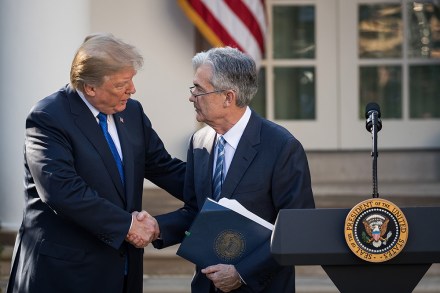
The phrase ‘trumped-up charges’ dates from the 18th century, I learn, and derives from the Old French tromper, to deceive. It has certainly acquired new resonance with the threat of criminal indictment against US Federal Reserve chairman Jerome Powell, somehow relating to the cost of Fed building renovations. The President says this Department of Justice action has nowt to do with him, but it’s plainly another exercise of what some commentators are calling ‘the Maduro option’: sod constitutional niceties, just drag your opponent into the dock. For all his foreign-policy fireworks, Donald Trump knows November’s US midterm elections will largely be driven by domestic cost-of-living concerns.

Am I really a tightwad?

From our UK edition

Of all the heavyweight books I’ve ever been asked to review, one that most influenced my view of how the world works was Why Nations Fail (2012) by two American academics, Daron Acemoglu and James A. Robinson. Their theory, drawn from a broad sweep of history, is that all state regimes fit patterns that are either ‘extractive’ or ‘inclusive’. To be inclusive is to be egalitarian in access to resources and rewards, and responsive to the will of the people. To be extractive is to rule despotically in the interest of corrupt elites, often profiting from ruthless extraction of natural resources. Inclusive economies are prone to occasional crisis but capable of self-renewal;extractive economies are destined to fail.

Pubs, schools and water in crisis: my economic forecast for 2026

From our UK edition

Forecasting is a mug’s game, as the Bank of England governor Mervyn King once said. But I’ll sketch a few trends for 2026 nevertheless, starting on a positive note in the stock market before moving on to some of the many choices on an à la carte menu of gloom. The FTSE 100 index will have ended 2025 almost 20 per cent higher than it started – slightly better than the US S&P 500 index – and the consensus of fund managers is that (having closed for Christmas at 9,870) it will carry on upwards, perhaps even towards 11,000. Why? In short because many UK blue-chips in traditional sectors such as banking, housebuilding and mining have been undervalued for too long, because interest-rate cuts will help, and because stock markets have a mind of their own.

Why does Netflix never show us business heroes?

From our UK edition

God bless Netflix: I’ve just watched all 28 episodes of Foyle’s War, the 1940s detective series set in Hastings and London that first aired on ITV more than 20 years ago. Pedants may have spotted minor anachronisms or been irritated by London scenes filmed in Dublin, presumably for tax breaks. But for me, the whole oeuvre – Spitfires, ration books, moustaches and all – stands as a monument of meticulous and compelling period drama. And as an amateur actor who always struggles to keep a straight face on stage, I’m in awe of Michael Kitchen’s gift of expressing Detective Chief Inspector Foyle’s moral outrage and inner pain by the tiniest twitch of a cheek muscle.

Why the Budget let banks off the hook

From our UK edition

‘Banks don’t vote and citizens don’t love them, so they’ll always be the Chancellor’s target of choice,’ I wrote in September when one of this autumn’s many false Budget trails pointed towards a left-pleasing extra surcharge on bank profits. But it didn’t happen: partly because Rachel Reeves was love-bombed by Goldman Sachs chief David Solomon and JPMorgan chairman Jamie Dimon, promising new investment in the UK if she held off; partly because she had evidently figured out that a raid on banks that already pay higher tax rates than in any other major financial centre – many of whose bosses are already packing to move to Dubai – would make them even less eager to help boost growth by lending more to British businesses.

An oasis of optimism for UK entrepreneurship

From our UK edition

The Spectator’s Economic Innovator of the Year Awards gala dinner, in partnership with Rathbones, returned this year to a spectacular venue: the London St Pancras Renaissance Hotel, one of the great monuments to the expansive spirit of the Victorian era. After a tax-raising Budget and a downbeat economic news cycle, our annual gathering of entrepreneurs, investors, judges and friends – with upbeat opening speeches by The Spectator’s editor Michael Gove and Rathbones CEO Jonathan Sorrell – was an oasis of optimism for the future of UK entrepreneurship.    Since these awards were launched in 2018, they have attracted well over 1,000 entries from every corner of the UK.

Let the Daily Mail buy the Telegraph

From our UK edition

When I first joined The Spectator under the proprietorship of Conrad Black, we operated in sisterhood with the Telegraph titles which he also owned, and no one objected to the Daily Mail ringing the Spectator house in Doughty Street most Fridays to buy the best of the week’s articles for re-publication or to commission the authors to rewrite them in humourless Mail house style. In short, there were frequent meetings of minds in our grove of the media forest.

Why has Peter Thiel dumped his AI stocks?

From our UK edition

How, I wonder, did a shortlist of candidates to succeed Sir Mark Tucker as chairman of HSBC come into the public domain? The three names ‘exclusively’ revealed by Sky News, if they really are the final contenders, ought to be a secret kept between a board committee led by senior independent director Ann Godbehere and the headhunters on the job, named as MWM Consulting. Two of the three – Kevin Sneader from Goldman Sachs and Naguib Kheraj, formerly of Barclays and Standard Chartered – might feature in a round-up of usual suspects. But the third is the former chancellor George Osborne, who has no public-­company chairmanship experience and is, to say the least, a Marmite figure.

This time it’s crypto: now the Bank of England bows to Trump

From our UK edition

The softening of the Bank of England’s stance on ‘stablecoins’ looks like another tugging of the British forelock towards the Trump regime. Stablecoins are virtual money akin to cryptocurrency, but theoretically safer because their value is pegged to the dollar or other conventional currencies. Often used by investors to buy into crypto, they’re claimed to offer a more efficient future for international payments – but also accused of facilitating crime. Two years ago, Governor Andrew Bailey decreed that stablecoins did not ‘meet the standards we expect of safe money’; other non-US regulators largely agreed. That well-known crypto player Donald Trump, however, called them ‘perhaps the greatest revolution in financial technology since the birth of the internet’.

Income tax must rise ­– but Rachel Reeves must go

From our UK edition

Call me hard-hearted, but I doubt even a magic mushroom-induced tantric visualisation of a harmonious universe could transport me into a state of sympathy for Rachel Reeves. Her content-free but don’t-blame-me speech on Tuesday morning did nothing to make me feel more benign. Yes, it’s not entirely her fault that a Labour cabinet can’t deliver welfare cuts, that defence spending must rise and that the UK has a chronic productivity deficit; and yes, the Tories left a mess behind. But in every other respect she’s in a trap of her own making, in which the only Budget move that might restrain out-of-control public borrowing, namely raising income tax, is also the one that should surely guillotine her disaster-strewn chancellorship.