Martin Gayford

Snap, crackle and op

From our UK edition

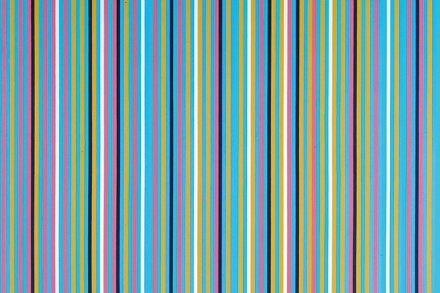
Stand in front of ‘Fall’, a painting by Bridget Riley from 1963, and the world begins to quiver and dissolve. Something you normally expect to be static and stable — a panel covered with painted lines — undulates and pulses. In addition to just black and white, the pigments actually present, other hues appear and disappear: faintly luminous pinks and greens. To her irritation, the artist was once told, ‘as though it were some sort of compliment’, that ‘it was the greatest kick’ to smoke dope while looking at this painting. The remark, much though it affronted Riley, is wonderfully characteristic of its epoch, the mid-1960s. We usually think of op art itself as dating from the era of Mary Quant, the Beatles and LSD.

What lies beneath | 24 August 2017

From our UK edition

Last year, Gary Hume made a painting of himself paddling. At a casual glance, or even a longer look, it might not appear to be what it is. What you see is a wrinkled, pinkish surface with a sort of dome of curving green and blueish shapes at the bottom. This, to Hume, is a sort of self-portrait as a child at the seaside. ‘I’m on the beach, I’ve got the ripples going around my ankles making little coloured shapes, and all the sand.’ Hume’s paintings are like that. They may look abstract, but it turns out that they are startlingly real. One from some years ago consists of six shiny black rectangles with yellow bars between them.

Object lesson | 3 August 2017

From our UK edition

Why did Henri Matisse not play chess? It’s a question, perhaps, that few have ever pondered. Yet the great artist provided an answer, which is quoted in the catalogue to Matisse in the Studio, a marvellous new exhibition at the Royal Academy. He did not care, he explained, ‘to play with signs that never change’. It’s a revealing reason in several ways. For one thing, it underlines how different Matisse was from his younger contemporary Marcel Duchamp: the most celebrated chess-player in art. Duchamp loved logic, so his work tended to turn into a series of theorems.

Maximum wattage

From our UK edition

On his deathbed in 1904, George Frederic Watts saw a extraordinary spectacle. He witnessed the universe coming into being: the ‘breath of the Creator acting on nebulous matter’ causing ‘agitating waves & revolving lines’ to fly out in all directions. With hindsight, it is tempting to conclude that Watts had a vision not, as he thought, of reality in ‘a glorious state’, but of abstract painting. The beautifully installed exhibition at the Watts Gallery, Compton, Surrey, celebrating the bicentenary of his birth actually contains a few pictures that — surprisingly for a great Victorian — put one in mind of Jackson Pollock.

A game for two

From our UK edition

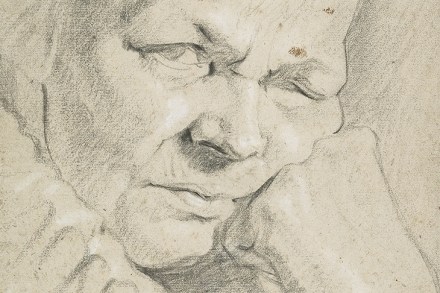
Some art can be made in solitude, straight out of the artist’s head. But portraiture is a game for two. That’s the lesson of The Encounter: Drawings from Leonardo to Rembrandt, a marvellous little exhibition at the National Portrait Gallery. It is essentially a medley of Old Master works on papers from various British collections — which might sound a little on the quiet side. But that would be the wrong conclusion: on the contrary it poses intriguing questions and is full of visual pleasures. [caption id="attachment_10230102" align="alignnone" width="530"] 'Head of an Elderly ManWearing a Cap, probably Mino da Fiesole' (c.

A tale of two artists

From our UK edition

Wherever one looked in the arts scene of the 1940s and ’50s, one was likely to encounter the tragicomic figure of John Minton. Whether he was dancing to the trad jazz of his pupil Humphrey Lyttelton — who recalled his style on the floor as ‘formidable and dangerous’ — or drinking at the Colony Room where Francis Bacon once poured champagne over his head, the painter and illustrator was ubiquitous. Even if he never produced a great picture, Minton deserves the exhibition at Pallant House, Chichester, marking the centenary of his birth, and the fine accompanying book by Frances Spalding and Simon Martin. In its way, failure can be as interesting as success, as well as more poignant.

American quartet

From our UK edition

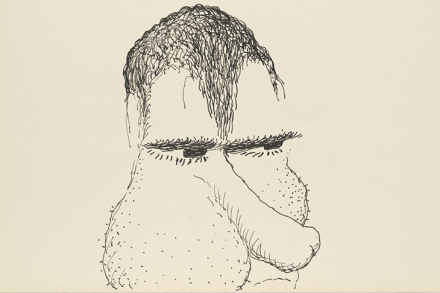
Politics and art can make for an awkward mix. Much more than with religious subjects it seems to matter whether the viewer shares the artist’s beliefs. But whatever you think of Richard M. Nixon, it would be hard not to enjoy Philip Guston’s satirical drawings of him and his cronies at Hauser & Wirth, Savile Row. These were the most exuberant, scatological, obsessive and imaginative such works since 1937 when Picasso produced an extraordinary strip-cartoon vilification and lampoon entitled ‘The Dream and Lie of Franco’. Indeed, the two series have a good deal in common. Picasso portrayed the Generalissimo as a sort of obscene, moustachioed set of bagpipes.

Tall story

From our UK edition

‘Everything is slow in Romania,’ said our driver Pavel resignedly, and, as it turned out, he was not exaggerating. He was taking us on a trip of about 150 miles, from Sibiu to Targu Jiu, to see the sculptures of Constantin Brancusi. Taking the faster route, we set off a little after 9 a.m. and arrived at about 2 p.m., stiffer, wearier and more comprehending of the reasons why, although Brancusi’s ‘Endless Column’ is among the most celebrated works of modernism, almost nobody — in the London art world, at least — has seen it. My inquiries suggested that an intrepid Tate curator had made it, but that was more than a decade ago.

The better angels of our nature

From our UK edition

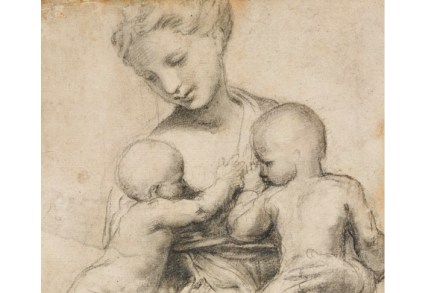
Late one afternoon, early in the year, I was walking through the Vatican Stanze with a small group of critics and art historians. While we were admiring the Raphael frescoes that fill these private apartments of the Renaissance popes, Matthias Wivel, curator of the Michelangelo & Sebastiano exhibition at the National Gallery, made the most eloquent case for the painter I have ever heard. Suddenly, I felt a new enthusiasm for Raphael. Essentially what he said is that Raphael is the supreme master of depicting human beings in interaction. Each of the frescoes around us, Wivel pointed out, was made up of a huge number of figures, all engaged with each other in fluently orchestrated groups.

Dealer’s choice

From our UK edition

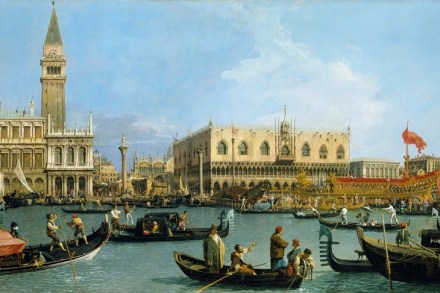
One evening a few weeks ago I was on my way to the opening of an exhibition at the Venice Biennale when I stopped for a moment in a quiet campo off the main drag. An elderly priest was standing on the steps of the church of Santa Maria della Fava in the weak sunshine. On impulse I stepped inside and he followed. For a while I looked at Piazzetta’s altarpiece, ‘The Madonna with St Philip Neri’ (c.1725). Then — as if silently to indicate that I should have a look at this too — the priest switched on the light to illuminate Giambattista Tiepolo’s ‘Education of the Virgin’ (c.1732)on the opposite side of the nave. It was indeed worth contemplating.

Being and nothingness | 25 May 2017

From our UK edition

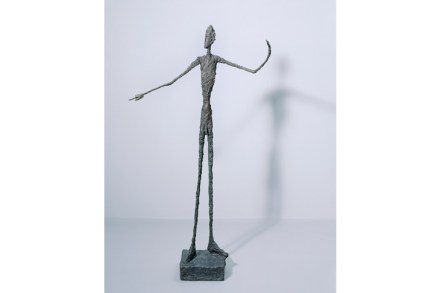
Size, of course, matters a great deal in art; so does scale — which is a different matter. The art of Alberto Giacometti (1901–66) illustrates the distinction. There are very few major artists who have produced objects so physically minuscule. But the smaller and thinner his people are, the vaster the space they seem to inhabit. That’s where scale comes in. There was a period of about five years, wrote his friend the critic David Sylvester, ‘when every figure Giacometti made (with one exception) ended up an inch high more or less.’ You encounter just such a work about halfway around Tate Modern’s big new Giacometti exhibition.

League of nations

From our UK edition

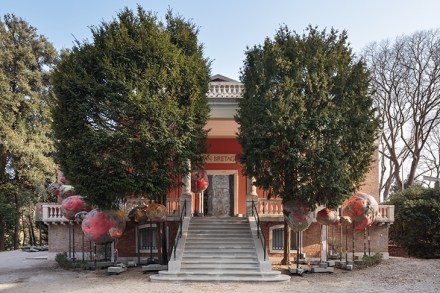
‘Are you enjoying the Biennale?’ is a question one is often asked while patrolling the winding paths of the Giardini and the endless rooms of the Arsenale. It is not easy to answer. The whole affair is so huge, so diverse and yet — in many ways — so monotonous. Like the EU, an organisation with which it has something in common, La Biennale di Venezia believes in the principle of subsidiarity. Therefore individual nations are allowed to do what they like within their own pavilions. However, there are also strong homogenising forces at work — so much of what is on view in the national pavilions and elsewhere tends to fall into certain approved categories: notably video art, photography (often rather dull) and messy installation.

Animal magnetism

From our UK edition

‘I frequently went to bullfights with Picasso,’ Sir John Richardson remarked, quite casually, as he showed me around the exhibition Picasso: Minotaurs and Matadors, which he was installing at the Gagosian Gallery, Grosvenor Hill. He mentioned this by way of explaining why a large and splendid linocut was inscribed to him by the artist: ‘à mon cher ami.’ They saw many fights together in the 1950s, either in Nîmes or Arles. Picasso took these occasions seriously. ‘If the fight was going well he was silent, concentrating totally. What he couldn’t stand was people talking. He would sigh and say, “Oh, I wish they’d shut up.” All around him people were shrieking if something went wrong, but he was absolutely cool as can be.

Put a spell on you

From our UK edition

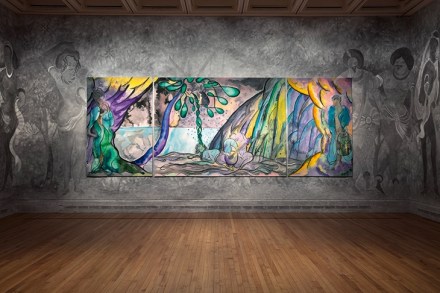
Many of the mediums from which art is made have been around for a long time. People have been painting on walls, for example, for about 40,000 years. Similarly, figures have been fashioned out of stone and metal for millennia, and still are. But if there is one ancient medium you might think was now definitely over and out, it would be tapestry. But no! In this era of artificial intelligence and omniscient Google, the ancient practice of painstakingly twining coloured wool into pictures is undergoing an unexpected revival. The latest contemporary artist to give tapestry a go is Chris Ofili. His exhibition Weaving Magic at the National Gallery gives some clues as to why he — and other figures such as Grayson Perry, Marc Quinn and Craigie Horsfield — find it appealing.

Constable on sea

From our UK edition

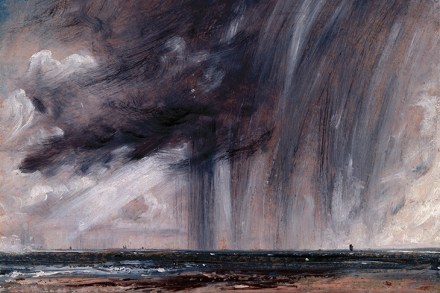
John Constable was, as we say these days, conflicted about Brighton. On the one hand, as he wrote in a letter, he was revolted by this marine Piccadilly, populated with: ‘ladies dressed & undressed — gentlemen in morning gowns and slippers on, or without them altogether about knee deep in the breakers — footmen — children — nursery maids, dogs, boys, fishermen’, all mixed together ‘in endless and indecent confusion’. On the other, as a brilliantly conceived little exhibition at the Brighton Museum & Art Gallery makes clear, the town was one of a small number of locations that were crucial to his art.

The good, the indifferent and the simply awful

From our UK edition

‘There is only one thing worse than homosexual art,’ the painter Patrick Procktor was once heard to declare at a private view in the 1960s. ‘And that’s heterosexual art.’ It would have been intriguing to hear his views on Queer British Art at Tate Britain. All the more so since it includes several of his own works, including a fine line-drawing study of the playwright Joe Orton, completely naked except for his socks — which he kept on because he felt they were sexy — and reclining somewhat in the manner of Manet’s Olympia. In fact, many of those included might have had reservations — Oscar Wilde, for example, one of whose characters observed, ‘The only artists I have ever known who are personally delightful are bad artists.

Cut it out

From our UK edition

How do you make a work of art? One method is to cut things up and stick them back together in a different order. That is, roughly speaking, the recipe for collage. Thus in 1934 Max Ernst snipped away at a pile of illustrations to 19th-century novels, reassembled them in an altered fashion, and came up with Une semaine de bonté — or A Week of Kindness — a surrealist novel in pictures. Some of its pages are displayed in The Ends of Collage, at Luxembourg & Dayan, 2 Savile Row, W1. In one a woman reclines on an ornate, neo-baroque bed, while all around the waves of the sea are rippling over her coverlet; in another a male leaps astonishingly high in a moonlit street, his head transformed into that of an enormous bird.

Internal affairs | 23 March 2017

From our UK edition

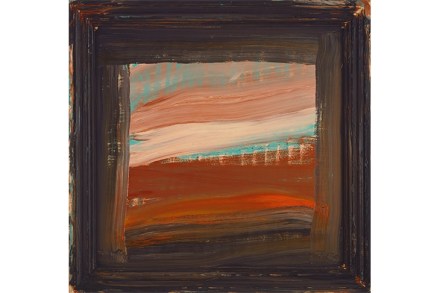
Over 20 years ago I wrote about Giambattista Tiepolo in The Spectator. Shortly afterwards I went to visit Howard Hodgkin in his spacious, white, light-filled studio close to the British Museum. It turned out that he had read my column and was pleased that someone had been discussing this 18th-century Venetian, who was just his idea of what a painter should be: a subtle master of colour, poetic, sensual, a bit neglected — in other words, much as he saw himself. The real subject matter of an artist such as Tiepolo, I suggested that day, is not really the Madonna or the apotheosis of some minor aristocrat. It is something more elusive and personal — such as the painter’s feelings about the charm of dogs, naked bodies or dreams of flying. ‘Yes,’ answered Hodgkin.

The odd couple | 16 March 2017

From our UK edition

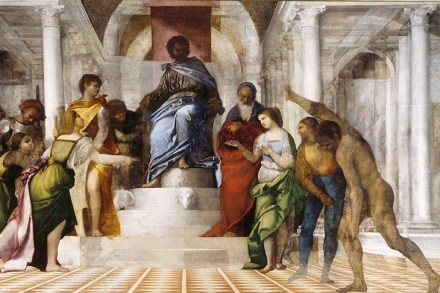
Only once did Michelangelo sign a sculpture. It was the ‘Pietà’ of 1497–1500, and he did so using an incomplete sentence in the past imperfect: ‘Michelangelo Buonarroti the Florentine was making…’. The implication was that actually completing a perfect masterpiece was an unattainable goal, so instead he just had to leave off (a great many artists still feel the same about finishing a picture). The ‘Pietà’ is included in Michelangelo & Sebastiano, a remarkably ambitious new exhibition at the National Gallery: not, of course, the original marble, which remains in St Peter’s, but a plaster cast from 1975.

Home help

From our UK edition

There have been many explanations for what happened in the Italian Renaissance. Some stress the revival of classical antiquity, others the rise of individualism. A pioneering exhibition at the Fitzwilliam Museum, Cambridge, Madonnas and Miracles: The Holy Home in Renaissance Italy, takes a different line. It’s all about the 15th- and 16th-century household — and the religious furnishings and fittings it contained. To a 21st-century eye some of these are distinctly bizarre. Early on, there is a painting of the ‘Madonna and Child’ by a follower of Filippo Lippi — just the kind of thing one expects to find in an art gallery. Underneath it is a brightly painted wooden figure of the infant Christ, very similar to the one in the picture.