Martin Gayford

Birth of a masterpiece

From our UK edition

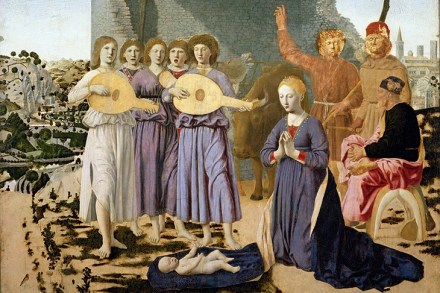
In the early 1370s an elderly Scandinavian woman living in Rome had a vision of the Nativity. Her name was Birgitta Birgersdotter, and she was later venerated as St Bridget of Sweden. In her account of the experience, transcribed by her confessor, she described herself as an eye witness. Her narrative began: ‘When I was present by the manger of the Lord in Bethlehem…’ Around a century later, Piero della Francesca (c.1412–92) used Bridget’s vision — or parts of it — as a starting point for a painting. This picture, now in the National Gallery, is one of the best-loved depictions of this immensely popular subject in the history of art. In some respects, Piero followed Bridget’s visionary account closely.

Clouds, storms and swirling stars

From our UK edition

The 20th-century painter Balthus once suggested that the author of a book about him began with the words: ‘Balthus is an artist about whom we know nothing; now let’s look at his works.’Actually, there are many important figures about whom we know nothing, or at least very little. Giovanni Bellini is a case in point. Information we don’t have about him includes when he was born, and even whether he was the younger sibling of Gentile Bellini — as is usually assumed — or in fact his uncle. The discovery a while ago of a Latin poem suggesting that in old age this artist of tranquilly thoughtful saints and Madonnas was in the habit of sleeping with a handsome young man has only complicated matters, though it does enliven his image.

The ex factor | 22 November 2018

From our UK edition

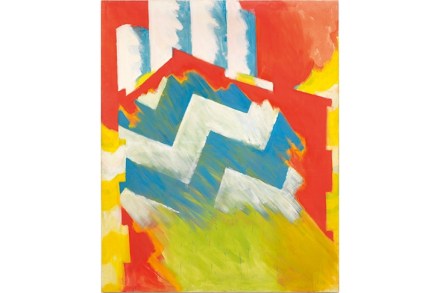
It is easy to assume that the contours of art history are unchanging, its major landmarks fixed for ever. Actually, like all histories it is a matter of shifting perspectives. As we move through time, the view backwards constantly alters. The rising and falling critical estimations of the painter Richard Smith are a case in point. Had you asked an art-world insider in 1963 who the brightest rising star of British art was there is a strong chance — though other names such as David Hockney might have been mentioned — that the answer would have been Smith (1931–2016). Appropriately, 1963 is the end date of an excellent little show at Hazlitt Holland-Hibbert gallery. This collates many of the most impressive pictures from Smith’s earliest and most seductive period.

Face time | 15 November 2018

From our UK edition

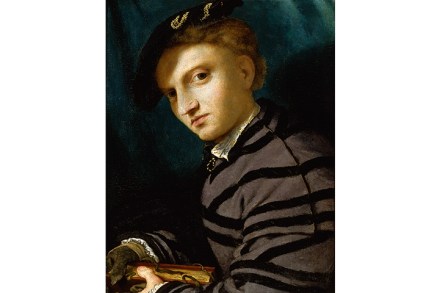
You can, perhaps, glimpse Lorenzo Lotto himself in the National Gallery’s marvellous exhibition, Lorenzo Lotto: Portraits. At the base of an altarpiece from 1541 a gaggle of paupers stretch their arms up in hopes of receiving the charity being handed out by Dominican friars above. One of these, a bearded, red-robed man, is supposed to be a self-portrait. If that is the case, it was a characteristic place to put himself. Lotto (1480/1–1556/7) was an intensely pious man and, in later life, poverty-stricken. But the most unusual point about this picture is that for the rest of the crowd of indigents he made studies from life of genuine poor people (and noted the modelling fee he paid them in his book of accounts).

The big sleep | 8 November 2018

From our UK edition

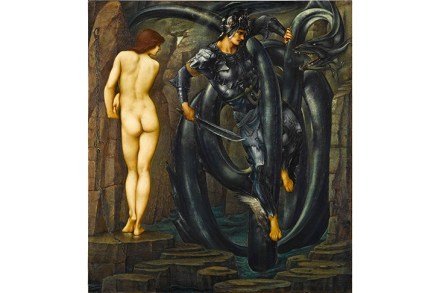
‘I want big things to do and vast spaces,’ Edward Burne-Jones wrote to his wife Georgiana in the 1870s. ‘And for common people to see them and say, “Oh! — only Oh!”’ That, however, was only the first part of my own reaction to the exhibition at Tate Britain of Burne-Jones’s works. Perhaps I’ve got a blind spot when it comes to B-J, but time and again I found myself thinking, ‘Oh no!’ Nonetheless, this comprehensive display and the accompanying catalogue give plenty of clues as to where he went wrong. Sir Edward Coley Burne-Jones (1833–98) followed an extremely unusual career path.

All together now | 18 October 2018

From our UK edition

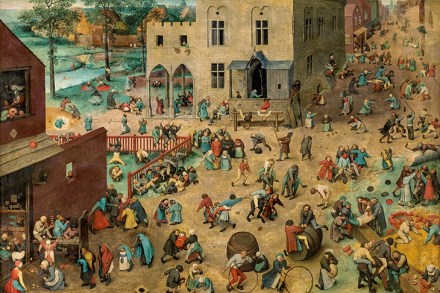
‘About suffering’, W.H. Auden memorably argued in his poem ‘Musée des Beaux Arts’, the old masters ‘were never wrong’. Great and terrible events — martyrdoms and nativities — took place amid everyday life, while other people were eating, opening a window or ‘just walking dully along’. As an example, Auden took ‘The Fall of Icarus’ by Pieter Bruegel the Elder. As it happens, Auden himself was wrong there, because the work he cited is no long thought to be by the painter after all. This picture is not, therefore, included in the exhibition Bruegel at the Kunsthistorisches Museum, Vienna.

Lost in the Pacific

From our UK edition

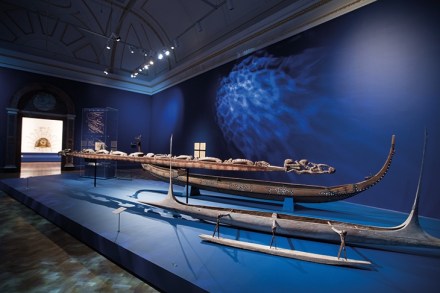
At six in the morning of 20 July 1888, Robert Louis Stevenson first set eyes on a Pacific Island. As the sun rose, the land ‘heaved up in peaks and rising vales’. The colours of the scene ‘ran through fifty modulations in a scale of pearl and rose and olive’, rising into ‘opalescent clouds’. The whole effect was a ‘suffusion of vague hues’ shimmering so that mountain slopes were hard to distinguish from the cloud canopy above. Oceania, the new exhibition at the Royal Academy devoted to the region’s arts and cultures, is almost as beautiful as that dawn landscape, and just about as difficult to make out with any precision. Nonetheless, it is full of the most marvellous things to see.

Doors of perception

From our UK edition

A reflection on still water was perhaps the first picture that Homo sapiens ever encountered. The importance of mirrors in the history of art has been underestimated. Alberti, Vasari and Leonardo recommended them as a tool for painters. Van Eyck delighted in them. Caravaggio had one in his studio. And they haven’t stopped fascinating artists. Shape Shifters, the new exhibition at the Hayward Gallery, might as well have been entitled ‘Modern Art through the Looking Glass’. Consequently, you see yourself all over the show, generally in surprising forms and positions. Early on, for example, you come across Anish Kapoor’s ‘Non-Object (Door)’ (2008), a rectangular block of highly polished stainless steel, each side of which is curved and convex.

Shock and gore

From our UK edition

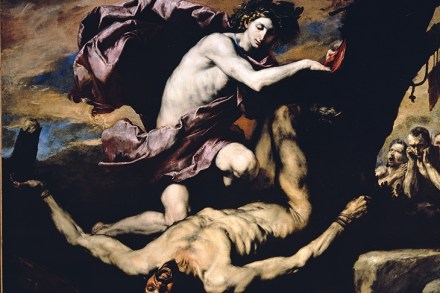
Last year my wife and I were wandering around the backstreets of Salamanca when we were confronted by a minor miracle. The iron gates of the convent of the Agustinas Descalzas — generally chained and padlocked — were ajar. Quickly we slipped through before they closed again. Inside was a vast 17th-century church, slightly dusty and completely deserted. On the high altar and the walls of the transepts were paintings by Jusepe de Ribera, a great master who is today half-forgotten. His art has seemed perhaps too gory, too dark — in short, too Catholic — to appeal to British tastes. But that may be about to change: next week, a Ribera exhibition opens at Dulwich Picture Gallery, the first ever seen in this country.

Hidden treasure | 30 August 2018

From our UK edition

In 1675 Lady Bedingfield wrote to Robert Paston, first Earl of Yarmouth. Never, she exclaimed, had she seen anything so fine as the latter’s mansion, Oxnead Hall. It was ‘a terrestriall paradise’, the ‘gardens so sweet — so full of flowers’, the house so clean. ‘Nor,’ she concluded, ‘did I ever in my life find anything in poetry or painting half so fine.’ Almost all this splendour vanished long ago. But its essence survives, compressed into a single painting, ‘The Paston Treasure’, currently the centrepiece of an exhibition at Norwich Castle Museum.

Horror show

From our UK edition

‘It is disastrous to name ourselves!’ So Willem de Kooning responded when some of his New York painter buddies elected to call themselves ‘abstract expressionists’. He had a point. Labels for movements — such as pop art, impressionism and baroque — are almost always misleading and seldom invented by the artists themselves. That was certainly the case with the idiom examined in a little exhibition at Tate Modern, Magic Realism: Art in Weimar Germany 1919-33. Actually, this rather heterogeneous assortment of painters has two tags.

Living the highly expensive life

From our UK edition

It was Le Corbusier who famously wrote that ‘A house is a machine for living in’ (‘Une maison est une machine à habiter’). But it was a visit to a masterpiece of his great rival among modernist architects — Ludwig Mies van der Rohe — that brought home to me how literally accurate that celebrated aphorism was. His Villa Tugendhat at Brno is one of the great monuments of early modernism. To run smoothly, however, this luxurious dwelling required almost as much machinery as a small ocean-liner. The building has been restored with rigorous scholarship to look exactly as it did when its first owners, Fritz and Grete Tugendhat, moved in 88 years ago.

Beasts from the East

From our UK edition

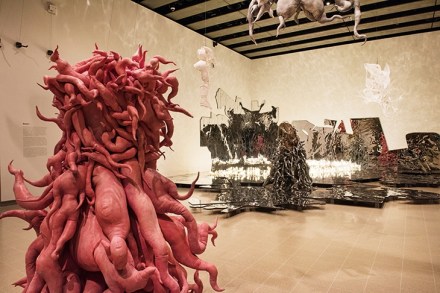
One area of life in which globalism certainly rules is that of contemporary art. Installation, performance, the doctrine of Marcel Duchamp, conceptualism — nowadays these flourish throughout the world and nowhere more so than in the Far East. Plenty of evidence for this is on view in an exhibition at the Hayward Gallery by the South Korean artist Lee Bul. But though the idioms are familiar, the works themselves can seem outlandish to an occidental eye. Just inside the door you are confronted by a sculpture entitled ‘Monster: Pink’ (2011). It looks like one of those oddly shaped vegetables that are sometimes displayed at village fêtes — but running riot on a monumental scale and sprouting innumerable carrot-like tubers.

Roll out the barrels

From our UK edition

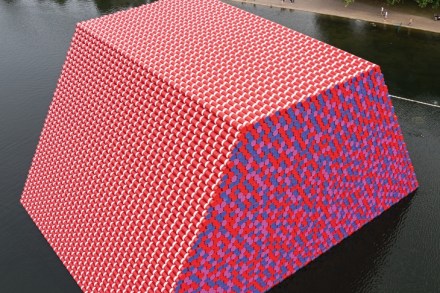
It’s not a wrap. This is the first thing to note about the huge trapezoid thing that has appeared, apparently floating, on the Serpentine Lake. Many of the projects by the artists who conceived it, Christo and his late wife and collaborator Jeanne-Claude, have involved bundling something up in a temporary mantle. The items thus packaged over the years include a naked woman (in Düsseldorf, 1964), the Pont Neuf (1985) and, famously, in 1995, the Reichstag. This London work, however, is the product of an equally long-running obsession with the barrels in which oil is stored and transported. At first, and second, glance, these objects lack charm.

A self examined

From our UK edition

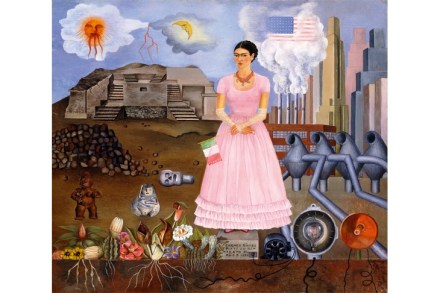
In 2004 Mexican art historians made a sensational discovery in Frida Kahlo’s bathroom. Inside this space, sealed since the 1950s, was an enormous archive of documents, photographs and personal possessions. This hoard forms the basis of Frida Kahlo: Making Herself Up, an exhibition at the V&A. Oscar Wilde once remarked that ‘one should either be a work of art or wear a work of art’. Kahlo opted for both, and she didn’t stop there. Though she was a Marxist who numbered Trotsky among her many lovers, she also channelled the role of saint and martyr. She was neater than Francis Bacon, whose studio-floor detritus has also been subjected to zealous forensic analysis — but the clutter Kahlo left behind her was similarly eclectic.

The good, the bad and the ugly | 21 June 2018

From our UK edition

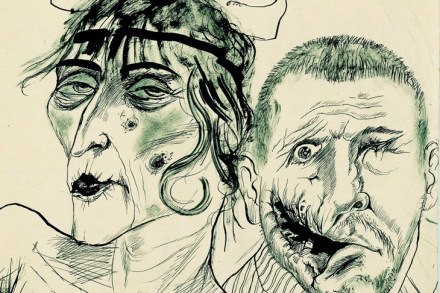
Some disasters could not occur in this age of instant communication. The first world war is a case in point: 9.7 million soldiers died, 19,240 British on 1 July, 1916, the first day of the Battle of the Somme, alone. If all that had been seen on social mediaand rolling news threads, public opinion would have shifted immediately. A hundred years ago, however, the sheer awfulness of what was happening took more time to sink in. Aftermath, an exhibition at Tate Britain, deals not so much with the art of the war itself as with the shocked and grieving era that followed the cataclysmic conflict: post-war art. The horrors of the fighting continued to haunt artists on all sides, but not with equal force in every combatant country.

Minor key

From our UK edition

‘When I’m on good form,’ Edward Bawden told me, ‘I get to some point in the design and I laugh and talk — and if I’m laughing, it probably means the work is rather good.’ You can see his exuberance everywhere in the exhibition of his work at Dulwich Picture Gallery. It is a thoroughly jolly affair, but it also raises a delicate question: was Bawden (1903–89) really a serious artist? He was certainly a tricky one to pigeon-hole. Bawden is, deservedly, one of the most popular of 20th-century Britishartists. But when one thinks of him, it is hard to bring a major work to mind — much harder than in the case of his mentor Paul Nash or fellow-student and friend Eric Ravilious.

Academic questions

From our UK edition

What is the Royal Academy? This question set me thinking as I wandered through the crowds that celebrated the opening of the RA’s new, greatly extended building. After all, there is nothing else quite like this institution anywhere else in the world. It was a terrific party: a mêlée of artists, journalists, politicians and media types such as I have not seen since the inauguration of Tate Modern 18 years ago (with the unexpected addition of DJs and high-volume music). The whole gang was there, and rightly so. This is a significant addition to the amenities of London, including, among other things, two new suites of galleries at 6 Burlington Gardens, behind Burlington House.

Rock stars

From our UK edition

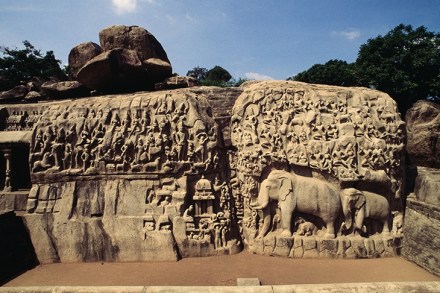
In Tamil Nadu we found that we were exotic. Although there were some other western tourists around, in most of the places the great majority of visitors were Indian. My wife Josephine, who is tall and fair-haired, appeared to be particularly unusual-looking. As we walked around a temple, she would frequently be invited to pose for photographs with groups of sari-clad women. Exoticism is one of those qualities that exists in the eye of the beholder. To western Europeans, this area at the tip of the Indian triangle has been the epitome of that quality for more than 2,000 years. The Romans came here, and some even settled — the Apostle Thomas for one. We saw his tomb and basilica in Chennai.

A whiff of wine and garlic

From our UK edition

I have occasionally mused that there is plenty of scope for a Tate East Anglia — a pendant on the other side of the country to Tate St Ives. If ever that fantasy came to pass, the collection would include — in addition to Grayson Perry, Edward Bawden, Eric Ravilious, and John Wonnacott, contemporary master of the Thames Estuary — a section on Sir Cedric Lockwood Morris. The more one delves into the history of modern art in Britain — indeed, into art history in general — the more one discovers that many reputations are still free-floating. Morris’s is certainly one of these: there is no consensus as to how good he was as a painter, nor as to how he fits into the wider story.