Martin Gayford

Snap happy

From our UK edition

These days the world is experiencing an unprecedented overload of photographs, a global glut of pictures. More and more are taken every day on smartphones and tablets. They zip around the world by the billion. When I went to Wolfgang Tillmans’s exhibition at Tate Modern, the galleries were full of people taking snaps of the exhibits. Some visitors posed to have their pictures taken in front of the larger ones — huge photographic prints of such diverse subjects as the waves of the Atlantic Ocean, a weed growing in a London garden and a hugely enlarged close-up of a male bottom. These, and a great many more, are shown in galleries with a messy, provisional look, more like a classroom or workshop than a conventional exhibition of art.

American psyche

From our UK edition

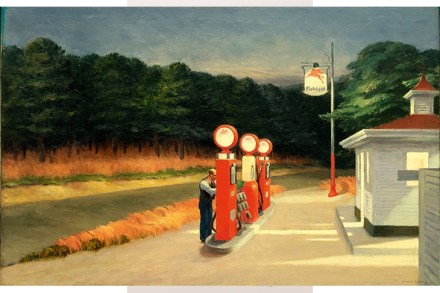
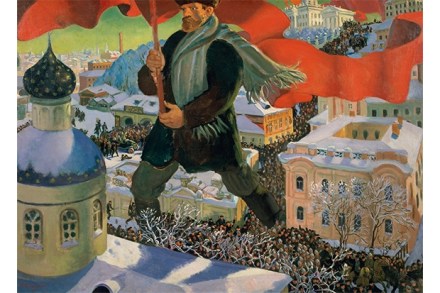
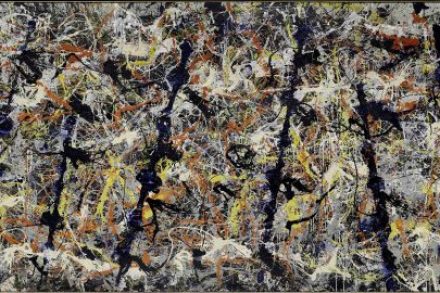
The latest exhibition at the Royal Academy is entitled America after the Fall. It deals with painting in the United States during the 1930s: that is, the decade before the tidal surge of abstract expressionism. So this show is a sort of prequel to the RA’s great ab ex blockbuster of last autumn. It might have been called, ‘Before Jackson Began Dripping’. Not much in this selection, though, can compare to the power of the abstract expressionists at their peak in the Forties and Fifties — not even an early work by Pollock himself. But it does include a couple of masterpieces by Edward Hopper, plus several pictures so brashly over the top as to be quite interesting, several others that are simply terrible — and one of the world’s most familiar images.

The good, the bad and the ugly

From our UK edition

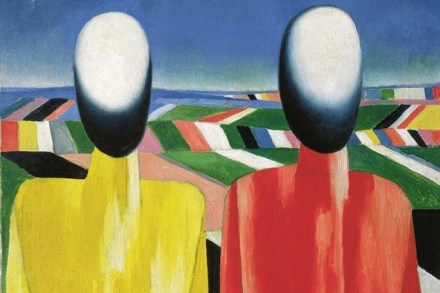
Vladimir Putin notoriously declared the collapse of the Soviet Union in 1989 to be one of the greatest disasters of the 20th century. However, as Revolution: Russian Art 1917–32 — an ambitious exhibition at the Royal Academy — helps to make clear, the true catastrophe had occurred 82 years earlier, in 1917. Like many of the tragedies of human history, the Russian revolution was accompanied, at least in the early stages, by energy, hope and creativity as well as by murderous cruelty and messianic delusion.

Seeing everything in black and white

From our UK edition

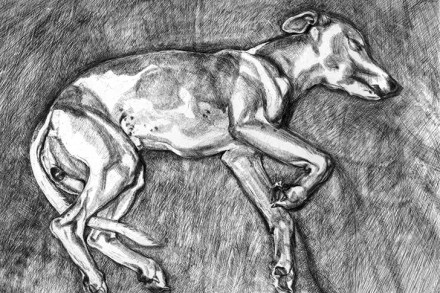
Two divergent approaches to printmaking are on view in an exhibition of graphic work by Francis Bacon and Lucian Freud at Marlborough Fine Art, Albemarle Street. For the former, media that depend on line, such as etching, were of little interest, since — as his friend Freud would point out — Francis couldn’t draw very well. But, Freud would add, Bacon’s painting was so brilliant that he made you forget that limitation. Bacon’s prints were essentially reproductions of his oils, signed and numbered by the artist. The etchings Freud made in the last three decades of his life were not like that at all. Though the models for the etchings were often the same as those for his paintings, his approach was entirely distinct.

Whited sepulchre

From our UK edition

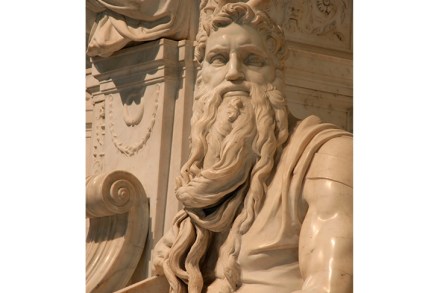
‘How often’, wrote Sigmund Freud in 1914, ‘have I mounted the steep steps from the unlovely Corso Cavour to the lonely piazza where the church stands, and have essayed to support the angry scorn of the heroic glance.’ The gaze that the founder of psychoanalysis struggled to withstand belonged to Michelangelo’s Moses, centrepiece of the tomb of Julius II in the basilica of San Pietro in Vincoli. Michelangelo’s Moses has indeed a look of formidable authority. The prophet possesses, in addition, the physique of a body-builder, a beard that cascades like Niagara Falls and a pair of knees for which the best adjective is also ‘heroic’.

The only way is up | 26 January 2017

From our UK edition

Michael Andrews once noted the title of an American song on a scrap of paper: ‘Up is a Nice Place to Be.’ Then he added a comment of his own: ‘The best.’ This jotting was characteristic in more than one way. A splendid exhibition at the Gagosian Gallery, Grosvenor Hill, London, makes it clear that Andrews was — among other achievements — a supreme aerial painter. No one else has better caught the sensation of floating, to quote another song from the Sixties, up, up and away. It was also typical of Andrews that his addition to that title was only two words — but it makes a big difference. His paintings are like that. At first, there may seem not to be much there. ‘Lights VII: A Shadow’ (1974) is almost a painting of nothing at all.

Great leaps forward

From our UK edition

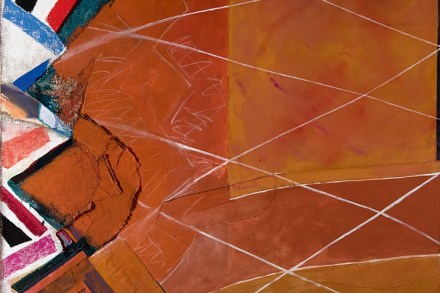
In the 1940s Lucian Freud took another young painter, Sandra Blow, up to the top of a bombed church in Soho. There were just two prongs of masonry left and Lucian promptly launched himself through space from one to the other. ‘You can’t possibly expect me to do that,’ she exclaimed. ‘Just think of it as if you were on the escalator in Selfridges,’ he replied. History does not relate whether she was persuaded by this comforting analogy, but as a small exhibition at the Fine Art Society demonstrates, Blow (1925–2006) spent the rest of her career making jumps. These were mainly of the visual and stylistic variety. There is an exhilarating feeling of rushing through air about ‘Stripes’ (1978), for example.

Shape shifter | 12 January 2017

From our UK edition

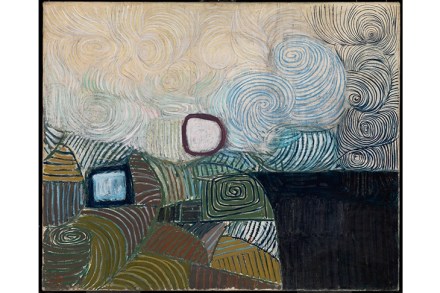
Victor Pasmore once told me how he greeted Pablo Picasso at Victoria station. The great man had come to Britain in 1950 to attend a communist-sponsored peace congress in Sheffield. In person Pasmore found him surprisingly different from the solemn art-historical giant suggested by books. ‘He did nothing but joke all the time, non-stop, and he was no more a communist than the local fairy.’ Instead, Pasmore felt, ‘Picasso was 100 per cent anarchist.’ Something similar could be said about Pasmore himself, as can be seen from a fine exhibition devoted to his work from the 1930s to the ’60s at the Djanogly Gallery, Nottingham (moving on to Pallant House, Chichester, on 11 March). Few artists made more abrupt stylistic swerves.

Back in the USSR

From our UK edition

For much of 1517 Michelangelo Buonarroti was busy quarrying marble in the mountains near Carrara. From time to time, however, he received letters relating how his affairs were going in Rome. These contained updates on — among other matters — how his friend and collaborator Sebastiano del Piombo was getting on with a big altarpiece which he hoped, with Michelangelo’s help, would vanquish their joint rival, Raphael. This picture, ‘The Raising of Lazarus’, has been in the National Gallery for almost 200 years now (it is No. 1 in the inventory of the collection). Next March it will be one of the centrepieces in an ambitious exhibition that inaugurates the new North Galleries, Michelangelo & Sebastiano: A Meeting of Minds (15 March–25 June).

O come, let us adore him

From our UK edition

On 27 July 1613 a man prostrated himself in the church of San Pedro Mártir in Toledo, having first made a solemn declaration: ‘I, Juan Bautista Maíno, make profession and promised obedience...’ Thus he became a Dominican friar. At the time, Maíno was halfway through painting ten canvases for the high altar of this very same church. Two of these, the most glorious and seasonally apposite, are currently on loan from the Prado and on show in Room 1 at the National Gallery (until 29 January). They open a window on to a little-known episode in Spanish art — and the spiritual life of an intriguing man.

Trivial pursuits | 1 December 2016

From our UK edition

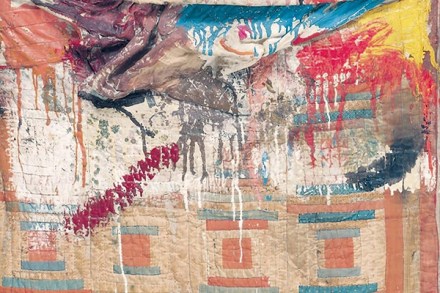
Robert Rauschenberg, like Autolycus in The Winter’s Tale, was a ‘snapper-up of unconsidered trifles’. Unlike Shakespeare’s character, however, he made them into art. Rauschenberg’s most celebrated piece, ‘Monogram’, on view in the grand retrospective of his work at Tate Modern, comprises, among other bits and pieces, a rubber shoe heel, a tennis ball, and a car tyre-plus-oil paint on stuffed angora goat. Next to it is another amalgam from the mid-Fifties, incorporating ‘paint, paper, fabric, printed paper reproductions, sock and army-issue flare parachute on canvas’.

The beast in man

From our UK edition

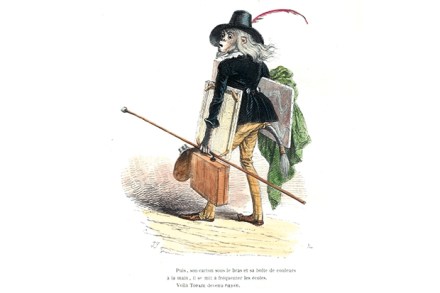
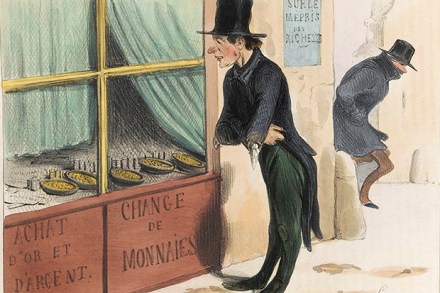
Ernest Hemingway loved going to the zoo, but not on Sundays. The reason, he explained, was that, ‘I don’t like to see the people making fun of the animals, when it should be the other way around.’ He would probably have enjoyed Animality, an entertaining exhibition at Marian Goodman Gallery, Lower John St, W1. It contains quite a few jokes, but generally the laugh is on Homo sapiens. The humour tends to comes from an age-old ploy: birds, reptiles and mammals wearing clothes. It was the basis, for example, of many works by the caricaturist J.J. Grandville of cats, bears and other such fauna dressed up as early 19th-century French citizens.

A choice of art books | 24 November 2016

From our UK edition

Suitably for a year so full of cataclysms and disturbing portents, 2016 is the quincentenary of the death of Hieronymus Bosch. He was of course the supreme painter of hell, with choking darkness, livid flames and the most grippingly monstrous menagerie of devils in the history of art — duck-billed figures on skates, demons with bat’s wings, lizard’s claws and cat’s whiskers. His panoramic vista of naked humanity inflamed by desire in ‘The Garden of Earthly Delights’ features giant birds and fruit, weird mineral formations, and — in one case — a couple making love in a cosy mussel shell.

Will the real Van Gogh please stand up

From our UK edition

Vincent van Gogh spent a remarkably short span of time in the southern French town of Arles. The interval between him stepping off the train from Paris on 20 February 1888 and his departure for the asylum at Saint-Rémy on 8 May the following year was a scant 14-and-a-half months. For some of this time the painter was hospitalised and seriously ill, yet in this brief period he produced not just one, but several of the greatest pictures in the history of art. It might be thought that there was nothing more to discover about Vincent in Arles, a subject that has been so discussed, investigated, dramatised and filmed over the years. But this year a flurry of fresh information has appeared.

Enigma variations | 3 November 2016

From our UK edition

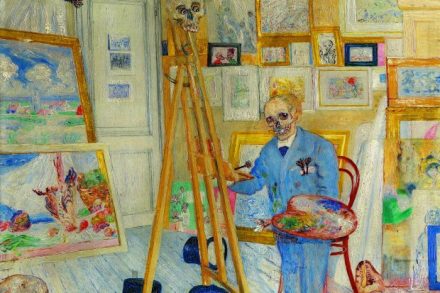
On 2 August 1933 one of the more improbable meetings of the 20th century took place when Albert Einstein had lunch with James Ensor. Apparently, Einstein attempted to explain his theory of relativity to Ensor, who doesn’t seem to have understood it. That evening the painter gave a speech, entitled ‘Ensor to Einstein’, ending with a sort of apology. Painters, he exclaimed — ‘alas and alack!’ — were slaves to vision and resistant to ‘positive reason, to calculations, to probabilities’. However, Intrigue: James Ensor by Luc Tuymans at the Royal Academy is an exhibition that is subject to the principle of relativity.

Romantic modern

From our UK edition

In 1932 Paul Nash posed the question, is it possible to ‘go modern’ and still ‘be British?’ — a conundrum that still perplexes the national consciousness more than 80 years later. It is true that the artist himself answered that query with an emphatic ‘yes’. But, as the fine exhibition at Tate Britain makes clear, his modernism was deeply traditional. The truth is that Nash (1889–1946) was what the author Alexandra Harris has termed a ‘romantic modern’. In other words, his art was a characteristic Anglo-Saxon attempt to have things both ways. Equally typically, he managed to do so — but only some of the time. Nash’s early drawings and watercolours, done in his early twenties, reveal his starting point.

Face time

From our UK edition

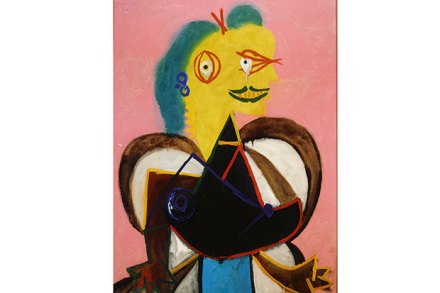
As a chat-up line it was at least unusual. On 8 January 1927, a 46-year-old man approached a young woman outside the Galeries Lafayette department store in Paris and announced, ‘You have an interesting face; I would like to do your portrait. I feel we are going to do great things together.’ The approach was successful, even though the woman in question, Marie-Thérèse Walter, was bewildered by his subsequent announcement, ‘I am Picasso!’, since she had never heard of the famous artist. Undeniably, great works did result from this chance meeting — as well as an intense affair, which lasted for years. Several are included in the splendid Picasso Portraits exhibition at the NPG.

Overshadowing all the rest

From our UK edition

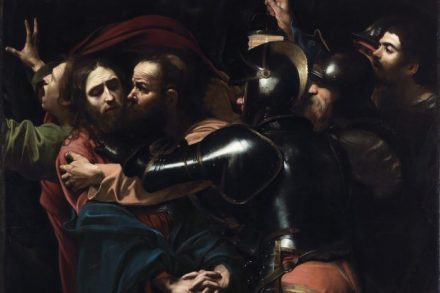
We don’t know what Caravaggio himself would have made of Beyond Caravaggio, the new exhibition at the National Gallery which is devoted to his own work and that of his numerous followers. But, by chance, we do have a very good idea what he would have said at least of one exhibit: ‘The Ecstasy of St Francis’ (1601) by Giovanni Baglione. Two years after this was painted, in 1603, Caravaggio stated in a disposition to a Roman court that he didn’t know of any other artist ‘who thinks Giovanni Baglione is a good painter’. Very few of Caravaggio’s own words survive, and those that do are mainly in the records of legal cases in which he was involved. But these are enough to give an idea of his demeanour.

American beauty | 29 September 2016

From our UK edition

‘At last,’ wrote Patrick Heron, a British painter, in 1956, ‘we can see for ourselves what it is to stand in a very large room hung with very large canvases by Jackson Pollock, Willem de Kooning, Mark Rothko, Clyfford Still, Franz Kline and others.’ Just over 60 years later, we, too, can stand in a series of grand galleries at the Royal Academy’s Abstract Expressionism and see what Heron saw, and much more. He was at the (greatly anticipated) first showing of those fabled American artists in Britain. Since then, they have frequently been exhibited individually, but there has been just one collective show of the movement. Now Pollock, de Kooning and co. are back in town. Cumulatively, the result is majestic, exhilarating and visually overpowering.

Root and branch

From our UK edition

Eventually,’ said Michelangelo Pistoletto, ‘it became a movement. In fact, I believe that arte povera was the last true movement. Since then all artists have been individuals.’ We were sitting one baking hot day last month in his cool study in Biella, a small town in the foothills of the Alps where he has established a huge museum and foundation in a series of disused 19th-century textile mills. He was discussing the group of Italian artists of the 1960s of which Pistoletto himself was a founding member. Arte povera is an umbrella phrase that covers a number of diverse artists, several of them marvellous, who emerged in Italy about half a century ago. What they had in common was more a mood than a style exactly.