Martin Gayford

Repeat prescription

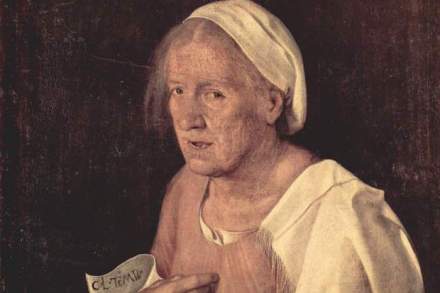
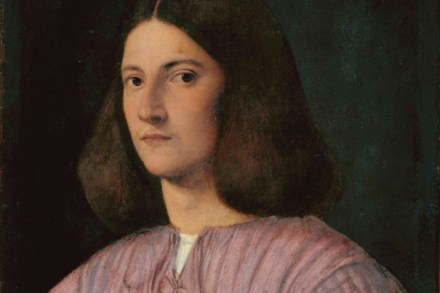
Walter Sickert was once shown a room full of paintings by a proud collector, who had purchased them on the understanding that they were authentic Sickerts. The painter took one look around, then announced genially, none of these are mine, ‘But none the worse for that!’ Were Giorgione to return to life, and take a stroll around the Sackler Galleries at the Royal Academy, he might echo those words. Few of the works on show, in all probability, were actually executed by Giorgione, but they are none the less magnificent for that. This is — wisely — not an exhibition that attempts to reassemble the artistic personality of that enigmatic figure (there have been quite a few of those over the years).

Paranormal activity

In 1896, a group of five young Swedish women artists began to meet regularly in order to access mystical zones beyond the confines of mundane everyday reality. Every Friday, they would gather in order to contact the incorporeal beings they called ‘spirit world leaders’ or ‘High Masters’; among these were five named Ananda, Clemens, Esther, Gregor and Amaliel. In 1904, during a séance, Amaliel instructed one of the artists, Hilma af Klint, to make paintings ‘on the astral plane’ representing the ‘immortal aspects of man’. Many of the results of this occult commission are on display in Painting the Unseen, a new exhibition at the Serpentine Gallery.

Hellzapoppin’

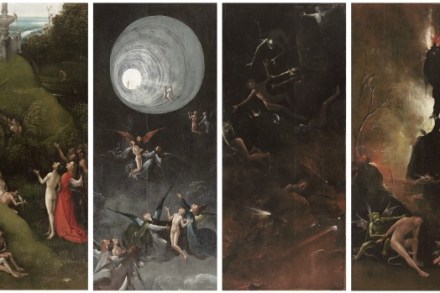
The 20th-century painter who called himself Balthus once proposed that a monograph about him should begin with the words ‘Balthus is a painter of whom nothing is known. Now let us look at the pictures.’ But while Balthus may have felt that far too much was known about his private life, Hieronymus Bosch is an artist about whom we truly know if not exactly nothing then very little that is personal or revealing. He adopted his name from his native town, ’s-Hertogenbosch, where his death 500 years ago is marked by a superb exhibition. Bosch (c.1450–1516) was christened Jheronimus — alternatively Joen or Jeroen — van Aken, came from a family of painters and died, perhaps of an epidemic disease, aged about 65.

Whodunnit?

On 7 February 1506, Albrecht Dürer wrote home to his good friend Willibald Pirckheimer in Nuremberg. The great artist was having a mixed time in Venice: on the one hand, as Dürer explained, he was making lots of delightful new acquaintances, among them ‘good lute-players’ and also ‘connoisseurs in painting, men of much noble sentiment and honest virtue’. However, there was also a very different type lurking in the early 16th-century Serenissima: ‘the most faithless, lying, thievish rascals such as I scarcely believed could exist on earth’. Dürer hints that among these latter were painters, perhaps including some whose works will be seen in a forthcoming exhibition at the Royal Academy, In the Age of Giorgione.

‘So quick and chancy’

When asked the question ‘What is art?’, Andy Warhol gave a characteristically flip answer (‘Isn’t that a guy’s name?’). On another occasion, however, he produced a more thoughtful response: ‘Does it really come out of you or is it a product? It’s complicated.’ Indeed, it’s those complications that make Warhol’s works compelling, as is demonstrated by a new exhibition at the Ashmolean Museum, Oxford. One is that it is hard to tell how much he was really in control. When you look at one of his pictures, are you really looking at the work of his assistants or, indeed, of chance? And the way he forces you to think about that makes you ponder other kinds of art as well.

Show me the Monet

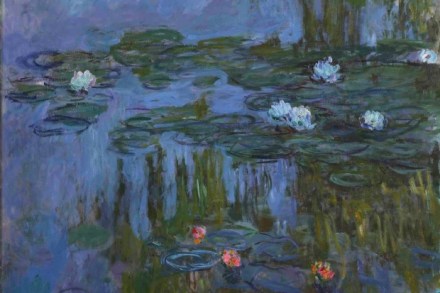
Philip Larkin once remarked that Art Tatum, a jazz musician given to ornate, multi-noted flourishes on the keyboard, reminded him of ‘a dressmaker, who having seen how pretty one frill looks, makes a dress bearing ninety-nine’. If you substitute paintings of flower-beds and dappled sunlight for chromatic keyboard runs, something similar is true of the new blockbuster at the Royal Academy, Painting the Modern Garden. That, however, is only half the verdict on this curious affair. It is a show that feels a bit overblown — like a visit to an enormous Victorian conservatory — but contained inside it is another, triumphantly successful exhibition that is inspiring, exalting and almost entirely about Claude Monet.

Wild at heart | 21 January 2016

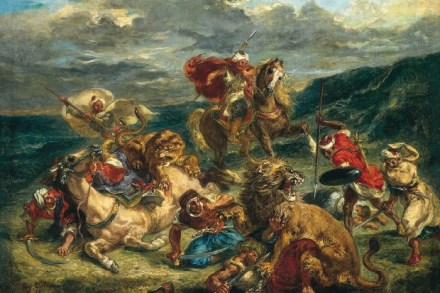
At the Louvre the other day there was a small crowd permanently gathered in front of Delacroix’s ‘Liberty Leading the People’. They constantly took photographs of the picture itself, and sometimes of themselves standing in front of it. No such attention was given to the other masterpieces of French painting hanging nearby, including many by Delacroix. This painting from 1830 — with its glamorous, bare-breasted personification of liberté, Tricolore in hand, followed by heroic representatives of the working and middle classes — has become an international shorthand for France itself.

Disciple of Duchamp

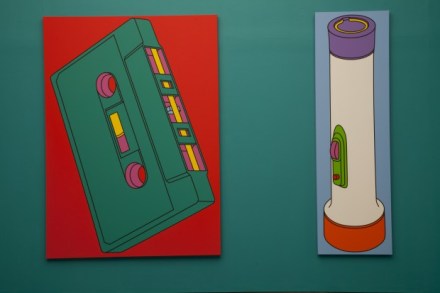
Michael Craig-Martin has had a paradoxical career. He is, I think, a disciple of Marcel Duchamp. But the latter famously gave up painting in favour of something more conceptual — ready-mades and whatnot — whereas Craig-Martin began with Duchampian concepts. He once exhibited a glass of water on a shelf together with a claim that he had mentally transformed these, by a kind of transubstantiation, into an oak tree. Then he metamorphosed himself into a still-life painter. As his current exhibition at the Serpentine demonstrates, for nearly 40 years Craig-Martin’s staple subject-matter has been everyday tools, gadgets and accessories.

Moving statues

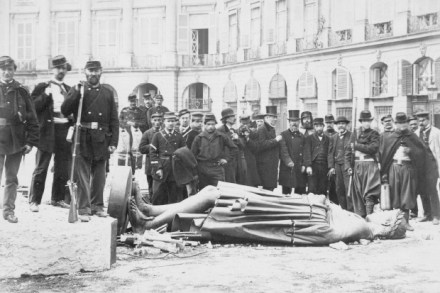
One of the stranger disputes of the past few weeks has concerned a Victorian figure that has occupied a niche in the centre of Oxford for more than a century without, for the most part, attracting any attention at all. Now, of course, the Rhodes Must Fall campaign is demanding that the sculpture — its subject having been posthumously found guilty of racism and imperialism — should be taken down from the façade of Oriel College. The controversy is a reminder of the fact, sometimes forgotten by the British, that public statues are intensely political. This was clear — until quite recently, at least — when one drove into the Syrian city of Hama. There, dominating a roundabout, was a large bronze representation of the late President Hafez al-Assad.

Best in show | 31 December 2015

Until a decade and a half ago, we had no national museum of modern art at all. Indeed, the stuff was not regarded as being of much interest to the British; now Tate Modern is about to expand vastly and bills itself as the most popular such institution in the world. The opening of the new, enlarged version on 17 June — with apparently 60 per cent more room for display — will be one of the art world events of the year. But, like all jumbo galleries, it will face the question: what on earth to put in all that space? Essentially, there are two answers to that conundrum. Give the public what they want, or — alternatively — what you think they ought to see.

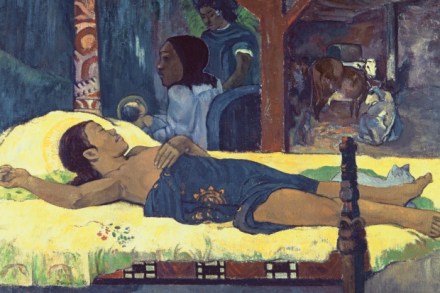
Why would a dissolute rebel like Paul Gauguin paint a nativity?

A young Polynesian woman lies outstretched on sheets of a soft lemon yellow. She is wrapped in deep blue cloth, decorated with a golden star. Beside her bed sits a hooded figure, apparently an older woman, holding a baby. In the background is a huddle of resting cows, suggesting that the setting is a barn or stable. There is something familiar about the set-up — baby, young mother, farm animals — but it may take a while to notice certain details. The head of the woman on the bed is encircled by an area of darker yellow, which forms a sort of halo, and the baby’s head is similarly ringed with green. A subsidiary figure standing in the shadows has an odd protuberance, which looks a little like a wing.

In a class of their own

Painters and sculptors are highly averse to being labelled. So much so that it seems fairly certain that, if asked, Michelangelo would have indignantly repudiated the suggestion that he belonged to something called ‘the Renaissance’. Peter Blake is among the few I’ve met who owns up to being a member of a movement; he openly admits to being a pop artist. The odd thing about that candid declaration is that I’m not sure he really is one. A delightful exhibition at the Waddington Custot Gallery presents Blake in several guises, including photorealist and fantasist, but — although one of the exhibits is an elaborate shrine in honour of Elvis Presley — ‘pop’ is not the term that comes to mind.

Artistic taste is inversely proportional to political nous

‘Wherever the British settle, wherever they colonize,’ observed the painter Benjamin Robert Haydon, ‘they carry and will ever carry trial by jury, horse-racing and portrait-painting.’ This doesn’t sound like a bad set of cultural baggage, even for those who don’t care for the races. There is clearly a lot to be said for trial by jury, and portraits make up the most enjoyable — in fact, downright humorous — section of Artist & Empire, a curious new exhibition at Tate Britain. Not, of course, that Tate approaches this subject in a playful spirit. At the entrance, a hand-wringing text declares that the British empire’s ‘history of war, conquest and appropriation is difficult, even painful to address’.

Artificial life | 19 November 2015

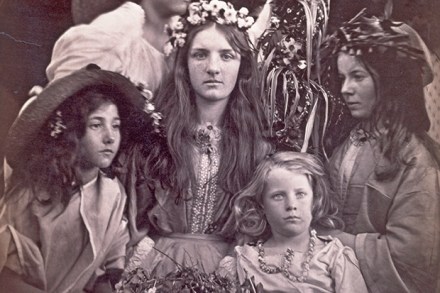
One day Julia Margaret Cameron was showing John Ruskin a portfolio of her photographic portraits. The critic grew more and more impatient until he came to a study of the scientist Sir John Herschel in which the subject’s hair stood up ‘like a halo of fireworks’. At this point, Ruskin slammed the portfolio shut and Cameron thumped him violently on the back, exclaiming, ‘John Ruskin, you are not worthy of photographs!’ He was indeed smackingly wrong to dismiss her work, as visitors to an exhibition at the V&A celebrating the 200th anniversary of her birth will be able to see for themselves. There are multiple ironies underlying this spat (they happily made up by lunchtime). Ruskin disapproved — officially speaking, at least — of photography.

The man who made abstract art fly

One day, in October 1930, Alexander Calder visited the great abstract painter Piet Mondrian in his apartment in Paris. The Dutch artist had turned this small space on rue du Départ, which also doubled as his studio, into a walk-in work of art. Even his gramophone, painted bright red, had become a note of pure form and colour. Calder was impressed by the squares and oblongs of the pictures all around. But he also asked a question: wouldn’t it be fun to make these rectangles move? With a perfectly straight face Mondrian replied that this wasn’t necessary: ‘My paintings are already very fast.’ As I walked around Performing Sculpture, the new Calder exhibition at Tate Modern, I mused on which of them had got the better of this exchange.

M.C. Escher: limited, repetitive, but he deserves a place in art history

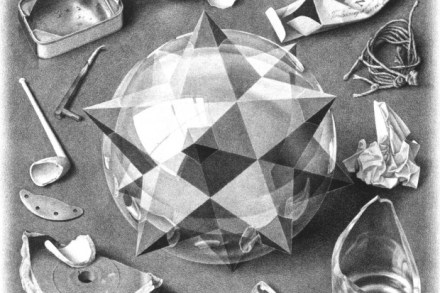
‘Surely,’ mused the Dutch artist M.C. Escher, ‘it is a bit absurd to draw a few lines and then claim: “This is a house.”’ He made a good point. That is what almost all artists since the days of Lascaux have done: put down some splodges of paint or a line or two and proclaimed, ‘This is a bison’, ‘This is a man’, ‘This is Mona Lisa’. One of the aims of Escher’s work, which is currently displayed in an exhibition at Dulwich Picture Gallery, was to undermine such pretensions to represent reality. At first glance, his images often seem meticulously, even aridly factual.

Repetitive but compelling: Giacometti at the National Portrait Gallery reviewed

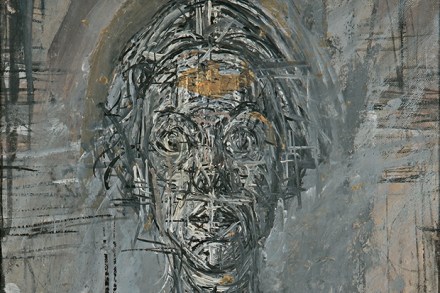
One day in 1938 Alberto Giacometti saw a marvellous sight on his bedroom ceiling. It was ‘a thread like a spider’s web, but made of dust’, an object that was both ‘very, very fine’ and in constant motion, like a snake except that ‘no animal’, he thought, had ever made such movements: ‘light and sweeping and always different’. This was, you might say, a revelation of the beauty that lay in extreme thinness and fragility. In Giacometti: Pure Presence at the National Portrait Gallery you see that process of attenuation occurring, in different ways, again and again in his art.

With this Tate Britain exhibition, Frank Auerbach joins the masters

No sooner had I stepped into the private view of Frank Auerbach’s exhibition at Tate Britain than I bumped into the painter himself. Auerbach was standing, surrounded by his pictures of 60 years ago, but he immediately started talking instead about Michelangelo. Of course, it is generally safe to assume that when artists talk about other artists they are also reflecting, at second hand, on their own work. And so it was in this case. Michelangelo, Auerbach pointed out, had stingingly described someone else’s architectural design as looking like ‘a cage for crickets’. So, he argued, Michelangelo was clearly striving to make his own work the opposite of that: to give it grandeur.

Why did Goya’s sitters put up with his brutal honesty?

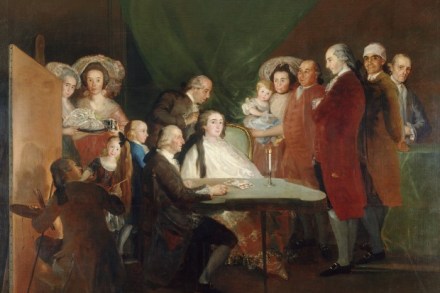
Sometimes, contrary to a widespread suspicion, critics do get it right. On 17 August, 1798 an anonymous contributor to the Diario de Madrid, reviewing an exhibition at the Royal Spanish Academy, noted that Goya’s portrait of Don Andrés del Peral was so good — in its draughtsmanship, its freedom of brushwork, its light and shade — that all on its own it was enough to bring credit to the epoch and nation in which it was created. He (or she) was absolutely correct. [caption id="attachment_9657482" align="alignnone" width="520"] Goya's portrait of Don Andrés del Peral[/caption] The same could be said of many of the exhibits in Goya: The Portraits at the National Gallery.

Now you see it, now you don’t

The artist, according to Walter Sickert, ‘is he who can take a piece of flint and wring out of it drops of attar of roses’. In other words, whatever else it is — and all attempts at definition tend to founder — art consists in making something rare and memorable out of not very much. Those words of Sickert’s popped into my mind as I looked at an exhibition of works by Avigdor Arikha at Marlborough Fine Art. Among these were pictures of a piece of toast, two pairs of socks, a casually folded orange tie, and part of a bathroom including a roll of toilet paper. Arikha (1929–2010) was a French-Israeli artist based for much of his life in Paris. For 15 years he was an abstract painter, then in 1965 he abruptly began to depict the world around him.