Martin Gayford

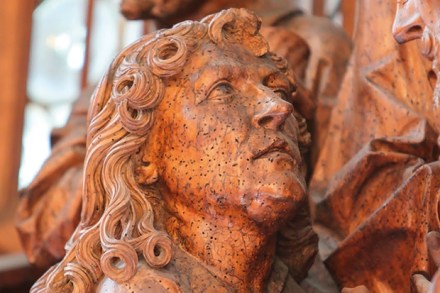
Is this the greatest sculpted version of the Easter story? It’s certainly the strangest

In April 1501, about the time Michelangelo was returning from Rome to Florence to compete for the commission to carve a giant marble David, a very different sculptor named Tilman Riemenschneider agreed to make an altarpiece in the small German town of Rothenburg ob der Tauber. Since then, things have not changed much in Rothenburg. Though battered during the war, it has been restored to postcard perfection (or rather turned into a perfect place for tourists to take selfies of themselves against a Disneyesque medieval background). And the Altar of the Holy Blood is still there, in the place for which it was made, at the west end of the church of St James or Jakobskirche. This is a sculpted version of the Easter story both great and strange.

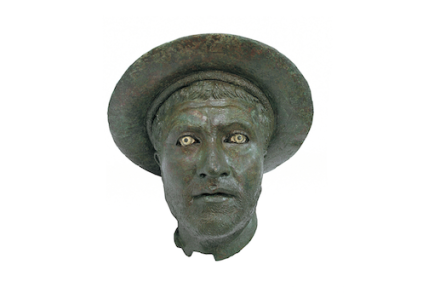
Reimaging the lost masterpieces of antiquity

For centuries there has been a note of yearning in our feelings about ancient Greek and Roman art. We can’t help mourning for what has irretrievably vanished. In 1764 Johann Joachim Winckelmann wrote that we have ‘nothing but a shadowy outline left of the object of our wishes, but that very indistinctness awakens only a more earnest longing for what we have lost’. In the same spirit, Power and Pathos, an exhibition of Hellenistic bronze sculpture at the Palazzo Strozzi, Florence, begins with an empty plinth. It is the marble base of a statue, found in Corinth, on which are written the words ‘Lysippos made [this]’. The inscription is poignant for a series of reasons.

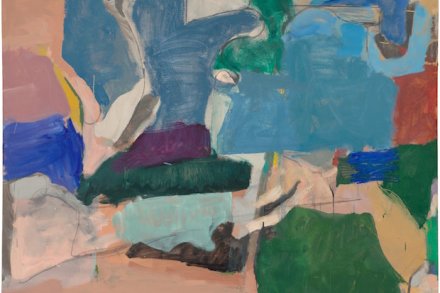
Richard Diebenkorn at the Royal Academy reviewed: among the best visual evocations of LA there are

It is true that, like wine, certain artists don’t travel. Richard Diebenkorn, subject of the spring exhibition in the Royal Academy’s Sackler Wing, is a case in point: an American painter who is revered in his native land, but of whom few will have heard over here. Will the RA show change that, and — more crucially — does it deserve to? Up to a point. Diebenkorn (1922–93) was no Mark Rothko or Willem de Kooning. He was a second-generation abstract expressionist, almost two decades younger than those two, and a lower-voltage talent to boot. But he created some memorably beautiful pictures, most of the best of them situated in the elusive territory between pure abstraction and landscape painting.

Flying witches, mad old men, cannibals: what was going on in Goya’s head?

It is not impossible to create good art that makes a political point, just highly unusual. Goya’s ‘Third of May’ is the supreme example of how to pull it off. It is a great picture with a universal message — the terrible suffering of the innocent victims of war — and one echoed, with fresh horrors, in the news today. The figure in front of the firing squad, arms flung wide, in Goya’s picture is everyman. One of the reasons for its power, and for that of ‘Disasters of War’, his series of aquatint etchings, is that images of violence and evil sprang spontaneously from his imagination.

Inventing Impressionism at the National Gallery reviewed: a mixed bag of sometimes magnificent paintings

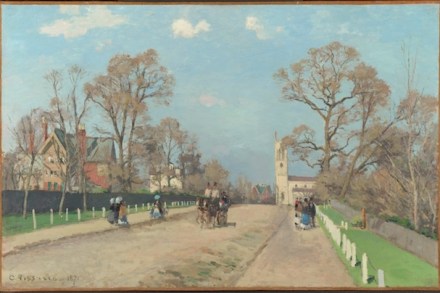
When it was suggested that a huge exhibition of Impressionist paintings should be held in London, Claude Monet had his doubts. Staging such an exhibition, he wrote to his dealer Paul Durand-Ruel, would be ‘unwise’ and only likely to baffle a London public that ‘knows very little about us’. That was in 1904. What, one wonders, would Monet make of Inventing Impressionism, which has just opened at the National Gallery 111 years later? It can hardly be said now that the British know little of the Impressionists. On the contrary, you could argue we’ve seen quite enough of them in recent decades. The challenge for a gallery planning to put on such an exhibition is how to make it different.

Sculpture Victorious at Tate Britain reviewed: entertainingly barmy

In the centre of the new exhibition Sculpture Victorious at Tate Britain there is a huge white elephant. The beast is not, I should add, entirely colourless. On the contrary, it has a howdah richly decorated in gold and green, and numerous trappings, and tassels covering its pale grey hide. Its whiteness is entirely proverbial. After all, what can you do with a porcelain pachyderm, standing over seven feet tall? The Victorian period, a text on the wall proclaims, was ‘a golden age for British sculpture’. This is perfectly true, in the sense that a colossal amount of the stuff was turned out during Victoria’s reign.

Sargent, National Portrait Gallery, review: he was so good he should have been better

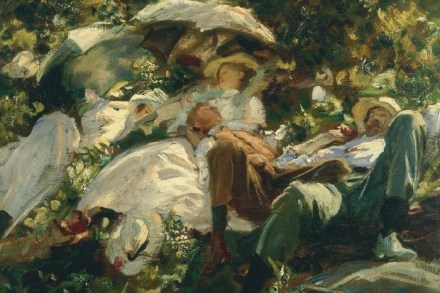
The artist Malcolm Morley once fantasised about a magazine that would be devoted to the practice of painting just as some publications are to — say — cricket. It would be filled with articles extolling feats of the brush, rather than the bat. ‘Well painted, sir!’ the contributors would exclaim at an especially brilliant display of visual agility. ‘Fine stroke!’ If such a periodical had existed in the late Victorian and Edwardian ages, no one would have been heaped with more praise than John Singer Sargent (1856–1925). Sargent: Portraits of Artists and Friends at the National Portrait Gallery is filled with mesmerising displays of his skills. There are so many, indeed, that to list them would be to describe just about every picture on view.

Marlene Dumas at Tate Modern reviewed: ‘remarkable’

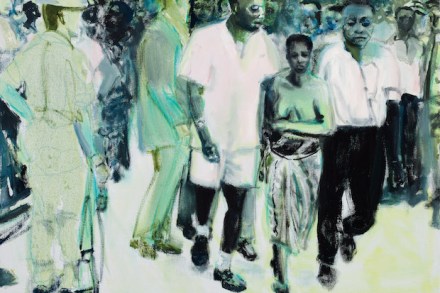
‘Whoever wishes to devote himself to painting,’ Henri Matisse once advised, ‘should begin by cutting out his own tongue.’ Marlene Dumas — whose work is the subject of a big new retrospective at Tate Modern — has not gone quite that far (and neither, of course, did Matisse). On the other hand, she does not hand out many clues as to what her work is all about. On the contrary, when Dumas says anything about her painting, it is inclined to be a self-deprecating paradox. ‘I paint because I am a woman,’ she states on her website. ‘(It’s a logical necessity.) If painting is female and insanity is a female malady, then all women painters are mad and all male painters are women.

Ignore the naysayers: these Fitzwilliam bronzes are by Michelangelo (probably)

A bronze sculpture by Michelangelo is one of the lost Holy Grails of art history. We know he made them, but the most important – an over life-size figure of Pope Julius II – was destroyed by the enraged citizens of Bologna (who had a grudge against the pontiff) a few years after it was made. A bronze David by Michelangelo vanished during the French Revolution. So that, it has always been concluded, was that. Now the Fitzwilliam Museum has unveiled not one but two bronzes attributed to the great man: athletic naked men mounted on slightly weird feline beasts. It seems too good to be true, but I am more than half persuaded that these are, as the art world says, 'right'.

Rubens and His Legacy at the Royal Academy reviewed: his imitators fall short of their master miserably

The main spring offering at the Royal Academy, Rubens and His Legacy: Van Dyck to Cézanne, teaches two useful lessons. One — not much of a surprise — is that Peter Paul Rubens (1577–1640) was a protean giant of a painter, expending sufficient artistic invention and energy to power other artists for centuries to come. The other conclusion is how hard compare-and-contrast exhibitions of this kind are to pull off. The basic idea — that Rubens was a towering figure in European culture — is plainly valid (the best riposte to the tired observation that there are so few famous Belgians is that there are plenty of celebrated Flemings, among whom Rubens is pre-eminent).

How will the British public take to Rubens’s fatties?

This week a monumental exhibition, Rubens and His Legacy, is opening at the Royal Academy. It makes the case — surely correct — that the Flemish master was among the most influential figures in European art. There are few painters of the 18th or 19th century — from Joshua Reynolds to Cézanne, Watteau to Constable — who were not affected by his work. It will be interesting, however, to discover what the London art public feel about Rubens himself. The British have had a complicated relationship with the great man. Its apex is represented by his residence in London — admittedly for a brief nine months in 1629–30 — his knighthood and the pleasure expressed by Charles I at meeting ‘a person of such merit’.

Geometry in the 20th and 21st centuries was adventurous – and apocalyptic

Almost a decade ago, David Cameron informed Tony Blair, unkindly but accurately, ‘You were the future once.’ A visitor to the Whitechapel Gallery’s exhibition, Adventures of the Black Square, might mutter the same words in front of the first exhibits. It is now a century since Kazimir Malevich painted the starkest abstractions in the history of art: one simple geometric shape painted on a background of another colour. It was not, one might have thought, an idea with much mileage. Yet those early geometric abstractions had the compressed power of revolutionary manifestos. For good or ill, there has followed 100 years of modernist, post-modernist, and now post-post-modernist geometry in art. This is the theme of the exhibition.

Martin Gayford’s five favourite exhibitions of 2014

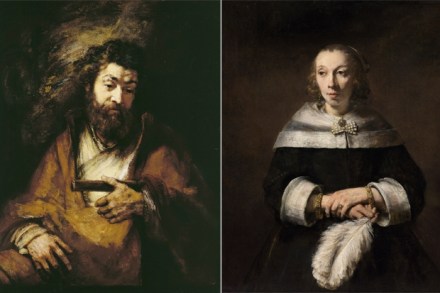
1. Late Rembrandt, National Gallery (15 Oct - Jan 18) (see image above) Some achievements, and some exhibitions, are virtually beyond criticism, and this is one: a superb assortment of works by a supreme artist. 2. Anselm Kiefer, Royal Academy (Sept 27 - December 14) A revelation – to the British public at least – that Kiefer is a great living artist, and above all a painter. 3. Henri Matisse: The Cut-Outs, Tate Modern (17 April - September 7) In his old age Matisse was an invalid, confined to a wheel chair, but succeeded in escaping triumphantly into a world of exuberant light and form: this exhibition was a triumph too. 4.

2015 in exhibitions – painting still rules

The New Year is a time for reflections as well as resolutions. So here is one of mine. In the art world, media and fashions come and go, but often what truly lasts — even in the 21st century — is painting. Over the past 12 months, there has been a series of triumphs for pigment on canvas, including the glorious Veronese exhibition at the National Gallery, and a demonstration by Anselm Kiefer at the Royal Academy that we still have painters of towering stature among us. What will 2015 hold? Well, as far as painting is concerned — both old master and contemporary — there are some extremely promising items.

Climate change, Bruegel-style

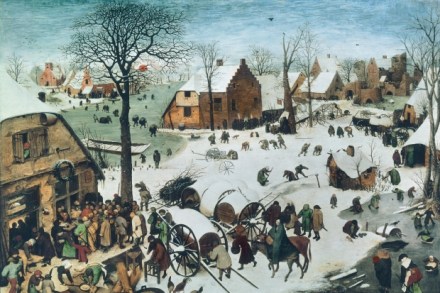
It is cold, but not in a cheery, robin-redbreast kind of way. The sky is slate blue; the sun, a red ball, is slipping below the horizon, figures carrying heavy burdens trudge across the frozen water. Yet this far- from-festive painting, ‘The Census at Bethlehem’ by Pieter Bruegel the Elder, is one of the earliest — perhaps the very first — to set the Christmas story in a northern winter landscape. There is no attempt to pretend that this is the Holy Land. The setting is a village in the southern Netherlands. The houses are brick-built, one with a northern European crow-stepped gable. In the foreground, a pig is being slaughtered, an improbable sight in Palestine. In his poem ‘Musée des Beaux Arts’ W.H.

The death of the life class

‘Love of the human form’, writes the painter John Lessore, ‘must be the origin of that peculiar concept, the Life Room.’ Then he goes on to exclaim on the loveliness of that name. It is indeed a venerable institution with a delightful description: a place devoted to looking at life — or, at any rate, to earnest attempts to depict people without a stitch of clothing. Currently two exhibitions in Norwich — at Norwich Castle Museum and Norwich University of the Arts — by Lessore and another distinguished painter, John Wonnacott, focus attention on this time-honoured practice, apparently remote from the contemporary art world of video, installation and performance.

David Hockney interview: ‘The avant-garde have lost their authority’

‘I just stay here and do my thing,’ David Hockney told me soon after I arrived at his house and studio in Los Angeles this August. ‘I’m not that interested in what happens outside. I live the same way as I have for years. I’m just a worker.’ Hockney has been labouring prodigiously for more than 60 years now, since he entered Bradford School of Art at the age of 16. ‘There is something inside David,’ his assistant Jean-Pierre Gonçalves de Lima noted, ‘that drives him to make pictures.’ In the summer of 2013, after a series of disasters — including a minor stroke and the terrible death of a young assistant — Hockney moved back to California after a long period of working in Bridlington. It was a dark period.

Without a model, Moroni could be stunningly dull. With one, he was peerless…

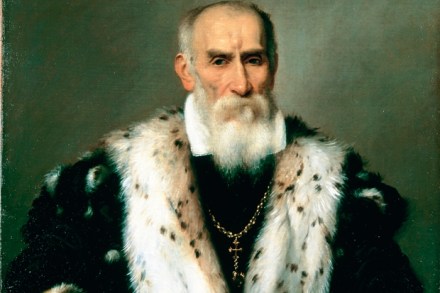
Giovanni Battista Moroni, wrote Bernard Berenson, was ‘the only mere portrait painter that Italy has ever produced’. Indeed, Berenson continued, warming to his theme, ‘even in later times, and in periods of miserable decline, that country, Mother of the arts, never had a son so uninventive, nay, so palsied, directly the model failed him’. It was a harsh judgment, but the great connoisseur inadvertently managed to put his finger on exactly what was so marvellous about his victim. A splendid exhibition at the Royal Academy triumphantly demonstrates that when Moroni actually did have a model in front of him, he was one of the most remarkable painters of later 16th-century Europe. He was, however, one who does not seem to fit easily into his time and place.

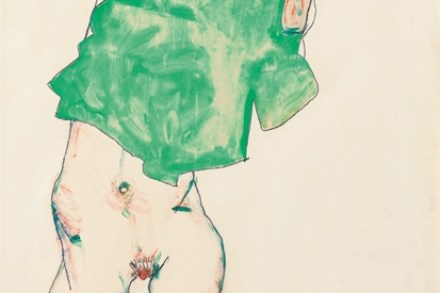
Egon Schiele at the Courtauld: a one-note samba of spindly limbs, nipples and pudenda

One day, as a student — or so the story goes — Egon Schiele called on Gustav Klimt, a celebrated older artist, and showed him a portfolio of drawings with the abrupt query, ‘Do I have talent?’ Klimt looked at them, then answered, ‘Much too much!’ One gets an inkling of what Klimt was getting at from the feverishly intense work on show in Egon Schiele: The Radical Nude. From childhood, Schiele drew with manic fluency. His father, a syphilitic stationmaster, was irritated to discover that a sketchbook, a gift to the boy intended to last for months, had been filled in less than a day.

The secret world of the artist’s mannequin

A 19th-century London artists’ supplier named Charles Roberson offered imitation human beings for sale or rent, with papier-mâché heads, soft leather skin and flexible, jointed limbs. The top-of-the-range article — described in Roberson’s catalogue as ‘Parisian stuffed’ — was pricey. Nonetheless, painters often felt they just had to have one whatever the cost. Many such creatures inhabit Silent Partners: Artist & Mannequin from Function to Fetish, a pioneering exhibition at the Fitz-william Museum, Cambridge. There are also distinguished paintings on view. But it is the figures themselves — slightly comic, a touch eerie, hard to classify — that are the real stars of the show.